Evidence of the Unintended Labor Scheduling Implications of the Minimum Wage
Abstract
Problem definition: The effect of the minimum wage is an important yet controversial topic that has received attention for decades. Our study is the first to take an operational lens and empirically study the impact of the minimum wage on firms’ scheduling practices. Methodology/results: Using a highly granular data set from a chain of fashion retail stores, we estimate that a $1 increase in the minimum wage, although having a negligible impact on the total labor hours used by the stores, leads to a 27.7% increase in the number of workers scheduled per week, but a 19.4% reduction in weekly hours per worker. For an average store in California, these changes translate into four extra workers and five fewer hours per worker per week. Such scheduling adjustment not only reduces the total wage compensation per worker but also reduces workers’ eligibility for benefits. We also show that the minimum wage increase reduces the consistency of weekly and daily schedules for workers. For example, the absolute (relative) deviation in weekly hours worked by each worker increases by up to 32.9% (6.6%) and by up to 9.7% (2.1%) in daily hours, as the minimum wage increases by $1. Managerial implications: Our study empirically identifies and highlights a new operational mechanism through which increasing the minimum wage may negatively impact worker welfare. Our further analysis suggests that the combination of the reduced hours, lower eligibility for benefits, and less consistent schedules (that resulted from the minimum wage increase) may substantially hurt worker welfare, even when the overall employment at the stores stay unchanged. By better understanding the intrinsic tradeoff of firms’ scheduling decisions, policy makers can better design minimum wage policies that will truly benefit workers.
Supplemental Material: The online appendix is available at https://doi.org/10.1287/msom.2023.1212.
1. Introduction
The effect of the minimum wage has been an important topic of debate for decades (Manning 2021). For many years, low-wage laborers, especially in the food service and retail sectors, throughout the United States have been advocating an increase in the minimum wage to $15 (https://fightfor15.org/). With the intention of increasing worker welfare, in addition to the recent federal-level proposals, many states (e.g., California and New York) and municipalities (San Francisco, Seattle, and New York City) have responded individually in recent years by raising their minimum wages.
There are concerns that an increase in the minimum wage may have negative consequences, such as the loss of jobs. The findings, however, are not conclusive: Some studies show that the minimum wage has a small but negative employment effect (Neumark and Wascher 2000, Gopalan et al. 2021), whereas others show no such adverse employment effect (Card and Krueger 2000, Dube et al. 2010). This debate has continued to the present time (Schmitt 2013, Manning 2021). Part of what makes the employment effect so elusive is that, besides employment, firms may strategically respond to the minimum wage through nonwage job attributes, such as worker schedules. This is often under-considered but can have significant implications on worker welfare (Clemens 2021). Despite its theoretical importance, as argued in Clemens and Strain (2020) and Clemens (2021), no empirical evidence has been established yet on the scheduling implications of the minimum wage. This is partly because detailed scheduling data (that captures the precise daily shifts worked by all employees within the same firms) are not publicly available and are hard to obtain (Clemens 2021).
In this paper, we take the first step to empirically study how firms respond to minimum wage in their labor scheduling practice by leveraging a highly granular data set of worker schedules from a medium-sized chain of fashion retail stores in the United States. Specifically, we study worker scheduling and minimum wage data from 2015 to 2018 for 5,832 workers at 47 stores in California and 17 stores in Texas. All stores share the same brand. Our data include all workers employed at the stores. They are all paid by the hour, and most of them are paid with the minimum wage. The key advantage of our data set is that it allows the precise measurements of labor hours for a store as a whole and for all individual workers within a store, including the timings of the shifts for each worker.
To identify the effect of the minimum wage, we apply a difference-in-difference (DID) estimation strategy. We consider the stores in Texas, where the minimum wage of $7.25 did not change during our study period, as the control group, and the stores in California, where the minimum wage was constant in 2015 and has increased every year thereafter, as the treatment group. We elaborate further on our identification strategy in Section 4.
Our results show that the minimum wage has a negligible impact on the total labor hours employed at the stores, which is consistent with the literature on the employment effect of minimum wage, especially in the nontradable sectors (e.g., retail and service) (Gopalan et al. 2021, Manning 2021). However, we show that the way in which the stores allocate these hours among their workers does change. Specifically, when the minimum wage increases by $1, the number of workers scheduled to work each week goes up by 27.7%, whereas the average hours per worker per week decrease by 19.4%. For an average store in California, for example, these changes translate into four extra workers per week and five fewer hours per worker per week. This means, for an average worker in California paid the minimum wage, total wage compensation is reduced by 13.6% when increasing the minimum wage from $11 to $12.
This decrease in the average number of hours worked not only reduces total wages but also impacts workers’ eligibility for benefits. We show that the percentage of workers with weekly hours larger than 20 (who may be eligible for retirement benefits according to ERISA (1974)) and those with weekly hours larger than 30 (who may be eligible for healthcare insurance according to the Affordable Care Act (ACA)) decreases by 21.5% and 15.3%, respectively. These results suggest that, as the minimum wage increases, firms may strategically adjust their scheduling practice to reduce the number of workers who are eligible for benefits. This is consistent with the results in Clemens et al. (2018) that show using survey data from the United States that minimum wage increase reduces workers’ likelihood to receive healthcare insurance, especially in the low wage sectors. To demonstrate the significant financial incentive for firms to do so, we provide a rough estimate of a store’s savings associated with reducing workers’ eligibility for benefits in Section 6.2.1.
Besides the direct reduction in total wage compensation and eligibility for benefits, we also show that increasing the minimum wage leads to less consistent worker schedules both in terms of the number of hours they work from one week to another and in terms of the timing of their shifts. In particular, for each $1 increase in the minimum wage, the absolute (relative) deviation in the number of weekly hours worked by each worker increases by up to 32.9% (6.6%). In addition, we show that the absolute (relative) deviation in the number of daily hours increases by up to 9.7% (2.1%). These results are consistent with the theories illustrated in Clemens and Strain (2020) through their stylized model. When exploring the heterogeneous effects across different workers, we find that the deterioration of scheduling consistency is generally more severe for workers with a shorter tenure.
The practices of limited and inconsistent hours have already been extremely prevalent, especially in the service and retail sectors, and among the low-wage workers. Recent studies from the Economic Policy Institute found that in 2015, 6.4 million workers—4.4% of the entire national labor force—were working part time even though they would have preferred to work full time, and 17% of the U.S. workforce has inconsistent work schedules (Golden 2015, 2016). Previous research shows that limited and inconsistent worker schedules can make it significantly harder for workers to coordinate job activities with their personal lives, to have a second job, or to attain financial stability (Lambert 2008, Lambert et al. 2012, Henly and Lambert 2014). These issues could be exacerbated through further minimum wage increases and thus underscore the need to better understand the scheduling implications of the minimum wage.
We further show that increasing the minimum wage can diminish worker welfare due to the changes in firms’ scheduling practices, even when it does not reduce the overall employment. For an average worker in a California store in our data, we estimate the net loss of welfare due to their reduction of hours, lower eligibility for benefits, and less consistent schedules (that resulted from a $1 increase in the minimum wage) to be at least $1,599 annually or 11.6% of the worker’s total wage compensation. This is assuming that workers were able to use their reduced hours to work a second job—an assumption that may not hold true for many workers.
Our study is the first to empirically examine the labor scheduling implications of the minimum wage. The granularity of our data allows us to precisely characterize the scheduling practice of each retail store and cleanly identify how stores’ scheduling practices and workers’ schedules change with the minimum wage. The economic literature generally assumes that the welfare effect of minimum wage increase is positive if it does not reduce employment (Clemens and Strain 2020). However, our results show that stores’ strategic adjustments in their labor scheduling practice (as a result of the minimum wage increase) can substantially reduce worker welfare, even when the overall employment at the stores is unchanged. These results highlight the importance of this under-considered operational mechanism through which increasing the minimum wage may impact worker welfare. As such, to better design minimum wage policies that truly benefit workers, it is essential for policy makers to better understand the operational tradeoffs that firms face in their scheduling decisions (in the presence of demand and capacity uncertainties). Our study sheds light on this critical issue.
2. Literature Review and Theory Development
2.1. Literature
In contrast to the extensive literature on the employment effect of the minimum wage (Schmitt 2013, Manning 2021), few studies have explored its effect on nonwage job attributes (Clemens 2021). Using American Community Survey data from 2011 to 2016, Clemens et al. (2018) find that state-level minimum wage increases reduced the likelihood that individuals report having employer-sponsored health insurance. The effects are the largest for workers in very low-paying occupations. Using both survey and secondary data, Datta et al. (2019) show that the 2016 introduction of the United Kingdom’s National Living Wage (which increased the minimum wage from £6.70 to £7.20) resulted in an increased use of zero-hour contracts (hourly and part-time employment) in social care sectors, under which employers are not obliged to provide any minimum number of working hours to the employee. Adams-Prassl et al. (2020) show that similar results hold across all low-wage sectors using data of 46 million UK job vacancies from 2014 to 2019. Clemens and Strain (2020) developed a stylized model and numerical example to illustrate that increasing the minimum wage may lead to more inconsistent work schedules, which in turn, will reduce worker welfare even if it increases wages and does not reduce employment. Clemens (2021) explicitly point out that although nonwage job attributes, especially work schedules, can have a first-order effect when analyzing the welfare implications of the minimum wage, there is little, if any, empirical evidence on how firms’ labor scheduling practice responds to the minimum wage. Our study is the first to empirically study the implications of the minimum wage on worker schedules. Our results support the theoretical prediction laid out in Clemens and Strain (2020) and Clemens (2021). Additionally, our results provide a possible mechanism through which increasing the minimum wage may reduce workers’ likelihood to receive health insurance, as shown in Clemens et al. (2018). We also extend the results in Adams-Prassl et al. (2020) and Datta et al. (2019) by showing that firms hiring hourly workers may further exploit flexibility through limited and inconsistent work hours.
Our work is related to the growing operations management literature on capacity flexibility in services. The commonly used approaches to create flexibility in services are cross-training (Iravani et al. 2005), adjustable work schedules (Gans et al. 2015, Kamalahmadi et al. 2021), capacity pooling (Song et al. 2020b), proactive customer services (Delana et al. 2021), the use of part-time and temporary workers (Kesavan et al. 2014), or more recently through crowd-sourcing gig workers (Chen et al. 2019, Allon et al. 2022). These studies focus on devising the optimal scheduling decisions in the presence of capacity flexibility, evaluating the impact of adjustable schedules on worker productivity or the value of flexible consumers. We contribute to this literature by exploring how the minimum wage may impact firm’s scheduling practice and its use of scheduling flexibility. To that end, our study is related to Lu and Lu (2017), which explores the impact of mandatory overtime laws on staffing decisions and service quality of nursing homes. They show that such a policy led to decreased hours of permanent nurses and increased hours of contract nurses, which created operational flexibility for nursing homes but reduced quality of care. More broadly, our study is also related to the recent empirical studies on the impact of scheduling on worker retention (Musalem et al. 2022), impact of staffing level on revenue (Fisher et al. 2021), and how scheduling discretion (Ibanez et al. 2018, Tan and Staats 2020), duration (Song et al. 2020a), and modality (Buell et al. 2020) may impact the service outcome.
2.2. Theory Development
As the minimum wage increases, the labor costs of firms that have the most exposure to the minimum wage policy (e.g., firms in the retail and hospitality industries) increase. Firms can respond in a variety of ways, for example, by passing the additional costs onto their customers through increasing the price (although evidence on price responses is mixed (Lemos 2008, Leung 2021)), absorbing the additional labor cost by cutting into their profit margin (often done in noncompetitive industries, but not competitive ones (Draca et al. 2011)), or finding ways to reduce their costs. Firms that have limited pricing power in a competitive industry such as the chain of fashion retail stores in our data are likely to be pressured to reduce labor costs. A natural approach to cut labor costs is to reduce overall employment. However, although the literature on the employment effect of the minimum wage remains contentious, an increasing fraction of studies have concluded that the effect of moderate minimum wage increase is close to zero (Wolfson and Belman 2019).
Instead of reducing overall employment, to reduce labor costs, firms may hire more part-time workers and reduce the hours per worker so that fewer workers will be eligible for fringe benefits (Fox 2014). According to ERISA (1974), hourly workers can only be eligible for retirement benefits if they work at least 1,000 hours per year, which is about 20 hours per week. Meanwhile, the ACA requires employers to offer health insurance to employees working at least 30 hours per week (or 130 hours per month) to avoid paying penalties. Moreover, having more part-time workers with fewer hours per worker also provides scheduling flexibility (i.e., the ability to schedule any number of workers at any time and to adjust the schedule in response to changes in demand and employee absenteeism), which allows firms to further reduce labor costs.
On the other hand, increasing the number of part-time workers and reducing their hours may have a negative implication for the firm in terms of reduced employee productivity due to lower motivation, inability to attract skilled workers, or higher turnover (Lambert et al. 2012, Kamalahmadi et al. 2021). This partly explains why firms often use a mix of full-time and part-time workers: part-time workers are less expensive, but they also tend to be less productive. As the minimum wage increases, firms (especially those with thin profit margin and limited pricing power) may be pressured to hire more part-time workers, reduce hours per worker, and exploit scheduling flexibility to reduce the labor costs and stay financially viable. However, as argued in Clemens and Strain (2020) and Clemens (2021), in the equilibrium prior to the increase of the minimum wage, no firm would deviate by making such scheduling adjustments because they would not be able to retain their workers from leaving for other similar firms that offer better work schedules. In other words, without the minimum wage increase, firms would not adopt scheduling adjustments as the loss in worker productivity due to higher turnover (because of schedule adjustments) would dominate the corresponding saving in labor costs. We thus predict that increasing the minimum wage should push the firms to hire more part-time workers, reduce hours per worker, and exploit scheduling flexibility in a new equilibrium.
3. Data and Variables
First, we present the context of our study, our data, all the variables we will use for the analysis, and the summary statistics.
3.1. Study Context
We chose a retail setting for the following reasons. (1) The retail industry is a significant sector; for example, the industry sales in the United States were more than $5 trillion in 2017 (U.S. Census Bureau 2017). (2) It is also a labor-intensive industry. According to the National Retail Federation, 32 million or 16% of the U.S. labor force worked in the retail industry in 2020 (NRF 2020). (3) The retail industry is one of the largest employers of minimum wage workers, accounting for about 23% of minimum wage labor in the United States (NLR 2021). (4) The retail industry is also among the largest employer of part-time workers, which gives employers much flexibility in assigning and adjusting their workers’ schedules. Indeed, most of the workers employed at retail stores in our data are part-time workers, and their schedules both in terms of the hours and the timing of their shifts fluctuate from week to week.
Our data are from a medium-sized chain whose name we cannot disclose that operates more than 160 fashion retail stores in the United States, located primarily in California and the southwest. All the stores share the same brand. This chain of stores generates about $400 million in annual revenue and operates with a fairly low net profit margin of approximately 4%, which is a typical profit margin in the retail sector (Damodaran 2021).
Store managers in our setting are full-time employees, and they are in charge of improving store sales, hiring and labor scheduling, and other decisions. The chain has a decision support system that (a) provides a total hours recommendation to the store managers based on the demand forecast and (b) provides a recommended schedule by first assigning the hours to full time workers (who typically work eight hours per day and five days per week), and then spreading the remaining hours across part-time workers given the number of part-time and full-time workers each store employs at the time. The store manager then creates the labor schedule taking the recommendations from the system into account but having full discretion to adjust the schedules within the budget as needed. We note that the scheduling algorithm does not provide any recommendations on the number of full-time or part-time workers or the total number of workers each store should have. There are also no specific corporate guidelines on the mix of the part-time and full-time workers or the total number of workers each store should have. The managers are making these decisions locally with the goal to improve sales and profitability of the store. We further note that the store budget is set locally by the manager, which is not an input to the scheduling algorithm.
3.2. Retail Data
We work with a proprietary data set containing work schedules from 17 stores in Texas and 47 stores in California. Table 1 summarizes the number of stores by city.
|

Table 1. Distribution of Number of Stores by City and State
| State or city | Number of stores |
|---|---|
| TX | 17 |
| CA (state-level minimum wage) | 40 |
| Los Angeles | 3 |
| Milpitas | 1 |
| Richmond | 1 |
| San Diego | 1 |
| Santa Clara | 1 |
Note. We aggregate all cities in California that follow the state-level minimum wage law to the state level.
The stores in our data set adopted the labor scheduling system at different times and hence have different observation windows. The earliest observations start on January 1, 2015, and we observe data until May 23, 2018. Because of technical issues, the data are missing for all stores from December 14, 2015 to January 25, 2016. The data consist of punch-in and punch-out time stamps indicating the beginning and end of work shifts for all individual workers employed at the stores. We have 5,832 unique workers, with each employee working one shift per day with potential break(s) during the shift. The median shift length is 6.16 hours, and 99% of the shift length data falls below 14.11 hours. We remove all observations exceeding 14 hours as possibly erroneous. We also conduct our analysis without deleting these shifts and provide results in Tables C.5, C.6, and C.7 in Online Appendix C.3: Our results are similar both qualitatively and quantitatively. The length of the break during a shift is 25 minutes, on average, with a median of 30 minutes. We do not consider the break as part of the workers’ hours. All workers employed at the stores in our data are paid by the hour, and most workers receive the minimum wage of the corresponding region.
3.3. Minimum Wage Data
During our observation window, the minimum wage in Texas was fixed at $7.25, whereas the minimum wage for employees in California changed multiple times at the state level and at the municipality level for a few cities. We summarize the minimum wages for all cities included in our analysis in Table 2.
|
Table 2. Minimum Wages at Municipalities Included in Our Analysis over Relevant Time Horizon
| City | 1-Jan-15 | 1-Jan-16 | 1-Jul-16 | 11-Jul-16 | 1-Jan-17 | 1-Jul-17 | 1-Jan-18 |
|---|---|---|---|---|---|---|---|
| Texas | 7.25 | 7.25 | 7.25 | 7.25 | 7.25 | 7.25 | 7.25 |
| California | |||||||
| State | 9 | 10 | 10 | 10 | 10.5 | 10.5 | 11 |
| Los Angeles | 9 | 10 | 10.5 | 10.5 | 12 | 12 | 13.25 |
| Milpitas | 9 | 10 | 10 | 10 | 10.5 | 11 | 12 |
| Richmond | 9.6 | 11.52 | 11.52 | 11.52 | 12.3 | 12.3 | 13.41 |
| San Diego | 9.75 | 10 | 10 | 10.5 | 11.5 | 11.5 | 11.5 |
| Santa Clara | 9 | 11 | 11 | 11 | 11.1 | 11.1 | 13 |
Source. California Department of Industrial Relations (2018); we use the data for companies that have more than 26 employees.
3.4. Variable Definitions
3.4.1. Dependent Variables.
We measure the store-level employment using the total number of hours for each store (j) deployed at any given week (t), which we denote as WeeklyHoursjt. To characterize how these hours were scheduled among workers in the store, we let the number of distinct workers scheduled and the average number of hours per worker at store j in week t be NumWorkersjt and AvgHoursPerWorkerjt, respectively. In addition, at store j in week t, we denote the percentage of distinct workers whose total scheduled hours are in the intervals of , and out of the total number of distinct workers as , …, and , respectively.
To measure the adequacy of work schedules for each individual, we use the number of hours each worker i works at store j during week t, denoted as WeeklyHoursijt. All the variables subscripted by i are at the worker level, whereas the variables without this subscript are at the store level. To assess the consistency of workers’ schedules, we consider five measurements.
First, we use AbsWeeklyHourDevijt (RelWeeklyHourDevijt) to measure the deviation in workers’ weekly hours from (relative to) the average weekly hours, which have important implications for the stability of workers’ weekly compensation. Specifically, we first compute the average weekly hours for worker i at store j during the time when the minimum wage was w, denoted as . Then, AbsWeeklyHourDevijt and RelWeeklyHourDevijt are given by
In addition to the deviation in weekly hours, we also measure the deviation of the time when workers are scheduled to work by using the following three variables: AvgAbsDailyHourDevijt, AvgRelDailyHourDevijt, and AvgAbsStartTimeDevijt. To construct the first two variables, for each worker i at store j on each day of the week d, we compute the worker’s average daily hours during the time when the minimum wage was w, denoted as . We then compute the worker’s weekly absolute and relative deviation on that day from and compute the average across all days of the week. As such, AvgAbsDailyHourDevijt and AvgRelDailyHourDevijt are given by
As for AvgAbsStartTimeDevijt, analogously to the daily hours deviation calculation, we compute each worker’s average starting time associated with each minimum wage, denoted as . We then find the worker’s weekly absolute deviation on that day from and compute the average across all days of the week, which is denoted as AvgAbsStartTimeDevijt. It is given by
Recall that the managers make the majority of the staffing and scheduling decisions locally as we mentioned in Section 3.1, including the mix of part-time and full-time workers, the number of workers employed at the store, and adjustments to the recommended total labor hours. Hence, all the previous outcome variables largely depend on the local managers’ decisions.
3.4.2. Explanatory and Control Variables.
The main independent variable of interest is MinWagejt: the minimum wage applied to store j during week t. To study the impact on stores’ scheduling practice, we conduct an analysis both at the store and worker levels. In the store-level model, we include the store fixed effects, Storej, and the city fixed effects, Cityj, that capture any store-specific and city-specific time invariant effects that may affect our outcome variables such as the location, culture, and size of the store, and so on. In the worker-level model, we additionally include the worker fixed effects, Workeri, which capture any worker-specific time invariant effects, such as workers’ demographics and intrinsic ability.
In both the store-level and worker-level models, we include city-specific week and year trends; that is, and . Weekt and Yeart are dummy variables that indicate the week and year, respectively.
3.5. Summary Statistics
Because we measure the adequacy and consistency of workers’ schedules at the weekly level, we aggregate our retail data to the weekly level. During some weeks, for example, the week of Christmas holidays, the stores operate for less than seven days; because such weeks are typically outliers to the regular store operation, we exclude all weeks with less than seven days of operation and active sales from the analysis. As a result, we drop 1,746 store-week combinations (16.4% of the data). Approximately 90% of these dropped store-week combinations occur during federal or religious holidays when all the stores from the brand were closed. In the remaining 10% of the weeks where individual stores may be open less than seven days, we do not observe any systematic difference between the stores in California and the stores in Texas; thus, it should not impact our treatment effect estimates.
Table 3 shows the weekly summary statistics for the store-level variables for the 64 stores stratified by state. Table 4 reports the weekly summary statistics for the worker-level variables for 5,829 workers, stratified by state. To minimize potential bias caused by outliers, we eliminate the bottom and top 2.5% from the data. The results are qualitatively similar when using the full data set without removal of outliers (please refer to Tables C.8, C.9, and C.10 in Online Appendix C.4).
|
Table 3. Summary Statistics for Weekly Store-Level Variables
| Statistic | N | Mean | Standard deviation | Minimum | Percentile (2.5) | Percentile (97.5) | Maximum |
|---|---|---|---|---|---|---|---|
| California (CA) | |||||||
| WeeklyHoursjt | 6,549 | 343.547 | 130.907 | 137.509 | 188.649 | 739.446 | 1,274.724 |
| NumWorkersjt | 6,549 | 14.483 | 5.189 | 5 | 8 | 29 | 77 |
| AvgHoursPerWorkerjt | 6,549 | 23.994 | 4.438 | 7.585 | 16.118 | 33.488 | 43.083 |
| 6,549 | 0.173 | 0.135 | 0.000 | 0.000 | 0.500 | 0.776 | |
| 6,549 | 0.267 | 0.140 | 0.000 | 0.000 | 0.556 | 0.800 | |
| 6,549 | 0.258 | 0.141 | 0.000 | 0.000 | 0.556 | 0.800 | |
| 6,549 | 0.162 | 0.109 | 0.000 | 0.000 | 0.417 | 0.750 | |
| 6,549 | 0.140 | 0.072 | 0.000 | 0.000 | 0.300 | 0.769 | |
| Texas (TX) | |||||||
| WeeklyHoursjt | 2,320 | 301.752 | 92.886 | 130.335 | 182.821 | 530.286 | 1,218.118 |
| NumWorkersjt | 2,320 | 12.611 | 4.024 | 4 | 7 | 22 | 58 |
| AvgHoursPerWorkerjt | 2,320 | 24.501 | 5.005 | 7.420 | 15.797 | 35.412 | 47.227 |
| 2,320 | 0.206 | 0.152 | 0.000 | 0.000 | 0.545 | 0.741 | |
| 2,320 | 0.245 | 0.137 | 0.000 | 0.000 | 0.539 | 0.750 | |
| 2,320 | 0.214 | 0.136 | 0.000 | 0.000 | 0.500 | 0.727 | |
| 2,320 | 0.160 | 0.119 | 0.000 | 0.000 | 0.444 | 0.750 | |
| 2,320 | 0.175 | 0.095 | 0.000 | 0.000 | 0.417 | 0.714 | |
|
Table 4. Summary Statistics for Weekly Worker-Level Variables
| Statistic | N | Mean | Standard deviation | Minimum | Percentile (2.5) | Percentile (97.5) | Maximum |
|---|---|---|---|---|---|---|---|
| California (CA) | |||||||
| WeeklyHoursijt | 94,850 | 23.721 | 14.145 | 0.0003 | 3.703 | 55.723 | 88.648 |
| AbsWeeklyHourDevijt | 94,850 | 5.713 | 5.330 | 0.000 | 0.015 | 19.446 | 56.255 |
| RelWeeklyHourDevijt | 94,850 | 0.273 | 0.256 | 0.000 | 0.001 | 0.862 | 4.898 |
| AvgAbsDailyHourDevijt | 94,850 | 0.826 | 0.720 | 0.000 | 0.000 | 2.715 | 10.429 |
| AvgRelDailyHourDevijt | 94,850 | 0.135 | 0.120 | 0.000 | 0.000 | 0.437 | 2.925 |
| AvgAbsStartTimeDevijt | 94,850 | 1.604 | 1.089 | 0.000 | 0.000 | 4.114 | 14.135 |
| Texas (TX) | |||||||
| WeeklyHoursijt | 29,257 | 23.928 | 15.308 | 0.001 | 3.392 | 57.802 | 84.510 |
| AbsWeeklyHourDevijt | 29,257 | 6.685 | 6.059 | 0.000 | 0.087 | 22.560 | 48.712 |
| RelWeeklyHourDevijt | 29,257 | 0.321 | 0.296 | 0.000 | 0.004 | 0.974 | 8.638 |
| AvgAbsDailyHourDevijt | 29,257 | 1.201 | 0.893 | 0.000 | 0.000 | 3.344 | 9.662 |
| AvgRelDailyHourDevijt | 29,257 | 0.189 | 0.141 | 0.000 | 0.000 | 0.542 | 2.058 |
| AvgAbsStartTimeDevijt | 29,257 | 1.637 | 1.101 | 0.000 | 0.000 | 4.226 | 12.338 |
4. Model, Identification, and Estimation
We next describe our identification strategy, model, and the validation of our approach.
4.1. Identification Strategy
We use a DID strategy to estimate the impact of the minimum wage on the scheduling practice at each store and its implication on the adequacy and consistency of the employment for each individual worker.
We observe that the minimum wage remained constant ($7.25) during the period of our study from January 2015 to March 2018 in the entire state of Texas. In California, the state minimum wage increased every year during this period. We consider the year of 2015 as the time before the treatment and the years after 2015 as the time after the treatment. Although the majority of the cities use the minimum wage imposed by the state, a few cities have higher minimum wages than the state for at least some period (Table 2). As such, we will use all the stores in Texas as the control group. For the treatment group, we select all the stores in the cities in California whose minimum wage is constant before the onset of treatment and changes when the treatment starts. This ensures that we have sufficient data for the pretreatment period (i.e., one year) to validate the parallel trend assumption and sufficient time during the posttreatment periods to estimate the treatment effect.
Besides the minimum wage, California and Texas may differ in other dimensions, (e.g., population, household income, cost of living and businesses, race representation, employment, economic growth rate including the growth of the gig economy, and among others). To account for the spatial heterogeneity between California and Texas, we first include store fixed effects (Storej), which capture the store-specific characteristics (and, by extension, state-specific characteristics) that do not vary over time, such as the location, the size, and the culture. Similarly, we also control for the city fixed effects (Cityj). To further account for the heterogeneity between the two states that may change over time (e.g., regional economic shocks, the overall employment, and growth trend), we follow the previous minimum wage studies (Allegretto et al. 2011, Addison et al. 2015) and include city-specific time (week and year) fixed effects. Key demographic variables that may impact minimum wage policies and the overall employment patterns are effectively controlled by the combination of the store and city fixed effects and city-specific trends. We also explore an approach where we include the demographic variables (the population, the unemployment rate, the median household income, the median age, the percentage of population below poverty line, and the percentage of Latino/Black/White population) as controls; however, in such a case they are automatically removed from our model due to collinearity. Beyond these controls, the local minimum wage should be not correlated with other worker- or store-specific characteristics that may lead to biased estimates, as the minimum wage is determined at the city or state level, not selected by the workers or the stores.
For each dependent variable, if its trend (after including the control variables mentioned previously) is the same between the control and treatment groups before the treatment but deviates after the treatment, we can attribute the deviation in the trend to the increase of the minimum wage in the treatment group. A potential caveat examines the possibility that the observed trends posttreatment are caused by other shocks (e.g., labor or tax policies) that happened at the same time as the minimum wage increases. To the best of our knowledge, there were no such shocks. State-level corporate tax rates and labor policies (other than the minimum wage) in California and Texas were unchanged throughout our study period. In May 2016, a federal regulation that applies to all states as part of the Fair Labor Standards Act was modified to expand the set of eligible workers for overtime pay. The regulation was, however, challenged in court before it became effective, and the rule was ultimately never implemented during our study period. As such, we believe any observed deviation in the posttreatment trend (after adjusting for the city-specific trends captured by our control variables) can be attributed to the increases in the minimum wage.
Our DID setting deviates from the standard DID setting where there is one single treatment and two time periods. In our setting, there are multiple levels of treatments that occurred over multiple time periods in the treatment group. According to proposition 6 in Callaway et al. (2021), the classic DID estimate (the two-way fixed effects model) is unbiased in our setting if the following conditions hold (in addition to the normative assumptions under the classic DID model): (1) the treatment effect does not change with the time duration that each unit has been exposed to the treatment; (2) the treatment effect (during the post treatment periods) does not depend on the time when the treatment occurred; (3) units in the treatment group do not take actions that will impact the outcome variables in anticipation of the treatment; and (4) within the units that share the same treatment timings (i.e., California stores whose local minimum wage increases occurred at the same time) and for all treatment levels observed in the data, the group of units that was not assigned a particular treatment level would respond to this treatment similarly to the group that was. The previous four conditions are referred to as assumption 6(a), assumption 6(b), assumption 3-MP, and assumption 5-MP, respectively, in Callaway et al. (2021).
We believe that in our setting, all these conditions hold other than condition (4), which we address using a robustness check in Section 6.3. Regarding conditions (1) and (2), firms’ response to a given level of minimum wage increase should be relatively stable over time. For condition (3), whereas California stores did know when the minimum wage would increase in the future in advance, they had no incentive to deviate from their usual scheduling practice before the actual minimum wage increase as we explained in Section 2.2.
4.2. Model
Using the DID strategy described previously, we estimate the effects of the minimum wage on the scheduling practices at each store. We start with the following store-level model:
Using a store-level model allows us to estimate the impact of the minimum wage on the adequacy of worker schedules on average. To better understand this adjustment and the effect of the minimum wage on the consistency of the worker schedules, we propose the following worker-level model:
4.3. Parallel Trend Assumption
A key component of the DID identification strategy is to validate the parallel trend. The most common approach is to visually inspect the trend before and after the treatment through plots as it is done in Lu and Lu (2017) and Li and Netessine (2020) in the operations management literature and Angrist and Pischke (2008) and Gopalan et al. (2018) in the economics literature. If the figure demonstrates that the trend is generally similar during the pretreatment period but deviates after the treatment, the parallel trend assumption holds. Some papers also conduct t tests to further test the statistical significance of the differences (if any) between the control and the treatment for each time period before the treatment (Gopalan et al. 2018, Cui et al. 2022).
Following the lead of these papers, we propose the following dynamic specifications, where we allow the treatment effect (i.e., the coefficients β and γ) to change from one month to another and then discuss both the visual inspection and t test results:
First, to illustrate the parallel trends before and after the minimum wage increases, we present the estimates and 95% confidence intervals for and for the entire time horizon of our data for the store-level outcome variables in Figures 1 and 2 and for the worker-level outcome variables in Figure 3. Visually examining the trends, we observe no difference in terms of the trend between the control and treatment before the treatment period for all the outcome variables but significant difference in trend after the treatment for most outcome variables.
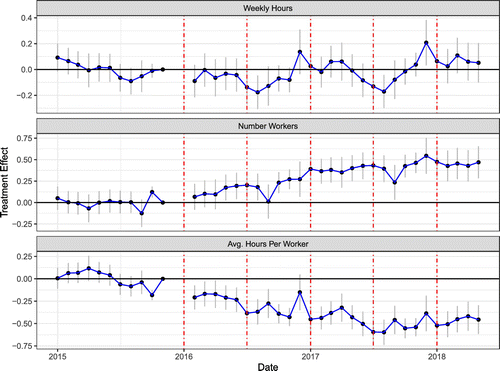
Notes. The regression is estimated for the entire data span with the reference period being November of 2015. Vertical lines denote minimum wage increases in treatment stores.
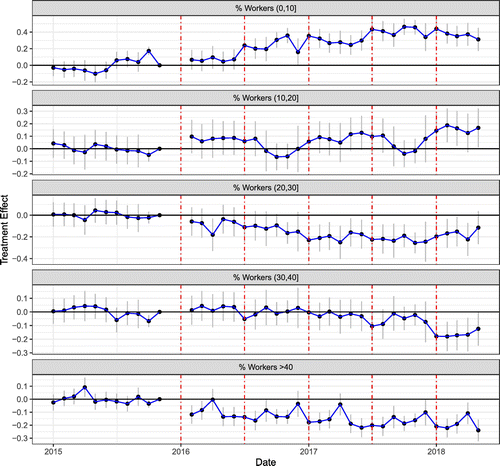
Notes. The regression is estimated for the entire data span with the reference period being November of 2015. Vertical lines denote minimum wage increases in treatment stores.
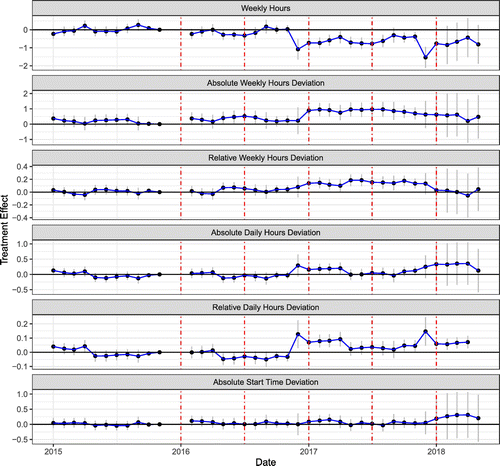
Notes. The regression is estimated for the entire data span with the reference period being November of 2015. Vertical lines denote minimum wage increases in treatment stores.
We note a spike/dip in October 2015 for some of the outcome variables at the store level (e.g., NumWorkersjt and AvgHoursPerWorkerjt); we could not find a systematic explanation: We believe that an odd observation for only one of the months is likely to be attributable to noise and do not think it is due to the potential anticipatory action. If there were anticipatory action, we should have observed a similar pattern for November 2015, which is not the case. This provides additional support for condition (3) mentioned in Section 4.1: Units in the treatment group do not take actions that will impact the outcome variables in anticipation of the treatment, which we need to ensure the correct interpretation of our results in the setting with multiple levels of treatment that occurred over multiple time periods.
We also report the estimated monthly coefficients for the pretreatment period and the t test results in Tables B.1, B.2, and B.3 in Online Appendix B using November 2015 as a reference period. There are one or two time periods for a subset of outcome variables that appear significant with the rest (the vast majority) of coefficients not statistically different from zero. For the parallel trend assumption to hold, it is permissible for a small number of pretreatment coefficients to be statistically significant (provided the majority of these coefficients are statistically insignificant); see Gopalan et al. (2021) and chapter 5 of Angrist and Pischke (2008). Our results thus support the notion that the pretreatment effects ( and ) are generally not statistically significant for all outcome variables, and we conclude that the parallel assumption holds in our data.
5. Results
5.1. Results from Store-Level Analysis
In Table 5, we present the estimation results of our store-level model characterized by Equation (6). First, we observe that the change in total labor hours per week (WeeklyHoursjt) is not significant, which is consistent with results in the previous literature (Manning 2021). Decomposing the total hours into the number of workers and hours worked by each worker, we observe that as the minimum wage increases by $1, the number of workers scheduled to work per week increases by 27.7%, and the hours assigned to each worker decrease by 19.4%. For an average store in California, this change implies that the average number of workers increases from 15 to 19 (approximately) and the number of average hours per worker per week decreases from 24 to 19. As a result, for an average worker in California who is paid with the minimum wage of $11, the worker’s wage compensation would be reduced by 13.6% () or $1,872 () annually. Such a reduction increases with the base minimum wage.
|
Table 5. Effect of Minimum Wage Increase on Store Scheduling Practices
| Dependent variable | |||
|---|---|---|---|
| WeeklyHoursjt | NumWorkersjt | AvgHoursPerWorkerjt | |
| 0.054 | 0.277*** | −0.194*** | |
| (0.044) | (0.051) | (0.033) | |
| Observations | 8,425 | 8,166 | 8,425 |
| R2 | 0.872 | 0.800 | 0.629 |
| Adjusted R2 | 0.805 | 0.691 | 0.437 |
Notes. Dependent variables are logged. Standard errors clustered at the store level.
*p < 0.1; **p < 0.05; ***p < 0.01.
The reduced hours not only decrease the total wage compensation of the workers but also reduce their eligibility for fringe benefits. In Table 6, we show that the percentage of workers who work 20 hours or less per week increases with the minimum wage increase, whereas the percentage of workers who work more than 30 hours decreases. In particular, as the minimum wage increases by $1, the percentage of workers whose weekly hours are in the intervals of and increase by 12.8% and 8.7%, respectively, whereas the percentage of workers whose weekly hours are in the intervals of , and decrease by 6.5% and 8.8%, respectively. We conducted the same analysis using the absolute number of workers with weekly hours in each of the buckets as the outcome variables (Table C.4 in Online Appendix C.2). Our results are consistent with the results in Table 6, and they show that the absolute numbers of workers with weekly hours longer than 30 and 40 hours both decrease. Such structural changes in the adequacy of workers’ schedules reduce the number of workers who are eligible for healthcare and/or retirement benefits and thus the store’s labor costs. Recall that workers have to work at least 20 hours per week on average to be eligible for retirement benefits (ERISA 1974) and work at least 30 hours per week for employer-sponsored health insurance according to the ACA. We provide a rough estimate of the savings associated with reducing worker benefits for an average store in California in Section 6.2.1. We do not directly observe whether a worker is a full-time or part-time worker in our data. However, for a worker to be considered as a full-time worker, they have to work at least 30 hours per week on average. To this end, our previous results collectively suggest that, as the minimum wage increased, the stores hired more part-time workers, and the hours were distributed among more workers, particularly among more part-time workers. In addition, some full-time positions might have been converted to part-time positions.
|
Table 6. Effect of Minimum Wage Increase on the Distribution of Workers by Average Number of Hours per Week
| Dependent variable | |||||
|---|---|---|---|---|---|
| 0.128*** | 0.087*** | −0.062 | −0.065*** | −0.088*** | |
| (0.042) | (0.011) | (0.043) | (0.011) | (0.013) | |
| Observations | 8,869 | 8,869 | 8,869 | 8,869 | 8,869 |
| R2 | 0.574 | 0.452 | 0.493 | 0.459 | 0.531 |
| Adjusted R2 | 0.365 | 0.184 | 0.245 | 0.194 | 0.302 |
Notes. Dependent variables are not logged. Standard errors clustered at the store level.
*p < 0.1; **p < 0.05; ***p < 0.01.
Although we show that increasing the minimum wage may hurt the adequacy of workers’ schedules overall, we do not yet know how it may impact the consistency of worker schedules and how these effects may vary across different workers. Thus, we turn to the results of our worker-level analysis.
5.2. Results from the Worker-Level Analysis
For identification purposes, in the worker-level analysis, we select workers who started working at the chain prior to the treatment onset (January 2016) and stayed active post treatment at least for some time. To balance the number of workers included in our analysis and the time duration of the analysis, we compile a set of workers who started working at the chain at least 4.5 months before the treatment and stayed active for at least 4.5 months after the treatment. This implies a tenure of at least nine months, which is the 75th percentile of tenure in our data set. Our results remain robust qualitatively and quantitatively to different tenure thresholds, namely, 3 months (for a total of at least 6-month tenure, which is the average tenure in our data set) and 1.5 months (for a total of at least 3-month tenure, which is the median tenure in our data set). The details of these robustness checks are available in the extended version of the paper at http://dx.doi.org/10.2139/ssrn.3863757.
We present our estimation results in Table 7. We observe that workers’ weekly hours go down by 32.6%, which, for an average worker in a store in California, implies a reduction of approximately 7.7 hours per week. Recall that based on the store-level results, we show that workers’ weekly hours go down overall. This could be because the stores hired new workers with fewer hours while maintaining the same adequacy of work schedules for incumbent workers. However, the worker-level results suggest that the reduction in weekly hours also applies to the incumbent workers.
|
Table 7. Effect of Minimum Wage Increase on Worker-Level Variables Using the Subset of Workers That Started at Least 4.5 Months Before Onset of Treatment and Stayed for at Least 4.M Months After
| Dependent variable | ||||||
|---|---|---|---|---|---|---|
| Hours | AbsWeekly | RelWeekly | AbsDaily | RelDaily | StartTime | |
| −0.326*** | 0.329*** | 0.066*** | 0.060*** | 0.018* | 0.064 | |
| (0.075) | (0.092) | (0.021) | (0.017) | (0.009) | (0.062) | |
| Observations | 30,206 | 30,206 | 30,206 | 30,018 | 30,018 | 30,020 |
| R2 | 0.561 | 0.251 | 0.329 | 0.437 | 0.350 | 0.376 |
| Adjusted R2 | 0.509 | 0.162 | 0.249 | 0.370 | 0.272 | 0.301 |
Notes. Dependent variables are logged. Standard errors clustered at the store level. Variable names have been shortened.
*p < 0.1; **p < 0.05; ***p < 0.01.
Besides the adequacy of work schedules, we also show that increasing the minimum wage leads to less consistent work schedules both in terms of the weekly and daily number of hours worked from one week to another and in the timing of the shifts. In particular, when increasing the minimum wage by $1, the absolute deviation and relative deviation of workers’ weekly hours increase by 33% and 6.6%, respectively. The absolute and relative deviation in daily hours increase by 6.0% and 1.8%, respectively. The change in the deviation in starting time is not statistically significant. These results support the argument that increasing the minimum wage will lead to more inconsistent work schedules.
5.2.1. Heterogeneous Effects.
We demonstrated that increasing the minimum wage degrades both the adequacy and consistency of workers’ schedules. We next explore how such effects may vary across workers with different levels of tenure and schedule adequacy. It is common that firms prioritize hours and scheduling consistency for workers with longer tenure (DePillis 2016). However, workers with longer tenure may generally work more hours and be more likely to be eligible for benefits. Reducing their hours may help cut the costs of these benefits more.
To explore how the reduction in weekly hours may impact workers with various tenure levels differently, we consider worker tenure as a moderator. For ease of interpretation and to account for the potential nonlinear moderating effect of worker tenure, we define it as a categorical variable with the values low, medium, and high. Specifically, equals one when the number of days that employee i spent at store j by week t is in the bottom quartile and zero otherwise. Similarly, equals one if worker i’s tenure at the time is in the top quartile and zero otherwise. When both and equal zero, the worker i has a medium tenure (i.e., ). As we do not have the actual hiring date in our data, we use the days since the worker appears for the first time in our data set as a proxy for employee tenure. Hence, this variable represents the lower bound on actual tenure. To estimate the moderating effect of worker tenure, we estimate the model that is identical to Equation (8) but with the following additional terms: , and and report the results in Table 8. Our results show that although increasing the minimum wage will lead to less consistent schedules for all workers, the effects are generally less severe for workers with a longer tenure. The overall reduction in weekly hours, however, similarly applies to workers with all levels of tenure.
|
Table 8. Effects of Minimum Wage on Worker-Level Variables Estimated with Moderator That Measures Worker Tenure
| Dependent variable | ||||||
|---|---|---|---|---|---|---|
| Hours | AbsWeekly | RelWeekly | AbsDaily | RelDaily | StartTime | |
| −0.317*** | 0.418*** | 0.074*** | 0.126*** | 0.026** | 0.072 | |
| (0.081) | (0.111) | (0.026) | (0.029) | (0.010) | (0.062) | |
| 0.032 | −0.045** | −0.005 | −0.021** | −0.002 | 0.019* | |
| (0.022) | (0.020) | (0.005) | (0.009) | (0.002) | (0.010) | |
| 0.009 | −0.051** | −0.007 | −0.045*** | −0.004 | −0.009 | |
| (0.037) | (0.026) | (0.007) | (0.013) | (0.003) | (0.016) | |
| Observations | 30,206 | 30,206 | 30,206 | 30,018 | 30,018 | 30,020 |
| R2 | 0.564 | 0.252 | 0.330 | 0.438 | 0.350 | 0.378 |
| Adjusted R2 | 0.511 | 0.162 | 0.250 | 0.371 | 0.272 | 0.303 |
Notes. Dependent variables are logged. Standard errors clustered at the store level. Variable names have been shortened.
*p < 0.1; **p < 0.05; ***p < 0.01.
In addition to workers’ tenure, the adequacy of their work schedules may also moderate the effect of the minimum wage. On the one hand, workers with a higher schedule adequacy might be considered to be the preferred employees; thus, the reduction in hours and scheduling consistency may affect them less. On the other hand, these workers are more likely to be eligible for benefits or overtime pay (for example, the hourly pay rate for overtime hours or hours beyond 40 hours per week, is at least 1.5 times the pay rate of the regular hours), so cutting their hours may lead to more savings in labor costs. We explore which effect might be dominating. To this end, for any given worker and any given minimum wage w, we characterize the adequacy of the worker’s work schedules by the worker’s average number of hours worked during the time when the minimum wage w is effective (). We discretize it into different intervals and denote them with , and based on the number of weekly hours. Specifically, if worker i’s average weekly hours associated with the minimum wage w is in the interval of and zero otherwise.
To estimate the moderating effect of workers’ schedule adequacy, we fit the model that is identical to Equation (8) but with the following additional terms: and , for . We present the estimation results in Table 9. Our results show that (1) as the minimum wage increases, it reduces the weekly hours and scheduling consistency for workers with all levels of work schedule adequacy; (2) the reduction in the absolute number of weekly hours is larger among workers with higher average weekly hours, which may be more effective in reducing the eligibility for benefits and overtime pay among workers, thus reducing firm’s labor costs; and (3) we find no moderating effect of work schedule adequacy on the consistency of worker schedules.
|
Table 9. Effects of Minimum Wage on Worker-Level Weekly Hours Estimated with Moderator That Captures the Level of Workers’ Average Weekly Hours
| WeeklyHoursijt | |
|---|---|
| −0.237*** | |
| (0.044) | |
| 0.037 | |
| (0.028) | |
| 0.070*** | |
| (0.026) | |
| 0.076*** | |
| (0.025) | |
| 0.036* | |
| (0.023) | |
| Observations | 30,206 |
| R2 | 0.697 |
| Adjusted R2 | 0.661 |
Notes. Dependent variables are logged. Standard errors clustered at the store level.
*p < 0.1; **p < 0.05; ***p < 0.01.
6. Discussion
In this section, we discuss the generalizability of our main insights, the implications on firms’ cost and worker welfare, and robustness of our results to some of the assumptions.
6.1. Generalizabilty
Similar to most empirical studies, we are constrained by the context in which we collected the data. Although we focus on the context of a chain of fashion retail stores, we believe our results are generalizable.
We first emphasize that our results are consistent with the models and theories proposed by labor economists (Clemens and Strain 2020, Clemens 2021) who point out that firms have clear financial incentives to reduce the consistency of workers’ schedules when the minimum wage increases. In addition, as mentioned earlier, using 46 million UK job vacancies from 2014 to 2019, Adams-Prassl et al. (2020) show that the 2016 minimum wage increase in the UK led to a substantial increase in the proportion of hourly and part-time vacancies (under which employers are not obliged to provide any minimum number of working hours to the employees) at low wages across all industries. Although these findings do not directly speak to firms’ scheduling practices or how they allocate the labor hours among their workers within the firm, these results clearly demonstrate that firms in the low wage sectors are generally likely to increase the proportion of hourly and part-time workers so that these firms can reduce the overall labor costs through exploiting scheduling flexibility and decreasing workers’ eligibility for benefits.
To further support the generalizability of our main insights and the causal link between the minimum wage and firms’ scheduling adjustment, we have collected complementary evidence of firms’ operational responses to a minimum wage increase by conducting a survey of executives in the retail industry. Here we briefly summarize the results, with the details discussed in Online Appendix D. A majority of retailers, which varied in terms of industry and size, indicated that they would be impacted by a minimum wage increase. Of these firms, nearly 90% indicated that a minimum wage increase would lead to more changes in workers’ daily and weekly schedules. In further support of our main findings, just under half of these firms also indicated that they would increase the proportion of part-time workers or reduce hours per worker to offset the additional labor cost from minimum wage increases.
Of course, our results will not generalize across all industries and types of firms. As mentioned earlier, reducing the labor costs (e.g., through adjusting worker schedules) is not the only way firms may respond to increasing minimum wage. Firms may also increase their prices to pass the additional cost onto their customers. However, evidence supporting price increases was scant among earlier studies surveyed in Lemos (2008). More recently, using retail scanning data in the United States, Leung (2021) shows increasing minimum wage leads to higher prices at grocery stores but not other store types such as drug or mass merchandise stores. As summarized in Clemens (2021), the price response to minimum wage may vary across industries, geographic markets, and the type of the minimum wage increase (local versus federal), and over time. Another possibility is that firms may simply absorb the additional labor cost by reducing their profit margin. Draca et al. (2011) study how the introduction of the national minimum wage in the United Kingdom in 1999 impacted firms’ profitability. They show the higher minimum wage did reduce firms’ profitability in the less competitive industries but not in the competitive industries that tend to have lower net profit margin to begin with.
In summary, we expect the scheduling implications we uncovered in our paper to be the most prominent for firms that have a high concentration of minimum wage workers, a relatively low profit margin and low pricing power, and can benefit substantially from scheduling flexibility (because of high demand or capacity uncertainty). This is often the case for firms in the hospitality and retail industries, which together hire nearly 60% of the minimum wage workers in the United States (NLR 2021). Because our study is the first to empirically shed light on the issue of scheduling implications of the minimum wage, we hope that follow-up work will examine other contexts to further test the generalizability of our results.
6.2. Implications on Worker Welfare and Firm Costs
In this section, we first provide an approximation of the savings in the costs of worker benefits for an average store in California in our data through the scheduling adjustments associated with the minimum increase of $1. This will help demonstrate the strong financial motivations for the stores to adopt the schedule adjustments. We then provide a rough quantification for the resultant total welfare loss of an average worker in a California store in our data from the scheduling adjustments. This will help demonstrate the importance of the scheduling implications when analyzing the effect of the minimum wage on worker welfare.
6.2.1. Reduction of Benefit Costs for an Average Store.
We do not directly observe whether a worker was paid benefits or given employer contributions in our data. We thus seek to approximate the potential reduction of benefit costs for an average store in California resulting from the scheduling adjustments. We focus on the employer contributions to the healthcare insurance and retirement plans, which are the major costs of benefits to the employers that depend on workers’ hours. Based on our summary statistics in Table 3, an average California store has 15 workers, 56.0% and 30.2% of which have weekly hours larger than 20 and 30, respectively. Recall that workers have to work at least 20 hours per week on average to be eligible for retirement benefits (ERISA 1974) and work at least 30 hours per week for employer-sponsored health insurance based on the ACA. In addition to the weekly hours, workers may also need to have a minimum length of tenure with the employer to become eligible for the healthcare and retirement benefits. According to the ACA, employers can assess the eligibility for healthcare insurance benefit using either the monthly measurement method or the look-back measurement method. Under the monthly measurement method, workers are eligible for the benefit for that month if their hours in that month are 130 or more. For the look-back measurement, companies may consider the look-back period to be between 3 and 12 months. Workers are eligible for the benefits if their weekly hours exceed 30 on average during that look-back period. The look-back period of three months should be used if the workers are expected to be full-time employees (with weekly hours larger than 30 hours) at the hiring date. In terms of retirement benefits, according to ERISA (1974), a plan may require an employee to be at least 21 years old and to have a year of service with the company before the employee can participate in a plan. Employers may choose to use less stringent criteria. Based on these rules, we use the tenure thresholds of three months and one year for the healthcare insurance and retirement benefits, respectively. Among workers with average weekly hours longer than 30, at least 71.4% have tenure longer than three months. Meanwhile, among workers with weekly hours longer than 20, at least 23.0% have tenure longer than one year.
According to Clemens et al. (2018), in very low wage occupations (e.g., retail), conditional on a positive contribution, the average annual employer contribution to workers’ healthcare insurance is $3,800 per worker. They obtained this estimate based on the combination of the Current Population Survey (CPS) and the Kaiser Family Foundation’s (KFF) Employer Health Benefits Survey from 2012 to 2017. Based on the news release of the Bureau of Labor Statistics (BLS 2021), in the retail industry, the ratio between the employers’ cost of retirement benefit and that of healthcare insurance is 0.323. To this end, we consider the average annual cost of retirement benefits per worker for the retail store to be $1,228. The total annual cost of healthcare insurance and retirement benefits for the store is thus estimated to be $14,663 (). Based on our results in Section 5.1, when increasing the minimum wage by $1, the percentage of workers with weekly hours longer than 20 and 30 decreases by 21.5% and 15.3%, respectively. Meanwhile, the number of workers for an average store in California increases from 15 to 19. With such schedule adjustments, the total annual cost of healthcare insurance and retirement benefits for this average store is thus estimated to be $9,532 (). Therefore, the annual reduction in healthcare and retirement benefit costs is $5,131 (). Given that the total labor hours per week is 344 for an average store in California, the total increase in the annual labor cost as a result of $1 increase in the minimum wage is $17,888 (), and the reduction in the benefit costs represents 28.7% of the total wage cost increase.
This, together with the additional savings from scheduling flexibility, provides strong financial incentives for the retail stores to adopt the scheduling adjustments we uncovered in our data.
6.2.2. Welfare Loss for an Average Worker.
We next provide a rough estimate on the welfare loss of an average worker in a California store in our data in light of the schedule adjustments, when increasing the minimum wage by $1. We caution that the following welfare analysis is only for workers in our data and to demonstrate that the scheduling implications of the minimum wage can have substantial and negative impact on worker welfare, even when the overall employment is unchanged. An important future work beyond the scope of this study is to assess the overall impact of the minimum wage on worker welfare in the entire economy.
We first quantify the loss due to the reduction in benefit eligibility. Following the estimation in Section 6.2.1, the store pays an average of $978 () per worker per year for the healthcare and retirement benefits at the base minimum wage (before the increase). It pays $502 () after the $1 increase in the minimum wage. We consider the difference between these benefit costs sponsored by the store as the loss of worker welfare due to the reduction of benefit eligibility, which is $476 per year per worker.
We next quantify the loss in total wage compensation for an average worker in California. Recall that, when increasing the minimum wage, workers’ weekly hours decrease by five hours on average. We consider an average worker in California, who works 24 hours per week and is paid with the base minimum wage of $11. As a result, when increasing the minimum wage by $1, the worker’s annual wage compensation would be reduced by $1,872 ().
In addition to the reduction of weekly hours and eligibility for benefits, workers’ schedules also become less consistent as the minimum wage increases. A recent study shows that an average worker is willing to take a 20% wage cut to avoid jobs that permit employer discretion in scheduling in the context of a national call center (Mas and Pallais 2017). This translates to a loss of welfare of $2,371 () per year for an average worker in California in our context (after the increase of the minimum wage from $11 to $12).
Although working fewer hours will lead to a reduction in total wage compensation and eligibility for benefits, workers may also derive positive value from the five fewer hours per week either through leisure or a second job. We assume that workers may make the new minimum wage of $12 if they use the hours in their second job or derive leisure value that is worth the same dollar amount. To this end, the potential value of the reduced hours may be worth up to $3,120 () annually.
In summary, the loss in worker welfare due to the reduction in weekly hours, eligibility of benefits, and consistency of their work schedules is estimated to be $4,719 () annually, whereas the value that workers may derive from the reduced hours may be worth up to $3,120. As a result, the net loss in worker welfare is estimated to be at least $1,599 annually or 11.6% of the worker’s total wage compensation. This net loss in worker welfare is entirely due to workers’ reduced eligibility for benefits and the consistency of theirs schedules not directly due to the reduced hours, when assuming workers can use all the reduced hours in their second jobs.
The previous quantification of the net welfare loss is for an existing average worker employed at the stores before the minimum wage increase. As the California stores hire more workers after the minimum wage increase, we shall also consider the welfare implications for these additional workers. If the overall employment effect of the minimum wage is negligible as it is summarized in Schmitt (2013) and Wolfson and Belman (2019), it is reasonable to assume that before the minimum wage increase, on average, these additional workers could have had the same hours elsewhere (i.e., 24 hours per week) as an average worker at our retail stores. As such, the net loss in welfare for these additional workers hired after the minimum wage increase at our stores is the same as the existing workers’.
6.3. Robustness
6.3.1. Robustness of Our DID Estimates.
As discussed in Section 4.1, our setting with multiple levels of treatments that occurred over multiple time periods in the treatment group requires four additional conditions to hold to achieve unbiased estimation. Although we argued in Section 4.1 that three of these conditions are satisfied, condition (4) is arguably a strong assumption as stores in California cities that follow the state minimum wage may respond to a minimum wage increase differently than stores in cities that have their own local minimum wage in our data. This treatment selection issue can lead to a biased estimate. As discussed in Callaway et al. (2021), there are no practical solutions currently available to address such treatment effect heterogeneity. As such, to demonstrate the robustness of our results, we conduct additional analysis using data from only the California stores that follow the state minimum wage in our treatment group. In this case, the classic DID estimates do not suffer from the issues discussed in Callaway et al. (2021) because the treatment is identical across all stores in the treatment group in both the magnitudes and timings. Consequently, conditions (2) and (4) are automatically satisfied, and conditions (1) and (3) continue to hold. We report the corresponding estimation results in Tables C.1, C.2, and C.3 in Online Appendix C.1. We continue to observe the parallel trend assumption to hold in Figures C.1, C.2 and C.3. All these results are similar to the results reported in Section 5 when we include stores in all California cities whose minimum wage is constant in 2015 and changes when the treatment starts in 2016.
7. Conclusion
Although the employment effect of the minimum wage increase has been extensively studied in the literature, to the best of our knowledge, we are the first to take an operational lens and empirically study the impact of the minimum wage on labor scheduling. We show that increases in the minimum wage can lead to changes in firms’ labor scheduling practices, which can be detrimental to workers’ welfare. Using a data set from a chain of retail stores, we find that although increasing the minimum wage has a negligible impact on the overall employment at the retail stores, it leads to more workers scheduled per week and fewer hours assigned to each worker. This adjustment effectively reduces workers’ total wage compensation and eligibility for benefits. Moreover, the workers’ schedules exhibit greater fluctuation from day to day and from week to week, making it challenging to secure financial stability and coordinate with a second job, childcare, or other personal issues.
Our results underscore the importance of the scheduling implications when analyzing the impact of minimum wage on worker welfare, which is often under-considered. The economic literature almost universally assumes that increasing the minimum wage will improve worker welfare when it does not reduce the overall employment (Clemens and Strain 2020). In contrast, our results suggest that, even when the overall employment stays the same, increasing the minimum wage can substantially reduce worker welfare in our data. As such, to better design minimum wage policies that can truly benefit the workers, it is essential for policy makers to better understand the operational tradeoffs firms face when making scheduling decisions and take that into account.
In the presence of the ongoing debate about the minimum wage, we believe our study is both important and timely. The present paper takes the first step toward shedding light on the unintended scheduling implications of the minimum wage increase. Many interesting topics remain for future research. We conducted our study in the context of a chain of fashion retail stores. Although we believe that our qualitative insights should apply to other similar firms in the low-wage sectors that have relatively low profit margins, limited pricing power, and can substantially benefit from scheduling flexibility, future studies should further validate the generalizability of our results using data from different contexts across various low-wage sectors (e.g., food and hospitality industries). The results we observe in California, which has high labor costs (e.g., high base minimum wage) and labor policies that are generally more favorable to workers’ rights than federal law, may not be generalizable to other states. It is worth exploring in the future how other local labor policies may moderate the effect of the minimum wage on firms’ scheduling decisions. Although most of the workers are paid with the minimum wage in our data, we do not directly observe the exact wage of each individual worker. We note that increasing the minimum wage may not only increase the wage of the minimum-wage workers but also other workers due to the positive spillover effect (Gopalan et al. 2021). Although we focus on the average effect, the scheduling implications of the minimum wage may be different across workers with different wages, which should be explored in the future.
Finally, in this paper, we focus on firm’s response to the minimum wage increase in its scheduling practice and its implication on worker welfare. It is also useful to understand how the minimum wage, in light of its unintended operational consequences, impacts worker productivity (measured by the quality of service provided or sales generated by the workers) and turnover, and thus, firm’s profitability. On one hand, as shown in Jayaraman et al. (2016), increasing the minimum wage may improve worker productivity due to greater supervision or behavioral mechanisms such as reciprocity at least in the short term. On the other hand, the scheduling adjustments (reduced hours, lower eligibility for benefits, and less consistent schedules) may reduce worker productivity due to lower motivation or higher turnover (Lambert et al. 2012, Kamalahmadi et al. 2021, Bergman et al. 2023). As such, it is an interesting empirical question to study the impact of increasing the minimum wage along with its resultant scheduling adjustments on worker productivity and turnover.
The authors gratefully acknowledge the constructive feedback from George Ball, Celso Brunetti, Gerard Cachon, Li Chen, Jeffrey Clemens, Srinagesh Gavirneni, Jeffrey Harris, John Horton, Susan Lambert, Serguei Netessine, Levent Orman, Kamalini Ramdas, Guillaume Roels, Nicos Savva, Lawrence Robinson, Brad Staats, Tom Tan, Amy Ward, and Yong-Pin Zhou. In addition, the authors are grateful to all Consortium for Operational Excellence in Retailing participants who shared their feedback about changes to labor scheduling practices via the online survey.
References
- (2020) Flexible work arrangements in low wage jobs: Evidence from job vacancy data. CEPR Discussion Paper No. DP15263. Preprint, submitted September 22, https://ssrn.com/abstract=3696343.Google Scholar
- (2015) On the robustness of minimum wage effects: Geographically-disparate trends and job growth equations. IZA J. Labor Econom. 4(1):24.Crossref, Google Scholar
- (2011) Do minimum wages really reduce teen employment? Accounting for heterogeneity and selectivity in state panel data. Industry Relations 50(2):205–240.Crossref, Google Scholar
- (2022) The impact of behavioral and economic drivers on gig economy workers. Preprint, submitted July 14, https://dx.doi.org/10.2139/ssrn.3274628.Google Scholar
- (2008) Mostly Harmless Econometrics (Princeton University Press, Princeton, NJ).Crossref, Google Scholar
- (2023) ‘I quit’: The role of schedule volatility in employee turnover. Preprint, submitted February 14, https://dx.doi.org/10.2139/ssrn.3910077.Google Scholar
BLS (2021) Employer costs for employee compensation: December 2020. Technical report, Bureau of Labor Statistics, Washington, DC.Google Scholar- (2020) Can shared service delivery increase customer engagement? A study of shared medical appointments. Working paper, Harvard Business School Technology & Operations Management Unit, Cambrideg, MA.Google Scholar
California Department of Industrial Relations (2018) History of California minimum wage. https://www.dir.ca.gov/iwc/minimumwagehistory.htm.Google Scholar- (2021) Difference-in-differences with a continuous treatment. Preprint, submitted July 9, https://arxiv.org/abs/2107.02637.Google Scholar
- (2000) Minimum wages and employment: A case study of the fast-food industry in New Jersey and Pennsylvania. Amer. Econom. Rev. 90(5):1397–1420.Crossref, Google Scholar
- (2019) The incentive game under target effects in ridesharing: A structural econometric analysis. Preprint, submitted November 13, https://dx.doi.org/10.2139/ssrn.3479675.Google Scholar
- (2021) How do firms respond to minimum wage increases? Understanding the relevance of non-employment margins. J. Econom. Perspective 35(1):51–72.Crossref, Google Scholar
- (2020) Implications of schedule irregularity as a minimum wage response margin. Appl. Econom. Lett. 27(20):1691–1694.Crossref, Google Scholar
- (2018) The minimum wage, fringe benefits, and worker welfare. Technical report, National Bureau of Economic Research, Cambridge, MA.Google Scholar
- (2022) Gender inequality in research productivity during the covid-19 pandemic. Manufacturing Service Oper. Management. 24(2):707–726.Link, Google Scholar
- (2021) Margins by sector (US). Accessed May 23, 2022, http://pages.stern.nyu.edu/˜adamodar/New_Home_Page/datafile/margin.html.Google Scholar
- (2019) Zero-hours contracts and labour market policy. Econom. Policy 34(99):369–427.Crossref, Google Scholar
- (2021) Proactive customer service: operational benefits and economic frictions. Manufacturing Service Oper. Management. 23(1):70–87.Link, Google Scholar
- (2016) Walmart is rolling out big changes to worker schedules this year. Accessed May 23, 2022, https://www.washingtonpost.com/news/wonk/wp/2016/02/17/walmart-is-rolling-out-big-changes-to-worker-schedules-this-year/.Google Scholar
- (2011) Minimum wages and firm profitability. Amer. Econom. J. Appl. Econom. 3(1):129–151.Crossref, Google Scholar
- (2010) Minimum wage effects across state borders: Estimates using contiguous counties. Rev. Econom. Statist. 92(4):945–964.Crossref, Google Scholar
ERISA (1974) Employee retirement income security act of 1974 (erisa).Google Scholar- (2021) Setting retail staffing levels: A methodology validated with implementation. Manufacturing Service Oper. Management. 23(6):1562–1579.Link, Google Scholar
- (2014) The real low-wage issue: Not enough hours. Accessed May 23, 2022, https://money.cnn.com/2014/01/13/news/economy/minimum-wage-hours/.Google Scholar
- (2015) Parametric forecasting and stochastic programming models for call-center workforce scheduling. Manufacturing Service Oper. Management 17(4):571–588.Link, Google Scholar
- (2015) Irregular work scheduling and its consequences. Accessed May 23, 2022, https://www.epi.org/publication/irregular-work-scheduling-and-its-consequences/.Google Scholar
- (2016) Still falling short on hours and pay. Accessed May 23, 2022, https://www.epi.org/publication/still-falling-short-on-hours-and-pay-part-time-work-becoming-new-normal/.Google Scholar
- (2018) State minimum wage changes and employment: Evidence from one million hourly wage workers. Working paper, Olin Business School, Washington University, St. Louis, MO.Google Scholar
- (2021) State minimum wages, employment, and wage spillovers: Evidence from administrative payroll data. J. Labor Econom. 39(3):673–707.Crossref, Google Scholar
- (2014) Unpredictable work timing in retail jobs: Implications for employee work–life conflict. Industry Labor Related Rev. 67(3):986–1016.Crossref, Google Scholar
- (2018) Discretionary task ordering: Queue management in radiological services. Management Sci. 64(9):4389–4407.Link, Google Scholar
- (2005) Structural flexibility: A new perspective on the design of manufacturing and service operations. Management Sci. 51(2):151–166.Link, Google Scholar
- (2016) Anatomy of a contract change. Amer. Econom. Rev. 106(2):316–358.Crossref, Google Scholar
- (2021) Call to duty: Just-in-time scheduling in a restaurant chain. Management Sci. 67(11):6751–6781.Link, Google Scholar
- (2014) Volume flexibility in services: The costs and benefits of flexible labor resources. Management Sci. 60(8):1884–1906.Link, Google Scholar
- (2008) Passing the buck: Labor flexibility practices that transfer risk onto hourly workers. Human Relations 61(9):1203–1227.Crossref, Google Scholar
- (2012) Schedule flexibility in hourly jobs: Unanticipated consequences and promising directions. Community Work Family 15(3):293–315.Crossref, Google Scholar
- (2008) A survey of the effects of the minimum wage on prices. J. Econom. Survey 22(1):187–212.Crossref, Google Scholar
- (2021) Minimum wage and real wage inequality: Evidence from pass-through to retail prices. Rev. Econom. Statist. 103(4):754–769.Crossref, Google Scholar
- (2020) Higher market thickness reduces matching rate in online platforms: Evidence from a quasiexperiment. Management Sci. 66(1):271–289.Link, Google Scholar
- (2017) Do mandatory overtime laws improve quality? Staffing decisions and operational flexibility of nursing homes. Management Sci. 63(11):3566–3585.Link, Google Scholar
- (2021) The elusive employment effect of the minimum wage. J. Econom. Perspective 35(1):3–26.Crossref, Google Scholar
- (2017) Valuing alternative work arrangements. Amer. Econom. Rev. 107(12):3722–3759.Crossref, Google Scholar
- (2022) Balancing agent retention and waiting time in service platforms. Preprint, submitted June 23, https://dx.doi.org/10.2139/ssrn.3502469.Google Scholar
- (2000) Minimum wages and employment: A case study of the fast-food industry in New Jersey and Pennsylvania. Amer. Econom. Rev. 90(5):1362–1396.Crossref, Google Scholar
NLR (2021) Proposed federal minimum wage raise and its effect on retailers. Accessed May 23, 2022, https://www.natlawreview.com/article/proposed-federal-minimum-wage-raise-and-its-effect-retailers.Google ScholarNRF (2020) The economic impact of the us retail industry. Accessed May 23, 2022, https://nrf.com/retails-impact.Google Scholar- (2013) Why Does the Minimum Wage Have No Discernible Effect on Employment? vol. 4 (Center for Economic and Policy Research, Washington, DC).Google Scholar
- (2020a) Time is the wisest counselor of all: The value of provider-patient engagement length in home healthcare. Preprint, submitted December 12, https://dx.doi.org/10.2139/ssrn.3370467.Google Scholar
- (2020b) Capacity pooling in hospitals: The hidden consequences of off-service placement. Management Sci. 66(9):3825–3842.Link, Google Scholar
- (2020) Behavioral drivers of routing decisions: Evidence from restaurant table assignment. Production Oper. Management 29(4):1050–1070.Crossref, Google Scholar
U.S. Census Bureau (2017) Annual retail trade survey. Accessed May 23, 2022, https://www.census.gov/data/tables/2017/econ/arts/annual-report.html.Google Scholar- (2019) 15 years of research on us employment and the minimum wage. Labour 33(4):488–506.Crossref, Google Scholar