


October 9, 2018 in INFORMS News
New editors-in-chiefs in town
Meet the appointees who will lead four INFORMS journals in advancing the Institute’s mission.
SHARE: PRINT ARTICLE: https://doi.org/10.1287/orms.2018.05.15
Each year, any given number of INFORMS journal editors-in-chief (EiCs) complete their terms of appointment. (The normal term of appointment is three years, and editors may not serve more than two consecutive terms.) At the end of this year, the INFORMS Publications Department will be saying goodbye to several two-term EiCs, including Dave Woodruff, Rakesh Sarin, J. G. “Jim” Dai and Paul Maglio, editors of INFORMS Journal on Computing, Decision Analysis, Mathematics of Operations Research and Service Science, respectively.
After a six-month process headed by journal-specific search committees, the INFORMS Board of Directors appointed incoming editors-in-chief in August to replace three of the outgoing editors. A fourth appointment was decided Sept. 26. All incoming EiC terms will begin on Jan. 1, 2019 and continue through Dec. 31, 2021.
All four EiC appointments help INFORMS advance its mission to promote diversity and inclusion to help O.R. and analytics professionals grow and thrive throughout the world. Following are brief snapshots of the new EiCs.
INFORMS Journal on Computing
 Alice E. Smith will serve as the next editor-in-chief for IJOC. Dr. Smith is the Joe W. Forehand/Accenture Distinguished Professor in the Departments of Industrial and Systems Engineering and Computer Science and Software Engineering (joint appointment) at Auburn University. She has served IJOC as an associate editor since 1995 and as area editor for Heuristic Search and Learning since 2012, and she is committed to seeing the journal flourish.
“IJOC fulfills a vital and rather unique role in connecting operations research with computing, with an emphasis on computational aspects,” Smith says. “We recently added a software explicit area, which further serves this mission. An important aspect to IJOC includes ensuring more transparency with data and with code. IJOC has been proactive concerning these issues but we need to continue to be on the prudent forefront of progressive policies and encouragements.”
During her term, Smith intends to encourage special issues on topics that are either emerging or would benefit from a concentrated set of publications. She is also considering requiring a paragraph with each submitted paper that addresses the computational issues and solution methodologies, which will help distinguish IJOC papers from O.R. papers that appear in other journals.
Smith’s research focuses on analysis, modeling and optimization of complex systems with emphasis on computation inspired by natural systems. She holds a U.S. patent and several international patents and has authored more than 200 publications, several of which have won awards, including most cited paper in Reliability Engineering & System Safety; two E. L. Grant Best Paper Awards (1999 and 2006); and the William A. J. Golomski Best Paper Award (2002).
Smith is an Institute of Electrical and Electronics Engineers Fellow and has recently been appointed to a three-year term as an IEEE Computational Intelligence Society Distinguished Lecturer, one of only 15 globally.
An active member of INFORMS, Smith is a member of the Institute’s Computing Society, Simulation Society and the Women in OR/MS Forum.
Decision Analysis
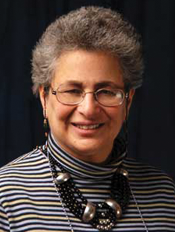 Vicki M. Bier has been appointed as the next editor-in-chief of Decision Analysis. Professor Bier is the former head of the Department of Industrial and Systems Engineering at the University of Wisconsin-Madison and is a well-respected scholar with a strong history of service to the field. She was awarded the Decision Analysis Society Ramsey Medal in 2016.
For her upcoming tenure, Bier does not foresee any radical changes to the overall current good health of the journal. She says she wants to continue publishing great papers on decision analysis, but perhaps “put more emphasis on recruiting applied work from practitioners, recruiting a younger and more diverse editorial board to help the field grow, and invite ‘perspectives pieces’ by [other] Ramsey winners.”
Bier has been a member of the Decision Analysis editorial board since its inception, and as such, has seen most parts of the editorial process, e.g., synthesizing conflicting reviews to yield a coherent decision and useful recommendations to authors. “The main challenge will be doing this ‘at scale,’ since as an associate editor I’ve typically handled fewer than 10 papers per year, while as editor-in-chief, I’ll be responsible for shepherding more than 100 submissions per year through the editorial process,” she says.
Bier has previously served as the president of the INFORMS Decision Analysis Society and is the first engineer to be name editor-in-chief of Decision Analysis. “Serving as editor-in-chief of Decision Analysis seems like a good way to give back to the field, which has given me a lot over the years – not only professionally, but also in personal decisions, such as whether to adopt my second child,” she adds.
Service Science
 The INFORMS Board of Directors has appointed Saif Benjaafar as the next editor-in-chief for Service Science. Professor Benjaafar is Distinguished McKnight University Professor, Industrial and Systems Engineering, University of Minnesota, and an internationally renowned leader in the field of operations and supply chain management. Benjaafar was a speaker on the panel on transportation at INFORMS’ inaugural Government & Analytics Summit in May, where he discussed recent work on collaborative consumption and the economic and environmental analysis of sharing economy. At UMN, he is the director of the Initiative on the Sharing Economy, a university-wide initiative particularly focused on peer-to-peer shared mobility. Relatedly, he is co-editing a special issue on “Sharing Economy and Innovative Marketplaces” for the INFORMS journal Manufacturing & Systems Operations Management.
“I believe I bring a broad perspective on the field with connections and understanding of both the business and engineering communities,” Benjaafar says. “I also bring an international perspective having worked in the U.S. and Singapore and having helped build large interdisciplinary programs with a strong focus on services in both places.”
Benjaafar noted that an important priority during his term as EiC is to improve the reach and access of Service Science. “The improved design of the journal website and the new online functionalities go a long way in supporting these priorities,” he says.
Benjaafar has served on the editorial boards of various journals, and has experience working with industry, including with many leading service organizations. He has extensively published, including in INFORMS journals MSOM, Management Science and Operations Research, and his research and teaching have been recognized by numerous awards, including the Harold Kuhn Award, MSOM Best Paper Award, George Taylor Distinguished Teaching Award and the IIE Fellow Award, among others.
Mathematics of Operations Research (MOR)
Katya Scheinberg, the Harvey E. Wagner Professor of Industrial and Systems Engineering at Lehigh University, will serve as the next editor-in-chief of MOR. A well-respected scholar with formative contributions in continuous optimization and optimization methods in machine learning. Scheinberg has been awarded the Lagrange Prize for influential research in continuous optimization by the Mathematical Optimization Society (MOS). She is co-editor of Mathematical Programming Series A, on the editorial board of SIAM Journal of Optimization, and editor-in-chief of a book series on optimization jointly published by SIAM and MOS.
According to Scheinberg, MOR is the only top-tier journal that assembles a strong editorial board with expertise in several disciplines including learning theory, optimization and stochastic models. “I hope to be able to encourage submission of strong theoretical work related to stochastic optimization in a broad sense. It is my opinion that interplay of randomness and traditional optimization will expand far beyond machine learning applications and in many ways will shape theoretical and algorithmic advances in optimization in the near future,” she said.
