


July 29, 2020 in Teaching OR/MS Practice
The Art of Teaching OR/MS Practice
Guitarist/award-winning professor emeritus riffs on life, lessons and learning.
SHARE: PRINT ARTICLE: https://doi.org/10.1287/orms.2020.04.08

Editor’s note: Every year, we invite the most recent recipient of the INFORMS Prize for the Teaching of OR/MS Practice to contribute an article to our annual special issue on “Innovative Education.” This year’s invitee, Patrick Noonan, answers all of our questions and more.
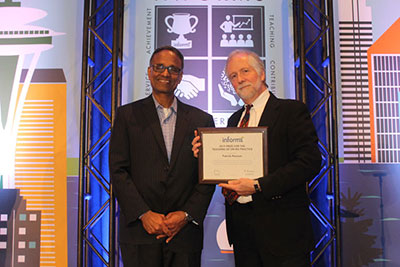
Then-INFORMS President Ramayya Krishnan (left) presents the
2019 INFORMS Prize for the Teaching of OR/MS Practice
to Patrick Noonan.
I am grateful for this opportunity to share career and life perspectives, an invitation that accompanied the 2019 INFORMS Prize for the Teaching of OR/MS Practice. First, my thanks to that selection committee. Second, my appreciation for the Emory colleagues who nominated me, and for the added endorsements from a few of the 7,000 or so students I have taught, as well as some participants in INFORMS’ own professional development courses.
As this article takes shape on my desk I can see, atop a stack of recently arrived mail, my Medicare card. I suspect my wife and grown children are planning a surprise for my milestone birthday, timed to start right after I log off from a full day of Zooming with my Duke WEMBA students. So, I am writing from an odd and unexpected vantage point. Retired … but far from idle. Able to pick and choose from a world of projects and work from home … but now virtually confined here. Invited to look back on past accomplishments as an educator … but as a way of extending that impact forward.
With that invitation came some excellent prompts, such as, “What are you most proud of?” That’s a useful and easy opener: I helped a generation of business students learn to think harder and better about their decision making! This recognition, after all, is for contributions to the practice, “bridging concepts and real-world complications,” as my nominator put it. As a professor, but also as a two-time dean (for MBA programs and for experiential-learning programs), I was pleased to get frequent validation along the way: 13 “distinguished educator” awards, six invitations to deliver the “Last Lecture,” and school-wide awards for educational innovation and service. But the cherry on top, again quoting my nominating letter, was that students hailed me “not despite analytical rigor, but because of it.”
“Did your pre-academic career in business help?” No doubt. My post-MBA, pre-Ph.D. years at a Big Three consultancy, as well as being co-founder and director of a boutique strategy firm in Boston, kept my feet grounded in real-world problems (and added street cred with students).
Secrets to Success
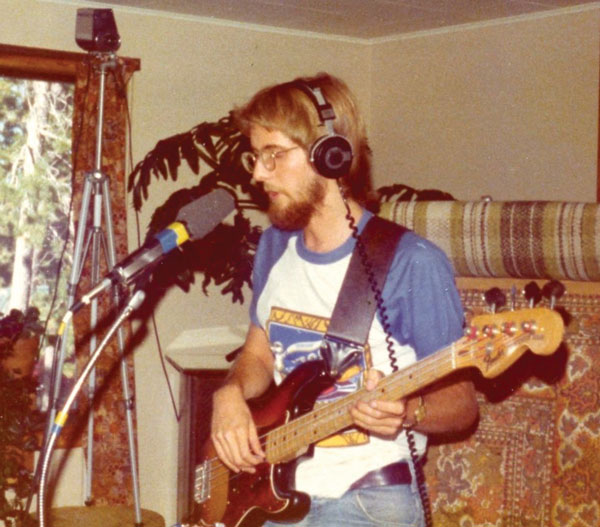 “What are some secrets to success?” That’s more complicated. Let me come clean about something: I’m just a guitar player. I’m serious! At my core, I’m a musician. That’s always been my self-identity. Sure, five decades ago, I stumbled into some other things that I happen to do well: problem-solving skills that help others to such an extent that I could eventually earn a living from them. Like most in this community, I always did well in analytical fields. By luck of geography, I learned to code in FORTRAN as a high schooler in 1970. In 1973, as a Yale freshman, I was fortunate enough to start crossing paths with the likes of Harvey Wagner and Eric Denardo (as well as computer scientists Alan Perlis and Roger Schank), and I crafted a custom degree in applied math. These methodologies were portals to insights about how the world works!
With that B.S. in hand, though, I became a professional musician (and environmental troublemaker). I composed, recorded and performed (maybe helped save a few whales) until late in my 20s, when I sold out and returned to Yale for my MBA. (Has anyone else transitioned from outfitting Greenpeace’s flagship “Rainbow Warrior” to summer associate at McKinsey in under 12 months?)
After four to five years in New York as a consultant, it was time to start a family, and not wanting to set up a cage match between “new partner” and “new father,” we moved to Boston for my Ph.D. program. The decision to leave business for academia was simple. My experience at the then-new Yale School of Management had been a joy and a revelation: management education could be transformational and empowering. People who wanted not merely to pass through the world, but to make things better wherever they were, could gain the tools for doing so and the motivation and inspiration to sustain them. I believed (a bit naively, in retrospect) that business schools could be creators of great social value, as well as economic value, as well as influence-multipliers for their faculties.
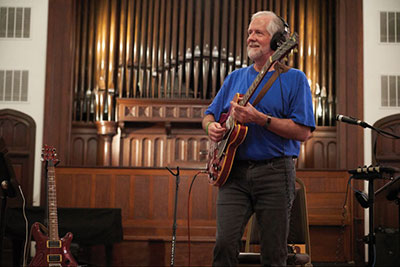
At his core, the author is a musician, whose guitar-playing career has spanned
five decades, from 1976 (right) to today (above).
The other part of that choice – to study under Howard Raiffa, John Pratt and others – proved the key one. Of all the programs where I was admitted, Harvard’s Ph.D. in decision science resonated most. The framing won me over. First, it was not about our methods, but rather our purpose. Prescription. Advice. Helping real-world people do better than they otherwise would in facing difficult decisions. Second, it provided the most “liberal arts” perspective of our field, obliging us to draw on economics, statistics, engineering and psychology, while encouraging us to think further about history, philosophy, law, clinical medicine and public health, policy and government, ethics, sociology and more. What the program lacked in integrating glue, it made up for in providing us diverse and relevant pieces to puzzle through on our own.
Lessons Learned
From that odd path – recording studios and eco-rabble to the West Point of Capitalism, and then through many years of writing, teaching, program building – I have learned some things that perhaps can resonate further with others. My advice to those who follow:
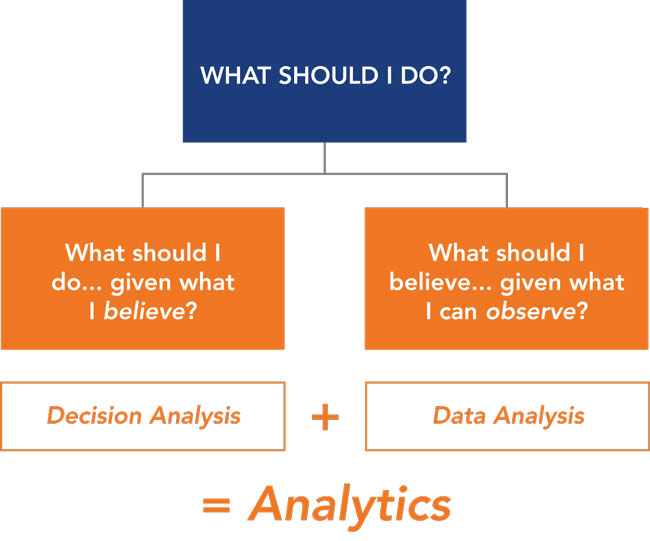
Decisions are fundamental particles. The question, “What should I do?” provides a unifying framework and motivation for everything one might consider “analytics.” Ralph Keeney reminds us that the only meaningful way we influence the world is through our decisions. We should go beyond mere lip service, and help people learn about decision-making from all angles: address practical implications of the psychology of judgment and choice, the heuristics our brains use and the traps we risk falling into. Give context to the data we seek and interpret. Master “meta decisions” – the decisions about how to decide – and in particular, learn to build processes and cultures of decision quality, as we are advised by Carl Spetzler, David and Jim Matheson, and others.
Listen for the wisdom. We’re soaking in it. Our OR/MS field has some of the best tools, true. But in the interstices of the methodology is the artistry. We know how to do things, discover things, invent things … let’s get out of the weeds regularly, and set our gaze on the bigger things. Set aside the operation of our models and connect with their purpose. For example, Ron Howard told us that the purpose of analysis is to “facilitate a high-quality conversation.” In Ralph Keeney’s “value-focused thinking” we rebalance our effort, investing more up front in thorough discussions of what we want and why we want it, and proactively creating new decision opportunities and options before building models to select among them. Steve Powell and Ken Baker, among others, have distilled some of the art of modeling, just as Peter Bell (and my earliest mentors at HBS) have distilled the art of turning a case study (an artifact) into a powerful “case method” (a way of doing).
Think out loud. Michelangelo once said, “The sculpture is already complete within the marble, before I start. It is already there. I just have to chisel away the superfluous material.” We have a way of reasoning and applying our intuition, developed over many years. There are lots of implicit frameworks and processes in what we do, even in how we structure a simple spreadsheet in anticipation of future application and insight. Our intuition about wherein lies the “sculpture” inside a problem is invisible to our students. We must model (pun intended) our ways of doing, regularly sharing our thought processes for others to hear.
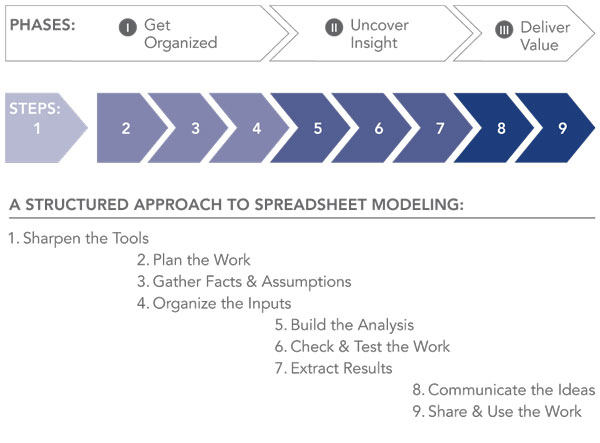
Build good scaffoldings. A related point: Students have a hard time connecting the dots. Instruction on individual tools, even done expertly, does not prevent novices from tossing a tool salad when they try to apply them. Even spreadsheet work is far more than a collection of tricks: It can be a platform for learning and internalizing a modeling process. Rather than handing out pieces and expecting them to integrate, we can give students road maps to use until they can internalize things.
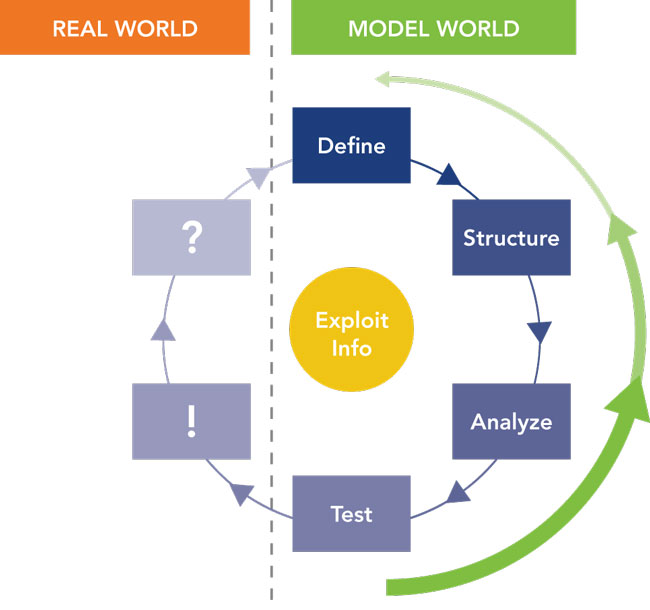
The magic is in the interfaces. Many have written about the difference between working in “model world” and “real world.” The most important challenges come when we cross those borders. In the formulation, we can help novices “untangle the spaghetti” of a case or real-world project by providing scaffolding for recognizing the type of problem, remembering the archetypal approaches to set them up, executing the proper analysis. In the interpretation phase, we can encourage them to make insightful conclusions from the outputs (keep asking “so what?”), and to connect them to action and change. Let’s not forget how many very smart people were predicting the fate of Challenger the night before its final launch, and how many equally smart people were not believing them. A correct answer is not itself completed work.
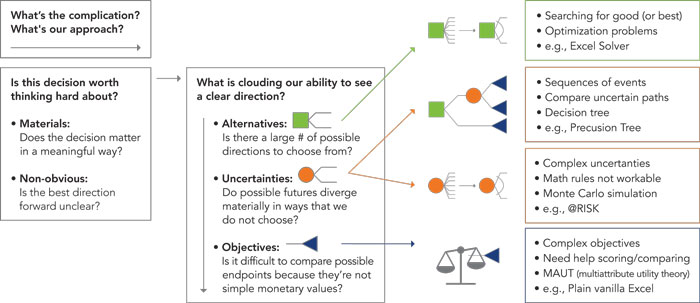
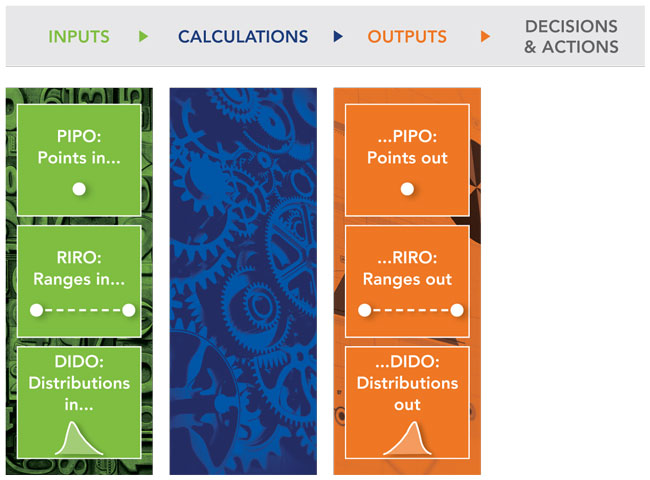
Everything you know is wrong. Modeling works best when it’s humble, in the sense of George Box’s “All models are wrong – some are useful.” Our models are intentional simplifications, and they’re of value when they add insight to our managerial judgment. To me, this means two things: First, good modeling is iterative. Howard Raiffa always advised starting with the simplest version of a problem that contains the features of interest and working incrementally from there. My students have learned this as “KISS it: Keep it simple … and start.” Second, the real fun, perhaps the locus of value for most modeling, is the “testing” phase. I use “sensitivity analysis” expansively. Of course, we need to factor in uncertainty and disagreement about numerical parameters (my students recall this as, “Point estimates are for suckers”), but we should revisit all our simplifying assumptions, including the appropriateness of risk-neutral EMVs, and whether we even need to proceed before obtaining more information. “Garbage in, garbage out” should become a motivating mantra, not just a glib dismissal of models.
Soft skills are hard. I’m a huge fan of real-world projects as capstones. I’m not a fan of “soft skills” as a way to describe the essential methods of practice that help unleash the power of our “hard” methods. We should teach those meta tools, the processes and principles of high-impact problem-solving in the real world. These are difficult to teach, and as craft skills they cannot be easily learned or quickly mastered. But working with problem-owners, developing the tools to define and decompose a problem, planning a team’s work (and then working the plan), developing insights and recommendations, and communicating in ways that give others the clarity and confidence to make a decision … these are indeed essential! Sure, we can give students a chance to experiment, but let’s not throw them into the Atlantic and expect them to invent the Australian Crawl on their way from Southampton to New York.
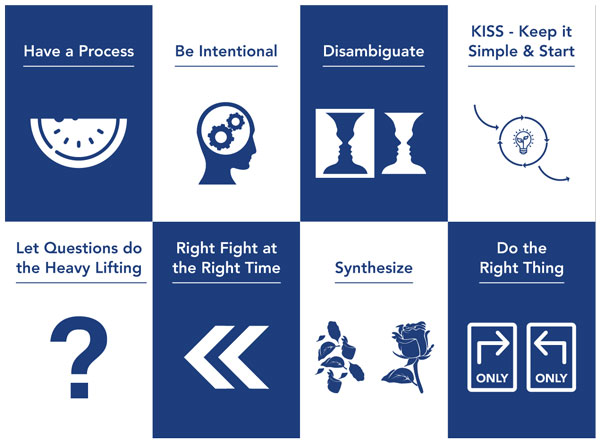
Telling is not teaching, and listening is not learning. Much has been written about the value of active learning, and I agree. Times require us to be even more innovative in our virtual and hybrid classrooms, and I’ve been fortunate to discover a few exciting tools, including Miro and LucidChart for facilitating rich, real-time collaboration using visual representations and inclusive conversations. My Duke students also appreciate my short video explainers as precursors to (perhaps substitutes for) reading my textbook.
Make a Difference in Others
As I said, I’m just a guitarist. But I did find, in our field of analytics, the opportunity to make a difference in others. To help people tackle problems better than they might. To facilitate many “high quality conversations” about important decisions.
Perhaps remembering who I am at the core, my own essential humanity, made me more effective and successful. I don’t know, but I would encourage all my colleagues to retain their unique individual view, to remember their responsibilities as humans, and share these problem-solving gifts we have (and the privileges of the megaphones we have been entrusted).
Patrick Noonan is Professor in Practice, Emeritus, at Emory University’s Goizueta Business School in Atlanta.
([email protected])