


October 14, 2020 in President's Desk
Grand challenges, sustainable development goals and disparities
SHARE: PRINT ARTICLE: https://doi.org/10.1287/orms.2020.05.17

In 2015, the United Nations established 17 sustainable development goals (SDGs) and an agenda to achieve the goals by 2030 [1]. The SDGs also align with the National Academy of Engineering’s Grand Challenges for Engineering for the 21st century [2]. The goals focus on poverty and economic growth, hunger, health and well-being, education, inequalities, affordable and clean energy, water and sanitation, climate, etc., calling for action to “end poverty, protect the planet, and improve the lives and prospects of everyone, everywhere.” According to the 2019 report, progress toward SDGs has already been lacking in several areas, and 2020 was expected to “usher in a decade of ambitious action to deliver the goals by 2030” [3].

The COVID-19 pandemic made these challenges grander than ever, further slowing down the progress. Racial and ethnic inequities in access to healthcare and education, as well as the impact of adverse health outcomes were magnified. Gender inequities also reached new heights, as women and girls have been disproportionally affected across social, economic and political dimensions, carrying the burden of balancing family care and work, while facing increased gender violence, reduced access to healthcare and education, and economic impact [4].
The worldwide pandemic has also highlighted numerous new possibilities toward progress, as well as the importance of combining technological solutions with a “systems” perspective, behavioral science and a human-centered approach. The effectiveness of various measures such as face coverings, hand hygiene and physical distancing were established by science and medicine, supported by technological solutions such as testing and tracing. However, logistics and supply chain challenges in implementation, as well as individual behaviors and social attitudes, complicated and delayed the COVID-19 response and recovery efforts.
The SDGs and other ongoing grand challenges, as well as major disasters and health emergencies such as COVID-19, with their complex nature and reliance on limited resources, present numerous opportunities for our INFORMS community to make a positive impact on humanity and the planet. While we think about various current and future challenges, it is important to consider the relationships between technology, society and organizations in the next decade, and how the emerging technologies might impact the way we live, work, learn and educate [5]. Amid the pandemic, many INFORMS members have been involved in “recovery” efforts and associated complex decisions at their own organizations, such as reopening college campuses or companies adjusting or revamping their operations. Members have also continued to contribute to the broader knowledge and decision-making with their research and thought leadership during the pandemic. Major themes that were highlighted by businesses, governments, researchers and other organizations include: (i) balancing costs and efficiency with resilience, responsiveness and flexibility; (ii) visibility, collaboration and coordination across multiple stakeholders; (iii) the need for social and behavioral science combined with medical and technological solutions; and (iv) continuing challenges in diversity, equity and inclusion. There is probably no better time to start interdisciplinary collaborations within our community and reaching out to other fields.
This year has been challenging for INFORMS and many other professional organizations, urging us to respond and adapt at a fast speed while we strategically think about various areas such as journals, conferences and other offerings. The incredible efforts and commitment of our INFORMS staff, volunteers and members enable us to stand strong and move forward together in solidarity. Special shoutout to our first cohort of INFORMS Diversity, Equity, and Inclusion Ambassadors and many others in our community for their efforts toward a more inclusive and equitable society for all.
I am truly grateful to be part of this amazing community and looking forward to our exciting virtual get-together at the 2020 INFORMS Annual Meeting during Nov. 7-13. With my best wishes.
References
- https://www.un.org/sustainabledevelopment/sustainable-development-goals/
- http://www.engineeringchallenges.org/
- https://unstats.un.org/sdgs/report/2019/
- http://hdr.undp.org/en/content/gender-inequality-and-covid-19-crisis-human-development-perspective
- https://www.delltechnologies.com/content/dam/delltechnologies/assets/perspectives/2030/pdf/SR1940_IFTFforDellTechnologies_Human-Machine_070517_readerhigh-res.pdf
Pinar Keskinocak is the William W. George Chair and Professor in the H. Milton Stewart School of Industrial and Systems Engineering and director of the Center for Health and Humanitarian Systems at Georgia Tech. Previously, she has served as the College of Engineering ADVANCE Professor. She is an INFORMS Fellow and past-president.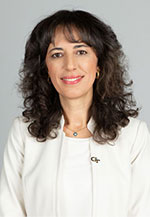
([email protected])