February 8, 2023 in Student Perspectives
Operations Research for Social Good: What to Expect When Working Outside of Industry and Academia
SHARE: PRINT ARTICLE: https://doi.org/10.1287/orms.2023.01.12

At the 2022 INFORMS Annual Meeting in October, several students expressed interest in conducting research within nongovernmental organizations (NGOs) during and after graduation. The need for operations research and management science expertise within NGOs is considerable.
Students may want to partner with an NGO for research for a variety of reasons, from desire to work in an NGO once they enter the labor force to fulfillment of graduation requirements to personal interest in the issues that a given organization is addressing. What opportunities are available and what should early-career researchers know when getting involved with NGO work?
For first-person insight into NGO work, we spoke with Abhijeet Mulgund, a mathematics Ph.D. student at the University of Illinois Chicago [1].
Opportunities at DSSGx
Last summer, Abhijeet was at the University of Warsaw to participate in the 2022 DSSGx (Data Science for Social Good) Fellowship program. In this program, students are paired with NGOs and/or local government authorities and work over the course of 12 weeks to formulate a problem relevant to a given organization and apply data science principles to address it.
The program brought together a diverse group of 15 students who were divided into different projects. The projects were organized in the couple of months leading up to the program. In the preliminary process, organizations submitted applications proposing research ideas, including problems they wanted addressed, questions they wanted answered and data they had available. Technical managers then parsed through the applications to identify projects that were well defined enough for the student fellows to bring to relative completion by the end of the 12-week program.
Each participant was provided a list of the projects that they could join and instructed to rank them in terms of personal interest. The 2022 DSSGx had four options:
- Predicting Students at Risk of Becoming NEET (Not in Education, Employment or Training)
- Child Poverty
- Youth Homelessness
- Targeting Residential Areas in the West Midlands for Retrofitting
(Full summaries of the projects and final presentations are available at the DSSGx website [2].)
Abhijeet joined the DSSGx program without any prior experience in projects related to data science or social good. After graduating from Rice University with bachelor’s degrees in computer science and mathematics and interning and working as a software engineer for a few years, Abhijeet felt called back to school and research and saw DSSGx as a venue where he could try something new. He admitted that, in his previous role as a software engineer, it sometimes felt like he “was just working to make other people more money.” He sought involvement in projects with more direct impacts on social welfare.
To that end, engaging in work that had some nonmonetary impact, as well as pursuing new challenges and gaining new skills, Abhijeet elected to work on the project involving students at risk of becoming NEET. NEET is an acronym that originated in the United Kingdom and refers to youth between ages 16 and 24 who are “not in education, employment or training.”
Abhijeet and his team collaborated with the Buckinghamshire Council, a local authority presiding over the ceremonial county of Buckinghamshire in England, and the EY Foundation, an independent charity focused on supporting youth with low-income backgrounds on the road to employment. Both bodies wanted to identify risk factors of a student becoming NEET and determine whether the risk factors used at the time were, in fact, good indicators. This information is important so that they can more effectively distribute resources to the students who need them most.
Using boosted decision trees, the team found that students who had a medium level of support, a large number of school absences and/or mental health challenges were at particular risk of becoming NEET. Meanwhile, participation in the free school meals program, which the EY Foundation had used as a risk indicator of becoming NEET, was not so significant – in their analyses, this factor ranked #20.
A main hindrance throughout the 12-week program for Abhijeet and his team members was data availability. “In big tech companies, data is provided almost immediately,” says Abhijeet. In contrast, with the sort of research featured at DSSGx, “things are a lot slower. You have to be prepared for there to be a slow turnaround when it comes to data requests.” Within local governments and NGOs, data may be manually entered into a spreadsheet by an employee or volunteer and thus not quickly accessible or particularly polished. In fact, the team did not receive all of the data for their project until the eighth week!
Advice for Students and Researchers
Despite the challenges, Abhijeet enjoyed his experience as a DSSGx fellow and is considering applying to the program again in future summers to serve as a technical mentor.
To students and researchers considering this kind of work, Abhijeet provides two pieces of advice: First, don’t be picky about where you start. Just start somewhere. Especially if you haven’t worked with nonindustry, nonacademic agencies before, gaining and learning from experience is key.
Second, make a point to build connections with people from a variety of backgrounds and in a variety of specialties. By stepping outside or popping one’s bubble once in a while (for Abhijeet, who completed a master’s degree in mathematics and is working through the first year of his Ph.D. program, his is a math bubble that primarily encloses faculty members and other Ph.D. students), your eyes can be opened to a much wider range of opportunities.
References
- Abhijeet Mulgund, personal communication, January 13, 2023.
- https://warwick.ac.uk/research/data-science/warwick-data/dssgx/dssgx2022/projects/
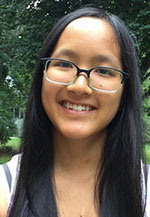
Abigail Lindner is a recent graduate of Regent University, where she earned a B.S. in mathematics. She is currently enrolled as a Ph.D. student in the mathematics program at Worcester Polytechnic Institute in Massachusetts. Her research interests lie in the nonprofit sector and theoretical ecology. Abigail has served as an editorial staff writer with OR/MS Tomorrow since the spring of 2020.