February 1, 2023 in Data Collection
Unlocking Business Benefits from Production-Line Data
SHARE: PRINT ARTICLE: https://doi.org/10.1287/LYTX.2023.01.10
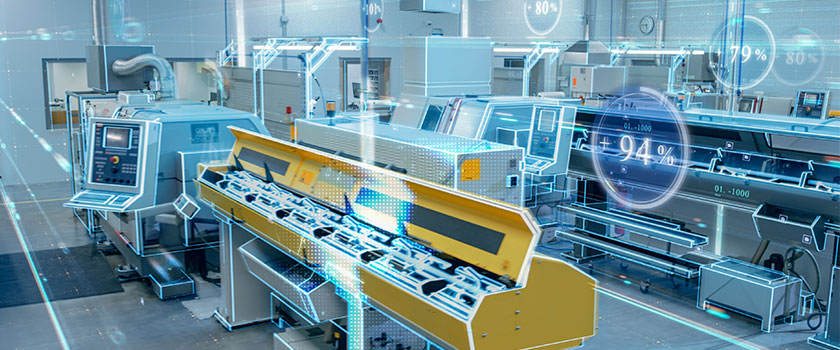
Data is everywhere on today’s factory production lines. But all too often, its use is restricted to detecting poor-quality products that need to be rejected or reworked. Even if any of the collected data is shared, it is likely to be limited to information such as whether a unit is running correctly or there are any signs of a fault.
But data gathered from end-of-line inspection technology on the production line can tell a valuable story, yielding real-time insights into production that can be used to optimize processes to increase efficiency and reduce costs. The dramatic decrease in the costs associated with data collection, storage and analysis – as well as tools such as machine learning – means this “fast-moving” data can now be captured and analyzed like never before.
Production-Line Data
End-of-line inspection technology, such as checkweighers, metal detectors, X-ray systems and vision systems, has been a standard part of factory production lines for years. But the data used to make the binary decision of whether a product is good or bad is typically discarded immediately afterward. Now, however, there is a golden opportunity to unlock valuable business benefits from this information.
Capturing each measurement made by a checkweigher, for example, enables trends to be identified before a problem becomes a major issue. If four filling machines are involved in producing bags of animal feed pellets and a fault means that one bagger consistently produces a product that is overweight, when analyzing the batch averages across the four machines, the high-level data does not suggest anything is out of range. However, if the individual weights are analyzed, a pattern emerges, allowing the faulty machine to be identified and the issue resolved.
Similarly, in the case of a chocolate enrober coating multiple lanes of chocolate bars, if the flow rate is nonuniform across the belt, then the chocolate layer on the central bars will be thicker than that on the outer bars. Identifying and rectifying this issue allows for the coating to be run closer to the optimal level, ensuring all bars meet the required weight. Without this insight, the enrober will be adjusted to ensure the outer bars meet the minimum weight, resulting in a “giveaway” cost of the additional chocolate on the inner bars. Data at a batch level will not resolve this variation – but data on individual weights will.
In addition, if there are missing wafers in some of the bars, they will be rejected by X-ray inspection technology because it will detect that they are solid chocolate. If one of the molds or lanes has an issue, that particular lane might have a higher reject rate. However, the overall reject rate may not give cause for concern, so the problem will not be addressed. If the process control system is supplied with statistics for each lane, however, the situation can be constantly monitored, and the alarm raised before any issue becomes critical.
Vision systems are often used to ensure labels are properly applied – something that is of particular importance if key allergen information is present. Additionally, weight and price are checked, ensuring the information has been correctly and legibly printed. Linking a weigh price labeler to a vision system is a simple example of the power of linking equipment. By analyzing the contrast of the print, a warning can be generated if the print head is failing. This allows for preventive maintenance to occur, rather than waiting until the print quality falls below an acceptable standard, at which point an unplanned stoppage will be required.
X-ray inspection systems, at their most basic level, detect foreign objects such as metal, stone or glass contaminants. Additionally, the X-ray image can be used to verify product integrity. As with the checkweigher, frequent product rejections can indicate an issue with upstream equipment. However, X-ray inspection can probe deeper into the specific issue. Take, for example, a four-pack of dessert pots. If one of the filler valves has become partially blocked, one of the four pots will be repeatedly underfilled. This underfill may not be sufficient for a checkweigher to identify the overall product as being underweight. But, by measuring the mass of each pot individually using X-ray zoned mass inspection, the four individual masses can be reported to the supervisory system and any deviations from the production norms can be rapidly identified.
In a connected environment, the frequency of breakages in products such as boxes of cookies can also be monitored and flagged up, with warning thresholds set lower than automatic reject thresholds. If a misaligned tool is causing a high proportion of cookies to be broken when placed into the packaging, data from X-ray inspection technology can highlight the issue before customer complaints start flooding in.
In addition to collecting a more granular result for quality inspection, supplementary metadata about a product can be collected. For example, an X-ray inspection system may be used to determine the correct number of components are in a container. This, combined with a checkweigher, ensures that the correct package weight is maintained, and the product is supplied as expected. However, it may be of interest to the manufacturer to know what the average size distribution of the products is.
With a pack of four apples, for example, the total weight and number of apples is controlled, and any packs found to be nonconformant are rejected. But a pack containing three small and one large apple, while acceptable, is not as desirable as four similarly sized apples. Therefore, the size of each apple can be recorded by the X-ray system, and this can be made available for analysis, even if the data is not solely used to make a rejection decision. It may be decided at a later date that, in fact, this should be made a criterion for rejection, at which point historic data is available to allow a data-driven decision to be made regarding acceptable tolerances.
Traceability is another key issue in which reliable data is vital. If, for example, there is an increase in the rate of bone contamination in packs of chicken breast fillets, it can be difficult to determine which supplier provided the nonconformant material – until now, this has been a largely manual, time-consuming process. If, however, the details of each unique inspection are automatically fed back to a central database that already has information on which starting batch was used and which intermediate equipment the product had passed through, it is much easier to determine how and why issues have arisen.
Hidden Value
As we move toward a more connected factory, it becomes possible to label a product with details of not only where the raw materials came from but also which mixers, ovens and packaging machines were used. In the event of having to place a product on hold – or even recall – this increasingly granular level of detail allows the scale of the disruption to be reduced.
As the quantity of data increases, so does the value of combining data from a variety of sources. Does the operation of one piece of equipment affect the behavior of a neighboring machine, for example, leading to a nonconformant product? By bringing a broad range of data into a single location, in real time, temporal and environmental factors can be more easily correlated with issues.
As more and more equipment are connected, the large amount of interconnected data allows for unprecedented levels of analysis and identification of potentially complex root causes to problems. This interconnected data can be harnessed to reveal unprecedented hidden value in the production line.
Richard Parmee is the founder and CEO of X-ray inspection technology pioneer Sapphire Inspection Systems.