January 9, 2024 in Food Delivery Platforms
Decoding the Restaurant’s Channel Dilemma Under a “Floor-Price” Model in the Ever-Growing Presence of Online Food Delivery Platforms
SHARE: PRINT ARTICLE: https://doi.org/10.1287/LYTX.2024.01.03
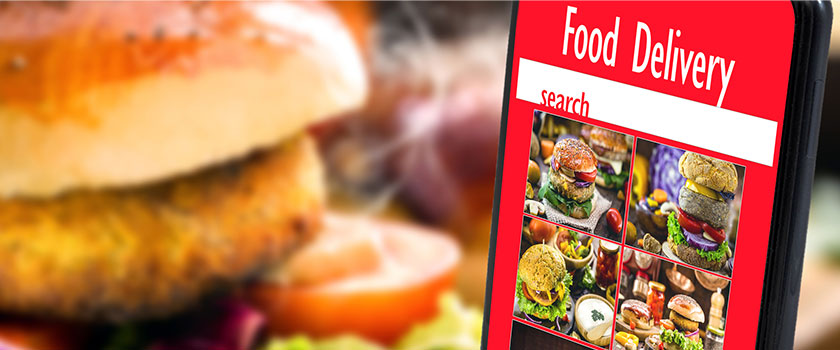
Not long ago, ordering food from a restaurant would have involved rummaging through a stack of menus and making a phone call. Now, in the age of online food delivery platforms, ordering food is just a few taps on your smartphone. While online food delivery platforms have caught on among consumers and continue to experience double-digit growth (CAGR 2024-2028 of 10.06% [1]), these platforms have upended the decades-old business model of restaurants globally.
The New Normal
For decades, restaurants largely relied on dine-in and take-away customers for its business. Although some did provide doorstep delivery, dine-in remained the core business. With online food delivery platforms entering the scene, restaurants had a third channel to consider. Delivery platforms, at first glance, seemed to be a boon for restaurants. They offer an easy way to expand into doorstep delivery. The large user base touted by the platforms opens up a larger market with greater reach for restaurants. In addition, restaurants could increase their own kitchen utilization even when dine-in was closed. These factors were on full display during the COVID-19 restrictions when restaurants relied heavily on platforms to stay afloat. Despite the obvious upsides to enlisting on platforms, the often high delivery fees and commissions make restaurants apprehensive toward engaging on platforms. In India, for instance, commissions can be as high as 27%, with restaurants significantly marking up their prices on the platforms. In other instances, customers end up paying significantly large delivery fees to cover the costs. Despite some of the contentious downsides, food delivery platforms have grown leaps and bounds, and restaurants have followed suit enlisting on them. Consumers have also gradually developed a preference for doorstep delivery because of its convenience, and the proportion of consumers continues to grow with the increasing accessibility. Despite changing consumer tastes and the compelling nature of delivery platforms for restaurants, the decision to enlist and the accompanying pricing decisions should be well guided considering the various factors at play.
The Floor-Price Model
Restaurants joining delivery platforms typically pay a certain commission of the total order value to the platform. These commissions can be quite high and lead to significantly inflated food prices or high delivery fees. Such an arrangement inadvertently affects consumers who end up paying these higher prices. Alternatives such as fixed fees for restaurants are not optimal either. Such revenue models therefore can deter restaurants from participating on delivery platforms.
Acknowledging such apprehensions, we propose a “floor-price” model along the lines of Feldman et al. (2023) [2] and refine it further. The floor-price model protects the interests of both restaurants and platforms and makes for healthier engagement. In this setup, platforms establish their own prices, whereas restaurants define a minimum price or a “floor price” that platforms can ask from consumers. This guarantees that platforms won’t undermine restaurant prices, while granting platforms the authority to set prices within their domain. Such an arrangement ensures that restaurants get a fair price and platforms have the autonomy to set prices accordingly to support a healthy partnership.
In practice, any restaurant could consider dine-in and doorstep delivery services for its business. Until recently, restaurants had to provide doorstep delivery services on their own (i.e., restaurant delivery), which involved considerable investments. Restaurants can now consider delivery platforms as a feasible delivery format (i.e., platform delivery). Therefore, hypothetically, a restaurant now has three relevant channel scenarios to consider: (1) restaurant offers dine-in and restaurant-delivery services; (2) restaurant offers dine-in and platform-delivery services; and (3) restaurant offers dine-in and both restaurant- and platform-delivery services.
Factors driving this decision at the restaurant level include the restaurant’s own dine-in and kitchen capacity. Further, the perceived quality of its food by consumers in both dine-in and delivery services (under both formats) is another major determinant of its demand from each channel. A restaurant is therefore confronted with the task of strategically determining its most advantageous channel choice – a decision influenced by its market positioning in relation to consumers and its consideration of pertinent factors at the restaurant level. The floor-price model serves as a tool to unravel this complex predicament for restaurants across various scenarios, concurrently accounting for the restaurant’s dine-in and kitchen capacities to inform its final choice.
In the scenarios detailed next, the restaurant engages with the delivery platform in scenarios 2 and 3. As previously mentioned, the restaurant depends on revenue from its dine-in and delivery services. Consumers, meanwhile, are strategic and usually differentiate between the dine-in services in terms of quality, leading to the products across its two services (and delivery formats) being vertically differentiated. The restaurant prioritizes its dine-in services over its delivery services. The restauranteur and platform price their services in a way to clear the entire market – i.e., they set a market clearing price. Therefore, for a restauranteur, any kitchen capacity would first be prioritized for its dine-in services, with the remaining being made available for its delivery services across restaurant and platform deliveries. Given this arrangement, doorstep delivery volume beyond the available kitchen capacity would be delayed, leading to penalties for the restaurant and consequently for the platform. The restaurant and platform profits under such circumstances would be given as:

where ,
, i = 1 for restaurant delivery and 0 otherwise, and j = 1 for platform delivery and 0 otherwise.
In the above, are the dine-in, restaurant-delivery and platform-delivery prices, respectively, and fp is the floor price charged by the restaurant.
are the market demand for the dine-in, restaurant-delivery and platform-delivery services, respectively. The restaurant’s kitchen and dine-in capacities are represented by K and
, respectively. The penalties for delays for the restaurant are given by vr and vd, and the penalty for the platform is vp, whereas cr, cd and cpd are costs incurred by the restaurant and cp is cost incurred by the delivery platform. Under the floor-price arrangement, while engaging with the platform, the restaurant and platform enter into a sequential Stackelberg game, with the restaurant acting as the leader setting the floor price and the delivery platform acting as the follower, consequently setting the platform price. Further details associated with the scenarios are as follows.
Scenario 1: Restaurant Offers Dine-in and Restaurant Delivery
The restaurant in this case provides dine-in and its own delivery services without engaging a delivery platform, thereby having full control over the dine-in and delivery prices. As previously mentioned, kitchen capacity is prioritized for dine-in services. Any resulting delays for delivery customers are restaurant-compensated, translating to penalties for the restaurant. Here, a restaurant’s dine-in and kitchen capacity are major drivers to pricing. Under Scenario 1, the restaurant’s revenue would arise from its dine-in and restaurant-delivery services. However, it would also face penalties for the volume of delivery orders delayed. The restaurant’s decisions in this scenario would be to determine its optimal dine-in and delivery-service prices.
Scenario 2: Restaurant Offers Dine-in and Platform Delivery
In this scenario, the restaurant engages a platform for its doorstep delivery services in addition to providing dine-in services. The platform autonomously decides the platform price while the restaurant implements its floor price on the platform. With the restaurant setting the floor price first, the restaurant and platform engage in a sequential Stackelberg game to determine the optimal prices and eventually the optimal floor price.
Scenario 3: Restaurant Offers Dine-in and Restaurant and Platform Delivery
In Scenario 3, the restaurant offers doorstep delivery through both its own service as well as a delivery platform. Therefore, consumers preferring delivery can pick their delivery channel. Again, the platform has the autonomy to set its own delivery price on the platform while obeying the floor price set by the restaurant. The restaurant, on the other hand, sets its own dine-in and delivery price. The restaurant in this scenario prioritizes its own delivery customers over the platform’s. Therefore, the restaurant may incur penalties from both its own delivery and platform customers. The restaurant and platform again engage in a sequential game, and the restaurant and platform also engage in a simultaneous game as they now compete in the doorstep delivery services. The restaurant and platform determine the optimal prices and optimal floor price.
Decoding the Dilemma
For all the scenarios, the market demand of the restaurant and platform depend on price and the position of the restaurant in the market. Consequently, for restaurants faced with this channel dilemma, our analysis shows that the decision to engage with a delivery platform and the suitable channel depends largely on the restaurant’s own market position in terms of perceived quality for its dine-in and delivery services. For a restaurant serving through both delivery channels, it is necessary to offer similar quality levels across both restaurant- and platform-delivery channels. If, however, the restaurant is able to adequately reduce the differentiation between its dine-in and restaurant delivery service, it should consider exclusively offering restaurant delivery. This is especially the case with main-street restaurants, which prefer offering their own delivery services. If, however, a restaurant’s dine-in and delivery services have a reasonably high differentiation, exclusively offering platform delivery would be prudent. Furthermore, our analysis suggests that engaging delivery platforms may indeed be beneficial for a restaurant’s dine-in traffic.
As we carried out our analysis for all three scenarios, our floor-price model provided some important insights to guide the restaurant-platform interaction. A restaurant’s kitchen capacity was a major determinant of its prices in both channels and can be a source of great competitive advantage. Investing in additional kitchen capacity can be a prudent decision for a restaurant regardless of whether it engages a delivery platform. For platforms, such restaurant-level factors affect its own performance and make a strong case for platforms to invest in their restaurant partners.
References
- https://www.statista.com/outlook/dmo/online-food-delivery/worldwide#:~:text=Revenue%20in%20the%20Online%20Food,US%242tn%20by%202027
- Feldman, P., Frazelle, A.E. and Swinney, R., 2023, “Managing relationships between restaurants and food delivery platforms: Conflict, contracts, and coordination,” Management Science, Vol. 69, No. 2, pp. 812-823.
Soumyadeep Kundu is a Ph.D. candidate at the Indian Institute of Management Kozhikode in the Quantitative Methods & Operations Management area. Ashutosh Sarkar is a professor at the Indian Institute of Management Kozhikode in the Quantitative Methods & Operations Management area.