September 24, 2024 in Sustainability
The Price Dilemma in Sustainable Products: A Barrier to Adoption
SHARE: PRINT ARTICLE: https://doi.org/10.1287/LYTX.2024.04.03

Key Takeaways
- For businesses, adopting sustainable practices is essential for future growth, customer loyalty and attracting talent, especially among younger employees. However, the challenge of pricing sustainable products presents a unique business situation.
The modern business landscape is transforming as sustainability takes center stage in consumer preferences and corporate strategies. Sustainable products, characterized by their reduced environmental impact, ethical sourcing and social responsibility, are becoming increasingly popular as consumers prioritize conscious consumption. The growing adoption of sustainable products is driven by a variety of factors that extend beyond traditional purchasing considerations. Consumers are drawn to sustainable options by ethical considerations, environmental consciousness, concerns for personal health and safety, and a desire to support businesses that adhere to responsible practices. Choosing sustainable products allows consumers to align their personal values – the promise of reduced environmental impact, enhanced health outcomes and support for ethical practices – with their purchasing behavior, infusing these products with the symbolism of their beliefs and convictions. However, a significant barrier to the widespread adoption of sustainable products remains: price. Pricing these sustainable products without considering their unique attributes can be challenging, as it fails to effectively convey their inherent value.
revealed that a significant number of consumers are increasingly prioritizing sustainable products. According to the study, 64% of consumers have reduced their use of single-use plastics, and 39% have cut down on their overall consumption to lessen their environmental impact. Many are willing to pay more for sustainable products, with 55% ready to spend extra on brands committed to social and environmental causes. Younger generations, particularly millennials and Gen Z, are leading this shift, with about half prioritizing purchases from value-aligned brands. For businesses, adopting sustainable practices is essential for future growth, customer loyalty and attracting talent, especially among younger employees. However, in the same study, 41% of consumers cited cost as a major concern for not making sustainable purchases.
Given the conundrum of willingness to pay because of associated value and the reluctance to act on that because of cost, the challenge of pricing sustainable products presents a unique business situation. The art of pricing lies in achieving a harmonious equilibrium between the product’s intrinsic value and the consumer’s willingness to pay the supplementary cost. The pricing strategy must seamlessly encapsulate the perceived advantages of sustainability, forging a link between the elevated price and the tangible and intangible benefits the product imparts, while ensuring that the premium over the price of the conventional product aligns with the product’s perceived value. Successful pricing strategies stimulate consumers to regard the incremental expenditure as an investment in their own well-being, ethical principles and environmental mindfulness.
The Price Barrier and Its Implications
The pricing dynamics of sustainable products reveal a significant challenge in aligning consumer demand with economic feasibility. Typically, sustainable goods are crafted to minimize environmental and social footprints, yet they come at a premium – often 75%-85% higher than their conventional counterparts. This cost differential varies widely across product categories, with sectors like fashion, beauty and health exhibiting markups surpassing 200%. For instance, sustainable lotions and fashion items from brands like H&M or Stella McCartney command markups between 150% and 210%, underscoring the disparity within the market
Food items span a broad range of markups, from 30% to 140%, influenced by factors such as production methods and product type. Animal-based products like meat and dairy tend toward higher markups, whereas processed vegetable products can see markups triple those of their raw counterparts. Despite consumers’ growing willingness – now at 80% globally – to pay more for sustainability, affordability remains a significant hurdle. Many shoppers, while supportive in principle, find the current price premiums prohibitive, revealing a persistent gap between intent and action known as the “green gap.”
This reluctance to pay a premium for sustainability creates a challenge for retailers. Stocking sustainable products that do not sell can lead to inventory losses, making retailers cautious about dedicating shelf space to these items. Consequently, the limited availability of sustainable products in stores reduces consumer exposure and accessibility, further discouraging adoption. In the same by Deloitte, 26% of the customers cited that they don’t make sustainable purchases because either they are unavailable or the lead times to obtain those products are longer than the customers are willing to wait. In short, the high price of sustainable products creates a feedback loop that hampers their adoption and monetization. Here’s how this loop works:
- High prices: Sustainable products are priced higher due to increased production costs and smaller economies of scale.
- Low consumer adoption: Higher prices deter a significant portion of consumers from purchasing sustainable products.
- Limited retailer stocking: Due to lower sales volumes, retailers are less inclined to stock sustainable products, fearing inventory losses.
- Reduced availability: Limited stocking reduces consumer exposure and accessibility to sustainable products.
- Sustained high prices: The lack of economies of scale keeps production costs and prices high.
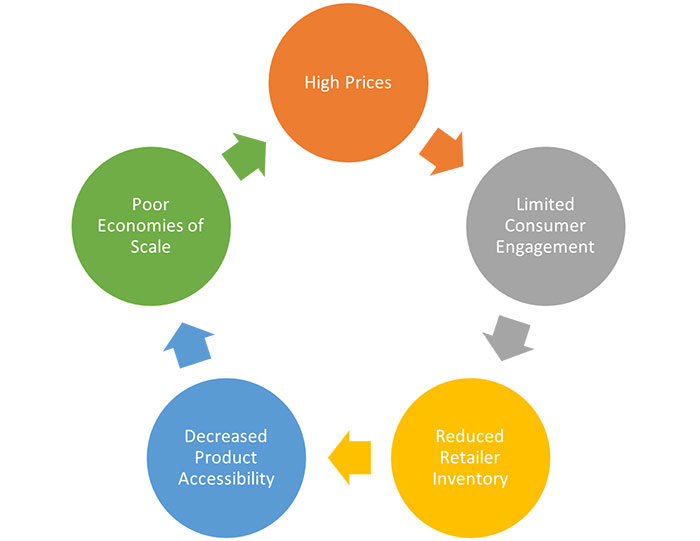
Breaking this loop requires a strategic approach to pricing that balances the need to be profitable with the goal of increasing consumer adoption. To bridge the green gap, strategies are needed that balance pricing with consumer expectations, potentially leveraging smaller incremental markups as a more palatable compromise for mass market acceptance. By addressing these challenges, industries can foster a more inclusive approach to sustainability that aligns economic viability with environmental and social stewardship.
The True Cost of Sustainability
The primary driver of sustainability costs lies in the initial stages of the value chain, specifically within production. This encompasses sourcing raw materials, processing and manufacturing – critical steps that heavily influence both ecological and social impacts. For instance, the production of a T-shirt involves stages such as cotton cultivation, weaving, dyeing and assembly, collectively setting the foundation for the product’s sustainability profile. Conversely, downstream stages such as wholesaling and retailing contribute comparatively little to sustainability metrics.
Analyzing cost distribution across various sectors reveals that production typically constitutes 10%-30% of total expenses for conventional products. For sustainable alternatives, this figure includes several markups:
- Production markups account for increased costs associated with organic materials, including higher labor expenses, lower crop yields, and additional space and time requirements for animal rearing.
- Certification markups stem from the compliance and documentation required for organic or fair-trade certifications.
- Volume markups arise from economies-of-scale challenges in which lower production volumes of organic goods necessitate higher per-unit costs.
Although production exerts the most significant influence on sustainability, accounting for a modest fraction of final product costs (10%-30%), higher markups in subsequent stages – largely unrelated to sustainability – inflate prices as products move toward consumers. For example, other brand owner costs beyond production range from 10% to 25%, whereas wholesaler and retailer charges escalate to 60%-65% – primarily driven by the costs that are multiplying markups of a relative margin.
The GBB
Implementing a “Good, Better, Best” (GBB) pricing strategy can strategically address the issue of multiplying markups in the supply chain for sustainable products. This method involves offering consumers multiple product options at different price points, each reflecting varying degrees of sustainability and quality. By clearly defining tiers – good (conventional), better (sustainable), best (brand name and sustainable) – distributors and retailers can guide consumer choices toward more sustainable options and ensure that the business operation simultaneously maximizes profit and revenue.
To enhance efficiency, scaling up sustainable production can reduce per-unit costs over time. Collaboration across the supply chain – from producers to retailers – can streamline operations and optimize costs associated with sustainable practices. By continuously refining the GBB strategy based on consumer feedback and market trends, businesses can maintain competitiveness while promoting broader adoption of sustainable products, thereby mitigating the inflationary effects of markups downstream in the supply chain.
Amazon’s Strategy with 365 by Whole Foods
Amazon’s acquisition of Whole Foods in 2017 marked a significant shift in the grocery retail landscape. One of the key strategies Amazon used to drive the adoption of sustainable products was through its private label, 365 by Whole Foods Market. Whole Foods has effectively leveraged pricing strategies to make sustainable products more mainstream, thereby driving their adoption. The brand has achieved this by positioning the prices of its sustainable and organic products, particularly those under the 365 by Whole Foods Market label, lower than many other organic brands, and often very close to conventional products. This pricing strategy successfully overcomes one of the most significant hurdles in the adoption of sustainable products: the high cost.
By utilizing these advantages, Amazon has managed to reduce the price barrier for consumers, making sustainable products more accessible and attractive. The success of the 365 brand underscores the critical role that strategic pricing can play in promoting sustainable consumption. This approach not only aligns with Whole Foods’ commitment to sustainability but also addresses consumer demand for affordable, high-quality organic products.
Solving the Pricing Conundrum Mathematically
To address this pricing challenge, retailers can use a mathematical optimization framework to price both conventional and sustainable products in a way that maximizes overall revenue while ensuring that sustainable products are priced within a competitive range. Here’s a proposed formulation:
Variables and Parameters
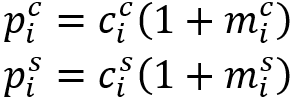
- ci : Cost of producing the conventional product in tier i (Good, Better, Best).
- cis : Cost of producing the sustainable product in tier i.
- mic : Markup percentage for the conventional product in tier i.
- mis : Markup percentage for the sustainable product in tier i.
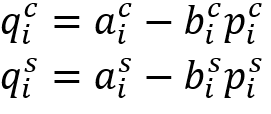
- qic : Quantity sold of the conventional product in tier i.
- qis : Quantity sold of the sustainable product in tier i.
- aic , bic : Demand function parameters for conventional products derived from historical data.
- ais , bis : Demand function parameters for sustainable products, reflecting higher price sensitivity.
- min_price_diff: Minimum percentage difference between sustainable and conventional product prices.
- max_price_diff: Maximum percentage difference between sustainable and conventional product prices.
Price Functions
Demand Functions
Revenue and Cost Functions
- Revenue for conventional products:

- Revenue for sustainable products:

- Total revenue:

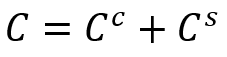
- Cost for conventional products:

- Cost for sustainable products:

- Total cost:
Profit Function
- Profit:

Constraints
To ensure competitive pricing for sustainable products:
Optimization Problem
The objective is to maximize profit ():
Maximize =

Subject to the constraints:

Overcoming the price barrier is crucial for increasing the adoption of sustainable products. Effective pricing strategies can bridge the gap between consumers’ environmental values and their purchasing decisions. By strategically aligning the prices of sustainable products relative to conventional ones, thereby underscoring the incremental value from sustainable products, businesses can reduce the cost barrier that often deters consumers. This approach underscores the importance of pricing in promoting sustainable consumption and highlights the potential for businesses to drive market growth while supporting environmental and social stewardship. By adopting similar pricing strategies, companies can foster broader acceptance of sustainable products and align their profitability with sustainable practices.
Vivek Anand is an accomplished operations research (O.R.) professional with more than a decade of expertise in applying data science and O.R. techniques to optimize business outcomes. Currently, as director of data science at a Fortune 500 retailer, Vivek’s team develops solutions for problems related to price optimization, inventory management and fulfillment optimization. Connect with him on LinkedIn: https://www.linkedin.com/in/va2260/.