


February 6, 2006 in INFORMS News
Getting Ready for the Real World
SHARE: PRINT ARTICLE: https://doi.org/10.1287/orms.2006.01.14
Getting Ready for the Real World / orms-2-06 / 2006 / Archived Issues / ORMS-Today / IOL Home / ez_root - INFORMS.org
INFORMS Professional Colloquium aims to arm O.R. grad students with "softer, high-level" skills needed for successful careers as practitioners.
Operations research/management science (O.R.) students graduating from master's and Ph.D. programs are recognized as motivated, analytical and technically sound. The INFORMS Professional Colloquium (IPC) aims to complete the equation by arming them with the "softer" and "high-level" skills necessary for success in industrial careers as practitioners. The IPC seeks to help O.R. graduate students jump-start their careers, through a hands-on, interactive program designed to show them what to expect and what is expected of them at work. The goals of the IPC are not only to help students be successful as individual practitioners but to help the overall reputation of the O.R. profession. A strategic goal of the IPC is also to attract and retain masters-level professionals to the INFORMS community.
Career Guidance
The INFORMS Professional Colloquium was created to better prepare O.R. students for "real world" careers by filling a gap not addressed by many curricula and to focus on a segment of the community not served by the existing Combined Colloquium: masters degree students with a practitioner profile.
The health of the field is often said to depend on the strength of the research-practice interface. Masters-level professionals are not well represented in INFORMS. The IPC's long-term goal is to enhance the practice-research interface by building the membership of this underrepresented group. The best time to recruit this segment is when they are still students and can be easily identified. By fostering professional identification with INFORMS and exposing students to the society's value-adds (e.g., networking opportunities, career-long technical and business support), the IPC hopes to attract new members from the masters-level practice ranks.
IPC in a Nutshell
The IPC is based on the successful Combined Colloquium, which has been serving Ph.D. students for 21 years. Many of the individuals who attend the Combined Colloquium go on to take leadership roles in INFORMS. The hope is that the IPC will be similarly successful in promoting leaders of tomorrow from the industry.
As with the Combined Colloquium, attendance to the IPC is by nomination only. Although the IPC targets masters-level students, it is open to practice-oriented Ph.D. students as well. Graduate students are nominated by their department or program and selected by the IPC Committee. As with the Combined Colloquium, the number of nominees submitted by anyone department is limited and the selection process is competitive. University departments are expected to fund students' registration and travel expenses. Limited financial aid from sponsoring companies may be available to help defray the cost of those expenses.
The IPC presents the experience and perspective of practitioners who have bridged the gap in order to give attendees a jump-start in their new careers. Held in conjunction with the INFORMS Practice Conference, the IPC is a full-day, interactive colloquium designed to help practice-oriented students transition into successful real-world careers. The IPC registration covers:
- Colloquium on the Sunday preceding the Practice Conference (includes all meals)
- Colloquium workbook that includes speaker presentation materials, personal reference recommendations, samples of journals and trade publications, industry research reports, URLs for professional societies and conferences, and attendees list
- Full registration to the Practice Conference (includes all meals)
- One-year INFORMS membership
The IPC program is a mix of multi-media presentations, lectures, hands-on activities, panel discussions, and networking events. Attendees are encouraged to bring their questions. The interactive format of the day presents an array of perspectives and opportunities for exchange on questions such as the following:
- What is the O.R. "job universe"?
- What does it mean to be a "professional"?
- How do I get my ideas across to management? Customers? Colleagues?
- What does it take to be a team player, and should I care?
- What can having (and being) a mentor do for me?
- What is professional networking? What is its value and how do I go about it?
- What is the difference between working all the time and getting things done?
- What are the computing tools I need to know?
- Where is O.R. in the scheme of businesses today?
- What is the functional organization of business and what's in a title?
- How do I maintain professional relevance?
Colloquium speakers represent a broad range of industries and specialty areas and are engaged in the practice of O.R. The goal is to provide students not only with specialized knowledge on formal topics but also with a spectrum of perspectives on O.R. practice.
IPC 2005
The first IPC was held in conjunction with the 2005 Practice Meeting in Palm Springs, Calif. The first agenda, presented below, shows the breadth of the topics, events, and speakers.
- Breakfast activity: "Exercising Expectations"
- Session 1: Welcome from INFORMS leaders and self-introductions
- Session 2: Careers
- What & Where Are the Jobs? (Smith Hanley),
- Career path video
- Session 3: Hands-on Case Study - "Congratulations, you're in business!"
- Lunch activity: Networking - "It takes a village"
- Session 4: Project Life Cycles. - "A Day in the Life" from the perspective of:
- R&D; (IBM Research)
- Deploying Package Solution (Salford Systems)
- Developing Custom Solution (ILOG)
- Session 5: Overview
- "Theory of Practice" from industrial O.R. group (INTEL)
- "Practical O.R." from independent consultant (Dieselbrain Partners)
- Panel Session Q&A;
- Session 6: Closing & Beyond
- Interviewing tips video
- Making the most of the Practice Conference (INFORMS)
- What INFORMS can do for you (INFORMS)
- Reception
The IPC workbook included all the materials mentioned previously, plus "crash courses" developed by the organizing committee on "How to Run a Meeting," "Workplace Culture," "Presentation Tips," and "E-mail Etiquette and Survival." Workbook materials were donated by AMR, Gartner Group, Information Week, Optimize, OR/MS Today and IBM.
Experience
Two dozen attendees, half of whom were master's students, attended the first IPC. A dozen universities were represented, including Carnegie-Mellon, MIT, Naval Postgraduate School, Northwestern, Oregon State, Rutgers, San Diego State, UCLA, USC, University of Buffalo, University of Cincinnati, the University of Illinois at Urbana-Champaign and University of Wisconsin.
Exit surveys indicated a high degree of participant satisfaction. On a range of five (very satisfied) to one (very NOT satisfied), the following average scores were reported.
- Overall value of the program to you 4.6
- Info/ideas you can take back and use 4.6
- Connections you made with others 4.2
- Speakers presentation skills 4.6
- Speaker's knowledge of subject matter 4.8
Satisfaction echoed in the survey comments, from which the following excerpts are representative:
- "Very satisfied. Overall a great experience. A lot of things I will use when looking for a job."
- "Great. I am going to tell my department to send more students next year."
- "This colloquium was a great overview of many aspects of O.R. I would not change much! Good job and very well organized."
- "It was well worth the sacrifice of time and expense to come to the session."
- "This is great. Targeted well. I was afraid as an MBA I wouldn't fit in. You gave good advice."
- "Creative and thoughtful."
- "Excellent. I would highly recommend it."
- "Very well organized. Good variety of speaker/industries."
- "Very nice! Glad I could be a part of it!"
The most highly rated component of the program was a hands-on case study where students role-played O.R. professionals. Attendee comments included the following.
- "Perfect. Exactly what I don't get in class."
- "I've made many of the mistakes covered. This was a very realistic scenario and the least covered area in education."
- "Gave me some view of what is going on in real life. I was really feeling in a real case and I understood which parts I could work on more."
- "Made me think about what O.R. and optimization mean to individuals and to the organization."
- "A winner. Stick with it."
- "Very insightful for a professional after you get an O.R. job."
- "Good perspective on the customer's side of the business."
- "Wow! I didn't know that math was the easy part."
Challenges
The IPC can only succeed if students can attend. Many universities, however, do not routinely fund master's students' travel to conferences. At times when a university is struggling to support travel for faculty and Ph.D. students, funding for master's students' travel may be practically impossible to secure. Although it is a tremendous value, it is not necessarily inexpensive. This is due in part to the location of the practice meeting that is usually held at resort destinations (e.g., Palm Springs). The IPC could, in concept, be held at a different location and time, but major benefits to IPC attendees are derived from attending the INFORMS national meeting where they can test what they learned, network to find that first O.R. job, attend sessions and experience the benefits of INFORMS
Thanks to the generous sponsorship of Hewlett-Packard, IBM, ILOG and the INFORMS president's discretionary funds, support for student travel was available in 2005. The IPC cannot pay dividends unless the primary stakeholders (e.g., employers, universities, INFORMS, O.R. product suppliers, recruiters, students) make an investment. A short-term challenge faced by the IPC is convincing stakeholders, including nominating departments, to make the investment in sending their best MS-level students to the IPC. The long-term challenge is to prove the IPC premise by producing IPC-alumni who take an active role in INFORMS and by raising the society's membership of masters-level practitioners.
IPC 2006
Based on the results in 2005, the INFORMS Board voted to support the 2006 IPC. The second annual IPC will be held in conjunction with the INFORMS practice conference in Miami. The nomination deadline is March 3, 2006. For more information, visit www.informs.org/Conf/Practice06/colloq.htm.
Acknowledgments
The authors would like to acknowledge their IPC2005 co-organizers Pierre Trudeau (co-chair), Terry Cryan, Amy Cohen and David Leonhardi whose generous contributions of time, talent and enthusiasm made the first IPC a reality. They would also like to express their appreciation to the IPC 2005 speakers: Luke McCahan, Harlan Crowder, Brenda Dietrich, Mikhail Golovnya, Karl Kempf, Dick Larson, Sanjay Saigal, and Rina Schneur.
`
Robin Lougee, Ph.D., is an O.R. ambassador, member of National Academies of Sciences, Engineering and Medicine’s Board on Agriculture and Natural Resources, and INFORMS Impact Prize recipient. Connect with her on LinkedIn at https://www.linkedin.com/in/robinlougee/. Mary Helander of IBM were members of the 2008 IPC Planning Committee.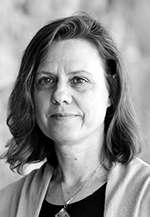
([email protected])