


December 3, 2007 in INFORMS News
Mass Customization
SHARE: PRINT ARTICLE: https://doi.org/10.1287/orms.2007.06.13
You can get a Ford in “any color you want, as long as it’s black.” This is what Henry Ford told his customers about their options for the 1914 Model T. Today, a Ford Explorer can be ordered in more than 2.5 million different combinations of options.
The term “mass customization” was first used by Stanley Davis in his 1987 book “Future Perfect.” He defined it as a process that provides a one-of-a-kind product manufactured on a large-scale basis. Mass customization is a business strategy that involves the practice of offering products designed to unique customer specifications, while using mass production techniques to achieve low cost manufacturing and distribution. Current trends in customer expectations and increased global competition is making mass customization a necessity for some industries (Kotha, 1995).
At first glance, the term mass customization appears to be an oxymoron. The thought of producing mass quantities of customized products was not considered a possibility for many years. In the past, a manufacturer had to choose a manufacturing strategy of either mass production of a limited product offering, or limited production of customized products (Duray, 1997). Mass production manufacturing principles include the concepts of interchangeable parts, specialized machines, focus on the process of production, division of labor, economies of scale, product standardization and focus on operational efficiency (Pine, 1993). These strategies can help to achieve efficient and cost effective production, but typically at the expense of variety. Product variation is not handled well by traditional mass production techniques (Anderson, 2003). Some companies have positioned themselves to provide customized products without sacrificing cost, quality or lead time. These companies are able to capitalize on the market advantages of customized products with the economies of scale associated with mass production (Duray, 1997).
Many topics of interest within the operations research community relate to mass customization principles. Supply chain design/management is an integral part of mass customization and a theme of many O.R. studies. Flexibility and agility are also integral to mass customization as well as operations research. Using E-business to communicate with customers is another field common to both O.R. and mass customization.
As mentioned above, Ford and other members of the auto industry continually strive to give customers more options in their vehicle selections. Dell computers have a business strategy to provide custom assembled computers to match each individual customer’s requirements. M&M’s candies can be ordered with the a customer’s message, up to two lines with eight characters, on one side and the M&M’s logo on the other side. Nike allows customers to order shoes from a site on the Internet. The customer chooses a base shoe design and then selects colors from a predefined list of options. The customer can also apply his or her logo beside the trademark Nike Swoosh symbol. Polo shirts can be ordered online, specifying the style, size, color and applying custom initials to the side opposite the Polo logo. Many firms today are using mass customization to attract customers who do not want stock products, but are not willing to pay high prices for totally custom designed and manufactured goods.
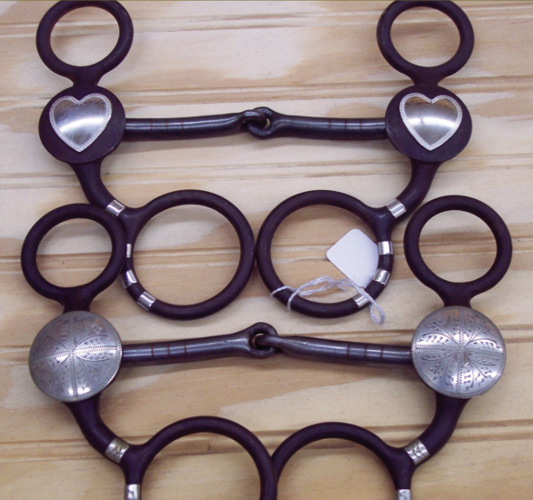
MRGBits is a designer and manufacturer of custom horse bits. Horse-related goods and equipment contribute $7.6 billion to the U.S. economy as reported in “The Economic Impact of the Horse Industry in the United States”by Deloitte Consulting, LLC. Horse bits are somewhat like the jewelry business. There is a huge range in the cost of a custom bit, depending on the materials used, complexity of the bit and even the reputation of the designer. Mike Gillespie, the owner of MRGBits, has been in the custom bit-making business for nearly 25 years. MRGBits’products are typically priced from $50 to $150. Although they are unique pieces of craftsmanship, they are designed to be functional working bits, not merely cosmetic display pieces. MRGBits uses many different techniques to provide a mass customization offering to its customers. This mass customization offering is MRGBits’core competency and its major competitive advantage over the competition in the market.
Gillespie describes three types of customers in the horse bit business. One type of customer wants a stock bit with little or no customization, but they want it immediately. This type of customer requires a supplier to stock finished goods in inventory and provide low-cost production. MRGBits has a minimal focus on this type of customer. It represents less than 20 percent of the company’s order volume.
Another type of customer wants to design a truly custom bit with custom components. These customers typically purchase from a craft manufacturer, who will make one-of-a-kind bits with all components being unique. MRGBits does not attempt to sell to this type of customer. Supporting this type of customer eliminates the ability to utilize many of the techniques associated with mass production. Production efficiency is very difficult to achieve in this style of manufacturing environment.
The third type of customer is the one that MRGBits targets as a customer base. This customer group wants a bit that looks custom and has key custom features, but is willing to accept some standardized components. Part of the business strategy is to understand which features the customer is willing to pay for customization on and which features can be standardized. This type of customer represents the core business for MRGBits and accounts for 80 percent of its sales volume. This is the type of customer base where mass customization becomes a competitive advantage. The strategies utilized by MRGBits to enable mass customization operations include product line rationalization, modularity and part standardization, Internet catalogs and order entry, supply chain design, lean manufacturing and total cost measurement.
Mass Customization Strategies
Product line rationalization is the practice of focusing efforts on only those products that can be produced efficiently and are profitable. Other products are either dropped from the offering or outsourced. Most companies have structured methodical procedures for introducing new products into their line. Few companies put forth the same effort to remove products from their offering.
At one time MRGBits had a product offering that included spurs, belt buckles and other forms of western jewelry. Leatherwork was performed at MRGBits to produce some of the products offered. In order to focus operations on making bits, the most profitable portion of the business, these other product lines were discontinued from production. Even today, Gillespie still receives requests from customers wanting custom-made jewelry. These requests are denied in order to keep the bit shop producing what it does best – producing bits.
Specific bits have been dropped from the catalog due to low volume, complexity or similarity to another product. One bit in particular was dropped from the offering, because customers did not understand how to use the bit properly. This resulted in confused and dissatisfied customers.Another bit was discontinued because of its similarity to another product. Discontinuing one of the two items allowed MRGBits to consolidate the volume from the two designs into one product.
Mass customization is not the practice of offering every conceivable product or feature to every customer. Limits and boundaries must be established to control the propagation of designs (Anderson, 2003). Focusing on core products and key manufacturing processes improves operating efficiency and profitability.
Modularity and part standardization. A number of researchers suggest that modularity in design is the key to achieving low-cost customization (Duray, 2002). One design approach is to standardize and modularize the internal components of an offering, so that a fewer number of them can be assembled into many different products that respond to the voice of the customer (George, 2003). Product differentiation can be achieved through the combination of, or modification to, standard modules. This concept has been intensely researched. Terms such as design for variety, modular design, product platforms and product families have been used to describe efforts to design products with the required variety to satisfy customers, based on some commonality of features. Not only does this modular approach reduce the cost of variety, it can also reduce the risk associated with new product development by reusing proven elements.
Modularization and standardization may be the most effective technique used by MRGBits to provide a competitive advantage over its competitors. Bit designs are modular in nature. Components and finishes can be mixed and matched to create almost limitless finished design options.
Some standard components are used in almost every finished design. Standard components include shanks, rings, bars, conchos, overlays and silver bands. As an example, a base concho is punched out as a standard size and material, then customized by placing a customer-specified (graphics and material) overlay over it. This makes the punching operations cost effective. One punch press die and setup is used to make the blank for all conchos. Overlays are customized, but this is a flexible process where modification does not involve expensive tooling or extensive setup changeovers.
Gillespie believes that a key aspect of the MRGBits business is the ability to provide a customer with a bit that appears to be unique for that customer, but is made from primarily standard components. Like the business model of Dell Computers, the customization at MRGBits comes from the modularization of the assembly and allowing customers to mix and match components to create a custom look for their product.
Additionally, there are certain manufacturing operations and components that are targeted for component customization. Since a bit is a functional product that fits in a horse’s mouth, there are advantages to being able to change the width of the bit to fit the horse’s mouth. The customization step appeals to horse owners, because it provides a more comfortable fit for the horse. The customer measures the width of the horse’s mouth and a bit is made to fit this specific width. Concho overlays are also customized, because they are one of the more visible components of a bit. Customers have demonstrated a willingness to pay extra for a customized concho, such as a unique brand or the buyer’s initials. George (2003) defines customer-required variety as value-add complexity.
Raw material selection is another area of standardization for MRGBits. Bit components are made from 1018 cold rolled steel, copper and nickel silver. Although there are many other materials that could be used to produce bits, MRGBits has standardized on these materials to minimize raw material variety. In some cases a “better than”substitution policy is utilized. Some components could be made from hot rolled steel, which is less expensive to purchase, but by using cold rolled material for all steel applications, this reduces the number of raw materials to stock. MRGBits believes that the material purchase price cost reduction that could be gained by using a lower grade of material for certain applications would be negatively offset by the increase in cost due to stocking more materials, losing purchasing volume and encountering fabrication inefficiencies due to unfamiliarity with material characteristics.
Internet catalogs and order entry. MRGBits provides an online catalog where customers can view various bit designs and create custom orders. Key variables the customers typically specify over the Internet order form include base bit style, concho style, mouth width and shank finish.
The online catalog provides a communication tool that allows potential customers across the world to view the available components and visualize their designs. MRGBits has provided bits for horses in most U.S. states and several foreign countries, including France, Japan, Sweden and Egypt. Customers in these foreign countries would never have seen the products available if not for the Internet. This sales channel has opened up an entirely new segmentation base. The Internet has provided a platform for taking orders for customized products from a large customer base at almost no additional cost (Agrawal, 2001).
Supply chain design. The MRGBits’ supply chain is designed to balance cost with flexibility. Operations such as laser cutting, waterjet cutting and concho punching are outsourced for standard components. Operations where components need to be modified to satisfy customer requirements are performed in-house. Of 30 common concho overlay designs, eight are outsourced to a waterjet vendor because the volume is high and no modifications to the design are needed. The other 22 overlay designs are cut in house, because of low volume or the design is customized at the time of order. An example of this type of concho overlay is one where the customer’s initials are cut into the overlay.
Shank bending is another operation that could be outsourced more cost effectively, but the number of shapes would have to be reduced. This may lower the cost of a standard bit, but would limit the ability to provide a bit that has a custom look to it.
The key for the supply chain in this type of mass customization environment is to identify components and operations that can be standardized. These components and operations are targets for outsourcing for low-cost fabrication. Conversely, components and operations that need to be customized to satisfy unique customer requirements are performed using in-house capabilities. This approach maximizes flexibility without compromising cost or lead time.
Lean manufacturing is a methodology focusing on the elimination of waste to produce products in the most efficient manner possible. MRGBits utilizes several techniques associated with lean manufacturing. Setup reduction is a cornerstone of lean production. The ability to make rapid changeovers is a precursor to producing in small lot sizes. This is also a requirement for some operations in a mass customization environment.
MRGBits has utilized many of Shigeo Shingo’s “Single Minute Exchange of Dies”principles to minimize setup time at key workstations. This allows them to customize products at these operations without sacrificing cost or lead time. If the setup time for an operation can be totally eliminated, then a production batch size of one piece can be produced just as efficiently as large batch sizes. Although total elimination of setup time is unrealistic for many operations, MRGBits has managed to minimize the setup time to make customization an economical option for many production operations.
Kanban is another technique associated with lean principles. Kanban pull systems represent a simple inventory control system. Kanbans are used to signal the need to replenish repetitive items. MRGBits uses a kanban system to control inventory for their standardized components. Standard container sizes are used to store stock components. The usage rate and production cycle time is used to calculate the number of containers dedicated to a given component. This system controls the total number of pieces for a given component on hand, by limiting the storage volume allowed for the component. When the storage volume drops to a predetermined level, the component is manufactured or ordered again. This system provides a visual flag for replenishment requirements and eliminates the need for forecasting stock components.
Total cost measurement. At MRGBits, bits are categorized into families for pricing. A bit family is typically made up of a group of bits that are similar in complexity and appearance. The price the market will pay is often dependent on the perception of the complexity of the item. Although all items within a given family are priced the same due to market consideration, the cost to produce each individual bit in the family may be slightly different. Consequently, there may be a different profit margin for different bits within the family. Bits with a better profit margin are made more readily available than bits with a lower margin.
The article “How Cost Accounting Distorts Product Costs” points out that overhead costs vary with the diversity and complexity of the product line (Kooper & Kaplan 1988). The total cost of a bit includes more than just the traditional elements of material, direct labor and overhead. Consideration is given for bit volume, component complexity, number of manufacturing operations, number of components and design time. Concepts associated with activity-based costing are utilized in the total cost measurement system. Costs are assigned for the consumption of resources. These may include labor time, design time, cycle time, machine time, floor space or any other resource.
Conclusion
FOR SOME COMPANIES TODAY, mass customization is a business necessity. Customers in some markets have come to expect a product that meets their individual needs,but they are not willing to pay a great premium for it or accept a long lead time. Manufacturers in this type of market environment must develop mass customization capabilities to satisfy this customer niche.
Companies that find their operating efficiency eroding due to small batch sizes and shorter product life cycles may find mass customization to be a requirement for future successful business operations. However, mass customization capability is not an independent strategy that an organization can directly control. It is a dependent characteristic influenced by business strategies and core competencies. To achieve mass customization, independent business strategies must be selected that will support and enhance the organization’s attributes associated with mass customization.
REFERENCES
1. Agrawal, Mani, Kumaresh, T.V., & Mercer, Genn A., 2001, “The False Promise of Mass Customization,” The McKinsey Quarterly, Vol. 3.
2. Anderson, David M., 2003, “Build-to-Order & Mass Customization,” Cambria, Calif: CIM Press.
3. Duray, R., 1997, “Mass customization configurations: an empirical investigation of manufacturing practices of customization,” Ph.D. thesis, The Ohio State University, Columbus, Ohio.
4. Duray, R., 2002, “Mass customization origins: mass or custom manufacturing,” International Journal of Operations & Production Management, Vol. 22, Issue 3, pp. 314-328
5. George, Michael, L., 2003, “Lean Six Sigma for Service,” New York, N.Y.: The McGraw-Hill Companies.
6. Kotha, Suresh, 1995, “Mass Customization: Implementing the Emerging Paradigm for Competitive Advantage,” Strategic Management Journal, Vol. 16, pp. 21-42.
7. Kooper, R. &Kaplan, R.S., 1998, “How Cost Accounting Distorts Product Costs,” Management Accounting, April 1988.
8. Pine, Joseph, B., 1993, “Mass Customization The New Frontier in Business Competition,” Boston, Mass.: Harvard Business School Press.
Cliff Welborn is an assistant professor in the Management and Marketing Department of Middle Tennessee State University. Prior to his academic appointment, he spent 18 years in manufacturing industries in various positions of manufacturing engineering and advanced planning.