


August 4, 2008 in INFORMS News
Blue-Collar Scholars
Strong work ethic, “get real” approach to teaching (and research!) and dedication to professional service add up to 40 years of success at the QAOM department in the College of Business at the University of Cincinnati.
SHARE: PRINT ARTICLE: https://doi.org/10.1287/orms.2008.04.13
Does size really matter when it comes to measuring the success of an academic O.R. department? Does the department have to be housed inside an “elite” engineering school at a “prestigious” research university in order to make a significant impact on the national and international O.R. scene? Does the department have to produce a half dozen or so Ph.D.s a year who land professorships at the “best” schools in order to prove its academic chops?
For the Department of Quantitative Analysis and Operations Management (QAOM) in the College of Business at the University of Cincinnati, the answers are no, no and no. Heck, QAOM doesn’t even officially award degrees in “operations research”or “management science,”yet, pound for pound, professor for professor, the small-but-energetic department can hold its own against many of the heavyweight academic O.R. departments around the country in terms of what it contributes to INFORMS and the O.R. profession.
That’s a strong statement, but consider the following factoids:
- QAOM has just 11 tenure-track faculty members, yet two of them – David Kelton and Mike Magazine – are INFORMS fellows.
- QAOM is home to two of the best-selling O.R.- oriented texts of all time: “An Introduction to Management Science” by David Anderson, Dennis Sweeney and Thomas Williams, and “Simulation Modeling & Analysis,” by Averill Law and Kelton.
- INFORMS publishes 12 journals, and QAOM was, until recently, home to two of them: INFORMS Journal on Computing and Interfaces. While Kelton has since stepped down as editor of the Journal on Computing, QAOM professor and department head Jeff Camm continues to serve as editor of Interfaces.
- Coordinated by associate professor David Rogers, QAOM hosts the Leonard Arnoff Lecture Series, one of the most prestigious lecture series in the world on OR/MS topics. The list of past presenters reads like a “Who’s Who” of O.R. and includes such luminaries as Gene Woolsey, John D.C. Little, Al Blumstein, Saul Gass, Russell Ackoff, Tom Cook, Marshall Fisher, Arnold Barnett and Ed Kaplan.
Did we mention that QAOM also played host to the 1999 INFORMS national meeting? Or that QAOM is the only department in any business school to win an Ohio Eminent Scholar Chair Award from the state of Ohio? Or that QAOM faculty, working in conjunction with Procter & Gamble, have been finalists for the coveted Franz Edelman Award? Or that QAOM boasts an active chapter of Omega Rho, the international OR/MS honor society, thanks in large part to the efforts of Rogers, a past president of the organization?

and department head.
That’s a lot of activity and success coming out of a small group located in the equivalent of the O.R. community’s hinterlands, but that’s what happens when you build a department the old-fashioned way: hire bright, dedicated professors who don’t mind rolling up their sleeves, climbing down in the trenches and getting a little dirty, whether it’s teaching undergrad courses to skeptical business students or fighting for the very survival of the department.
Yes, despite its 40-year-history of achievement, QAOM, like just about every other business school O.R. department, has on occasion faced budget cuts as funding fell short of expenses. It’s a scenario that has played out at hundreds if not thousands of business schools in recent years as deans, under pressure to cut costs, look around and ask,“What don’t we really need here?” Yet, at a time when many OR/MS-type departments and courses in business schools are not just suffering but succumbing to the pressure, QAOM, to borrow a well-worn but appropriate phrase,“not only survives, but thrives” at UC.
Core Classes
EVERY STUDENT who goes through the UC business school – undergraduates, master’s students and Ph.D.s – is exposed to operations research/management science methodology and techniques through one or more core classes taught by QAOM faculty. If you receive a degree in quantitative analysis from UC, you will have taken a good number of O.R. and statistics classes. To get a degree in operations management, you will have taken optimization, simulation and a fair amount of statistics. If you get a Ph.D. in marketing, you will have taken your stat classes from QAOM. Even MBAs, who historically shy away from anything that even smells of serious math, can’t avoid a four-credit stats course with a little bit of simulation and a two-credit course in optimization from QAOM.
“We focus on modeling,”says Camm.“Everybody brings in real stuff to the classroom. We bring in real consulting and make the students work with real data. That’s something we’ve been doing for a long time.”
Camm isn’t about to let the department rest on its laurels. After all, it wasn’t that long ago that one of QAOM’s master’s programs almost got “whacked” by budget cuts because of shrinking enrollment.“You can’t just sit back and relax, ever, because the job is never done,” he says.
QAOM responded to the crisis by aggressively recruiting from a new market of students – part-time and evening students. The department took money from its Center for Productivity Improvement (www.business.uc.edu/cpi) and used it for student “assistantships,” which attracted more full-time students. The department put ads on the local public radio station and in student newspapers and marketed the program to companies within a 200-mile radius of Cincinnati. The results: the number of students doubled within a year and the program was saved.
Besides going to the mat to fight for its programs, Camm points to several factors that account for QAOM’s long-term success, starting with what he calls a pervasive “blue-collar, getreal” approach to teaching and research that began 40 years ago with the founding of the department by Al Simone and continued under the influence of faculty members Norm Baker, Jim Evans, David Anderson and Dennis Sweeney – all of whom served as department heads at one time or another. It didn’t hurt that two O.R.-type guys – Simone and Arnoff – also served as deans of the College of Business during the department’s formative years in the 1970s and throughout the 1980s.
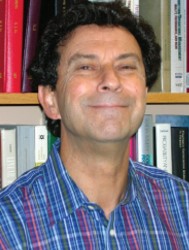
and good sport
QAOM enjoyed a growth spurt in the early 1980s under the leadership of then-department head Baker, whom Simone lured away from Georgia Tech. The growth corresponded with the university’s transition from a city-funded college to a state-funded university. Baker brought in Evans and Sweeney, among others.
“When I first got here in 1984, the group was really strong, but if you looked around, virtually everybody in the department at the time was not just the first person in their family to get a Ph.D., they were first-generation college students,” says Camm, a native of Cincinnati who joined the QAOM faculty right out of grad school and has headed the department since 1994. “It was almost like we had this blue-collar group of people who were the first in their family to make it this far, and that just naturally led to a certain work ethic and a focus on real problems that you don’t see at some of the more elite schools.”
The Real Deal
CAMM IS LOCKED into QAOM’s real-world legacy. “I don’t work on or teach anything that I don’t think is relevant,” he says.“I made a decision early in my career that I was going to work on real stuff. As I pointed out in the other article (“O.R. in the Classroom – Get Real,” OR/MS Today, April 2007), I was greatly influenced by Gene Woolsey, if not in demeanor, at least in philosophy. Gene has contributed so much to keeping people focused on the right things. We have a master’s of science program where our students add value to employers as soon as they come out of school, and those students have done very well.
“The philosophy of the department in terms of working on real stuff is probably not as extreme as mine, but in virtually every class we teach – and certainly at the graduate level – students do a real project of some sort before they get through the class,” adds Camm, the 2006 recipient of the INFORMS Prize for the Teaching of OR/MS Practice.“We bring our consulting into the classroom and make each and every class relevant.”
The next two big-name additions to QAOM were Magazine and Kelton. Magazine arrived in 1995 courtesy of QAOM winning an Ohio Eminent Scholar Chair Award from the state, while Kelton moved over from UC’s Industrial Engineering Department a year later with encouragement from then-university provost Baker. So what sold Magazine on UC’s QAOM?
“First, I saw a lot of people who were like me,” Magazine says. “Strong quant backgrounds with a real interest in doing research in applied areas. All of our faculty members have at least one degree in mathematics or engineering and love getting involved in new and emerging areas and publishing in our top journals.
“In addition, at that time, we had a dean, Fritz Russ, who bought into the notion of a strong analytics group boosting the business school profile,” Magazine continues. “This was at a time when other business schools were dropping their quant courses from curricula. This was not the case at UC. We were confident that the university and college would support our activities and allow us to flourish. Finally, I really liked the people in the department, which should never be underestimated.”
An important part of Magazine’s role as an Ohio Eminent Scholar Chair is to draw promising faculty members and students to the department,a task he relishes.“This has been loads of fun,” Magazine says.“We recruited some excellent young faculty, and I have been fortunate to work with at least half of the department on research and projects. I never get tired of working with our doctoral students and teaching the best of our undergraduates to bring them the message of OR/MS. One of the perks is that I also get to introduce the Arnoff speakers. Of course, I still spell it ‘Imminent’Scholar, as there is much more to do.”
Camm credits Magazine for playing a key role in the hiring of several outstanding young scholars such as Craig Froehle (University of North Carolina), Michael Fry (University of Michigan), Yan Yu (Cornell) and Uday Rao (Cornell).“I think we were able to hire graduates from some big-name schools because they see what we’ve done here and that we have a very cohesive group,” Camm says.
Publish or Perish
IF PUBLISHING in top journals is any indication of a department’s academic prowess, then QAOM ranks among the best. The University of Texas-Dallas, for example, uses a database of publications in top business journals to rank business schools in such areas as operations management, quantitative analysis and a combination of the two. For the field of OM, the UT-Dallas rankings counted publications in Production and Operations Management, the Journal of Operations Management and Manufacturing and Service Operations Management. Based on data from 2002-2007, UC ranked 13th nationally in operations management and 32nd in the QA and OM combined (which included articles in Operations Research and Management Science, as well as the other three journals). Not bad considering the rankings are based on quantity in quality journals, and the QAOM has a modest 11 faculty members.
As far as the quality of teaching is considered, suffice to say that three QAOM faculty members (Tom Innis, Rogers and Ruth Seiple) and one emeritus (Dave Anderson) have won the UC business college’s prestigious Michael Dean EXCEL Award for excellence in undergraduate teaching, and Camm was the 2006 recipient of the INFORMS Prize for the Teaching of OR/MS Practice.
While UC’s QAOM department has a stellar academic and research record considering its size (11 tenure-track faculty members, plus two “field”faculty members) and location (in a business school at a less-than-big-name university), it’s clearly not in the same league as, say, the “O.R.” departments at MIT, Stanford and Georgia Tech.
“Let’s understand, first of all, that many of the premier departments are in engineering schools with a history of significant funding,”Magazine says.“We are also a relatively modest business school in terms of size and funding, so there is a real scaling issue when comparing our small group with many of these departments/schools. What is great is that 100 percent of our folks have bought into what we do. We all care about quality teaching, research and somehow, thanks to Jeff [Camm], we all get along with each other.”
Good Sports
IN REGARDS to the last point, Magazine says that many faculty members (and past and current students) share a passion for sports, a tradition that goes back decades, back to the days when the faculty and Ph.D. students played each other in competitive basketball games at Simone’s house. Virtually all of the faculty members used to play on a city league softball team that celebrated wins (and losses) at the beer gardens at the Lions Den on West 8th Street. Earlier this year, at the annual faculty vs. Ph.D. student wiffle ball game, the students won 30-26 in what Magazine reports was a “real pitcher’s dual.”
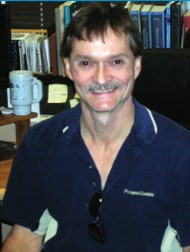
of Omega Rho
QAOM’s athletic prowess may be questionable, there’s no denying its teaching and research achievements rank with the best. And when it comes to service to INFORMS and the profession, QAOM can rightfully stand alongside any O.R. department.
“From my perspective, that’s a great group they have up there,”INFORMS Executive Director Mark Doherty says when asked about QAOM’s contributions to the Institute.“They’ve had people serve on our board, they’ve had editors of our journals, they’ve hosted a national meeting. In terms of governance, in terms of publications, in terms of meetings and just about everything we do as a professional society, the QAOM department at UC has contributed greatly to the success of INFORMS over the years.”
Shortly after he joined INFORMS as executive director in 1998, Doherty got word that the Institute was going to hold its annual meeting in Cincinnati the following spring. “I had to chuckle when I heard that,”Doherty says of the meeting’s location. “Nothing against Cincinnati. I went to school there [Xavier]. I was an officer with the Cincinnati Police Department. I know the city pretty well, but c’mon, people, what in the world are we doing holding our national meeting in Cincinnati?
“As it turned out, they did a fine job,” Doherty adds.“Dave Rogers was the general chair, Jeff Camm was the program chair and several other members of the department worked on the meeting, and it was a big success. It’s just another instance where the [QAOM] department has shown how much they care about the society and the profession. They have made a contribution that is greater than the sum of their parts, a contribution that far outweighs their relative modest size.”
It’s not easy to spot a diamond in the rough like UC’s QAOM department. Magazine, QAOM’s “eminent/imminent” scholar, turned down an offer to join the department when he finished his Ph.D.“It took me 25 more years to see the light,”he says.
Peter Horner is the editor of Analytics magazine.
([email protected])