


June 5, 2011 in INFORMS News
Election 2012: The ‘13 keys’ to the White House
Quantitative historian Allan Lichtman predicts Obama’s re-election.
SHARE: PRINT ARTICLE: https://doi.org/10.1287/orms.2011.03.09
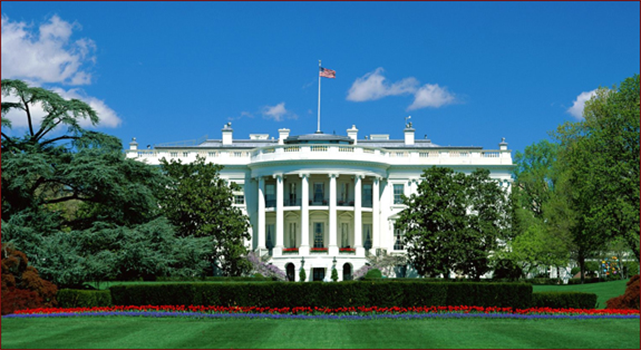
With the presidential election a year and a half away, campaigning and punditry are already intense, with many commentators noting Obama’s low approval numbers in the polls and pronouncing him highly vulnerable. The most reliable model of presidential elections, however, indicates a different answer. Based on his “13 keys” model, quantitative historian Allan Lichtman called the 2012 election for Obama nearly a year ago, with some caveats about how some keys might change.
OR/MS Today readers may remember Lichtman, professor of history at The American University in Washington, D.C. He was the subject of feature articles in these pages in 1996, 2000, 2004 and 2008. More significantly, he has attracted quite a bit of coverage in the news media, his books continue to sell well, and it is evident that campaign strategists take his model into consideration in their planning. His model deserves to be taken seriously, as it has correctly predicted the popular vote outcome of every U. S. presidential election since 1984, including George H. W. Bush’s comeback from nearly 20 percent behind in the polls in 1988 and Al Gore’s narrow win in 2000.
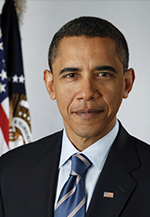
His predictions are based on 13 questions, each with a “true” or “false” answer (see box). “True” answers favor the incumbent party. If five or fewer answers are “false,” the incumbent party retains the presidency; if six or more are “false,” the challenger wins.
Here are the keys and Lichtman’s assessment of how they turn:
For this election, Lichtman said the Democrats have lost Key 1 (the 2010 mid-term election was a huge setback), Key 6 (long-term economic growth), Key 11 (there were no major military or foreign-policy successes) and Key 12 (the incumbent-party candidate is not very charismatic or a national hero.)
This still leaves the Republicans two keys short of what they need, with the Democrats holding the seven keys they need and two keys still undecided.
Obviously, at this point, some keys could still change. The economy could slide back into recession. Major social unrest could erupt – 1968 was the last time this key turned; things were fairly calm in the summer of 1967. Opportunities for major military or foreign policy failures abound. If enough elements of governance go wrong, a serious challenge either within the party or from a third party could emerge.
Obama gets Key 7 mostly because of the sweeping health care financing reform legislation enacted in spring 2010. Perceptions of the importance and benefits of this legislation could change; certainly opponents of the legislation have maintained a vigorous campaign disparaging it. The Democrats have enough votes in the Senate to block repeal efforts for the next year and a half, but arguably people may end up deciding it wasn’t that big an accomplishment. By Lichtman’s reasoning, this still wouldn’t lose the administration Key 7, as the political clout to get a major change passed, not how well people end up liking the change, is what turns this key.
Also, an early indicator of the success or failure of “budget-hawk” efforts to undermine Obama and his policies is now shaping up in Wisconsin. Following the nationally reported fight over budget cuts and union-busting there, both parties are engaging in petition drives to recall state senators. According to the most recent reports at this writing, the Democrats have had little difficulty collecting more signatures than they need to force recall elections of at least four Republican state senators, while the Republicans continue to struggle to force recall elections for three Democrats. The Democrats need a net gain of just one seat to regain control of the state senate. Success in this effort would signal that the tide may be turning against the “tea party” and its allies.
The 13 Keys to the Presidency
If six or more of these statements are false, the incumbent party loses. |
Some commentators have also noted that losing control of the House in 2010 may actually help Obama in 2012: It spreads the blame and gives him someone else’s record to run against. Losing control of both houses of Congress in 1994 did not badly damage Bill Clinton’s re-election prospects in 1996.
On the other hand, the death of Usama bin Laden and the events resulting from that may now have turned Key 11 in Obama’s favor. The removal of the Al Qaida chief from the scene is probably not enough by itself, but reportedly the U.S. commando team also captured several computers and about 100 flash drives that were critical links in Al Qaida’s communication and coordination. UBL’s leadership may be replaceable; his financial expertise and connections likely are not. Also, the capture of this information almost certainly set off a mad scramble for new hiding places and new cover by UBL’s key associates, drastically limiting their ability to carry out new operations for a while. So far, their attacks to avenge UBL’s demise have targeted ordinary Pakistani citizens, not leaders, and certainly not Americans. This targeting suggests frustration and limited capability.
In short, the raid may have been a serious blow to Al Qaida, long term. If that conclusion is what emerges, Obama is likely to collect this key.
The Science Behind It
It is worth re-emphasizing that the 13 Keys model is based on a statistical pattern recognition algorithm implemented by Russian seismologist Volodia Keilis-Borok. In English-language terminology, the technique most closely resembles kernel discriminant function analysis. The idea is to choose the variable that produces the biggest improvement in prediction, then the variable that adds the most improvement, and so on.
Lichtman and Keilis-Borok considered many other variables that didn’t have much effect: the challenging party’s nomination contest, adverse reports on candidates’ health, running mates and endorsements, among others. The emergence of these 13 variables implies that governance is more important than campaign characteristics.
This model’s success also underscores the unimportance of poll results this far ahead of the election. Lichtman declares bluntly, “Polls more than two months before the election are meaningless.” Indeed, as he points out, George H. W. Bush trailed Michael Dukakis by 17 points three months before the 1988 election, and Gore trailed George W. Bush in every poll up to the weekend before the 2000 election, and then only edged ahead in one, the Zogby poll. (But Gore won the popular vote, as the model predicted.)
The Effect of Style of Governance
As noted in OR/MS Today in fall 2008, modern communication and marketing/targeting methods link governance and campaigning more closely, not necessarily in good ways. Distinguished political scientist and highly successful novelist (he co-authored “The Ugly American” and “Fail-Safe”) Eugene Burdick described both modern targeting and the potential dangers of using it for large-scale political manipulation in his first novel, “The Ninth Wave,” in 1956. He revisited the subject in 1964 to update his information and illuminate the danger more clearly in “The 480.” (480 was the number of strata in the most effective national targeting surveys in use at the time.) Both books deserve renewed attention, as their warnings still apply. (Disregard the political consultants who pop up every election year to claim they invented a radically new targeting method for the previous election. Data have gotten better, computational capability continues to increase, but the basic method hasn’t changed all that much in 50 years.)
As OR/MS Today noted in 2008, citing George Reedy, press secretary to Lyndon Johnson, and historian James David Barber, presidents’ decision-making style and process are critical to how well they do, regardless of ideology. Presidents who retreat into a circle of trusted advisors tend to make more and worse mistakes than those who maintain a broad base of advice and counsel. Recent studies of the Bush-Cheney Administration, notably “Angler” by award-winning Washington Post reporter Barton Gellman, document a striking degree of the small-trusted-circle style that led directly to some of that administration’s most damaging mistakes.
As OR/MS Today reported in 2009, Obama is making unprecedented use of social networking, both to get ideas from people and to get his message out, and he seems determined to keep an open policy-making process. He is likely to claim that his more open, less directive style in foreign policy has paid large dividends in securing other countries’ cooperation. While other issues are likely to dominate the campaign, the question of how best to govern, and how governance translates into political wins, is a promising one for scientific study.
Conclusions
While political methods and tactics continue to change, some factors seem fairly reliable over the long term in enabling us to predict who will win. Barring major new adverse events, these factors favor President Obama’s re-election. Increased attention to decision-making processes and structures, also using new OR/MS methods among other approaches, could do much to improve our understanding of what works, both in campaigning and in governing. OR/MS analysts would do well to learn about these analytical methods and issues and to contribute to improving national-level decision-making.
References
- Barber, James David, 1992, “The Presidential Character: Predicting Performance in the White House,” Prentice Hall, Englewood Cliffs, N.J.
- Burdick, Eugene, 1956, “The Ninth Wave,” Houghton Mifflin.
- Burdick, Eugene, 1964, “The 480,” McGraw-Hill.
- Maralee Csetlar, July 12, 2010, “Scholar’s ’13 Keys’ Predict Another Obama Win,” www.american.edu/media/news/20100712_Lichtman_Predicts_Obama_Wins_Reelection_2012.cfm
- Gellman, Barton, 2008, “Angler: The Cheney Vice Presidency,” Penguin.
- Lichtman, Allan J., 2008, “The Keys to the White House: A Surefire Guide to Predicting the Next President,” 2008 Edition, Rowman & Littlefield Publishers, Lanham, Md.
- Lichtman, Allan J., 2000, “The Keys to the White House, 2000,” Madison Books, Lanham, Md.
- Lichtman, Allan J., 1996, “The Keys to the White House, 1996,” Madison Books, Lanham, Md.
- Lichtman, Allan J., and DeCell, Kenneth, 1990, “The Thirteen Keys to the Presidency,” Madison Books, Lanham, Md.
- Lichtman, A. J., and Keilis-Borok, V. I., 1981, “Pattern Recognition Applied to Presidential Elections in the United States, 1860-1980: Role of Integral Social, Economic and Political Traits,” Proceedings of the National Academy of Science, Vol. 78, No. 11, pp. 7230-7234.
- Reedy, George, 1970, “The Twilight of the Presidency,” New American Library, Cleveland, Ohio.
- Samuelson, Doug, February 2009, “Change We Can Blog In,” OR/MS Today, pp. 28-31.
- Samuelson, Doug, October 2008, “Election 2008: How to Pick the Winner and Predict How He’ll Do,” OR/MS Today, pp. 30-33.
- Samuelson, Doug, February 2004, “Does O.R. Hold the Keys to the White House?” OR/MS Today, pp. 36-39.
- Samuelson, Doug, October 2000, “Gore Wins! (At least that’s what the model says),” OR/MS Today, pp. 24-26.
- Samuelson, Doug, October 1996, “Unlocking the Door to the White House,” OR/MS Today, pp. 28-30.
Douglas A. Samuelson is president of InfoLogix, Inc., a consulting company in Annandale, Va. Samuelson worked as a paid campaign staffer in a U.S. Senate campaign in Nevada in 1970, as a county coordinator in a gubernatorial campaign and targeting analyst for a local campaign in California in 1974, and as a Federal Civil Service policy analyst from 1975 to 1982. He has been a longtime contributor of columns and articles to OR/MS Today and Analytics magazines.
([email protected])