
December 7, 2015 in Analytics
Agriculture: Fertile ground for analytics and innovation
SHARE: PRINT ARTICLE: https://doi.org/10.1287/orms.2015.06.10
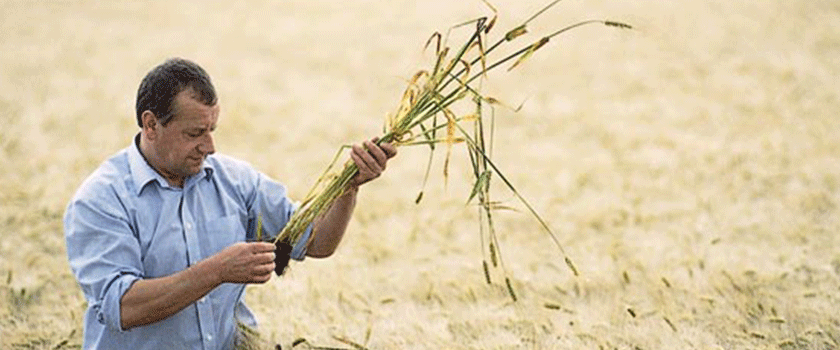
The most fertile ground for operations research today is agriculture. That may seem like a surprising claim, considering data analytics continue to help save companies billions of dollars and move billions of packages and passengers around the world – and there’s no lack of opportunity in these arenas. While advanced mathematical techniques have proved invaluable across diverse industries, operations research has yet to move in and dominate the field of agriculture, where it can play a leading role in feeding billions of people who may otherwise lack food security.
That’s no exaggeration. Within the next few decades, the global population will grow by nearly two billion. Although the world produces a tremendous amount of food today, it’s nowhere near enough to feed everyone. By 2050, caloric demand will increase by 70 percent and crop demand for human consumption and animal feed will double according to the World Resource Institute. The problem isn’t just that we need more food. This food must be produced in the context of formidable resource constraints, providing better nutrition for more people in the face of rapid environmental change while also cutting back our overuse of natural resources, ecosystems and the climate.
Consider, for instance, that crops require irrigation, and that more crops will require even more water – water we do not have. By 2030, an estimated 40 percent of water demand is unlikely to be met. On top of that, one out of every five acres of arable land is already degraded.
Food and agribusiness comprise a $5 trillion industry that accounts for 10 percent of global consumer spending, 40 percent of employment and 30 percent of greenhouse-gas emissions. This massive industry does not change easily, but change – transformative innovation – is precisely what’s needed.
Meeting the future population’s entire demand for food will require disruption of the current trends. Over the last 50 years, agricultural technology has evolved largely along the lines of bigger and faster. New plows, better tractors, superior combines. Even recent advances in genetics require greater inputs to take advantage of superior yields.
In the next 50 years, we must be smarter by taking advantage of the operations research and analytics revolution and its capability for making easier and more precise decision-making. Data analytics can increase the efficiency of food production by optimizing the entire agricultural ecosystem. This quantified approach would use sensing, input modulation and analytics to enhance the efficiency of producing the world’s food.
Analytics and Agriculture Today
To better understand where operations research and analytics can take us in the future, it’s worth exploring the current state-of-the art innovations in analytics and agriculture, where the focus is on expanding access to – and making more sophisticated use of – information. For example, granular data for every 10-meter-by-10-meter square of a field combined with the analytical capability to integrate various sources of information such as weather, soil and market prices has the potential to increase crop yield and optimize resource usage, thus lowering cost.
A wealth of agricultural information is gathered and distributed by means of smartphones, portable computers, GPS devices, RFID tags and other environmental sensors. Already, automation technologies such as GPS steering are being used to operate balers, combines and harvesters. RFID technologies track livestock to enhance food safety. Since 2010, European sheep farmers are required to tag their flocks, and the European Commission has suggested the extension of this practice to cattle. RFID technologies also provide new possibilities for harvest asset management. By adding RFID tags, bales can be associated with measured properties such as weight and moisture level. Mobile communication networks and technologies, which are now commonly deployed in many areas around the world, have become a backbone of pervasive computing in agriculture.
Agriculture is thus becoming a knowledge-intensive industry. As farmers need to obtain and process financial, climatic, technical and regulatory information to manage their businesses, public and private institutions cater to their needs and provide corresponding data. The U.S. Department of Agriculture supplies information as to prices, market conditions or newest production practices. Internet communities, such as e-Agriculture, allow users to exchange information, ideas or procedures related to communication technologies in sustainable agriculture and rural development. So far, however, much of the research and development in this regard has focused on sensing and networking rather than on computation, analytics and optimization. Therein lies the opportunity.
Contributions to analytics in agriculture have mainly applied off-the-shelf techniques available in software packages or libraries without developing specific frameworks and algorithms. This state of affairs has only recently begun to change. While early work in analytics in agriculture focused on the design of relational databases, more recent approaches consider semantic Web technologies, for example, in pest control, farm management or the integration of molecular and phenotypic information for breeding. Others consider recommender systems and collaborative filtering to retrieve personalized agricultural information from the Web or the use of Web mining in localized climate prediction.
Geo-information processing plays an important role in computational agriculture and precision farming. Research in this area considers mobile access to geographically aggregated crop information, region-specific yield prediction or environmental impact analysis.

Hyper-spectral imaging is being increasingly used for near-range plant monitoring in agricultural research. It enables basic research into the molecular mechanisms of photosynthesis, but is also used in plant phenotyping, which can help as an approach toward understanding phenotypic expressions of drought stress. Classical image analysis and computer vision techniques are being used in agriculture, too. Examples include automated inspection and sorting in production facilities, the detection of the activity of pests in greenhouses or the recognition of plant diseases.
Finally, artificial intelligence techniques are increasingly applied to address questions of computational sustainability. Work in this area considers algorithmic approaches toward maximizing the utility of land, enabling sustainable water resource management and the learning of timber harvesting policies. Thanks to the increased use of modern sensors, corresponding solutions have to cope with exploding amounts data recorded in dynamic and uncertain environments where there are typically many interacting components.
We’ve only begun to scratch the surface of what can be done with artificial intelligence techniques in agriculture. Most work in this area so far has not involved specifically trained data scientists. From the point of view of analytics, more efficient and accurate methods are surely available. Yet, computer scientists entering the field must be aware that methods they bring have to benefit researchers and practitioners in agriculture.
The Need for Practicality
Practitioners “out in the fields” need tools that yield results they can work with, ideally on mobile devices that run in real time to assist in their daily work. From the perspective of farming professionals, purely theoretical concepts or mathematical abstractions are of little use. They face real problems that can be addressed using scientific methods and advanced computing, but the tools need to be adapted to their needs in a way that produces tangible results.
The world’s food producers are technology-oriented people, but practicality for them remains a core value. They know their business, and if a new technology does not fit into their workflows, they will either ignore it or wait until it meets their needs. Thus, there is a great need for more information technology training in the industry.

Advanced technology, properly harnessed, creates the ultimate in practicality. In our own plant breeding work at Syngenta, we have seen the power of customized operations research tools for delivering concrete results. We’ve used data mining and pattern recognition to breed elite varieties of seeds that deliver higher yields, and the results speak for themselves. Before we took full advantage of the power of analytics, we realized an average annual increase in yield across our portfolio of about 0.8 bushels per acre. That average is now closer to 2.5.
We will realize more than $287 million in cost optimization for Syngenta Seeds Product Development during the period from 2012 to 2016 from our operations research tools. What that means is, we would have had to invest an additional $287 million to achieve the same level of genetic gain that we are realizing with the tools. Our goal is to do more with less, which helps fulfill our Good Growth Plan commitments of reducing agriculture’s impact on the environment and people that produce the crops we need, while helping to ensure a growing global population will have enough food for future generations.
Scale of Opportunities in Agriculture
This offers just a glimpse of the future potential for analytics in our industry. We expect that, with the availability of more computational power combined with sensing and networking technologies, new forms of farming may emerge thanks to operations research and data analytics.
The opportunities brought about by data collection and analytics have touched every market, from health care to retail. While the agricultural supply chain may not at first seem to be a prime target for optimization, it should be. From early stage research to farms and end-user customers, the agricultural supply chain is heavily reliant on small improvements in operational efficiencies and processes in order to increase crop yields, manage risk and create greater profit. This is particularly true for large-scale agribusiness where commodity crops are involved and small process adjustments have large impacts in terms of production.
The key to success is figuring out a business model that captures value from data at scale. In part, that is because the data are captured by disparate players in different parts of the value chain, such as seed companies, equipment manufacturers, traders and software developers. Managing and capitalizing on the critical data points is likely to require strategic partnerships and acquisitions, and potentially a reshaping of the industry structure. Meanwhile, emerging markets still lack high-quality, reliable data on production and demand. Establishing a systematic mechanism to capture the data could offer additional value-creating opportunities. In particular, rapid expansion of mobile technologies in rural populations could allow farmers in these areas to greatly improve productivity based on access to better information.
This is where the operations research community can have a big impact. Getting involved in agriculture is much more than just a ripe business opportunity. It’s lending a hand to solve one of the toughest challenges that humanity faces. Billions of lives depend on the coming analytics revolution in agriculture, and we hope the INFORMS community will rally around the cause.
SYNGENTA CROP CHALLENGE
Each year farmers have to make decisions about what crops to plant given uncertainties in expected weather conditions and knowledge about the soil at their respective farms. A new competition from INFORMS asks: How can a farmer make seed variety decisions that optimally reduce risk and increase yield?
Syngenta, a leading innovator in plant genetics, and INFORMS have teamed up to present the Syngenta Crop Challenge, a new competition administered by INFORMS that focuses on using analytics to address the problem of world hunger.
The case competition challenges participants to develop a model to predict what varieties farmers should use in the next planting season to maximize yield, using provided data on soil property, weather and seed variety tests. Experts in analytics and operations research are invited to compete in the innovation challenge.
Teams must submit their report by Jan. 15, 2016, and finalists will be announced in March 2016. Finalists will make their presentation in person or via teleconference on April 12, 2016, at the INFORMS Practice Conference in Orlando, Fla.
The winner of the first competition will be announced at the 2016 INFORMS Annual Meeting and receive a $5,000 prize. The runner-up will receive $2,500, and the third place winner will receive $1,000. Contestants must be 18 years or older to participate.
Each contestant will be provided the following data:
- soil property information for the particular farm that must choose which varieties to plant;
- daily weather data for the past 15 years (focused on the growing season) for the farm; and
- test data for the seed varieties at various soil types and weather types for the past four years (note that not all varieties are tested in all soil and weather types) indicating the yield for each variety at each growing season.
Selecting varieties involves a combination of seeking the best yield and hedging against challenging environments (such as disease or unusual weather). Contest entries will be evaluated based on the rigor and validity of the process used to determine which variety or varieties are selected for planting.
An extension of the Good Growth Plan, six commitments from Syngenta to address global food security, the contest broadens its reach to include input from stakeholders the world over. More information and case details are available online at ideaconnection.com/syngenta-crop-challenge. INFORMS is the sponsor and administrator of the contest.
Joseph Byrum, Ph.D., MBA, PMP, is the chief data scientist at Principal Financial Group. Connect with him on Twitter @ByrumJoseph.