


August 6, 2018 in Innovative Education
Innovative Education: Distance business analytics education
The state of distance education and the variety of forms an online business analytics program can take
SHARE: PRINT ARTICLE: https://doi.org/10.1287/orms.2018.04.10
Distance (online) education has enjoyed significant growth over approximately the past 20 years. From early beginnings that were tentative steps, the span and depth of distance education now rivals the resident offerings of most universities and colleges. If you have not encountered or examined the distance education market in the past five to eight years, you will likely be surprised at the rapid growth. Distance education allows a university to reach students worldwide, and competition has become intense as the natural delineation of “turf” has become blurred and overlapped.
In this article I provide some background on the current state of distance education and then sharpen the focus to look at a variety of forms for online business analytics programs. The key takeaways are: 1) distance education is now viable as a competitor to resident education, 2) programs are available for most interests, 3) the traditional notion of a classroom and its attendant method of delivery is redefined, and 4) business analytics education is readily available for virtually all career stages, locations and work situations.
It requires significant investment to start a distance education enterprise. While the infrastructure does not require classrooms, dorms or many other kinds of physical space, there is a fundamental need for a means to transmit materials (screencasts, lectures, readings, etc.) on a 24-by-7 basis year-round. Instructional designers work as co-creators of course materials and serve as an invaluable partner in understanding how to organize and deliver a course in the online space. Additionally, students need 24-by-7 support to assist them with access to materials, enrollment and technical support. All of this is summarized in a quote from an administrative colleague: “The first copy of a course costs a million dollars and every one after that is a penny.”
While the overall outlook is strong and improving for distance education, caveats for prospective student should be noted. Some employers have expressed skepticism regarding the value of an online credential vis-à-vis a resident equivalent. Having taught for the last dozen years in distance mode, in addition to my resident teaching, I believe that an online experience can be as productive as any. However, for the student it usually requires an extra level of discipline, commitment and initiative. For the instructor, there are additional challenges in teaching when the bulk of learning takes place outside of a traditional lecture format. Evaluation of student work is also different and ensuring that a student’s work is their own is challenging. However, technology can help mitigate this. Lastly, the nature of interaction between student and faculty tends to be more diffuse, spontaneous and in real time.
In a recent report [1], Seaman, Allen and Seaman provide a comprehensive snapshot of the recent growth of distance programs. Figure 1 summarizes various kinds of enrollments in degree-granting institutions in the United States. This data includes both resident and distance enrollments. The overall trend is slightly downward or stable.
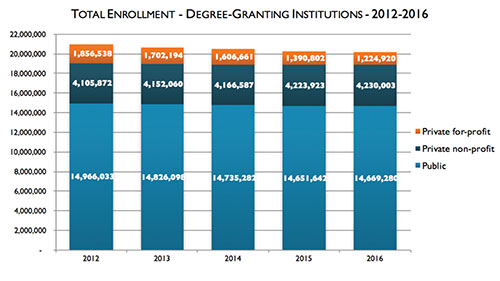
Figure 1. Total enrollment in U.S. degree-granting institutions.
Conversely, the trend for distance education is toward increasing enrollments. Figure 2 summarizes this trend for the years from 2012-2016.
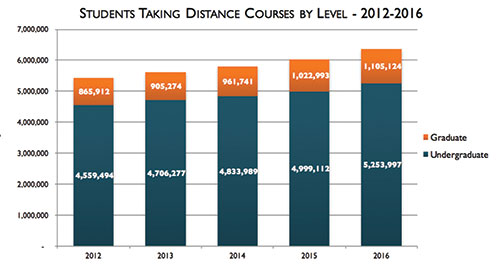
Figure 2. Students taking distance courses by level. Source: ibid.
The conclusion is that distance education is meeting a need that resonates with both undergraduate and graduate students, and this trend has been increasing at an increasing rate. Over the near term, I fully expect this to continue as programs and providers expand, acceptance of the equivalence of distance and resident credentials increases, and the need for additional education throughout one’s career increases.
General Trends
The general trends of distance education are fully at play for business analytics programs. The programs vary from ad hoc coursework to certificates and degrees. A certificate program is typically a series of three to six courses with a particular focus, while a graduate program mirrors the requirements and content of resident coursework. Most degree online business analytics programs are at the master’s level, with relatively few undergraduate programs and only a small number of Ph.D. programs.
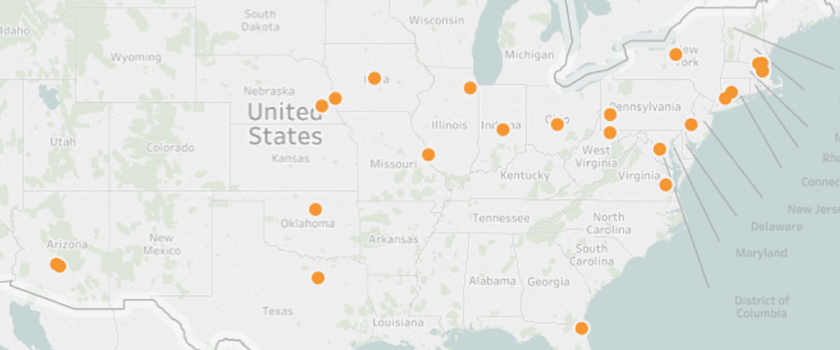
The Institute for Advanced Analytics [2] maintains a site with detailed information on programs in data science, analytics and business analytics. Figure 3 is a map of online business analytics programs in the United States, while Figure 4 presents a striking view of the growth in the number of analytics/data science programs over time.
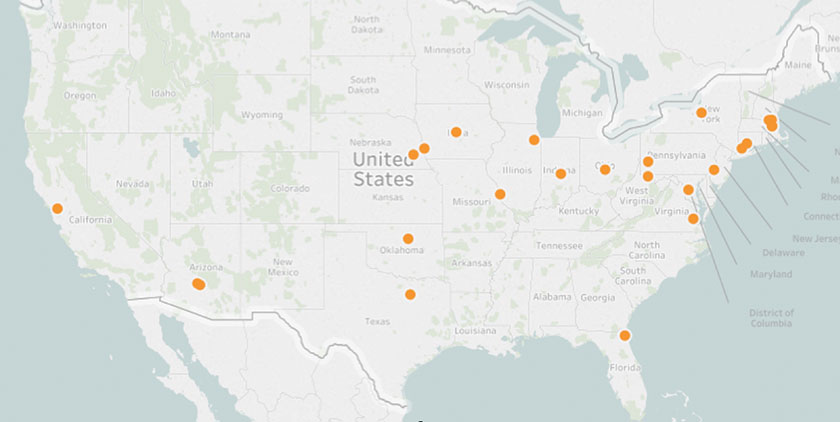
Figure 3. Distance business analytics programs. Source: Institute for Advanced Analytics
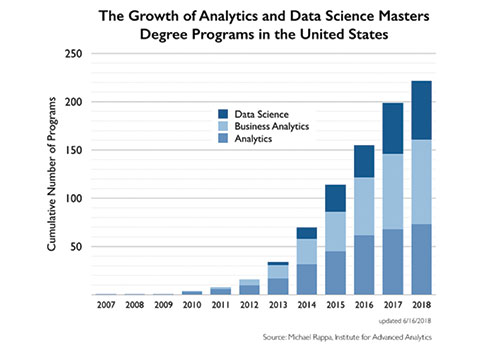
Figure 4. Growth of analytics and data science programs over time. Source: ibid.
An alternative to distance education from institutions with both a traditional, resident presence is a massively open online course (MOOC). Courses and programs delivered as a MOOC typically are either free or much less expensive than other online offerings. The courses are lightly moderated and use student interaction as a key learning method. Coursera (https://www.coursera.org) is a prime example of a MOOC provider. The courses are often offered by a university. They are also frequently offered as a transition point to programs at the home institution. The breadth of offerings is quite large and overlapping. Figure 5 presents the output from a search at Coursera on the term “business analytics” resulting in hundreds of course offerings.
Figure 5. A sample search of Coursera with the term “business analytics.” Source: https://www.coursera.org.
The ability to have access to business analytics courses and programs in distance mode has never been more easily accessible, extensive and flexible, and there is a program that will fit the needs and availability of virtually everyone. As the demand for analytics professionals has grown, so too has the ability to develop the skills for the analytics professional via an online offering.
Notes & References
- J. E. Seaman, I. E. Allen and J. Seaman, 2018, “Grade Increase: Tracking Distance Education in the United States.” Available online at: http://www.onlinelearningsurvey.com/highered.html. Accessed July 2018.
- Institute for Advanced Analytics, https://analytics.ncsu.edu. Accessed July 2018.
Online education: an enjoyable teaching experience
I have spent the last 36 years on the faculty in the Smeal College of Business at Penn State. My graduate training was in MS/OR and computer science. In 2001, my department (Management Science and Information Systems) merged with Business Logistics to form a Supply Chain and Information Systems department.
Our department started in distance education with a logistics certificate in 1999. In 2007, we expanded our offerings to include a master’s degree, with the certificate program coursework forming the first year of the two-year program. That program has grown substantially over the years, with enrollments in the 300-400 range.
I have taught online for the past 12 years. For the first nine years, I taught a graduate course titled “Supply Chain Analytics” in the second year of our online master’s program. Three years ago, I moved out of the online supply chain program to become the first faculty director of a new certificate program in Business Analytics, which is also an option in a master’s program in data analytics. I teach a course, “Prescriptive Analytics for Business Decisions,” in that program.
In our first year, we purposefully kept the size of the class small to ensure substantial faculty interaction and feedback. With the course content and delivery in place, we have substantially grown our enrollments, doubling each successive year. We are on pace to double again with our incoming class in the fall 2018 semester.
Our view is that quality is the only lasting differentiator in the distance education market. We also believe in a “high touch” approach to distance education. I encourage my students to contact me with questions and set up video conferences (we use Zoom) on a spontaneous basis. With this approach, I typically have more interaction with my online students than the resident ones. Since the bulk of the students are working professionals who are paying their own tuition, I find them to be mature, serious students who welcome the work and look for tangible skills as a takeaway. It is a very enjoyable teaching experience.
– Terry Harrison
Terry P. Harrison is a professor of supply chain and information systems at the Smeal College of Business, Penn State University. A former president of INFORMS and an INFORMS Fellow, Harrison is a recipient of the Kimball Medal from INFORMS, and he served two terms as editor-in-chief of Interfaces.
([email protected])