February 4, 2019 in Student Perspectives
Navigating the OR/MS academic job process
SHARE: PRINT ARTICLE: https://doi.org/10.1287/orms.2019.01.09

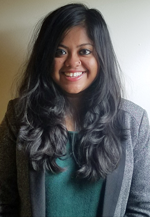
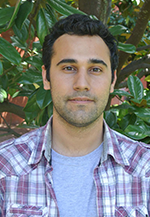
Every year, OR/MS Ph.D. students, post-docs and others enter the job market seeking their ideal dream job. The academic job market has been known to be particularly (and justifiably) exhaustive, with applications measuring many traits in a candidate including research and teaching abilities. In the following interview, Pritha Dutta and Çağlar Çağlayan, two Ph.D. candidates projected to graduate in May 2019, share their tips on how to navigate the OR/MS academic job process, particularly as it relates to tenure-track positions.
What criteria did you use to decide which institutions you wanted to apply for?
Pritha: As an international student, and not completely informed about the higher education system in the United States, it was crucial for me to understand the differences between the types of academic institutions such as R1, regional comprehensive, liberal arts college, etc. Once I was able to figure that out, I focused mostly on research-teaching balanced schools as they perfectly fit my career aspirations. I also applied to positions in R1 or research universities based on the research interests of the faculty in the department or if the job advertisement specifically mentioned research areas such as healthcare or sustainability, which align with my research interests.
Çağlar: Professional fit. In particular, my goal is to tackle complex medical decision-making problems (mostly coping with uncertainty) by using analytical methods. Accordingly, I applied to all schools and departments that appear to be a great fit for my research including biostatistics, IE/OR, business and public health schools. Some of these were a great fit for my methods and others were a great fit for my application areas.
What criteria did you use to choose your recommenders?
Çağlar: I tried to choose people that: (i) know a decent amount about my personal and professional aspects (and hence, can write strong recommendations), (ii) are diverse enough to cover both the practical and theoretical strengths of my research (e.g., a queueing theory expert for theory, a medical doctor for the application aspects of my research), and (iii) are prominent researchers in their area of expertise.
What are some strategies you used to prepare your statements: teaching, research, diversity?
Pritha: I attended workshops on the academic job market offered at my school that helped a lot in preparing the materials. I sought advice from seniors who had successfully landed jobs as assistant professors, and they shared their materials with me. I knew the first draft was not going to be perfect, so it is always a good idea to start with enough time on hand to make edits. A few experienced people read my statements and gave a lot of constructive feedback. I had one set of basic materials ready that I would modify according to the position and institution to demonstrate my fit for the job.
Çağlar: Start early, read the statements of previous strong applicants and ask others (e.g., your advisor) to help improve your statements. It is a process, and you need to clarify your research and teaching objectives, strengths and weaknesses (as well as how you will address these weaknesses) during this process. Furthermore, you need to demonstrate you are an excellent fit for the open position and hence, some portion of these statements should be customized to (the expectations of) each department to which you submit an application.
What is something you wish you knew better during the process?
Pritha: While preparing for the job applications and interviews, you hardly ever think of the final stage when you receive offer(s). I wish I was more aware of the challenges of this phase such as negotiating offers, handling and scheduling campus visits when you already have an offer, etc.
How did you prepare for the interviews?
Pritha: First, I prepared a three-minute pitch on my current research and future research plans. I also made sure I had some anecdotes in mind regarding my teaching experience that demonstrate my teaching philosophy and attitude toward students. Before campus visits, I spent a lot of time researching the school, the faculty in the department and people in higher administration who I was going to meet.
At a couple schools, in addition to the job talk, I had to give a teaching demonstration to a class of students, which can be very daunting. Hence, I extensively practiced both presentations, by myself as well as in front of an audience, so that I was confident. My advisor would also emphasize being relaxed so that I could enjoy the visit and be my best amicable self. Throughout the process, I read blogs on preparing for academic job markets that brought these several aspects to my attention. One that I found particularly useful is “The Professor Is In.”
Çağlar: Six suggestions:
- Rest well before the interview.
- Practice your job talk with different audiences (including your parents/friends).
- Clearly identify your strengths, key differences and future goals, and practice expressing them in a precise/concise manner.
- Know your weaknesses and thoroughly think about how to address these weaknesses in the future.
- Be aware that they [the interviewers] are interested in your future (not in your past). Hence, previous accomplishments are only useful if you can relate them to your future. Similarly, previous failures should not be much of a concern if you can convincingly show that you overcame them.
- Know the people you will interview with (e.g., know their papers, identify future collaboration possibilities, check if you have common interests/hobbies, etc.)
How crucial was the role of networking?
Pritha: Networking at events such as the Doctoral Student Colloquium organized by INFORMS helped in connecting with graduate students from other schools who were in the same situation. I stayed in touch with a few of them, and it really helped to be able to discuss the process and share the anxiety and stress (and hopefully successes!) with fellow candidates.
If you have your own advice or experience to share regarding applying for an academic career out of graduate school, please share them on INFORMS Connect!
Pritha Dutta (she/her) is an assistant professor in the Department of Management and Management Science in the Lubin School of Business at Pace University, New York. Her research interests include sustainability, socially responsible practices, healthcare operations, agriculture and food supply chains. She is passionate about teaching and is committed to contributing to the advancement of a diverse, equitable and inclusive community in higher education. Çağlar Çağlayan is a Ph.D. candidate in the operations research program at Georgia Institute of Technology. Utilizing a broad range of analytical methods, Çağlayan tackles complex clinical decision-making problems under uncertainty. In particular, his research mainly focuses on disease management and health service operations.