


February 3, 2019 in Women of O.R.
Powerful, pragmatic pioneers
Personal profiles of 10 pillars of the O.R. profession who blazed trails, broke barriers and busted down doors for others to follow (plus one 'Rising Star')
SHARE: PRINT ARTICLE: https://doi.org/10.1287/orms.2019.01.14

From the first settlers who came to our shores, from the first American Indian families who befriended them, men and women have worked together to build this nation. Too often the women were unsung and sometimes their contributions went unnoticed. But the achievements, leadership, courage, strength and love of the women who built America was as vital as that of the men whose names we know so well.
– President Jimmy Carter, addressing the nation in March 1980 recognizing the first National Women’s History Week
In contrast to many STEM-based organizations, INFORMS boasts an abundance of women in leadership roles; powerful, pragmatic women who have done amazing work and made countless contributions to O.R. and analytics across the board – from academia to industry. With the approach of Women’s History Month in March, this issue of OR/MS Today seems a good time to spotlight 10 women – longtime, influential members of INFORMS – whose professional accomplishments and dedication to blazing trails for others to follow dates back decades. We also profile one “rising star,” a young woman who no doubt benefited from those who came before and is now making history of her own.
While each of the women share a deep interest in the field of operations research, they took different career paths to get where they are today. The brief profiles below go beyond the honors and accolades to focus on the pioneer of a person who dared to go where few, if any, women had gone before.
Vicki Sauter
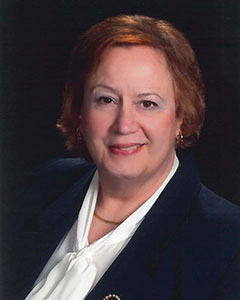 What do the 2003 George E. Kimball Medal recipient, 2012 WORMS Awardee for the Advancement of Women in OR/MS, author of "Decision Support Systems for Business Intelligence" and an INFORMS Fellow have in common? They are all Vicki Sauter. You can easily find these credentials on INFORMS Online, but you probably didn’t know that Sauter does needlepoint and is very involved in the arts as chair of the board of Craft Alliance Center of Art & Design.
Some INFORMS members may know that Sauter was instrumental in the merger of ORSA and TIMS, but how? According to Sauter, it was a “right place, right time” scenario. As a chairperson with TIMS and secretary of ORSA, she managed the five referenda needed to make the merger happen. “Most of the membership thought it was one organization anyway and no one knew who did what. It seemed silly to have two staffs, two of everything,” Sauter recalls.
After the merger, Sauter was selected as the first VP of Subdivisions and had to make huge decisions to help deliver the promise of INFORMS. She re-wrote bylaws and P&Ps. “What is a society, section, fora? I did that,” she says. “The structure of the meetings became mine to figure out.” She describes the time period around the merger as “tiring, exhilarating, political, interesting and stressful,” before adding that today she’s “just a regular old member.”
With her INFORMS duties a thing of the past, Sauter can now concentrate on teaching her graduate students information systems & technology and decision support systems at the University of Missouri-St. Louis. She is also very passionate about getting more women into technology. Her current project with doctoral students is called “Code Cowboys” (male or female) about how individuals interact in the workplace. She notes that some (Cowboy) male coders don’t document how they write their code or allow their colleagues to help – what is this saying to women in tech? Sauter says this bravado problem is causing more people to leave the field (particularly women), so the problem is not necessarily how to attract women to the field, but how to keep them.
One way to keep women in the field – support. Support in all areas from research to projects to work/life balance to simply having like-minded colleagues with whom to talk. INFORMS and WORMS are supportive in a number of ways, per Sauter. To her, WORMS was a “support mechanism – people you can talk to and depend on in a way that you can’t otherwise. All of my mentors were male because that’s what was available. Judith Liebman, Karla Hoffman, Susan Albin – we were all there together, supporting one another.”
As for INFORMS conferences, Sauter has seen the number of female members at sessions explode; she has to wait in line for the ladies room now! She loves seeing the number of people who bring their children. “I did that as a new mother and it was very traumatic to many of my colleagues, and now, no one thinks twice about it,” she says.
Sauter worked hard to try and bring childcare to society conferences. She chaired the (then) ORSA/TIMS meeting in 1987 in St. Louis, an easy date for her to remember because her son was born the year before. She notes that at that time, the meeting budget paid for activities and food for spouses. So, she says, “I decided if we were going to support the spouses (virtually all wives), we should support the female members, too. I lobbied for childcare at the meeting.” In the end, Sauter secured childcare by hiring a professional childcare agency and renting a room.
Sauter was once asked if she felt bad for taking a man’s position. Her answer was a resounding “no,” adding, “yes, I was a rebel,” which her story and legacy confirm.
Susan Sanchez
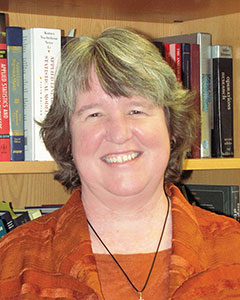 From math to engineering to simulation, Susan Sanchez never had any doubts that she could do whatever she wanted with hard work. Growing up, Sanchez would do math for fun with her dad – he was teaching her algebra even though she thought she was just solving problems. She tested out of a year of math in middle school (thanks, Dad!) and took second-year University of Michigan calculus classes while in high school.
Sanchez knew nothing about operations research (O.R.) at the time but wanted to do something “real” with math, which led her to engineering as an undergrad. After deciding on industrial & operations engineering, Sanchez “overloaded a bit” on classes and graduated from Michigan in just three years, and continued on her stellar educational track with a Ph.D. from Cornell University.
Interestingly, while choosing among grad programs, Sanchez received a call from a school offering her a fellowship but needing her decision on the spot. When she told the Ph.D. program director that she was also considering Cornell, he responded with “Oh, do you have a boyfriend there?” She decided instantly to turn down the fellowship offer and indeed ended up at Cornell (where she was treated professionally and did, in fact, meet her husband).
And thus began the dreaded “two-body problem” that academic couples face when trying to find ideal jobs in the same city. It took them years to fully solve this problem, going from Tucson, Ariz. to St. Louis, Mo. to finally ending up (together) at the Naval Postgraduate School (NPS) in Monterey, Calif. Sanchez recalls going out to NPS in 1999 on what she thought was a one-year sabbatical and feeling for the first time they truly had a good solution to the two-body problem. Today, Sanchez works on fascinating problems in military O.R. – problems that affect real decision-making.
As an academic, Sanchez took risks on her career path. With an engineering background, she went to a business school at the University of Arizona (UA). “It was a risk for me to go to a business school. Whatever the circumstances, I don’t regret having taken that risk, and it has allowed us to take risks later on.” While at UA, Sanchez had both of her children before she was up for tenure. At the time, UA’s official policy for faculty involving childbirth was that “faculty need not take a semester off without pay if they continue to perform all regular duties.”
Sanchez moved on to the University of Missouri-St. Louis, where she earned tenure, but gave it up (for several years) when joining NPS and shifting to military O.R. “Regrets are not for things you’ve tried that haven’t worked out, but for the chances that you didn’t take,” she says. “I never had my life mapped out and had to be flexible.” She is happy with her choices – the unexpected twists and turns led to good things.
At NPS, Sanchez co-directs the SEED Center for Data Farming, where she, her colleagues, and over 200 thesis students grow and generate data in smart ways using large-scale simulation experiments. She has worked with the Department of Defense and NATO on projects in many areas, including humanitarian assistance and disaster relief. The Navy mandates support of disaster relief operations and all sorts of decisions have to be made: from prepositioning relief materials, to allocating transportation resources, to conducting relief efforts. According to Sanchez, since we don’t know much about disasters in advance, simulation helps us develop robust plans under uncertainty. For her work with SEED, Sanchez was named a Titan of Simulation in 2016. She is an INFORMS Fellow and a 2018 WORMS Award recipient.
Sanchez says she tries to raise the visibility of women in O.R., giving back what she’s gained from INFORMS – particularly WORMS and the INFORMS Simulation Society. She says the groups have been tremendous sources of professional friendships and networks, “people I could call and talk to and receive mentoring from, which has made a huge difference,” she adds. Sanchez also notes that INFORMS itself has done well to raise the visibility of women, especially by supporting and encouraging their participation on the Board of Directors and in other leadership roles within the society.
Margaret Brandeau
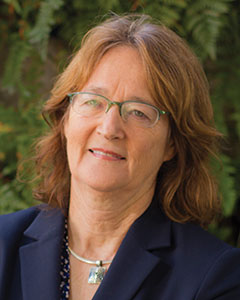 You really can have it all! What an inspiration! Tell me your secret! She truly is a trailblazer, breaker of glass ceilings and the role model anyone would want for young women. Margaret Brandeau would never say those things about herself, but all those thoughts ran through my mind after one short phone call with her.
Brandeau never thought being a woman in operations research was an obstacle, but she did understand the possible setbacks. “I don’t want to be given favors for being a woman,” she says, “or judged more harshly – just fairly.” To that end, Brandeau had the prudence to level the playing field for herself by publishing under “M. Brandeau” in her early days as a faculty member at Stanford University. She didn’t want to be judged, just her work, and she didn’t want any bias, especially not based on her name.
“A fellow once came up to me at an INFORMS meeting and read my name tag and was shocked that I wasn’t an old French man,” she quips.
Someone once told Brandeau in a faculty interview at a top university that “we have to hire a woman,” whereas Stanford told her she was the best person for the job. She joined the Stanford faculty in 1985, and she is just as enamored with her job today as the day she received the offer. “I love O.R.,” she says. “I was never planning to become a professor. It just kind of happened, but it is fantastic and I totally love it!”
According to Brandeau, when she joined the Stanford faculty, there were two more senior women in her department, both of whom had two children, which was helpful and encouraging to know it can be done. Brandeau one-upped these women and had three children – two before tenure. How did she do it? Unbelievable hard work, dedication and discipline.
“I chose to be a mother and I chose to be a scholar, and I wanted to do both well,” she says. “When I’m at work, I focus entirely on work. I don’t have a lot of time for chit chat, sadly!”
Although her greatest career challenge has been the work/life balance, she really wanted both things and worked incredibly hard to make tenure and be fully present at home. Brandeau would go to work (sometimes late, but would always be there), swim Masters on her lunch break at noon, return home to be with her family and then sometimes prepare lectures from 9 p.m. to midnight after her kids were in bed. Rinse and repeat. “You just need to focus your energy and stay calm. A lot of it is attitude,” she says.
Brandeau did all of this at a time when female professors were under a microscope. She notes that as a woman professor of engineering in those days, you had to be better than the average engineering faculty member to succeed. Brandeau is still working hard today, specifically on trying to halt the U.S. opioid epidemic. In a recent published work she considered 11 different strategies to help curb the opioid epidemic using a model showing the potential effectiveness of those strategies either alone or in combination. Brandeau has discussed this work with the U.S. Assistant Secretary for Health, who is in charge of federal opioid policy in the United States.
Brandeau still believes that recognition of women in the O.R. field has lagged, but her running list of achievements (including INFORMS Fellow, INFORMS President’s Award and Philip McCord Morse Lectureship, to name a few) begs to differ. Brandeau herself has recognized women in STEM with the foreword she wrote to the book, “Women in Industrial and Systems Engineering,” which features contributions from leading female scientists along with a comprehensive biography on the historic luminary of industrial engineering, Lillian Moller Gilbreth – a name worth learning as we head toward Women’s History Month.
Despite possible lack of recognition, Brandeau says women have come a long way since the 12 percent female students in her MIT undergraduate class has grown to 50 percent, and membership of WORMS is now more than a handful. Brandeau remembers her first INFORMS conference in 1979 in New Orleans where the few women attendees started grabbing lunch together. This has now turned into the highly popular WORMS luncheon.
If you want to discuss societal problems that can be fixed with O.R. or how to balance your career and home life, you’ll have to get up early to join Brandeau on her daily 2.5-mile hike or get yourself a bee suit and find her in her garden keeping honeybees to make her own skincare products from the honey and wax. Again, how does she do it?!
Polly Mitchell-Guthrie
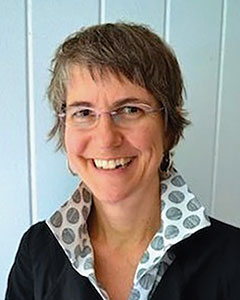 When Polly Mitchell-Guthrie discusses her career path there is a resounding theme of aspirational women. A 17-year career at SAS and several job “pivots” led Mitchell-Guthrie to work for mentor and longtime INFORMS member Dr. Radhika Kulkarni – her boss for nine years and “a great example of someone who showed both strong technical abilities (depth and breadth) … as well as business leader of large team.” The recently retired Dr. Kulkarni had “technological vision, business skills and compassion. She brings her whole self to the job with personal warmth,” says Mitchell-Guthrie.
She also credits INFORMS Past President Anne Robinson for her involvement with the Institute when she recommended that Mitchell-Guthrie be added to an ad hoc committee to plan the executive forum at an INFORMS Business Analytics Conference. Robinson also recommended that Mitchell-Guthrie be put on the first task force that led to the creation of the Certified Analytics Professional (CAP) program. “Even though I didn’t have a deep analytics background at the time, Anne was encouraging, and I appreciated her nudge,” says Mitchell-Guthrie. With her CAP involvement since its inception, Mitchell-Guthrie helped launch the Associate CAP (aCAP) designation for entry-level analytics professionals.
Another project Mitchell-Guthrie is particularly proud of is cofounding the Women in Machine Learning and Data Science (WiMLDS) North Carolina chapter, which after three short years has almost 900 members. The Raleigh-Durham, N.C. group was the third chapter of WiMLDS and now there are 39 worldwide. The mission of the nonprofit is to promote and support women trying to grow their careers or get into the field of analytics.
Noting that her two cofounders are Turkish women with Ph.D.s, Mitchell-Guthrie thinks U.S. universities should look to what other countries are doing to get young women involved in the STEM field. She notes that there is no shortage of active INFORMS women members, but most of them are not born in the U.S. In fact, some are from countries with some practices that would score far lower on gender equality, but they are ahead in terms of not discouraging young women from entering STEM fields, according to Mitchell-Guthrie. For some reason, “women born in America outside of the immigrant diaspora do not see STEM careers as something for them,” she says, noting that they feel they are unwelcome in in those classes (like math) and leave or drop out. “We need to see what other countries are doing and do that,” she adds.
Her advice to young women: “Go for it. If change is not thrust upon you, look for opportunities for changes and make it happen.” Which is precisely what Mitchell-Guthrie did when leaving her long career at SAS and making a left turn toward the healthcare discipline as the director of Analytical Consulting Services within Enterprise Analytics and Data Sciences at the University of North Carolina Health Care System.
Mitchell-Guthrie tells young women to remember their ABCs: Ask questions (for a raise, to be on a committee, included in a meeting); Be confident (try something that’s a stretch, even if you don’t yet have all the skills, and grow into it); Connect (find mentors and sponsors but don’t assume they have to be women). To men, young and old: “Support and encourage women in the field. If there is a fear that it would be viewed inappropriately because of concerns about sexual harrassment, get past that. Men can be great supporters of women, and should be.”
Karla Hoffman
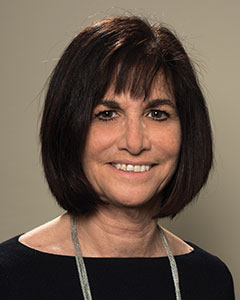 Karla Hoffman has worked at George Mason University since 1985. Nearly 35 years with the same employer – what did she do right to find the perfect job so early in her career? Apparently, she’s just lucky. “Everyone’s career involves luck, I was especially lucky. And I had a lot of people willing to help me out,” Hoffman says.
With an undergraduate math degree, and an imperfect first job as an actuary trainee, Hoffman was back in the classroom within six months of graduation. She received her MBA and Ph.D. from George Washington University and took a post-doc at the National Institute of Standards and Technology (NIST) where she acted as a consultant in operations research to government agencies that didn’t have O.R. departments but had problems that O.R. could help solve. The agencies included the IRS, Federal Aviation Administration, Department of Energy and the Department of Transportation. This one-year Post-Doctoral Fellowship turned into nine years at NIST.
Hoffman credits her mentors, colleagues and friends for helping her career path seem easy. A good friend and colleague Carl Harris helped start the Engineering School at George Mason and, as the first chair of the Systems Engineering Department, implored Hoffman to help him build this department within the School of Information Technology and Engineering. Hoffman hasn’t looked back. Although she was the first woman hired in the department, reinforcements arrived shortly thereafter. “There are more women at this department than one would expect for operations research and systems engineering. It’s about one-third women, which is surprising when the number of undergraduates in our field is about 20 percent,” she adds.
Hoffman understands how important mentorships are to careers and the O.R. profession. She says she couldn’t have asked for a better first supervisor than Alan Goldman, who encouraged her to attend her first ORSA/TIMS meeting, at which, Hoffman notes, she could probably count the number of women in attendance on her fingers. Happily, the number of female INFORMS members and conference attendees have significantly grown since then.
Hoffman was also mentored by Judith Liebman (also profiled here) – the first woman elected president of ORSA. With Liebman’s guidance, Hoffman was involved in the creation of what is now the Computing Society of INFORMS. Hoffman, in turn, has given back to the profession by mentoring students and faculty in her department as well as colleagues at INFORMS.
“I’m very proud of the Edelman-winning team with the FCC – I put the optimization team together primarily of GMU graduates,” Hoffman says of the important role GMU played in the FCC earning the prestigious award last year. Hoffman’s most recent Ph.D. graduate is head of O.R. at GrubHub and is responsible for the routing and scheduling algorithms that must provide schedules to drivers in less than one second.
Even while traveling during this sabbatical year, Hoffman remains naturally curious and constantly learning about new things and thinking about how the “App economy” can be helped with O.R. tools. In her travels, she visits many good friends she’s made through INFORMS, “The friends I have made in the INFORMS Community means that I can travel anywhere in the world and have colleagues to see. It makes life more interesting.”
Eva K. Lee
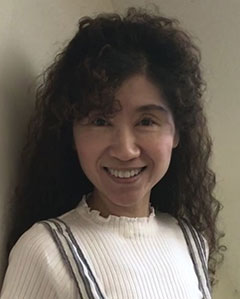 Simply put, Eva Lee loves math. She studied theoretical mathematics as an undergraduate, and when she came to the U.S. for graduate school, she thought math was the only subject of study to choose. That is, until she learned about operations research (O.R.). “All of the problems I love to do include math, and the desire to solve them lends itself to O.R. applications,” she says.
Along the way, Lee’s trajectory took a turn toward medicine, which she says has been easily the most challenging part of her career. “It is difficult – emotionally and physically – having to deal with life-and-death situations,” Lee says.
How did this begin? Two months after becoming the first female faculty member in the Department of Industrial Engineering and Operations Research at Columbia University, Lee attended a clinical seminar for medical research, where she was the only mathematician in the room. She had some thoughts and ideas she wanted to share during the seminar but was too afraid to speak up – so she didn’t.
“I think this was a test, and I might have failed in some sense,” Lee says. However, she emailed the medical director a week later to discuss her ideas, which turned into her first medical-focused O.R. project. This pioneering work won the 2007 INFORMS Edelman Award for using O.R. at Memorial Sloan Kettering Cancer Center to develop sophisticated optimization modeling and computational techniques for real-time (intraoperative) treatment of prostate cancer.
Another INFORMS award that impacted Lee’s career? Winning the 2005 Pierskalla Best Paper Award from the Health Applications Society. As a result, Lee was contacted by White House policy directors inviting her to speak to Congress and other government leaders on “Emergency Treatment Response and Real-time Staff Allocation for Bioterrorism and Infectious Disease Outbreak.” Needless to say, she was pleased they saw the paper and was grateful for the recognition.
Lee is involved in numerous emergency response and homeland security projects, working closely with leading government policymakers in dissemination and practice of her research. Some of this work, such as radiological response in Japan, combating Ebola in West Africa and the Zika epidemic in South America, takes her to other countries.
Lee says O.R. represents a field attractive to young students for its powerful applications. Now at the H. Milton Stewart School of Industrial and Systems Engineering at Georgia Tech, Lee hosts Georgia high school students in her classroom. Through hands-on science activities, she shows them mathematical models and how to develop math and computer systems for decision-making. She says the students start out with no idea that math can have so many practical applications. She suggests that INFORMS should do more outreach to grade school and secondary school students.
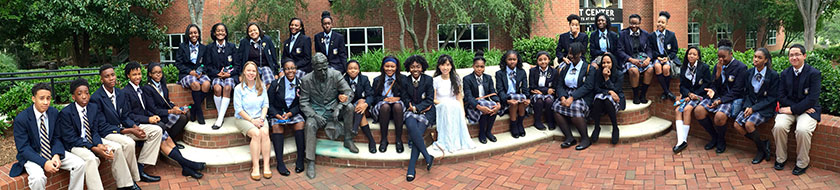
“Think about AAAS -- the biggest and authoritative science organization -- they always have high school kids at meetings,” Lee notes. “I think we can do that for O.R. too. If students are engaged in exciting research and its uses, they will be drawn to operations research.”
For the past two years, Lee has been putting together inventions and a paper on personalized medical treatment involving robotics. In one case, she is examining how to deliver real-time radiation from different angles and planes to treat difficult-to-treat cancers (such as lung and pancreatic) and intracranial tumors.
She is currently working on several impactful projects, such as designing a universal flu vaccine by looking at the influenza virus and its proteins. She thinks the results will work not just for the flu but also for finding cures for other viruses.
Another big project involves working with Good Samaritan Health Center on a homelessness project in Atlanta that reaches out to people without healthcare and permanent residences. Lee is optimizing these individuals’ chances of being placed in housing and receiving subsidized transportation. She was invited to discuss this project with U.S. senators, and her goal is to expand the project nationwide.
Her love of mathematics goes a long way. Don’t be surprised when Lee – a nonstop ball of high energy – accomplishes it. All of it.
Judith Liebman
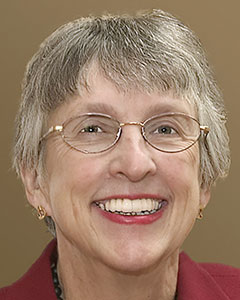 Judith Liebman was a true O.R. pioneer. In 1972, she was the first woman tenure-track faculty member in the engineering departments at the University of Illinois. A few years later, Liebman became one of the few women in ORSA (Operations Research Society of America), a forerunner of INFORMS). She eventually joined the ORSA council as the only woman and was heartened to hear that some members of the council were already discussing appointing more women as committee chairs. In 1987, Liebman was elected the first female president of ORSA, to which she notes, “It didn’t seem to be a big deal to me at the time. I was used to being the only woman in the room.”
Now retired from teaching, Liebman’s influence continues to be felt throughout the O.R. community. Her name is attached to the Judith Liebman Award, which INFORMS presents to outstanding student volunteers who have been “moving spirits” in their universities, student chapters and the Institute. On a more personal level to many female INFORMS members, Liebman is a mentor, someone they look up to, including her youngest granddaughter, a graduate student in O.R. at the University of Texas at Austin.
Liebman maintains she did not feel any career obstacles based on her gender. “I honestly didn’t feel the need for more support,” she says. “I was blessed with a husband who supported me wholeheartedly, and I was probably so goal focused that if there were bumps in the road, I took no notice, otherwise known as being stubborn.”
Liebman also credits her husband, Jon, for her interest in the field of O.R. She learned of O.R. when her husband was pursuing his Ph.D. in environmental engineering at Cornell University. Minoring in O.R., he suggested Liebman might like it. At the time, she was a computer programmer for the General Electric Research Lab in Ithaca, N.Y., and they paid for her to take a course. “One O.R. course and I was hooked,” she says, adding, “imagine building models of processes that one could improve!”
Without blinking an eye, Liebman accomplished a major feat that women today still struggle with: becoming a mother and returning to work. At a time when it was typical for women to stay at home and raise their family, Liebman simply took a four-year break from her job, during which she had their three children. She then returned to work as a computer programmer until she began graduate school in the Department of Industrial Engineering and Operations Research at Johns Hopkins University.
Throughout her time in graduate school, Liebman’s long-term goal was always to become a professor of operations research. The goal became her greatest achievement, along with being an active member of a university faculty and assuming a leadership role when needed. In 1972, the University of Illinois hired Liebman and her husband at a time when it was university policy to not have a married couple on the faculty. The feat required the signature of the university’s president.
The one O.R. “problem” Liebman would address today is “better defining what it is!” She also wishes she could have had access to the vast amounts of data available now when she was in the prime of her career. She notes that O.R. was a developing new field in the 1960s, as was computer technology. “We built mathematical models for decision-making processes years before sufficient data were available to evaluate their effectiveness,” Liebman adds.
For Women’s History Month, Liebman plans to read about the successes and struggles of women. At age 11, Liebman was gifted the biography of Marie Curie authored by Curie’s daughter, which certainly contributed to Liebman having a role model of a woman with both a career and a family – a testament to Liebman’s can-do and unfazeable attitude. Today, at the age of 82, she says, “I am still aghast at what some women have had to overcome.”
Brenda Dietrich
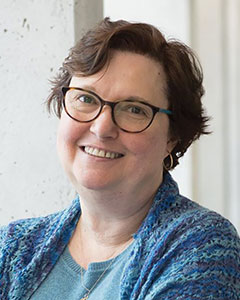 Practitioner-turned-academician Brenda Dietrich always has the same goal in mind: improve the data. After a 33-year career at IBM and holding several titles such as Chief Technology Officer and Strategist for IBM’s Business Analytics group and IBM Fellow, Dietrich says she is most proud of not one particular project, but “being a significant influence on both the culture of IBM as it became a data-driven organization…and on the business of IBM, as it transitioned from selling hardware to providing the infrastructure and methods of data-driven decision-making to its clients.”
After joining Cornell University in 2017 as the Arthur and Helen Geoffrion Professor of Practice in the School of Operations Research, Dietrich is now working on strengthening the department’s interaction with industry and bringing more “practice” perspective to both the undergraduate and graduate program. Mixing industry and academia is kind of her thing.
Dietrich joined IBM in 1984 and planned to spend a few years working on “real” problems and then return to academia to teach and work on extensions of, and improvements to, the real problems. But between having kids, getting promotions, and always having interesting problems to work on and great people to work with, there was never a really good time to make the transition, she notes.
For students considering a career in O.R., Dietrich highly recommends internships that involve real project work, which are available in many industries. For those pursuing a Ph.D., there are industrial as well as academic post-doc positions, and moving from a post-doc in one to a longer-term position in the other is an option. Many careers blend real-world use of O.R. and academic research and teaching in O.R., either through nontraditional positions or academic incubators for start-ups. Dietrich maintains that choosing an O.R. career within industry or academia doesn’t have to be an “either/or” decision. “With a little creativity it can be both – either simultaneously or sequentially,” she adds.
If given a do-over, Dietrich says there’s nothing about her career path she would change. However, if she were to start her career now, she’d focus on healthcare – on making better use of the available resources to reduce costs and improve outcomes. Early in her career, insufficient data hindered progress in the healthcare area, but that has changed for the better, along with computing power and capacity. Problems that used to require days of computation on powerful computers now solve in minutes (or less) on readily available commodity hardware.
Dietrich plans to update the material in her first-year “Introduction to O.R.” course to include more contributions to the field by women. She is doing her part to introduce the field to college freshmen, but she would like to see the O.R. community reach out to younger students. “We need to realize that OR/MS as a profession is not visible to most high school and college students,” Dietrich says. “Those of us in the profession need to make what we do broadly visible outside of our small community of academics and professionals.”
At IBM, Dietrich worked with the communications team to create accessible articles for mainstream media about how she and her team used O.R. and related methods. “These generated lots of emails from parents of high school and college students wanting to know more about the field. I answered every one of those emails and included a pointer to INFORMS,” she notes.
Dietrich suggests that INFORMS use a day during the Annual Meeting to invite local undergraduates (focusing on colleges and universities that have high female and/or minority enrollments) to a networking lunch and give them access to some plenaries, poster sessions and career or graduate school panels. Dietrich networks and mentors during the WORMS reception at the Annual Meeting and compares notes with colleagues while eating “the best food at the INFORMS conference.”
Speaking of food, Dietrich’s weekends are filled with trips to the Ithaca Farmer’s Market, occasional trips to a few Finger Lakes wineries and time with her dogs at the dog park. She is also active in the “farm to fashion” movement, processing and spinning fleece into yarn, and knitting or weaving that yarn into garments.
L. Robin Keller
 Like other pioneer women profiled in this article, Robin Keller never perceived her gender as an obstacle, let alone game over. She just kept moving forward. For example, when Keller applied to colleges, she didn’t even know that Harvard University wasn’t an option (they only accepted male undergraduate applicants at the time). She was accepted to both Stanford University and the University of California, Los Angeles (UCLA) and became a mathematics major at UCLA. After a class on game theory, Keller focused on OR/MS and later its subfield decision analysis.
During her freshman year at UCLA, Keller took a bowling class and noticed her arm began to hurt. She was soon diagnosed with juvenile rheumatoid arthritis (RA) – the only limitation she’s ever experienced. “I’ve always felt that even if there are limitations – everyone has one – that there are things you can still do within your perceived limits,” Keller says.
Early on, Keller thought a professor job would provide her with job security and flexibility in case her RA got the best of her. She’s been on the faculty at University of California, Irvine since 1982 and “everything is fine,” she says. Her myriad publications and INFORMS honors (including Fellow, Kimball Medal and Ramsey Medal recipient) prove nothing can hold her down.
Keller credits INFORMS for giving her the opportunity to get her work out there in journals and other forums. She says INFORMS allows its members to provide service and network broadly with people worldwide. Keller traveled to Cuba twice to attend the conference of the Cuban O.R. society to network and communicate (in Spanish) how to use Markov decision tree analysis using the open source R software. The U.S. embargo with Cuba prohibits Cubans from buying U.S. companies’ software. Keller hopes that INFORMS can continue to reach out to countries that may be isolated from such resources.
In many ways, Keller’s career was based on real-world problem solving rather than perceptions, and her mentors were instrumental in her mindset. She mentions Moshe Rubinstein, who taught a campus-wide class at UCLA called Patterns of Problem Solving and always urged the importance of creative problem solving. Keller became an instructor in his class as a grad student, which went through many problem-solving tools. Rubinstein and Rakesh Sarin were very supportive as her UCLA dissertation co-chairs. Keller also names Irv LaValle, who always beseeched “playing while you work and Ralph Keeney (“Don’t say yes immediately, think about how the activity fits in with your personal and professional objectives”) as mentors during her career.
Keller’s mentors influenced the advice she would give to young students of O.R.: “Find what you really like doing because then it’s always a pleasure – when it’s fun, it’s not hard to motivate yourself.” Sound advice for anyone to follow.
Anna Nagurney
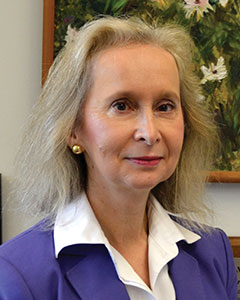 Talk about timing. Anna Nagurney recently returned from a trip to Chile where she gave two talks. First in Santiago, Nagurney was part of a panel that included an IBM executive and a physicist. The second, in Valparaiso (and live-streamed on Congreso Futuro), she spoke about women in science – a personal journey (which is also the topic of her blog RENeW). Ever humble, Nagurney says she had no idea why they picked her, but she was thrilled to share her love of networks and supernetworks. “I love networks,” she says, “and the math.”
Nagurney combined her love of networks (and giving talks, apparently) in her Omega Rho lecture at the 2018 INFORMS Annual Meeting in Phoenix. She shared network-based results in multiple areas, including her work in perishable product supply chains from food to healthcare, disaster relief, cybersecurity and the “new” Internet. Nagurney has been involved in a “Future Internet” project for several years as part of several teams working to envision a new kind of architecture for the Internet, which could enhance work in cybersecurity. It should be noted that Nagurney is the only female on the project.
As a Ph.D. student in applied mathematics, Nagurney recalls that when people would say “she” in transportation, they could only be referring to herself or her advisor. Today, as the director of the Virtual Center for Supernetworks, Ph.D. coordinator and John F. Smith Memorial Professor of Operations Management at the University of Massachusetts Amherst, Nagurney is proud to report how much the community has grown, complete with women. “We are much better connected now because of fantastic conferences and social media,” she says, adding that there was a time when there were so few women you would really stick out, but now there is so much support. Support in terms of visibility, like INFORMS booking female keynote speakers at conferences, as well as the networking community within WORMS.
“You need to be a trailblazer,” Nagurney stresses. She certainly is as the first female Full Professor at the Isenberg School of Management at UMass. While she suggests that INFORMS female membership might be low at 25 percent, she knows “we are visible. We just need more peer mentorship for young female students.”
According to Nagurney, it has been scientifically demonstrated that when a freshman female is paired with another female student mentor, the freshman is more likely to remain in the course of study and career path toward a STEM profession. And if they need more inspiration, look no further than the 2016 book “STEM Gems,” which features Nagurney and 43 other female role models in diverse fields within STEM. The book is mainly used to encourage girls ages 9 to 15 to explore STEM studies and is very accessible to this age group. Girls who have STEM role models are 1.4 times more likely to pursue STEM careers. To do her part, Nagurney gives out copies to her nieces and colleagues with young girls to incite inspiration.
Nagurney is a motivator of young women, and her inspiration earned her the WORMS Award for Advancement of Women in OR/MS. Ironically, Nagurney first heard about WORMS from some of her male doctoral students. She believes the WORMS group is innovative in its sponsorship of travel awards and other recognitions, in addition to organizing timely sessions.
Concludes Nagurney: “It is outstanding to recognize women who have done a lot – practitioners and academics – true trailblazers and truly wonderful people.”
RISING STAR: Kayse Lee Maass
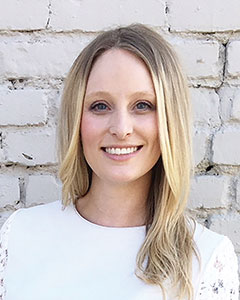 Kayse Lee Maass grew up interested in math and playing tons of math games with her mother, who teaches middle and high school math. For example, mother and daughter would add up the family grocery bill while shopping and see who could get the closest to the total at check-out. As a senior undergraduate math and physics major, Maass took an O.R. course and the proverbial light bulb went off. She found a way to use applied math and be technical.
Her undergraduate mentor, Patrice Conrath, who taught the aforementioned O.R. course and oversaw the math tutors, encouraged Maass to go for an O.R. grad degree. A quick change of plans landed Maass at the University of Michigan in a Ph.D. track in Industrial and Operations Engineering. Her Ph.D. advisor, Mark Daskin (former president of INFORMS), was “incredibly helpful and willing to let me explore different areas,” Maass says. “He was able to provide guidance on industry versus academia and encouraged me in getting other people’s perspectives.”
As the first Ph.D. in her family, Maass found navigating the academic process her biggest challenge, along with simply being a female in academia. “I like to wear heels and dresses and do my hair – it was hard to navigate,” she says. “How much do I want to conform to the norm [of what many people consider an engineer to look like] versus being myself? It’s still a process.” In the end, Maass chose herself, but noted that “it’s not always that easy or clear.”
Still today, decades after trailblazers cleared the way, Maass often finds herself the only woman in the room. Why do people assume Maass is a nurse because she works in the healthcare field (running a lab in the Department of Health Sciences Research at the Mayo Clinic)? Why, in all but one of her academic job interviews, was Maass asked pressing questions about whether she was planning on having kids pre-tenure or whether her husband was OK with her having a job that would mean she wouldn’t be home to cook dinner? She is still trying to navigate why.
In one university interview, she was asked what one faculty thought was the “most important question: “Do you have kids? And do you think you’ll be able to handle this job with kids?”
Says Maass: “I had prepped extensively for these interviews, knowing that I would get some questions about kids or marriage, likely from a well-meaning faculty trying to make small talk, and I was prepared to answer or deflect these types of questions on my own terms. What I wasn’t prepared for were the questions that seemed to question my ability to be successful at my job based on my reproductive decisions.”
The WORMS group is helping Maass and others navigate these questions. Maass says that the group has helped her because she can see other great women that are out there doing great work. Through WORMS, she says, she saw “all of these prolific women that I want to be like: Anna Nagurney, Laura Albert and Harriet Nembhard, and the list goes on.” Maass is also encouraged when she sees men at WORMS events, noting that empowering women isn’t something just women have to be interested in, and she hopes to see more of that in the future.
Recipient of the Judith Liebman Award, Maass has certainly been a “moving spirit” in all aspects of her education and career thus far, earning the NSF GRFP, Richard and Eleanor Towner Prize for Outstanding Ph.D. Research, IOE Outstanding Graduate Student Award, and the Joel and Lorraine Brown Graduate Student Instructor of the Year Award. Maass was president of the University of Michigan INFORMS Student Chapter and serves as treasurer of the INFORMS Section on Location Analysis.
Now an assistant professor in the Department of Mechanical and Industrial Engineering at Northeastern University, Maass continues with her extracurriculars as a member of the H.E.A.L. Trafficking Research Committee and recipient of multiple NSF EAGER Awards, for disrupting human trafficking and building mathematical representations of human trafficking networks. “O.R. has all these tools that can make a big difference,” she says.
Maass’ past and current work prove she, too, can make a big difference – an international one. She is currently working on cross-border trafficking flows in Nepal in addition to increasing access to mental healthcare, including where to add capacity throughout states or regions and what type to add. “Everyone needs access and we are working on that,” she says.
A personal “project” Maass is working on is the dreaded separated two-body problem. As a hobby, Maass enjoys both interior and graphic design.
At the end of the day, Maass shares that “as a young, woman engineer, I constantly receive micro-aggressions signaling to me that others are still trying to figure out if I fit into their idea of what a successful engineer looks like.”
You do you, Kayse – keep shining.
All about WORMS
Established in 1995, the INFORMS Women in OR/MS (WORMS) forum’s mission is to: 1) encourage interest in the field of OR/MS; 2) encourage discussion and interaction among individuals interested in the issues facing women and their relationship to the OR/MS profession; and 3) advise the INFORMS Board on aspects of issues facing the profession.
Any INFORMS member, male or female, can become a member of WORMS. The benefits of membership include:
- Mentorship network – meet other WORMS members and learn from their experiences
- Family care travel fund – help cover family care costs when attending the INFORMS Annual Meeting
- Student travel awards – offset costs for graduate students traveling to conferences
- Job opportunities – discover new job postings or advertise for open positions
- Resources and support – access articles and tools for women in OR/MS and other STEM fields
- WORMS Award – celebrate significant contributions toward the advancement of women in OR/MS
For more information, click here.
