


March 26, 2019 in International O.R.
Refugee Resettlement via Analytics
How an international team incorporated operations research and analytics into an interactive software tool to best match refugees with host communities.
SHARE: PRINT ARTICLE: https://doi.org/10.1287/orms.2019.02.09

In 2017, there were nearly 20 million refugees – the highest number ever recorded – under the mandate of the United Nations High Commissioner for Refugees (UNHCR). Of those, the UNHCR considered 1.4 million refugees to be in need of resettlement – permanent relocation from their asylum country to a third country [17]. Such refugees are in a particularly vulnerable position, with a majority having survived either torture or persecution in their country of origin [17]. While 1.4 million refugees were in need of resettlement in 2017, the number of refugees submitted for resettlement was around 75,000, and just over 65,000 people departed for resettlement [17].
As it turns out, there is strong evidence suggesting that the initial placement of refugees within the host country determines their lifetime employment, education and welfare outcomes [3, 4, 5, 6, 9]. Hence, ensuring the best initial match between the refugee family and the host community is essential from social, economic and humanitarian perspectives. Notwithstanding, resettlement capacity offered by communities is rarely used to maximize either the welfare of refugees or of the host population.
This article describes how an international team (see acknowledgments) incorporated operations research (O.R.) and analytics, specifically integer optimization and machine learning, into the interactive software tool Annie MOORE (Matching and Outcome Optimization for Refugee Empowerment), named after the first immigrant to be processed at Ellis Island, circa 1892. Annie empowers resettlement staff with predictive and prescriptive analytics to drive improvements to refugee resettlement outcomes in the United States. Annie was developed in close collaboration with representatives from all levels of HIAS, one of the nine U.S. agencies that are federally authorized to resettle refugees, where a first version was deployed in May 2018.
Current Matching Process, and Limitations
Resettlement agencies match refugees to local communities largely via a manual process. On a weekly basis, resettlement staff from each of the nine agencies meet to select from a pool of “cleared for arrival” refugee cases. Each case consists of an immediate family of one or more members (we use case and family interchangeably). Around a third of these are free cases, that is, they have no relatives in the U.S. and can in principle be relocated anywhere in the country.
After each agency selects their set of weekly cases, resettlement staff manually assess – on a one-by-one basis – the feasibility and fit of cases to locations in their networks. In addition to integration factors such as language and nationality support, the fit between the affiliate and the family depends on various community capacities, such as available placement capacity, housing availability, slots for English language instruction, as well as employment prospects.
This manual matching process results in multiple inefficiencies that motivated the development of Annie. First, keeping in mind that support attributes such as languages, nationalities, family composition and medical needs for all locations can be challenging, leading to information overload. Second, it is prohibitive to manually estimate, let alone optimize, established welfare indicators such as employment and economic sufficiency, developed social networks and civic engagement activities such as voting [1, 12]. Hence, refugees are often not placed to the best available affiliate even according to well-defined outcome metrics. Third, inefficiencies arise from processing refugees case-by-case, in sequential fashion, rather than simultaneously matching all arriving refugees to locations. Collectively, these inefficiencies can result in meeting the needs of refugees, and locations, in a suboptimal manner. We developed Annie to address all of these inefficiencies.
Benefits of O.R. and Analytics in Refugee Resettlement
While O.R. and analytics has predominantly seen application in, and been driven by, competitive settings, these tools are just as effective when applied to societal challenges like refugee resettlement.
We model whether refugees are matched to destinations with binary integer decision variables. By doing so, the constraints defining the feasible region directly follow. Important considerations include that refugees may only be matched to locations with community support, such as language and nationality support. Whenever refugees have previously resettled family members in a given location, these refugees should be placed in the same location. Doing so helps with eventual integration, because the existing or resident members can assist the newly arriving ones. Moreover, there are real community constraints that must be respected.
While in our context constraints take the form of weekly refugee processing capacity in communities allocated by the U.S. government, other community resources with limited capacities include housing availability, places in schools for children and slots in foreign language instruction classes. Finally, all members of a resettled family should be placed in the same location (while this may seem obvious, this must be explicitly expressed into the optimization model).
The more challenging question, perhaps, lies not in capturing the variety of ways in which refugees can be feasibly matched to communities, but rather how to characterize a best match. A simplistic approach might be to maximize the total number of feasibly placed refugees (or families). Ideally, the preferences of refugees over features of local areas – such as climate, urban versus rural, crime, amenities and quality of schools – would be elicited, as strong arguments exist for preference-based matching [13, 2, 10, 7, 11, 15, 14]. Unfortunately, it is not current practice to collect refugee preferences. In light of this, and that the overarching goal of refugee resettlement is for refugees to progressively integrate into society, a prudent approach is to consider integration factors. Ager and Strang [1] detail 10 domains of integration (see Figure 1).
We characterize refugee integration in Annie via the domain of employment, for two reasons: It is vital for stabilization and self-sufficiency, and is in fact the only data (in the form of a 90-day employment indicator) that have been reliably collected over a long period We use machine learning to estimate employment likelihoods for each employable refugee and location. For each location, we fit a logistic regression with a LASSO constraint to approximately six years of historical employment data, to estimate the likelihood of refugee employment. We then characterize the placement of each family to each location with a quality score that represents the expected number of employed refugees (as we ensure that all members of the same family are placed in the same location, we sum the individual likelihoods). We employ a utilitarian approach of maximizing the total number of expected employed refugees; an alternative is to maximize the sum of minimum employment probabilities within every matched case.

Figure 1: A conceptual framework defining core domains of integration. Reproduced from Ager and Strang (2008).
The formulated integer optimization problem is a variant of the NP-hard multidimensional, multiple knapsack problem. Fortunately, the week-to-week operational problem of assigning refugees to locations is of reasonable size, so solve times remain fairly modest.
Effective Decision Support
As an operations researcher who enjoys seeing theory brought into practice, this is where things get exciting. For any solution to be effective – independent of how well it is modeled – it must be readily accessible to the end-user. In our case, the end-users are the highly-skilled resettlement staff at HIAS, who collectively have years of resettlement experience. Thus, we carefully developed Annie to accommodate the realities of this setting – where any lack of technological expertise is compensated by a deep passion for serving refugees, coupled with a rich knowledge of what works. By working in close collaboration with resettlement staff, we were able to design an effective solution to meet their operational needs.
Annie was built with this flexibility in mind; without compromising on the technological sophistication, it is responsive to resettlement staff needs. Moreover, there are unique challenges that come with handling vulnerable populations. For example, it would be short-sighted for the matching process to be completely automated, as there are nuances that are not readily captured in a mathematical model. Hence, we designed Annie to produce match outcome recommendations that, while optimized from the standpoint of the optimization model, give complete autonomy for the resettlement staff to fine-tune. In this way, we allow for the best of both worlds: by leveraging the strengths of modern computational technology, namely integer optimization and machine learning, we equip human decision-makers with all available information to facilitate the decision-making process.
The Annie interface displays two primary views: Load Data and View Results. The former view allows for configuration of various match settings, as well as a Run Matching button with a prominent gear icon; the latter depicts green case tiles as matched by stacking them underneath blue location tiles. After selecting the Run Matching button, the integer optimization problem is built and solved, and the optimal match outcome is displayed on the View Results view. Again, this optimized solution should be interpreted as a recommended match outcome, with which HIAS staff, if so desired, can further refine.

Figure 2: Case tiles can be moved by dragging to an alternate affiliate tile. Upon moving, the match scores dynamically update. The background of the case tile changes to gray to indicate a nonoptimized state.
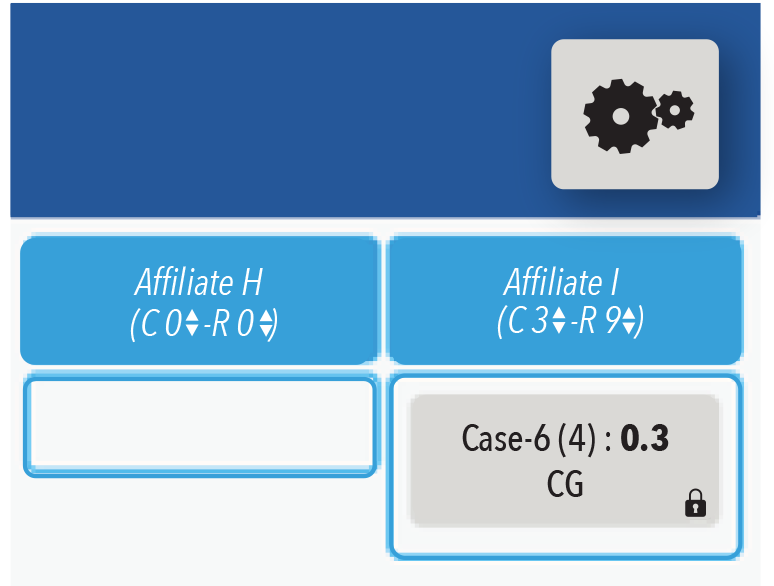
Figure 3: Locking case tiles and reoptimizing.
This ability for interactive optimization can be seen in Figures 2 and 3. The three panels of Figure 2 depict a case tile being manually moved, or dragged, into an alternate location. After moving, the corresponding tile is depicted in a gray, non-optimized state with an updated estimate on the expected number of employed refugees in that case. Figure 3 depicts the ability to lock a case tile in place, which effectively fixes that family-location match for subsequent re-optimization (via a similar gear button on the View Results view). Local community resettlement capacities are also easily adjusted via up and down arrows. In this way, resettlement staff can iteratively interact with the decision space, refining the match results.
Throughout the development process, we have firmly maintained that Annie is a tool that augments the perspective of resettlement staff at HIAS. That is, matches generated by Annie are suggestive in nature. HIAS has complete discretion to match and rematch cases according to their expert judgment.
Operations Research and Analytics as a Change Agent
My primary motivation in becoming involved in refugee resettlement is my passion to make the world a better place. O.R. and analytics can be employed as a change agent in our society, especially with respect to empowering vulnerable populations. In particular, integer optimization and machine learning are able to remedy the operational challenge of resettling refugees. These methods offer significant value, however expertise is needed for successful implementation. While this expertise is readily available in the private sector, applying analytics to societal causes, including refugee resettlement, typically features significant challenges such as lack of human and financial resources, lack of exposure to technology and data scarcity. Nonprofit and humanitarian organizations must be responsive to crisis events, immediate needs and changes in political and donor climates. Such realities can make it challenging for resettlement agencies to be proactive in pursuing, and implementing, advanced technological innovations.
Annie has transformed the decision-making process at HIAS from a manual to an analytically enriched one. While it is still early to evaluate Annie-enhanced refugee placements, the operational process of placing refugees has improved considerably, thereby enabling resettlement staff to place greater emphasis on cases that need greater attention, such as those with several medical conditions. Moreover, Annie is well capable of being deployed in similar settings, whether refugee resettlement in the United States, in other countries (e.g., Sweden) or similar matching contexts such as adoptive and foster care, asylee placement and matching people with jobs. At the time of this writing, our team is in discussions to port Annie to additional resettlement contexts, and we hope to soon see it adopted in other areas.
Acknowledgments
The author is grateful for the efforts of the Annie team, including Narges Ahani (WPI), Tommy Andersson (Lund University), Alessandro Martinello (Lund University) and Alex Teytelboym (University of Oxford). Moreover, the support of those in the refugee resettlement community, including Mike Mitchell and Karen Monken of HIAS and Barbara Day of the U.S. Department of State, has been essential in implementing Annie. The author is also grateful for the support of the Operations Engineering Program at the National Science Foundation (Award CMMI-1825348), as well as that of the Jan Wallander and Tom Hedelius Foundation (Research Grant P2016-0126:1), and the Ragnar Söderberg Foundation (E8/13).
References
- Ager, A., Strang, A., 2008, “Understanding integration: A conceptual framework,” Journal of Refugee Studies, Vol. 21, No. 22, pp. 166–191.
- Andersson, T., Ehlers, L., 2016, “Assigning refugees to landlords in Sweden: Efficient stable maximum matchings,” Technical report, Lund University.
- Åslund, O., Rooth, D.O., 2007, “Do when and where matter? Initial labour market conditions and immigrant earnings," The Economic Journal, Vol. 117, No. 518, pp. 422–448.
- Åslund, O., Fredriksson, P., 2009, “Peer effects in welfare dependence quasi-experimental evidence,” Journal of Human Resources, Vol. 44, No. 3, pp. 798–825.
- Åslund, O., Östh, J., Zenou, Y., 2010, “How important is access to jobs? Old question, improved answer,” Journal of Economic Geography, Vol. 10, No. 3, pp. 389–422.
- Åslund, O., Edin, P.A., Fredriksson, P., Grönqvist, H., 2011, “Peers, neighborhoods, and immigrant student achievement: Evidence from a placement policy,” American Economic Journal: Applied Economics, Vol. 3, No. 2, pp. 67–95.
- Aziz, H., Chen, J., Gaspers, S., Sun, Z., 2017, “Stability and Pareto optimality in refugee allocation matchings,” Technical report, Mimeo.
- Bansak, K., Ferwerda, J., Hainmueller, J., Dillon, A., Hangartner, D., Lawrence, D., Weinstein, J., 2018, “Improving refugee integration through data-driven algorithmic assignment,” Science, Vol. 359, Vol. 6373, pp. 325–329.
- Damm, A.P., 2014, “Neighborhood quality and labor market outcomes: Evidence from quasi-random neighborhood assignment of immigrants,” Journal of Urban Economics, Vol. 79, pp. 139–166.
- Delacrétaz, D., Kominers, S.D., Teytelboym, A., 2016, “Refugee resettlement,” Technical report, University of Oxford.
- Jones, W., Teytelboym, A., 2017, “The Local Refugee Match: Aligning refugees’ preferences with the capacities and priorities of localities,” Journal of Refugee Studies, Vol. 31, pp. 152–178.
- Lichtenstein, G., Puma, J., Engelman, A., Miller, M., 2016, “The refugee integration survey evaluation project (RISE) year five: Final report.”
- Moraga, J.F.H., Rapoport, H., 2014, “Tradable immigration quotas,” Journal of Public Economics, Vol. 115, pp. 94–108.
- Nguyen, T., Nguyen, H., Teytelboym, A., 2019, “Stability in matching markets with complex constraints,” Technical report, Mimeo.
- Roth, A.E., 2018, “Marketplaces, markets, and market design,” American Economic Review, Vol. 108, No. 7, pp. 1,609–1658.
- Trapp, A.C., Teytelboym, A., Martinello, A., Andersson, T., Ahani, N., 2018, “Placement optimization in refugee resettlement,” Working Paper 2018:23, Lund University, Department of Economics: https://ideas.repec.org/p/hhs/lunewp/2018_023.html.
- UNHCR, 2018, “Global Resettlement Needs 2019,” Technical report, United Nations High Commissioner for Refugees.
Andrew C. Trapp, Ph.D., is an associate professor of operations and industrial engineering at Worcester Polytechnic Institute (WPI), and he holds courtesy professorships in mathematical sciences and data science. His research focuses on using analytical techniques, in particular mathematical optimization, to identify optimal decisions to challenges arising from a diverse cross-section of sectors such as humanitarian operations, healthcare, sustainability and data mining. He develops new theory, models and computational solution approaches to tackle such problems.
([email protected])