


March 26, 2019 in International O.R.
Keeping Slovenia green: How to best manage famed forest region
A multicriteria group model to evaluate future management scenarios of the environment: experiences and results.
SHARE: PRINT ARTICLE: https://doi.org/10.1287/orms.2019.02.10
Rapid social, economic, climatic, ecological, technological and other changes raise new issues and concerns regarding the future of the environment. The situation demands an innovative paradigm considering services, management and governance, and the need to develop an interdisciplinary decision-making process for determining environmental functions and supplying services on which human well-being depends. The paradigm also has to consider numerous worldwide resolutions, action plans, protocols and directives on environment, climate change, energy and social development. In this context, Slovenia initiated a research project with the authors that investigates management options to foster resilience of forests and adjacent areas under different global change scenarios.
Study Area
Slovenia is located in southern Central Europe at a crossroads of important European cultural and trade routes (see Figure 1). It has mostly mountainous terrain with a mainly continental climate. The country is one of the most water-rich in Europe with a dense river network. Slovenia’s water quality is considered to be among the highest in Europe, but this does not mean that Slovenia has no problems with surface and groundwater quality, especially in areas with intensive farming.
Over half the country is covered by forests, with a relatively high production capacity. Thus, Slovenia is one of the greenest countries in the world, distinguished by an exceptional biological diversity (mammal species, carnivores, wide variety of birds, cave species, fungal species, etc.). About 12.5 percent of the territory is protected, with 35.5 percent in the Natura 2000 network. Despite this, and the Yale Environmental Performance Index, which considers Slovenia a strong performer in environmental protection efforts, diversity has been in decline because of pollution and environmental degradation. Further, Slovenia offers tourists a wide variety of natural and cultural amenities (popular with skiers and hikers, rich with spas, vineyards, historic sites, etc.), and, according to National Geographic Traveler magazine, (2016), Slovenia enjoys the world’s most sustainable tourism [1, 2].
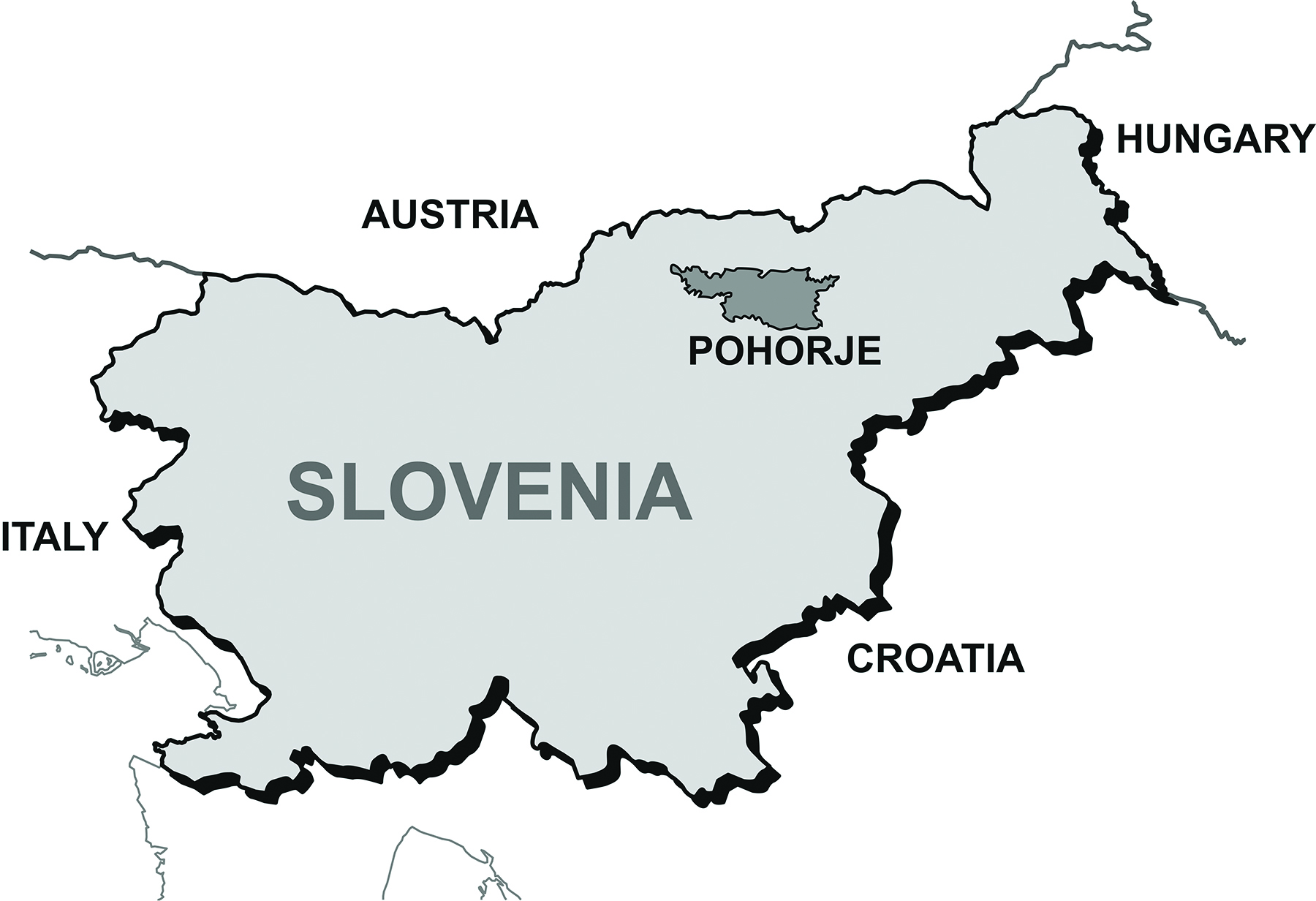
Figure 1: Map of Slovenia and Pohorje.
The research area, called Pohorje region (Figure 1), is situated in the northeastern part of Slovenia and covers an area of 840 square kilometers. Pohorje is a mountainous area, under the protection of the alpine convention, and most of it is part of Natura 2000 (Figure 2). The main economic development of Pohorje is based on tourism, followed by managing natural resources that are primarily connected with forestry and to a lesser extent agriculture. More than 70 percent of Pohorje is covered with forests, which are mainly private.
Due to the impermeable ground, characteristic peaty bogs have been formed. The forests provide habitats for numerous rare and endangered species, and serve ecological, social and production functions. Agriculture on the outskirts of Pohorje is not very profitable, but supplementary activities on farms are becoming more important. Pohorje has several popular recreational centers; Alpine and cross-country skiing is prevalent in winter, while trekking and cycling prevail in summer. One of the main problems is the high administrative disjointedness of Pohorje. Its weaknesses are an inadequate road network and public transport, as well as weak communication between tourist providers.
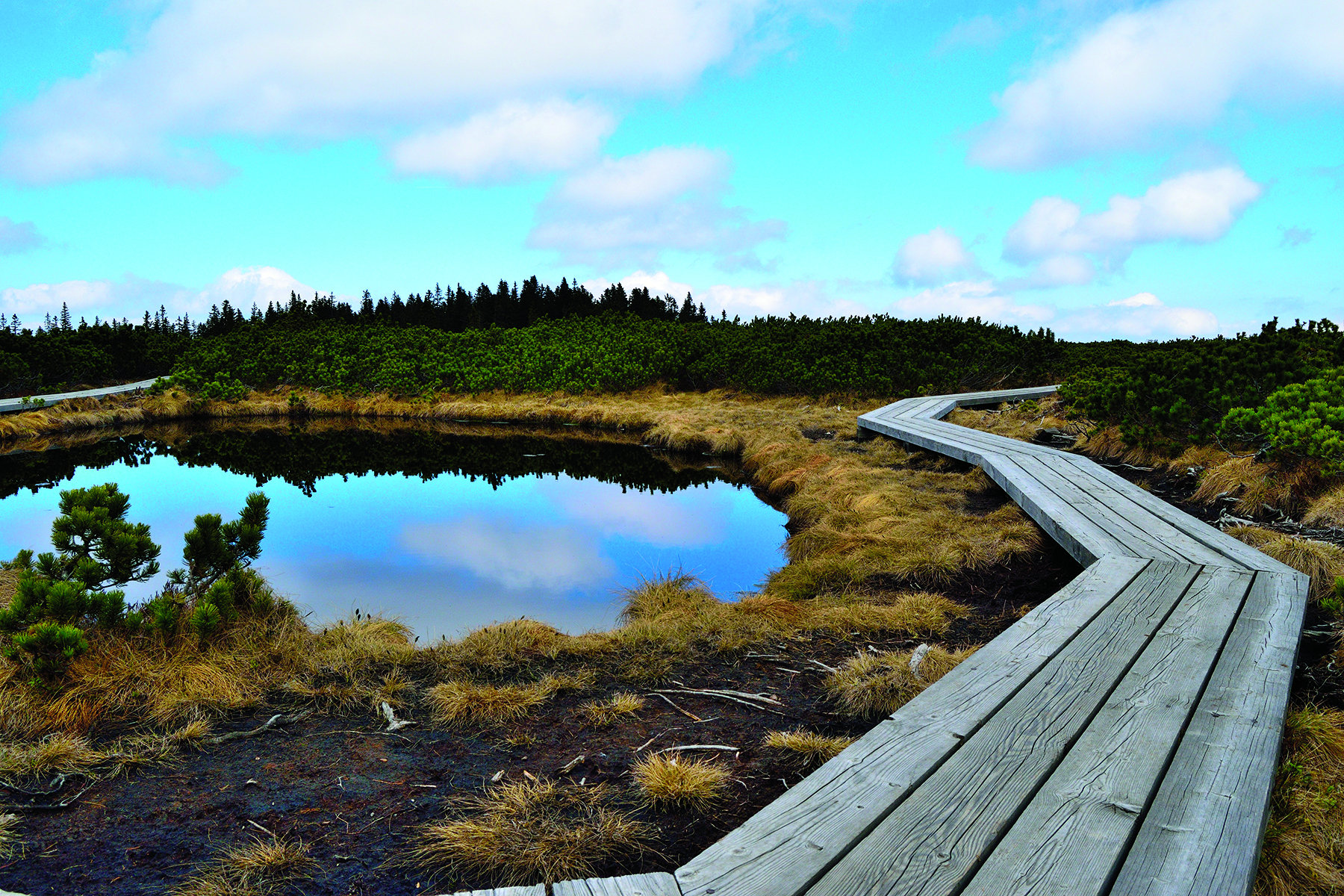
Figure 2: Pohorje in northeastern Slovenia is a mountainous, heavily forested region.
The strategic, tactical and operational planning of Pohorje involves efficiently using its resources and managing it in an economical, ecologically and socially acceptable manner. Consequently, sustainable and multifunctional development applied to Pohorje reveal different management scenarios, along with wide-ranging criteria and objectives. The research team is faced with a decision process in which scenarios must be determined and evaluated according to the present state of the environment, as well as the goals and preferences of end-users. Incorporating different and sometimes opposing viewpoints of several stakeholders and representatives of various groups who benefit or lose from the preferred scenarios in the decision process is one of the most important tasks. Thus, management of the environment is a very complex problem. To support optimal management, multiple criteria and group optimization models must be generated and used.
In the rest of this article, we present in more detail the managerial problem of Pohorje, the data set obtained by the Institute of the Republic of Slovenia for Nature Conservation (IRSNC), the framework of the optimization model based on group analytic hierarchy process (GAHP) [3], and finally the results of the model.
Managerial Problem and Input Data
The managerial problem of Pohorje was determined in collaboration with experts from IRSNC within their NATREG (natural and protected areas as sustainable regional development opportunities) project. The main aim of the project was to acknowledge and promote the potential of natural assets and protected areas as drivers of sustainable regional development, and to increase the perception of preserved nature as a valuable asset [4]. The final objective was to develop a management plan of Pohorje. Forestry and hunting, agriculture and tourism have been established as the most important activities of the project area.
The analysis of stakeholders determined the key stakeholders, their mission, competencies and willingness to cooperate. They were divided into public (municipalities, development agency, chamber, educational institutions, public institutions, institutes and ministry) and private entities (tourism, forestry and agriculture, education and protection of nature). Three sector workshops produced SWOT (strength, weaknesses, opportunities and threats) factors for tourism, agriculture and forestry. Based on the results, a vision, Pohorje 2030, was written [5] to serve as a basis for selection of strategic and operative goals [6] and for the action plan [7], which represent the draft of management plan of Pohorje.
The Model
The model consists of three parts. The goal of the first part was to select a suitable strategy for optimal development of Pohorje. We developed a hierarchical structure of a goal, criteria (SWOT analysis) and four alternatives (Figure 3, right side). Going with the flow with no changes to the current situation in Pohorje is an alternative where everyone does his/her best to realize the goals and ideas that will contribute to the development of Pohorje, to own success (tourism) or existence (agriculture), with no connection between sectors, suppliers and local residents.
Sustainable development, the second alternative, considers regional peculiarities, natural resources and assures their sustainability, preserves cultural and natural heritage and values high-quality local community life. The third alternative, intensive sectoral development, emphasizes the use of natural resources, tourism and industry, and exploits all economic opportunities (timber production, peat, water, electricity, game and non-timber products). The last alternative, conservation of nature, stresses green, protected and untouchable environment with sustainable tourism and ecological agriculture, values preservation of nature and biodiversity, education about nature and cultural heritage, and presumes establishment of a park-like Pohorje.
GAHP was used for the evaluation of SWOT factors and alternatives. Multicriteria methods based on the AHP method offer tools for including various supplementary, often conflicting criteria that result from the complexity of the real-world problems and diverse views of stakeholders on the problem. The AHP method has been recognized as a useful tool in the management of the environment [8]. It contains all of the advantages offered by multicriteria decision methods and allows integration of qualitative and quantitative criteria, measurable and nonmeasurable factors, and one decision-maker or a group of stakeholders.
The second part of the study included the ranking of strategic and operative goals (Figure 3, left side) according to their contribution to the realization of vision Pohorje 2030 [5]. In the third part, we connected the first and second part of the application as a network (Figure 3). The goal of the model was to select the optimal strategy for Pohorje development, not only on the basis of the SWOT groups and factors, but also in connection with strategic and operative goals.
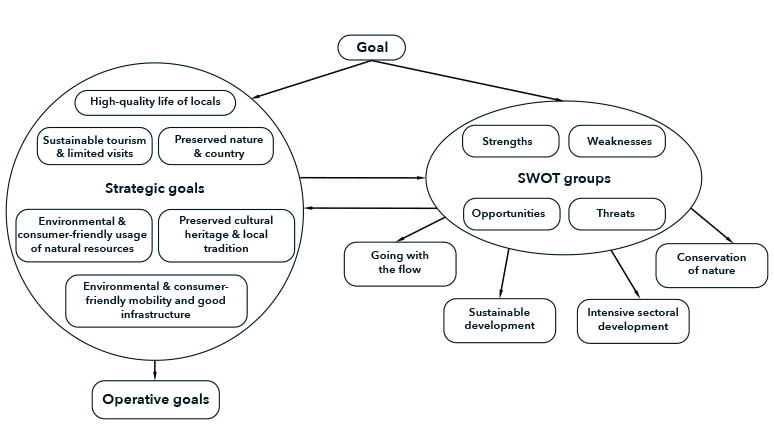
Figure 3: Model for selection of the optimal management strategy of Pohorje.
To obtain pairwise comparisons for all levels of the model, separately for each part, we created AHP questionnaires. For the first questionnaire (Figure 3, right side), we selected a dozen experts familiar with Pohorje. Experts from the fields of forestry, agriculture, tourism and nature protection compared alternatives that increase or preserve the given strength, transform weakness into strength or further reduce the selected weakness in order to make the best out of the selected opportunities or avoid the selected threats. A handful of experts that were already engaged in the NATREG project were selected to answer questions from the second questionnaire (Figure 3, left side). Finally, for the third part, one expert, who was very active in NATREG, was selected to express his view about the interdependence among alternatives and goals (Figure 3, network).
From a theoretical point of view, the main question was how to analyze the questionnaires to gain the weights for criteria (SWOT factors), as well as alternatives and strategic and operative goals for the following: 1) which method to use to aggregate individual judgments into group judgments, 2) how to derive the weights from the group comparison matrix, and 3) how to calculate weights from the networked alternatives and goals. In this case, we used the weighted geometric mean method (WGMM) for question No. 1 [9], eigenvector method (EVM) for No. 2 [10] and analytic network process (ANP) for No. 3 [11]. WGMM also makes it possible to consider the case when stakeolders acting in the decision-making process are not all equally important.
Results
The weights from the stakeholders’ comparisons expressing the importance of forestry, agriculture, tourism and nature protection show that nature protection received the highest weight. This result indicates that stakeholders believe that the opinion of experts from the field of nature protection is important, since they strive for maintaining the nature and biodiversity of Pohorje.
When analyzing the category of stakeholders, the results highlighted two types of stakeholders: optimists who emphasize opportunities and strengths of Pohorje, and pessimists who underline weaknesses and threats. However, optimistic stakeholders prevailed over the pessimistic. Regarding the alternatives (Figure 3, right side), stakeholders ranked sustainable development as the most important. The group weight of “sustainable development” amounted to 58 percent when all stakeholders were equally important, and 56 percent when stakeholders were not equally important. “Conservation of nature” was second (about 18 percent), followed by “intensive sectoral development” (around 14 percent) and “going with the flow” (around 12 percent).
The results of the second questionnaire revealed that the most important strategic goal is “preserved cultural heritage and local tradition” (21 percent), followed by “environmental and consumer-friendly usage of natural resources” (18 percent) and three goals with similar weights (16 percent): “preserved nature and country,” “high quality life for locals” and “sustainable tourism and limited visit.” The smallest weight included “environmental and consumer friendly mobility” and “good infrastructure” (13 percent) (see Figure 5). The main finding was that the differences in importance of strategic goals were small, so all goals should be attained to fulfill the Vision Pohorje 2030. The results of the ANP method were very similar as those obtained by the WGMM and EVM methods (Figure 4).
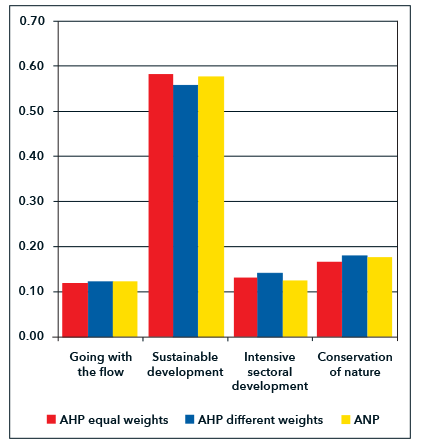
Figure 4: Weights for alternatives using WGMM and EVM methods, as well as the ANP method.
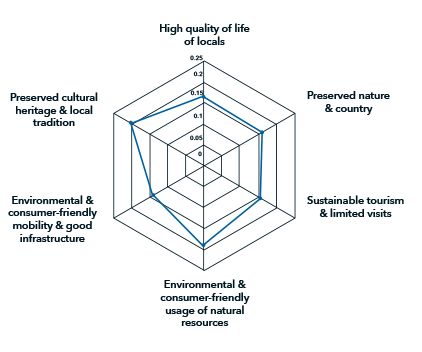
Figure 5: Final weights for strategic goals.
Conclusions and Lessons Learned
The exploitation of the opportunities is most important for optimal development of Pohorje. Ecotourism should be stressed. Local people should be included in the decision-making process. Promotion and sector connection should be more intensive. Strengths, like rich cultural heritage, natural resources, preserved nature and climate should be taken into account. It is important to reduce weaknesses and avoid threats. To use all advantages of strengths, sustainable development was the most suitable alternative. Conservation of nature would use only advantages of strengths connected with nature. Intensive sectoral development is too intense and against nature. The stakeholders recognized that going with the flow is not good when performing strengths. Sustainable development is the best alternative to annul weaknesses. Stakeholders are aware of weaknesses and know that going with the flow is not a good option to annul weaknesses, therefore they ranked it last. Intensive sectoral development and conservation of nature can annul some weaknesses but not all.
To take advantages of opportunities, sustainable development is the best alternative. Going with the flow has not yet taken advantage of opportunities. Threats can be avoided with sustainable development. The stakeholders think that threats connected with tourism can be avoided with conservation of nature, so they put it in second place. Some stakeholders are afraid that intensive sectoral development can stimulate mega projects, but stakeholders from the field of tourism do not see mega projects as a real threat, since they are not profitable.
Despite the fact that all stakeholders support sustainable development, they expressed some problems and doubts at turning sustainable development into practice. The main problem of sustainable development is how to change words into actions. Local people are afraid of projects because they do not know what they can bring. Another big problem is that municipalities do not cooperate. Some people are limited by many local laws, such as pastures in forests are forbidden.
Some stakeholders think that tourism is the most important activity because it is driving all other activities. There are some touristic niches, such as cycling and skiing. Cycling is a prosperous activity as it can be done almost year-round. Skiing is an intensive recreation at Pohorje, but skiing requires significant interventions in nature, and the skiing season is only four months in duration. Ecotourism is a good opportunity. Local suppliers should be included in food production. Mega tourism projects are not considered a great danger because it is difficult to get visitors to Pohorje.
Forests cover most of Pohorje, thus forestry is very important. The main problem is a huge number of private owners, many of whom are bad managers. Price of timber is low, and the money does not come back to Pohorje. Another problem is tree species structure. Beech forests have been cut in the past for burning fires required by the glass industry. Beech was replaced by spruce, which grows quickly. Meadows and pastures healed over, because farmers do not cut grass. There is also a question about the sense of protecting “unnatural” nature. The stakeholders think that water is an important source of energy. Small connected power stations should be established.
The stakeholders’ opinions reveal that it will be hard to employ sustainable development in practice, but it will be worth doing as much as possible.
Future Research Challenges
During the study, policymakers and practitioners provided a valuable discussion and critical analysis of major issues and challenges, interrelating several aspects of the environment, and assessing risk, welfare and social preferences. Going forward, more scientific research is required, as well as general public input, to ensure sustainability and multiple use, avoid emerging risks and develop innovative management for environmental services, resilience and the bio-economy.
In our study, surveys were performed in individual meetings. Thus, all the questions and particularities, including those of the AHP method, could be explained to the selected stakeholders. This was important because of the consistency of their evaluations. Consistency, one of the main demands of the AHP method, ensures that the final results are sound. In future research, special attention should be paid to the consistency of survey answers.
Several issues are connected to the decision-making of a group of stakeholders. The stakeholders have to be carefully selected because the knowledge or experience of a single stakeholder is limited, and their expertise and views can be supplemented or opposed by others. The importance of all stakeholders in the decision process is not necessarily equal, and in this case, it should be implemented through their “weights of importance.” How to assign weights of importance to stakeholders is one of our next research problems [12].
Inaccuracy and vagueness exist in data and judgments. This drawback could be implemented in several methodological ways, such as substituting common numerical judgments with interval judgments or fuzzy number judgments [13].
Finally, an important problem in the AHP method is how to unite individual opinions into a joint decision. Several technical methods could be used, but consensus, the most desired result, is hard to achieve in practice [14-16].
References
- Wikipedia, The Free Encyclopedia, https://en.wikipedia.org/wiki/Slovenia, (accessed Feb. 28, 2019).
- Pezdevšek, Malovrh Š., Leban, V., Krč, J., Zadnik Stirn, L., 2012, Country report; WP1 ERA-NET, WoodWisdom-Net, COOL, "Competing Uses of Forest Land," Ljubljana: Biotechnical Faculty, p. 34.
- Saaty, T.L., 2006, "Fundamentals of decision-making and priority theory with the analytic hierarchy process," Pittsburgh: RWS Publications.
- Uratarič, N., 2011, NATREG: "Managing Natural Assets and Protected Areas as Sustainable Regional Development Opportunities," Ljubljana: Regional Environmental Center; p. 48.
- Hojnik, M. Vizija območja, 2011, "Pohorje 2030: The vision of the area - Pohorje 2030," project NATREG, Ljubljana: The Institute of the Republic of Slovenia for Nature Conservation, p. 1.
- NATREG, 2011, "Goals of the draft of the management plan of pilot area Pohorje," Ljubljana: The Instititute of the Republic of Slovenia for Nature Conservation, p. 21.
- Stare, E., Softić, M., Lešnik Štuhec, T., Tekič, A., Pavletič, L., Bokal, S., "Action plan of Draft management plan of pilot area Pohorje," project: NATREG, Ljubljana: The Instititute of the Republic of Slovenia for Nature Conservation, p. 43.
- Blackstock, K.L., Kelly, G.J., Horsey, B.L., 2007, "Developing and applying a framework to evaluate participatory research for sustainability," Ecological Economics, Vol. 60, No. 4, pp. 726–742.
- Grošelj, P., Zadnik Stirn, L., 2009, "Comparison of group methods in analytic hierarchy process," in: Zadnik Stirn, L., Žerovnik, J., Drobne, S., Lisec, A., editors, Proceedings of the 10th International Symposium on Operational Research SOR '09, Nova Gorica: Slovenian Society Informatika, Section for Operational Research, pp. 157–163.
- Grošelj, P., Zadnik Stirn, L., 2009, "Comparison of eigen vector method, LLSM and DEA method for calculating the weights in AHP models," Uporabna informatika, Vol. 17, No. 2, pp. 79–87.
- Grošelj, P., Zadnik Stirn, L., 2015, "The environmental management problem of Pohorje, Slovenia: A new group approach within ANP–SWOT framework," Journal of Environmental Management, Vol. 161, pp. 106–112.
- Grošelj, P., Zadnik Stirn, L., 2017, "Consensus model for group decision problems with interval weights," in: Lidija, Z.S., Mirjana, K.B., Janez, Ž., Drobne. S., editors, 14th International Symposium on Operational Research SOR'17, Bled, Slovenia: Slovenian Society Informatika, pp. 535–540.
- Grošelj, P., Zadnik Stirn, L., 2015, "IGMDEA and TFNGMDEA methods for deriving weights from interval-valued comparison matrices in AHP," in: Zadnik Stirn, L., editor, 13th International Symposium on Operational Research in Slovenia, Bled, Slovenia, Slovenian Society Informatika, section for operational research, pp. 247–252.
- Grošelj, P., 2018, "Consensus model in analytic hierarchy process," in: Živković, Ž., editor, International May Conference on Strategic Management – IMCSM18, Bor, Serbia: University of Belgrade, Technical Faculty in Bor, Department of Engineering Management, p. 24–35.
- Grošelj, P., Zadnik Stirn, L., 2017, "Soft consensus model for the group fuzzy AHP decision making," Croatian Operational Research Review, Vol. 8, pp. 207–220.
- Grošelj, P., Hodges, D.G., Zadnik Stirn, L., 2016, "Participatory and multi-criteria analysis for forest (ecosystem) management: A case study of Pohorje," Slovenia Forest Policy and Economics, Vol. 7, pp. 180–186.
Lidija Zadnik Stirn is professor (emeritus) of operations research at the University of Ljubljana, Biotechnical Faculty, Slovenia, and an adjunct professor at the University of Tennessee, Knoxville. Her research work is focused on deterministic, stochastic, dynamic, multicriteria and group decision-making methods applicable to socio-economic and ecological problems in management of natural resources, particularly forestry. Petra Grošelj is an assistant professor at University of Ljubljana, Biotechnical Faculty, Slovenia. Her research focuses on multicriteria decision-making, particularly analytic hierarchy process, group decision-making and fuzzy logic.
([email protected])
([email protected])