March 28, 2019 in Student Perspectives
'Let's get better together'
Six OR/MS students discuss how volunteering plays a role in shaping their lives.
SHARE: PRINT ARTICLE: https://doi.org/10.1287/orms.2019.02.15
Most everyone is familiar with President John F. Kennedy’s inspiring inaugural address stressing the importance of civic action and public service, where his historic words live on: “Ask not what your country can do for you – ask what you can do for your country.”
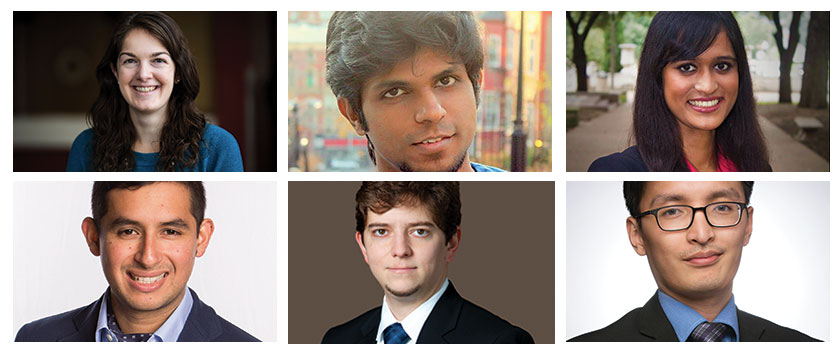
Stepping up to serve a broader community is integral to any community’s success. How does that translate to the operations research and management science (OR/MS) student community? This column provides six unique perspectives from OR/MS student volunteers on how volunteering has played a role in shaping their lives.
Shreya Gupta
Ph.D. candidate in Operations Research and Industrial Engineering, University of Texas at Austin
Staff editor, OR/MS Tomorrow (2017–2019)
Editorial Board Member, OR/MS Tomorrow (2016–2017)
President, UT-Austin INFORMS Student Chapter (2016–2017)
Founder & Chief Editor, UT INFORMS Student Chapter Newsletter – “INFORMER” (2015–2017)
One of my first efforts to volunteer with INFORMS at the student chapter-level was with the UT-Austin student chapter. I noticed that we did not have a student newsletter within the program, but I wanted to write for a newsletter! So, how do you contribute to a newsletter that does not exist? By founding one! After all, why always depend on external manifestation of an entity? Volunteering is not just about joining existing teams. It’s about being the change you want to see, and if you like to see something that does not exist, then make it happen!
It’s important to note that volunteering is an activity that is an addition to any current, ongoing main commitment (e.g., school work or a job), and many times your main task may dominate your time, which cuts into volunteering time. Thus, volunteering within a team teaches one to be more accepting of simple things like if someone misses a deadline because they were busy focusing on something else important to them at that point in time. After all, everyone has their own dynamic priority lists. You may find yourself in a situation when your main, nonvolunteering work leads you to push the volunteering task down your priority list. Thus, you may have to find a substitute to take over your volunteering task, or you may have to negotiate with your volunteer team on how to maneuver or reduce your workload. These are complex situations that we all need to learn how to handle.
Finally, volunteering is important to forge a team spirit. Skills such as choosing between when to lead and when to step back are important (I am graduating this semester so hopefully I will learn its importance in the upcoming year). All of these are crucial skills that need practice to master – the earlier you start, the better!
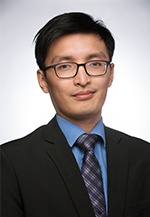
Andrew Law
Ph.D. Student in Industrial Engineering, Virginia Tech
Treasurer, Virginia Tech INFORMS Student Chapter (2017–2018)
President, Virginia Tech INFORMS Student Chapter (2018–2019)
Student Chapter Representative for INFORMS Subdivisions Council (2019–2020)
Webmaster, OR/MS Tomorrow (2019–2021)
My current volunteering activities with INFORMS are as an executive officer at the local student chapter, student chapter representative for Subdivisions Council and webmaster of OR/MS Tomorrow. Inspired by my university’s motto – Ut Prosim (That I May Serve) – I appreciate the importance of volunteering one’s time to serve the community for the betterment of others. I choose to volunteer for INFORMS because I feel a sense of belonging here. To me, INFORMS is not only a well-connected professional organization related to my research but also a learning platform for my personal growth in the long-term.
The biggest takeaway throughout my experience from these volunteer roles is to make friends with a group of enthusiastic and knowledgeable peers who share the same mindset regarding the volunteering spirit. Without a doubt, volunteering gives me the chance to learn from others and improve the soft skills that are essential for any life occasion. One frequent question often asked regarding volunteering is time management. My opinion on this is to emphasize priorities and efficiently optimize time. Lastly, I would highly encourage anyone to seek out volunteer opportunities to make a difference in your community. Never underestimate your time that could make the cause impactful. Let’s volunteer and get better together!
Thiago Serra
Former president, Carnegie Mellon University INFORMS Student Chapter
Everyone has a role in promoting a vibrant academic environment in their respective universities. I believe that starting an INFORMS student chapter at Carnegie Mellon allowed the students to actively contribute by organizing their own events and fundraise for bigger initiatives. We invited speakers for seminars targeted to undergraduate, MBA and Ph.D. students. We organized weekly “discussion dinners” – informal gatherings to share research ideas among Ph.D. students. We also had social events with other departments and with the INFORMS chapter at the University of Pittsburgh. I was proud to be part of that and help the chapter take off as its founding secretary, then I supported many great ideas of my colleagues as president for two terms, and for a final year I acted in an advisory capacity and witnessed the new officers launch the YinzOR Student Conference and promote new events like the panel on Women in Academia.
I had an amazing time working with colleagues that understood the impact of what we were doing: The chapter changed how we experienced our time at the university and remained as our legacy to the next generation of students.
Rahul Swamy
Ph.D. student in Industrial Engineering, University of Illinois at Urbana-Champaign
Lead editor, INFORMS OR/MS Tomorrow (2017–2019)
President, UIUC INFORMS Student Chapter (2017–2018)
While research and teaching form a predominant part of Ph.D. training, volunteering is an often overlooked but an important facet of becoming a better professional (and even a better person). Why volunteer? Here are some things I’ve learned over the past few years.
1) Taking ownership of the things that I care about. Taking the first step to plan anything can be hard, and prioritizing one commitment over another isn’t easy. Learning how to take initiatives is a fundamental life skill, and volunteering activities have helped me a great deal with developing this skill.
2) Managing expectations from others, as well as from myself. From setting realistic deadlines to planning initiatives that are feasible, knowing how to set optimistic goals with a practical game-plan is another skill I’ve learned through volunteering.
3) Networking. Volunteering is a great way to meet people and add a social element to work life. It truly is a lot of fun and every student should try volunteering in some form or another.
Emily Tucker
Ph.D. candidate in Industrial and Operations Engineering, University of Michigan
Staff editor, OR/MS Tomorrow (2016–2018)
President, Univ. of Michigan Student Leadership Board in IOE (2016–2018)
Member of the Wagner Prize Committee (2019)
Volunteering with INFORMS is a wonderful way to get to know people and to be an active partner in pushing our field forward. I was one of the editors at OR/MS Tomorrow for several years, and through that I've gotten to know countless other Ph.D. students both on the team and off. These are folks that will likely be my colleagues for years to come. I've also organized a few sessions at conferences, and it's been fun to think about ways to get people together to talk about and promote active research areas.
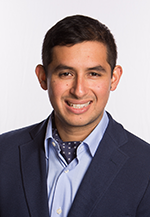
Carlos Zetina
Former president, HEC Montreal INFORMS Student Chapter
Personally, my motivation for volunteering in different initiatives has been to be a part of something that will have a positive impact on other people’s lives. Whether it is bringing people together to share knowledge and ideas, introducing young students to our field in a fun, dynamic competition or helping international students transition into academic life in Canada, seeing the joy on other people’s faces has made, and continues to make, volunteering very worthwhile.
The experience itself refined my multitasking and communication skills, improved my cultural understanding through exchange, and enhanced my social network by allowing me to connect with many people that I admire both professionally and personally. Indeed, an important part of the value of volunteering is in the “journey” itself.
Finally, I’d like to point out that volunteering also has curricular value. Potential employers see volunteering experience as an indicator of good interpersonal skills, a high level of motivation and selflessness – all traits they seek in candidates. While I don’t recommend this to be your whole motivation for volunteering, it is a byproduct worth mentioning as it can make a difference during the job search and interview process.
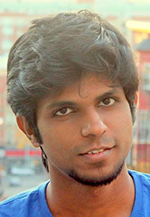
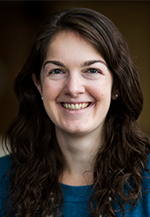
Shreya Gupta is a PhD candidate at The Univeristy of Texas at Austin. Andrew Law is a PhD candidate in industrial engineering at Virginia Tech. Thiago Serra recently joined the University of Iowa’s Tippie College Business as an assistant professor of business analytics, following five years as an assistant professor of analytics and operations management at Bucknell University’s Freeman College of Management. Previously, he was a visiting research scientist at Mitsubishi Electric Research Labs from 2018 to 2019, and operations research analyst at Petrobras from 2009 to 2013. He has a Ph.D. in operations research from Carnegie Mellon University’s Tepper School of Business, from which he received the Gerald L. Thompson Doctoral Dissertation Award in Management Science in 2018. During his Ph.D., he was also awarded the INFORMS Judith Liebman Award. His research at the intersection of discrete optimization and machine learning is supported by the National Science Foundation. He served as an INFORMS NavigatOR for the 2024 INFORMS Annual Meeting in Seattle. Rahul Swamy is a Ph.D. candidate in industrial engineering at the University of Illinois at Urbana-Champaign. He is the lead editor of OR/MS Tomorrow. Emily Tucker is a PhD candidate in industrial and operations engineering at the University of Michigan. Carlos A. Zetina, Ph.D., is a postdoctoral researcher at the Canada Excellence Research Chair for Data Science for Real-Time Decision-Making.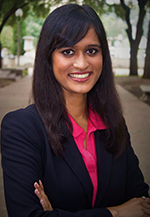
([email protected])
([email protected])

([email protected])
([email protected])