


June 4, 2019 in Diversity, Equity & Inclusion
Diversity and OR/MS/Analytics
INFORMS seeks to deepen the impact of research, broaden access to the profession.
SHARE: PRINT ARTICLE: https://doi.org/10.1287/orms.2019.03.06

The United States is facing rapid changes that force us to confront basic questions about our lives and the communities we live in. As our country transitions into one where the majority of children born are nonwhite, where the #MeToo movement has changed norms of acceptable behavior in the workplace and in personal relations, and where animus against religious, racial and ethnic minorities has become normalized, understanding the impact that diversity plays in our lives becomes ever more important. Central to our new awareness of life, work, culture and environment is diversity, or measures of difference, at the individual or group level.
INFORMS defines diversity as encompassing both externally identifiable measures, such as age, gender, race and ethnicity, as well as less-visible measures such as sexual orientation, all of which influence our understanding of the world [1]. As an applied science, operations research, management science (OR/MS) and analytics have a central role to play in addressing concerns about diversity, and of related issues of equity and inclusion, to ensure that our discipline, and our profession, reflect the needs and concerns of all who live in this country.
The upcoming publication of an Editor’s Cut volume on this topic is an opportunity to reflect on diversity, equity and inclusion (DEI) in the profession and discipline. In this article we will discuss the state of OR/MS and analytics professions with respect to diversity, equity and inclusion. We’ll also present different ways that our understanding of DEI can improve our research, teaching and practice, including some examples of research that can make our organizations and institutions more welcoming of people of different backgrounds. We’ll conclude by identifying opportunities for innovations in research and practice that: (a) can expand the focus of research to address issues of social justice as well as managerial efficiency, and (b) increase efforts to make the profession more welcoming and supportive of persons from traditionally-underrepresented groups.
INFORMS’ Diversity and Inclusion statement is: “INFORMS values and seeks diverse and inclusive participation within the membership and profession it represents. To achieve this goal, INFORMS is committed to providing an environment that encourages and supports equal opportunity, free expression, freedom from discrimination, harassment and retaliation, full participation in all activities and leadership, and collaboration among people of different backgrounds” [2]. INFORMS defines inclusion as a strategy to make diversity sustainable by creating environments in which people feel safe, supported, listened to, valued and able to do their personal best. But diversity need not be limited to social characteristics: researchers have grappled with the notion of the diversity of approaches to doing research, for example in information systems research [3] and community operational research [4] where issues of disciplinary boundaries, appropriate analytic methods and the nature of public engagement are active subjects of inquiry.
Diverse Communities
INFORMS has multiple communities that match the diversity of the profession and work to make it more reflective of our society: Minority Issues Forum, Women in OR/MS Forum, Junior Faculty Interest Group and, since 2016, the INFORMS Committee on Diversity, Equity and Inclusion, of which we (the authors) are members. Our committee has learned what many of us have long understood intuitively: INFORMS, which is about 71 percent male, about 7 percent Hispanic and 2.5 percent black, is less diverse on these measures than the U.S. population overall [5], the U.S. workforce part of the workforce employed in STEM occupations, or even workers classified by the U.S. Census as “Operations research analysts” [6].
Moreover, a recent NSF-funded study on STEM diversity found that within INFORMS, women and racial/ethnic minorities persistently report more negative experiences and feelings of marginalization and exclusion compared to men and white respondents [7]. The Chronicle of Higher Education has documented among African-American academics a wide range of testimonies of discrimination, perceptions by whites of underserved benefits, feelings of inadequacy and lack of institutional support [8].
In what ways can we think differently about diversity, equity and inclusion in order to help our society, profession and discipline become more supportive of members of traditionally underrepresented groups? One way is to broaden the notion of “discrimination” from explicit actions based on gender, race and so on to “implicit bias” and structural barriers that inhibit full participation in work and social life. Another way is to move from a primary focus on hiring, to a concern for inclusion, supported by top leadership, to make our organizations desirable places for all persons to grow their careers. Most importantly, for researchers, is to consider how gender, race, disability status and other markers play a crucial role in generating insights relevant to areas of interest: healthcare, retail, transportation, natural resources, the environment and so on.
There are many examples of current research reflecting concerns for diversity, equity and inclusion that provide important guidance for our discipline and the profession. For example, Niederle, Segal and Vesterlund [9] demonstrate that affirmative action, rather than causing reverse discrimination and lowering the qualifications of those hired, can instead increase the overall quality of employees by encouraging persons to join organizations who might otherwise be discouraged from applying. Lount et al. [10] use social experiments to argue that managers’ implicit bias may impede their efforts to fairly evaluate the work of demographically diverse teams that face routine challenges in interpersonal conflicts.
Maass et al. [11] apply mathematical programming to construct student teams that maximize measures of cultural diversity, thereby enhancing learning and improving productivity. Seron et al. [12] examine experiences of female undergraduate engineering students to uncover cultural and professional attitudes that value “meritocracy,” “individualism” and technical prowess over social impacts of engineering, stigmatize concerns for diversity and may reduce persistence by females in engineering.
There are many opportunities for innovations in DEI-infused research and practice inspired by our upcoming Editor’s Cut, and the work of the Diversity, Equity and Inclusion Committee and other INFORMS subdivisions. From a research perspective, many sectors of the economy, including emerging areas such as the sharing economy, automation and artificial intelligence, and long-standing domains such as the service sector, can better meet the needs of our communities from an increased focus on the skills and capacities of lower-income workers and workers of color. Government and nonprofit organizations can better respond to natural and humanitarian disasters by accounting for socioeconomic and cultural diversity among affected populations and communities.
Inclusion Through Understanding
The culture of OR/MS, analytics and STEM, generally, can be made more inclusive through different understanding of what we value in students, employees and colleagues. In terms of practice, we may widen the pipeline of persons from underrepresented groups to higher education and careers in OR/MS and analytics through programs such as a pre-doctoral enrichment program being developed by the INFORMS Minority Issues Forum. We may support professionals in our field who develop innovative policies and practices in DEI through a new INFORMS initiative, the Diversity and Inclusion Ambassadors Program. We can join forces with colleagues in other professional societies to address sexual harassment and gender inequality through the new Societies Consortium on Sexual Harassment in STEMM [13]. It is our hope that efforts such as these can enable INFORMS to help our discipline and profession to become a more welcoming and supportive environment for all.
Acknowledgment
This article, and the initiatives it describes, would not be possible without the enthusiastic support of INFORMS executive director Melissa Moore, INFORMS President-Elect Pinar Keskinocak and past presidents Brian Denton and Mark Daskin, and INFORMS Director of Human Resources Gina Lloyd. We are also grateful for the research assistance of University of Massachusetts Boston doctoral student George Chichirau.
References
- Institute for Operations Research and the Management Sciences, 2019, “Diversity and Inclusion Statement,” https://www.informs.org/About-INFORMS/Governance.
- Institute for Operations Research and the Management Sciences, 2019, “INFORMS Diversity Community,” https://connect.informs.org/diversity/home.
- Benbasat I., and R. Weber, 1996, “Research Commentary: Rethinking ‘Diversity’ in Information Systems Research,” Information Systems Research, Vol. 7, No. 4, pp. 389-399.
- Johnson, M.P., Midgley, G. and G. Chichirau, 2018, “Emerging Trends and New Frontiers in Community Operational Research,” European Journal of Operational Research, Vol. 268, No. 3, pp. 1178-1191.
- U.S. Census Bureau, 2019, “Quick Facts: United States,” https://www.census.gov/quickfacts/fact/table/US/PST045218.
- Bureau of Labor Statistics, 2019, “Labor Force Statistics from the Current Population Survey: Table 11, Employed persons by detailed occupation, sex, race, and Hispanic or Latino ethnicity,” https://www.bls.gov/cps/cpsaat11.htm.
- Cech, E. and T. Waidzunas, 2017, “STEM Inclusion Study Climate Report: INFORMS,” University of Michigan, Ann Arbor, Mich.
- Chronicle of Higher Education, 2019, “No One Escapes Without Scars: Being a Black Academic in America,” https://www.chronicle.com/interactives/20190418-black-academic.
- Niederle, M., Segal, C. and L. Vesterlund, 2013, “How Costly Is Diversity? Affirmative Action in Light of Gender Differences in Competitiveness,” Management Science, Vol. 59, No. 1, pp. 1-16.
- Lount, R.B., Jr., Sheldon, O.J., Rink, F. and K.W. Phillips, 2015, “Biased Perceptions of Racially Diverse Teams and Their Consequences for Resource Support,” Organization Science. Vol. 26, No. 5, pp. 1351-1364.
- Maass, K.L., Hey Lo, V.M., Weiss, A. and M.S. Daskin, 2015, “Maximizing Diversity in the Engineering Global Leadership Cultural Families,” Interfaces, Vol. 45, No. 4, pp. 293-304.
- Seron, C., Silbey, S., Cech, E. and B. Rubineau, 2018, “I am Not a Feminist, but . . .’: Hegemony of a Meritocratic Ideology and the Limits of Critique Among Women in Engineering,” Work and Occupations, in press. DOI: 10.1177/0730888418759774.
- “INFORMS Joins New Professional Society Consortium to Fight Sexual Harassment in STEMM,” OR/MS Today, https://pubsonline.informs.org/do/10.1287/orms.2019.03.01n/full/.
Michael P. Johnson is a professor in the Department of Public Policy and Public Affairs at University of Massachusetts Boston. He received his Ph.D. in operations research from Northwestern University. His research addresses decision models for nonprofit organizations and government agencies. His primary application areas include affordable and assisted housing; community development; climate change response; and diversity, equity and inclusion in the decision sciences. Anahita Khojandi is associate professor of industrial and systems engineering at University of Tennessee, Knoxville. She serves as vice chair of the Diversity, Equity, and Inclusion (DEI) Committee at INFORMS. 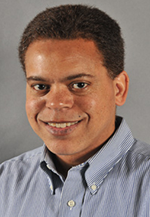
([email protected])
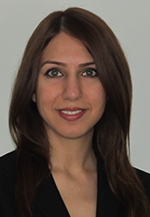
([email protected])