
June 3, 2019 in Smart Agriculture
Agricultural Digital Transformation
Blockchain, AI and API management platform are key enablers for smart agriculture.
SHARE: PRINT ARTICLE: https://doi.org/10.1287/orms.2019.03.18
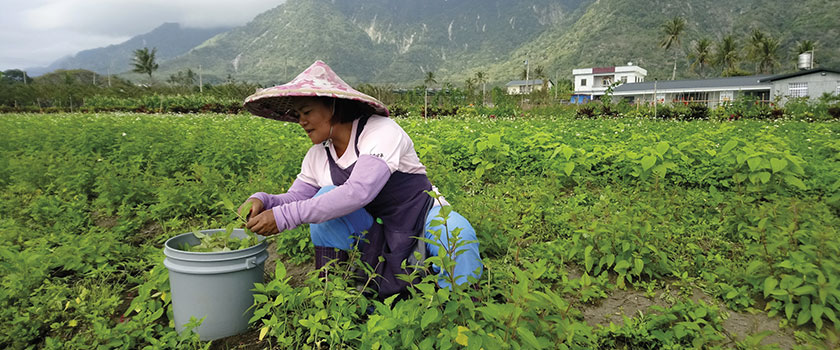
The United Nations has forecasted that the world population of 7.6 billion will reach 9.8 billion in 2050 and 11.2 billion in 2100. Rapid population growth, coupled with a severe reduction in global food production – due to climate change, environmental pollution, urbanization, as well as changing consumer behavior, demands and market integration – have made food shortages and food security the biggest agricultural challenges today [1]. Furthermore, a handful of global and regional intermediary corporations now dominate agricultural supply chains for the world’s 570 million farmers and more than 7 billion consumers. The consolidation of agriculture input, such as seeds, agrochemicals, seed breeding, trading and food processing, has contributed to rising food costs to consumers and farmer poverty around the world [2]. At the same time, advanced digital technologies have become major drivers for addressing these challenges. Industries are aggressively embracing major digital transformation, moving toward Industry 4.0, and fusing material and virtual worlds into cyberphysical systems. The key technologies are:
A: Artificial intelligence (AI), analytics, operations research;
B: Blockchain;
C: Cloud, IoT, 5G communication;
D: Big Data;
E: Ecosystems.
New approaches and new models of innovation and collaboration increase operational efficiencies on manufacturing shop floors, improve operations excellence in supply chains and services, and enhance brand and customer value. Transforming the agricultural industry with an intelligent integration of the technological ABCDEs would create abundant opportunities to address key issues, including food shortage, product safety and security, pricing management, agricultural ecosystem and power-player landscape modeling, fair returns on investment for farmers, and most importantly, consumer trust and well-being.
Advanced sensing and monitoring sensors supported by emerging communication technologies are capable of monitoring farmland and crop metrics throughout the full planting, production and delivery lifecycle, collecting metrics such as soil, temperature, humidity, light, crop growth, pesticide residue, production device, equipment conditions, transportation, storage status and more. Live sensor information can be processed and analyzed for real-time anomaly detection and automated or human response. Transmitted to cloud and combined with demand and market conditions, internal organizational data and partner information, this data can help optimize planning and operational decisions through AI and big data analysis and predictive and proactive decision-making. The overall supply and demand balancing, pricing, cost, processes, customer service and partner integration can also be studied in order to improve planting, production, distribution, sales, marketing, customer service, supply chain effectiveness and ecosystem value [3].
Business processes redesign, game-changing business models and new ecosystems are also crucially catalyzing digital transformation in the agriculture industry. Major shifts in roles and power relations among different players in food supply chain networks are expected. It is estimated that, by 2025, 40 percent of agriculture products will be serviced through horizontal fulfillment, geographic clustering or other innovative alternatives to an oligarchy of intermediators. In addition, microfinancing-related models enabled by recent financial technology will be valuable in developing new agriculture supply chains.
Next, we discuss opportunities for applying AI, analytics, blockchain and IoT cloud to the agriculture industry with special attention to the role of software ecosystems and a changing agriculture business landscape. We will also share insights from our collaborative alliance of farmers, agricultural product startups, IT startups, central and local governments and Asia University, to realize the benefits of digital transformation.
Technologies for Agriculture Digital Transformation
Smarter agriculture requires the intelligent integration of planting, factories, production, products and services, linked together by smart supply chain and supported by smart financing. Blockchain, AI and API management platform are the key enablers for smart agriculture.
Blockchain allows multiple organizations that, by nature, do not fully trust each other, to agree upon on a permanent, tamper-proof and transparent exchange of data through decentralized consensus mechanisms. This mutually beneficial and secure information sharing helps organizations collaborate in a meaningful way, eliminating intermediaries and speeding up communication to simplify processes and improve effectiveness. Using blockchain technology to record various supply chain data on planting, production, testing, logistics, sales, storage and demand will greatly enhance agricultural traceability and consumer trust. Blockchain-based token economy is another killer application for agriculture. Crypto tokens (currency) can encourage and incentivize innovation and contributions to the commons, by rewarding stakeholders in the value chain/ecosystem and promoting rapid growth of the value chain.
Analytics and AI support automation, intelligence and risk management, while blockchain creates decentralization, openness and transparency for decision-making and cross-company cooperation. The two complement each other well, and can greatly strengthen trust building, process simplification, and optimization and integration with innovative business models. These improvements can be further enhanced by an open API management integration platform. Under a principle of co-creation, partners will be able to quickly create needed processes and solutions through information and application-sharing mechanisms to achieve mutually beneficial, snowballing growth.
Dream Team: Creating Partnerships
Faced with the challenges of an aging society, dwindling population and outflow of young people from rural areas, the National Development Council (NDC) of Taiwan aggressively launched the “Regional Revitalization Initiative” providing joint funding for local government, enterprises and academia that contribute to the social and economic development of rural areas, promote regional migration, and sustainably balance urban and rural development [4]. The Big Data and FinTech Research Center and the International AI and Blockchain Consortium – supported by “Gloria” (Global Research & Industry Alliance) and sponsored by Ministry of Science and Technology (MOST) in Taiwan [5] at Asia University – have been working with industry and government to promote and develop big data and blockchain-based solutions.
Blueseeds, founded in 2016, is a social enterprise brand that creates natural and pure essential oils and associated skincare and bath products. The goal is to offer exceptional natural aroma experiences while contributing to environmental and social health. Blueseeds carefully identified unpolluted farmlands in Taima and Changbin in Taitung and Zhoulan in Miaoli, Taiwan; contracted dozens of farmers; and built factories with regional entrepreneurs to create a fast-growing natural farming herb supply network. Blueseeds also opened a farming school to educate farmers in natural farming techniques, train manufacturers in natural product production, and provide classes and labs to introduce natural products, green environmental practices and their benefits to the public.
In three years, Blueseeds products have reached China, Thailand and Canada. To maintain trusted brand, create a sustainable business model, achieve rapid international growth plan and give back to the society, Blueseeds formed a strategic partnership with Fusion$360, a technology startup. Fusion$360 was founded in 2016 to help enterprises accelerate their digital transformations, develop innovative applications, and promote cross-domain and cross-industry integration by developing an application programming interface (API)-based ecosystem enabling platforms to support innovative applications of ABCDE technologies across value chains. Fusion$360 also offers a blockchain-based payment called FusionPay – a private data protection, backup and sharing mechanism called Xfile – as well as a decentralized over-the-counter exchange system called B2E (see Figure 1).
With the common goals of supporting agricultural transformation and environmental ethics, promoting natural products and healthy living, stimulating local economy, and nurturing innovative startups in technology and agriculture, Asia University, central government initiatives from MOST and NDC, the local government of Taitung and Fusion$360 have worked hand-in-hand with Blueseeds to help create global brands in aromatic herbs and botanical products and develop the associated agriculture businesses while supporting Fusion$360 in becoming a leading global API and blockchain solution company.
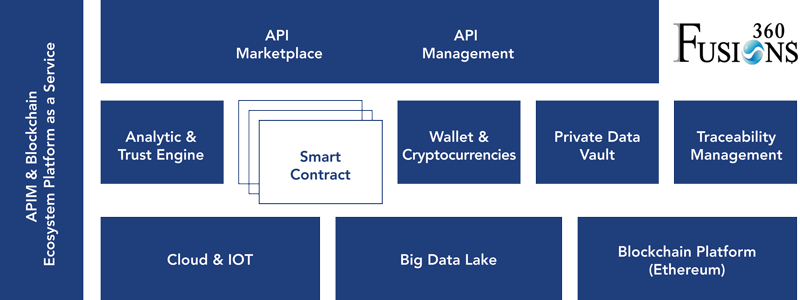
Figure 1: The Fusion$360 API Ecosystem Sharing Platform.
Smart Agriculture in Action
To support Taitung’s agricultural transformation and help Blueseeds realize its social enterprise vision, the author team identified four initial focus areas: 1) traceability, 2) token economy and payment, 3) supply chain financing and 4) corporate social responsibility. We advanced these by leveraging Fusion$360’s APIM and blockchain ecosystem platform, and Asia University’s data analytics and AI capabilities.
Traceability: Product traceability helps ensure product safety, anti-counterfeiting and build brand trust. In the event of a problem, traceability allows associated parties to quickly resolve issues and limit the scope of recalls and other losses. The platform combines blockchain, smart contracts and API management technologies to integrate data and document monitoring, protection, certification, storage and controlled sharing. Data gathered during planting, production, manufacturing, distribution and inspections can be recorded and uploaded with an easy-to-use mobile application equipped with encrypted electronic signature support. Data integrity is guaranteed to establish trustworthy traceability and supply chain visibility. A novel data protection mechanism, Xfile, was designed and implemented to strengthen data security. This mechanism also enables ecosystem participants to store business data in the cloud system with a high level of security protection. Data owners can determine what, when and how data will be shared with partners to improve overall effectiveness, redeem rewards for good deeds, or obtain financing when needed [6,7,8,9,10].
Blockchain-based payments: The authors designed a crypto-currency called Blueseeds Tokens (BST) for inter-supply chain trading. Tokens also provide a foundation for ecosystem value sharing, exchange and creation. Tokens reward individual and community contributions to planting, product design, production, testing, supply chain optimization, marketing, sales and customer loyalty. It is also used to transparently track Blueseeds’ donations to various charities. The goal is to create a digital economy for a safe, trustworthy and sustainable natural agriculture ecosystem. Customers and stakeholders can also purchase blockchain-based community tokens for trading within the network (utility tokens). Use cases include using tokens to reward loyal customers for volume purchases or sharing their recommendations or experiences on social networks; rewarding farmers for using natural farming techniques to cultivate herbs, crops and restore lands, reward manufacturers and distributors to enhance food and product safely, and allowing stakeholders to submit trace or test data.
Supply chain financing: Due to insufficient credit history information and lack of collateral, small and micro-businesses tend to struggle to get financing. The natural essential oil and wash product supply chain, in particular, has long lead times because the cultivation of various herbs can take months to years. Farmers and factories all have strong needs for financing support. The authors analyzed web and social network information to discover the interrelationship among companies using natural language processing and multisource machine learning.
The authors built a stochastic credit rating methodology and a blockchain-based, third-party supply-chain and crowdfunding platform to provide alternative financial services while ensuring transparency and trust between borrowers and lenders. Tests for these natural language network analysis and stochastic credit rating methodologies have been conducted using financial, bank transition and operations data from a large IC distribution corporation with very promising results. A POC, POB and POS using the team’s third-party blockchain-based system has been designed to provide financing service to Blueseeds ecosystem participants including farmers, natural product manufacturers and resellers [11].
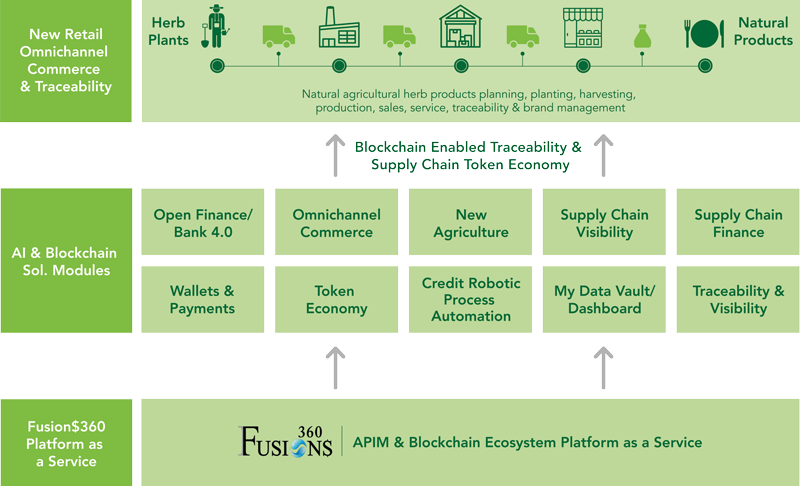
Figure 2: Enhancing Blueseeds brand trust and customer value through omni-channel token economy and traceability based on a set of advanced technology and solutions at low costs.
Corporate social responsibility: An AI and blockchain-enabled agricultural supply chain traceability system is an ideal vehicle to support corporate social responsibility (CSR) by keeping track of organization contributions to environmental sustainability and social equity. The Blueseeds blockchain-based traceability system allows CSR organizations direct access to the farmers and product information with built-in trust and security mechanisms to verify claims about natural, safe, non-toxic or organic production within the ecosystem. Blueseeds’ “Adopt an Acre” program allows consumers and CSRs to pre-pay for future products originating from particular plots of land. The fund helped farmers secure their investments while guaranteeing demand for limited product releases, in turn making the subscription a good investment for consumers.
Blueseeds donates 5 percent of its profit to various charity programs using token economy mechanisms. The traceability software has also been extended to track flow of Blueseeds tokens in CSR donations. CSR organizations can purchase BSTs to promote natural agriculture products. They can also bring in their own partners to further engage with the Blueseeds agriculture supply chain, becoming an active catalyst for agriculture digital transformation while helping better society and preserve the environment. In May 2019, Blueseeds won an APSIPA award for working with charities to create ecofriendly value chains.
Moving Forward
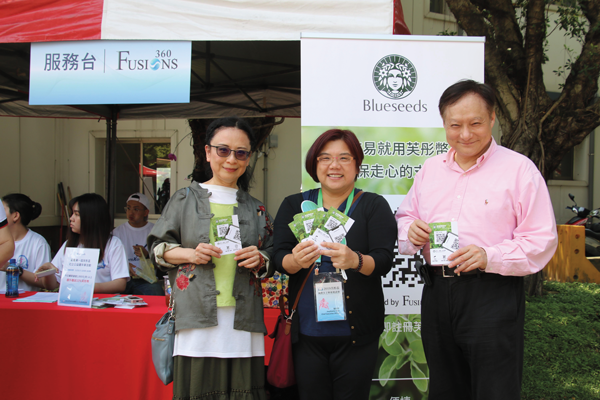
Grace Lin, Stephanie Chan and Ko-Yang Wang (l-r) at Blueseeds Cup International Women’s Baseball Tournament and Carnival for the official launch of Blueseeds Tokens.
Although still a young company, Blueseeds has successfully transformed unused farmlands into naturally fertilized herb farms and abandoned factories into high-end essential oil extraction plants. In Taitung, farmers’ per hectare income is about four to six times higher than that of farmers producing rice or vegetables. Step-by-step, Taitung County has been transformed into Taiwan’s first large-scale producer of natural and organic herb products and is quickly becoming “Taiwan’s Provence.”With emerging technology support from Fusion$360 and Asia University, Blueseeds can greatly enhance customer trust and loyalty through blockchain-based traceability and token economy. The associated supply chain visibility, proactive decision-making capabilities and supply chain financing are expected to help Blueseeds further increase its market reach and gain better profitability while providing CSR services.
The success of Blueseeds highlights a society willing to pay more for natural farming products. It was made possible through the cooperation of two startups, Blueseeds and Fusion$360, as well as Asia University’s Global Research & Industry Alliance Initiative sponsored by the Taiwan Ministry of Science and Technology, and Taitung’s Regional Revitalization Project spearheaded by the National Development Council of Taiwan. The industry-academic-government cooperation has enabled a small business to take advantage of disruptive technologies and embark on an exponential growth path.
The combination of technological cooperation, resource sharing and government investment support has created a successful model that can be easily replicated to other agriculture products such as medicinal herbs, food, fisheries and livestock, with the capacity to scale from local, regional markets to the global marketplace. The token economy allows a more profitable and in-time financial model for value chain stakeholders, which benefits both producers and consumers.
Acknowledgments
The authors would like to thank the extended team including Kevin Kuo and Brick Tsa, technical directors of Fusion$360; Shelley Chang, COO, Blueseeds; Dr. Fei-Yu Kuo, deputy minister, NDC, Taiwan; Arthur Wang, Ph.D. candidate, Yale University; and Taitung County’s support.
References
- United Nations, 2017, “2017 Revision of World Population Prospects,” https://www.un.org/development/desa/en/news/population/world-population-prospects-2017.html.
- FAO, 2014, “The State of Food and Agriculture. Innovation in Family Farming,” Rome: Food Agriculture Organization of the United Nations.
- WEF with McKinsey & Company, 2012, “Putting the New Vision for Agriculture into Action: A Transformation Is Happening,” http://www3.weforum.org/docs/WEF_FB_NewVisionAgriculture_HappeningTransformation_Report_2012.pdf.
- National Development Council, Taiwan, https://www.ndc.gov.tw/Content_List.aspx?n=78EEEFC1D5A43877.
- Gloria, Ministry of Science and Technology, Taiwan, https://www.gloria.org.tw/gloria/index.php?&web_lang=en-us.
- Linus U. Opara, 2003, “Traceability in agriculture and food supply chain: A review of basic concepts, technological implications, and future prospects,” Food, Agriculture and Environment,” Vol. 1, No.1, pp 101-103, https://www.world-food.net.
- COA, Taiwan, 2015, “Promoting a Production Traceability System for Taiwan Agricultural,” https://eng.coa.gov.tw/ws.php?id=2505355.
- Alicia Noel, 2018, “Six Ways Blockchain is Being Used in Food and Agriculture Supply Chains,” https://medium.com/cultivati/six-ways-blockchain-is-being-used-in-food-and-agriculture-supply-chains-68a7305fd533.
- International Trade Center, 2015, “Traceability in Food and Agricultural Products,” Bulletin No 91.
- Abbie Phatty-Jobe, 2018, “The role of digital in improving traceability and certification in the agricultural last mile,” https://www.gsma.com/mobilefordevelopment/blog-2/the-role-of-digital-in-improving-traceability-and-certification-in-the-agricultural-last-mile/.
- Kristoffer Francisco, David Swanson, 2018, “The Supply Chain Has No Clothes: Technology Adoption of Blockchain for Supply Chain Transparency,” Logistics, Vol. 1, No. 2, p. 2; https://doi.org/10.3390/logistics2010002.
Grace Lin is the founder of UFI.ai. She has served as chair professor at Tzu Chi University, Asia University, China Medical University and Soochow University, Taiwan, and as a vice president at the Asia University, Taiwan. She was VP and general director for the Advanced Research Institute and Data Analytics Technology and Applications Institute at the Institute for Information Industry (III), Taiwan, from 2011 to 2016. Before that, Dr. Lin worked for IBM US for more than 16 years within IBM Global Business Services and IBM Thomas J. Watson Research Center as CTO, director for Innovation and Emerging Solutions, senior manager for Supply Chain and eBusiness Optimization and research staff member. She was a member of the IBM Academy of Technology and an IBM Distinguished Engineer. Dr. Lin is an INFORMS Fellow. Ko-Yang Wang, Ph.D., is founder and chairman of the FinTech startup, Fusion$360.com in Taiwan that is developing an API-based financial innovation platform to support inclusive financial and associated services. He is also chairman of the Taiwan FinTech Association. Dr. Wang previously served as an EVP at III, and before that, he was a partner and practice leader for business process management at IBM Global Business Service. Han-Chao Lee is a VP at Fusion$360.com on temporary assignment at iABC, Asia University, as a chief strategy officer with a focus on blockchain research and development. Previously, he was a deputy director general of the Data Analytics Technology and Applications Institute and the Cloud System Software Institute at III. Webster Peng is business manager at Fusion$360.com in Taiwan. Previously, he served as project manager at KPMG Taiwan Sustainability Service, responsible for corporate sustainability transformation, strategy development and ESG disclosure. Stephanie Chan is founder and CEO of Blueseeds. Chan has more than 24 years of sales, marketing and management experience in networking and communications. She co-founded and served as the chairman of Amigo Communications (TWSE 6241) and has worked for CNet Technology as the sales and marketing director. Under her guidance, the company went public in 1996.
([email protected])