July 30, 2019 in Advocacy in D.C.
Engineering summit focuses on research processes, collaborations to benefit society
SHARE: PRINT ARTICLE: https://doi.org/10.1287/orms.2019.04.14

The Engineering Research Framework Visioning Summit, hosted by the National Science Foundation (NSF) and the American Society for Engineering Education (ASEE), brought together an eclectic group of academic, government and industry leaders to discuss and explore how engineering discipline success stories and best practices can be translated into viable models for identifying and seeding research directions for the broader engineering community. Ramayya Krishnan (2019 INFORMS president) and I participated in the Summit, which was held July 16-18 in Alexandria, Va.
The Summit focused on identifying models for facilitating research processes and collaborations that could lead to significant societal advances, enabled and driven by engineering methods. The Summit was structured with thought-provoking presentations to frame the task at hand, including a discussion of the greatest engineering achievements of the 20th century and the four components that provide a vision for the Grand Challenges in the 21st century (summarized into the broad areas of sustainability, health, security and quality of life).
The remaining time was divided into four sessions, with smaller groups of participants discussing how models for research processes can be designed and implemented. Leadership types were explored for such models, contrasting centralized leadership (like a spider) with dispersed leadership (like a starfish). Existing models, such as the Computing Community Consortium (CCC) and MForesight (Alliance for Manufacturing Foresight), provided examples of how domain specific areas have created models for facilitating research processes and collaborations within their targeted areas. These models were likened to creating tracts of fertile soil, where researchers can gather to plant their seeds of innovation to grow gardens of solutions that solve not only some of today’s most vexing challenges, but lay the framework to solve future problems that have not even materialized, or even conceived.
The Summit was less about predicting the great societal challenges of the future, but rather, laying the foundation for a living and breathing process of discovery and problem solving that transcends the constraints of time.
The INFORMS research community is well positioned to contribute to new societal advances. Our strengths as a community include a diverse group of methodological and applied researchers, positioned across academia, government labs and industry. We recognize the value of collaboration and reaching out to individuals outside our domain, particularly in healthcare, energy, manufacturing, transportation/logistics, finance and service operations. We also tackle societal problems organically, by individual researchers reaching out to partners, positioning us as a bottom-up research community. As such, we operate akin to the starfish leadership model.
INFORMS can play a useful role to catalyze such activities to co-seed (with support from NSF) targeted workshops (20-30 participants) with both INFORMS members and members of communities that work in domains that can benefit our community’s modeling and analysis expertise. The outcome of such workshops would be working papers that can be used by government agencies (like NSF) as input for new cross-disciplinary initiatives. Aligning such workshops around sustainability, health, security and quality of life allows the operations research (O.R.) community to gain a foothold into even larger programs and opportunities. Such synergistic activities may serve as fertile soil to identify new opportunities that can further advance our field.
There are numerous indicators for the health of our research community, including attendance at our national meetings, the impact that the field is having in government and industry (looking no further than the last two INFORMS Government & Analytics Summits), and our natural alignment with artificial intelligence as a field that uses models and algorithms to improve decision-making. All such excitement and energy surrounding O.R. suggests that our best days still lie before us.
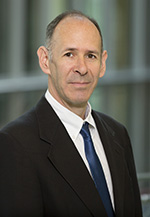
Sheldon H. Jacobson is a founder professor of computer science and engineering at the University of Illinois Urbana-Champaign. His research interests include data-driven decision-making under uncertainty with application in public policy and public health. His passion for service, giving back and making a difference motivated him to serve as the general chair of the 2022 INFORMS Annual Meeting.