October 7, 2019 in President’s Desk
The intersection of O.R. and AI
SHARE: PRINT ARTICLE: https://doi.org/10.1287/orms.2019.05.20

As INFORMS continues its early-stage work at the intersection of artificial intelligence and operations research and analytics, I was recently afforded a unique opportunity to speak at a dinner with senior congressional staff on this very topic.
Software.org – an independent, nonpartisan international research organization that works to help policymakers better understand the impact that software has on our lives, our economy and our society – sponsored an educational trip to Boston for more than a dozen senior congressional staff from the U.S. Senate and House to facilitate a thoughtful series of discussions around artificial intelligence and the government’s role in this fast-moving landscape.
As the only speaker that August evening, I was afforded ample time to talk with these key congressional staffers about INFORMS, the incredible work our members do, and the role O.R. and analytics plays in the artificial intelligence framework. As our discussion unfolded, it revolved around a number of interconnected issues, such as ethics in data-driven decision-making, the future of work, the pace and nature of technological change, and needs and opportunities at the federal level for investments in basic and applied research.
We also delved into several other more specific topics of interest to policymakers – including the roles and responsibilities of the United States and other OECD (Organization for Economic Cooperation and Development) and G20 nations in addressing the myriad short- and long-term implications and opportunities that AI brings to bear for humanity. Of note, over this past summer, both the OECD and G20 nations adopted separate AI principles around the global adoption of AI [1, 2].
There are clearly a variety of societal, technical, economic and security issues within this context, but one in particular that has been raised with INFORMS on multiple occasions, including in Boston, revolves around the future of work. More specifically, people from all walks of life are thinking, or worrying, about the workforce challenges around AI. There is wide recognition (see the Science paper by noted management scientist Erik Brynjolfsson and computer scientist Tom Mitchell, available at https://science.sciencemag.org/content/358/6370/1530) that AI will complement workers in some tasks and replace them in others and that it will spur new types of jobs and workforce needs for which we need to begin preparing.
A quick scan of the news and one can find a growing number of examples of companies that have already begun investing in this change. The scale of this need is nothing short of astonishing. In fact, a report released by IBM in September (https://www.ibm.com/downloads/cas/EPYMNBJA) states that “more than 120 million workers in the world’s 12 largest economies may need to be retrained/reskilled in the next 3 years as a result of intelligent/AI-enabled automation.”
As organizations wrestle with how to rescale their workforces and identify which workers need to be retrained in order to meet these upcoming needs, there are profound implications for our community. First, the IBM report identifies that “behavioral” skills that support “organizational agility and adaptability” in addition to their technical competencies have become more important than ever. That means that as the next generation of O.R. and analytics professionals prepare to enter the marketplace, they must not only be great at what they do but also be made ready to operate effectively in these dynamic environments.
But, more broadly, addressing the questions surrounding the effective and efficient deployment of workforce training to ensure attainment of desired learning outcomes is an important societal challenge. We as a community have pioneered workforce and manpower planning initiatives over the last several decades. While new AI-based educational technologies will be important enablers of reskilling at scale, the design and implementation of mechanisms to identify and deliver appropriate education and training to those who need it will be critical to the success of any reskilling initiative. Our community and our methodologies can play an integral role in helping organizations do this well. Indeed, some companies such as Amazon and AT&T have already emerged as early leaders in this effort. But other companies, workers, unions and other stakeholders in the economy need to quickly begin formulating and implementing policies to meet these needs. How, then, might our community bring the O.R. mindset and skill set to the table to help accomplish this?
Should it be an organic piecemeal effort at participation? Should INFORMS seek to work more directly with organizations such as the U.S. Chamber of Commerce, the Business Roundtable, the Society for Human Resource Management, labor unions or others to help them through this process in a comprehensive fashion? How can this be an important element of our advocacy efforts? To do so would certainly meet the letter and spirit of one INFORMS’ strategic goals – that “operations research and analytics will advance society and make the world a better place.”
This should quickly become an area of discussion across INFORMS as the opportunity for us to proactively engage will be a short window. Perhaps the INFORMS Annual Meeting in Seattle will offer an appropriate forum for this conversation to take place.
In fact, we will have a number of AI-focused talks throughout this year’s meeting, including keynote remarks on Oct. 23 from Microsoft’s Eric Horvitz, who will present “research on principles and mechanisms for harnessing the complementary skills of people and machines.”
Additionally, Pascal Van Hentenryck and I will lead a keynote discussion on Oct. 21 in which we will talk about the place, relevance and opportunities for O.R. within AI as a preview to a forthcoming white paper that will be issued by the AI Strategy Committee, which has been working throughout this year to help assess INFORMS’ path forward in AI.
In helping to meet the needs of policymakers and the technical work that is core to the future of AI itself, and by affording the opportunity to help workers and society at large address vital aspects of our future, it is clear that our message of “saving lives, saving money, and solving problems” is resonating like never before.
Thanks to the individual and collective works of our community, combined with what I have touched upon here along with many other factors, the future for our community is more robust than ever before. I hope you’ll join us in Seattle to hear more about the intersection of O.R. and AI and to engage with us in this important endeavor. You can reach me at [email protected].
References
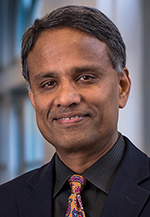
Ramayya Krishnan is the Cooper Professor of Management Science and Information Systems at Carnegie Mellon University. He is dean of the Heinz College of Information Systems and Public Policy and served as 2019 president of INFORMS.