


December 6, 2019 in Q&A
It’s a great time to be president!
On the eve of her INFORMS presidency, Pinar Keskinocak addresses advocacy, diversity, collaboration with industry . . . and her career journey.
SHARE: PRINT ARTICLE: https://doi.org/10.1287/orms.2019.06.10
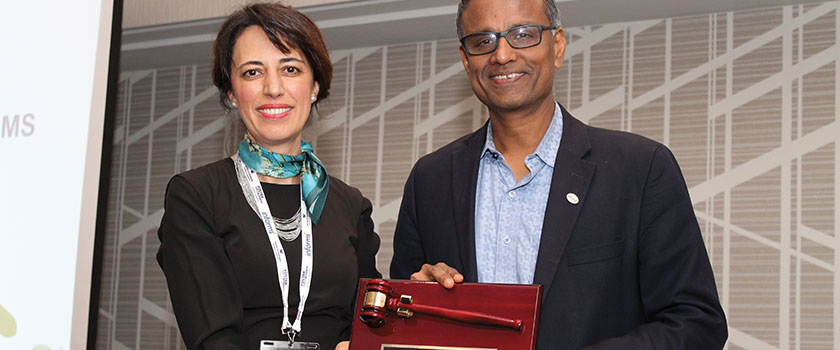
For as long as she can remember, going all the way back to her childhood, Pinar Keskinocak has loved mathematics. Later, as a student at Bilkent University in Turkey, she turned her love of mathematics and a desire to solve real-world problems into bachelor’s and master’s degrees in industrial engineering. From there, it was on to Carnegie Mellon University (CMU) in Pittsburgh where she earned a Ph.D. in operations research, which gave her a new set of technical skills and tools and an “O.R. mindset.”
After a stint at the IBM T.J. Watson Research Center, Keskinocak joined the faculty at Georgia Tech, where she developed a new perspective on global “grand challenges” and how she could best put all of her knowledge and research to use in addressing the pressing problems facing humanity. She is currently the William W. George Chair and Professor in the H. Milton Stewart School of Industrial and Systems Engineering (ISyE) and co-founder and director of the Center for Health and Humanitarian Systems.
Keskinocak’s introduction to INFORMS began during her grad school days at CMU. She read INFORMS journals to bolster her research and attended INFORMS conferences to present her research. Along the way, she became a student member of INFORMS and then a regular member.
As a junior faculty member at Georgia Tech, Keskinocak became an active volunteer with INFORMS, and her service to the Institute continued year after year. After serving on countless committees and presiding over various societies and sections, as well as multiple positions on the INFORMS Board as VP of Membership and Professional Recognition, secretary and now president-elect, Keskinocak is poised to become president of INFORMS on Jan. 1, 2020.
In October, we caught up with Keskinocak at the 2019 INFORMS Annual Meeting in Seattle to get her take on the state of INFORMS on the eve of her presidency, as well as her thoughts on everything from advocacy, mentoring, meetings and diversity to health systems and humanitarian operations. As the following interview makes clear, she’s immensely passionate about all of those topics and equally optimistic about INFORMS and its future.
Describe the “state of INFORMS” in terms of its major activities – journals, conferences, subdivisions and finances – from your perspective.
The state of INFORMS is great. If you look at our membership, our conference participation, our research and outreach initiatives, awards, subdivisions, journals, finances – pretty much every dimension or metric you look at – we’ve been thriving. This not only gives us a safety net, but also gives us an opportunity to try new things, new initiatives.
As an organization, we are at a great place, and I hope we keep the momentum going. Of course, over the years, the INFORMS leadership, staff and members deserve credit for where we are today. I’m grateful to all of them. It’s truly an honor to be elected president of INFORMS.
What do you consider is INFORMS’ greatest strength?
Our community – our members, our staff and the unique capabilities we have to develop solutions for the challenging, complex problems that are facing industry, business, the planet and humanity. Our community has so many talented people, tools and techniques that we really can and do make a difference in so many areas, whether it’s business, government or public sector impact.
In your vision statement, you indicated that one of your priorities would be broadening the membership base of INFORMS. What does that entail?
We would like to increase the overall membership numbers while also broadening the membership base. For example, even though our membership is growing, the distribution between academic and nonacademic members has not changed much.
Why is that a concern?
I would like to see more growth in our industry membership because industry/academia collaborations would help us increase our impact as a community. I would like to see more bridges built and collaborations and synergies established between our academic and industry members. That’s a great approach for us to exchange and develop knowledge and experiences both ways and expand our impact.
Another aspect of broadening the membership is increasing our diversity in terms of international versus domestic members; race, gender and ethnicity; student members versus regular members, etc. There are many dimensions to diversity. Can we broaden our membership by looking at all these different dimensions? This takes considerable effort and outreach and does not magically happen on its own. There needs to be intentional effort propelling us in that direction.
Your vision statement also mentioned broadly disseminating the work of INFORMS members. What are your ideas in that area?
There is a perception among many of our members that INFORMS and what we do is a best-kept secret! I think we have done a good job over the years establishing communication channels internally, but we could be more outward facing in terms of INFORMS communication and outreach. Initiatives such as the government advocacy program are great steps in that direction to ensure that outreach efforts to government, policymakers and industry help position the INFORMS community to play an active role in addressing and developing solutions/policies for important problems and issues. We need to hear from government representatives, policymakers and industry leaders about their priorities. They need to know what INFORMS and its members bring to the table, and they need to hear from us about some of the great things that we do. We need more of that kind of exchange and discussion, which hopefully would lead to new collaborations and greater impact.
Ramayya Krishnan, the 2019 president, has been very active in government advocacy. What can INFORMS members look forward to in 2020 in terms of advocacy?
I would like to continue to expand the government advocacy initiative and also strengthen the ties between academia and industry. To achieve these goals, we may need to explore different channels and activities. For example, as we plan our annual meetings, we could be more proactive in terms of offering different forms of industry engagement beyond our regular sessions to create more interaction, brainstorming, exploration, collaboration opportunities and action items between our academic and industry members.
Simultaneous engagement in government, policy and industry outreach – and communication back and forth, both ways – could lead to synergies and bigger impact.
This INFORMS Annual Meeting is on track to draw more than 7,300 attendees, an all-time record by far. To what do you attribute such a huge turnout?
First, we all should celebrate the participation of so many members at the Annual Meeting! There could be many reasons for the increasing growth in attendance over the years. We need to do a deep dive into the numbers and also hear from our members. But I guess it would be safe to say that the conference offers a variety of benefits to the participants and more and more people find value in participating every year. This is thanks to the INFORMS staff and the conference chairs and committees and all the other organizers, speakers, sponsors, etc. It takes a village and more to make it happen!
Whatever the reason, the stars certainly aligned this year to produce an incredibly successful meeting. Can it get any bigger or better?
I certainly hope that we will continue to do at least as good, or better, both in terms of numbers and the benefits and value offered by the conference to all participants. Given the size of the conference, we might explore more structured opportunities for attendees to interact with each other in a more meaningful way beyond the standard tracks and presentations or chance meetings in between sessions. Developing pockets of opportunities for brainstorming about a specific topic and exploring collaboration opportunities could lead to increased engagement and impact in the long run.
Many of the attendees are grad students here to present a paper or new-to-INFORMS practitioners. What is your advice to new members?
The new member breakfast is a great platform for us to get to know our new members and for them to familiarize themselves with INFORMS and its various communities. It’s easy to get lost in a conference this size, especially for a newcomer, so we encourage all our new members to find a home in a subdivision. If they engage in a meaningful way and become part of the community, it increases the chances that they value the membership and stay with INFORMS.
Tell us a little about your career journey. How did you end up in operations research?
I loved math growing up, for as long as I can remember. When I was thinking about options for college and studies, math was an obvious option, but at that time and place – I grew up in Turkey – career options for math majors were quite limited. Engineering was the next thing that came to mind, so I studied industrial engineering (IE). I didn’t know any industrial engineers and didn’t really know much about IE either. I chose IE because the description in a college information sheet said it’s very mathematical, but more than that, you will also tackle many problems that impact humans. That combination sounded wonderful to me.
How and why did you become involved with INFORMS?
When I was a graduate student at CMU, my advisor Sridhar Tayur encouraged me to present my research at an INFORMS conference in Washington, D.C. Even before that, I read articles from INFORMS journals as part of my research. Later, as a junior faculty member, I became quite active service-wise with INFORMS, and it just kept going from there – one service activity after another.
Mentoring is important to any student or young academic or professional. Who were your mentors and what impact did they have on your career?
I believe mentoring is important at any stage in life and career, and it’s multidimensional. That’s why we all need many mentors, as each one can share different perspectives on different topics, enabling us to synthesize and pave a path for ourselves.
I have been fortunate to have many mentors; we could be here for hours if I were to start listing them and I surely would miss many! In high school, two of my amazing teachers taught math and logic, with very different ways of explaining topics and showing me different ways of thinking I didn’t know I was capable of. Many of my undergraduate professors encouraged me to go to graduate school, and my Ph.D. advisor was an amazing mentor, not just in technical areas but also about life and always encouraging me to believe in myself.
I worked at IBM and of course at Georgia Tech for many years. Many of my peers and more senior colleagues at the time and still today have been mentors. I have been very fortunate in that regard. Within the broader INFORMS community there are people I’ve never been in the same organization with or directly collaborated with, but they have been wonderful mentors over the years. So yes, I have had many mentors. The amazing thing about INFORMS is that it also allows us access to these wonderful mentoring opportunities and people we otherwise wouldn’t have had a chance to meet.
While there has been no shortage of women rising to the rank of INFORMS president over the past 15 years, generally speaking, women and minorities remain underrepresented in STEM-oriented organizations. Your thoughts?
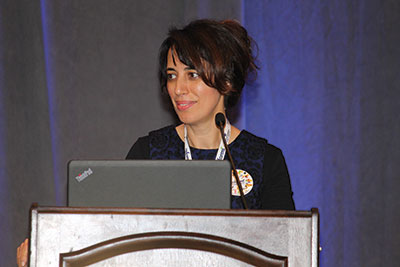
Keskinocak plans to address as president.
That brings us to our continuing efforts toward enhancing our diversity, equity and inclusion. If you look at our demographics in terms of race, ethnicity and gender, we pretty much mimic the typical STEM organization based on an NSF diversity and inclusion study. The 2016 INFORMS membership survey indicated several issues in terms of members’ experiences regarding inclusion.
We need and want to do better in this space. INFORMS now has a diversity and inclusion statement, ethics guidelines and a Diversity, Equity and Inclusion Committee (DEIC). These are important steps forward. The board recently approved a new initiative proposal to establish a diversity and inclusion ambassadors program to provide an opportunity to any of our members to take action toward establishing a more diverse and inclusive community.
What drove your interest in the establishment of the Center for Health and Humanitarian Systems at Georgia Tech?
Being connected to real-world problems and having impact through my research has always been important to me. Some of my earlier work was implemented by companies and made me think, “Great, I’m helping companies become more efficient, more profitable and to better serve their customers, but can we do something to more directly impact humanity?” That question was always in the back of my mind. I would say it’s been a natural extension of my desire to have impact, expanding my research from industry more broadly to public sector.
Together with two other colleagues – Ozlem Ergun and Julie Swann who shared similar interests with me – we started a center at Georgia Tech. Initially, the center focused on humanitarian issues – disaster prevention, response and recovery, along with long-term development – but then we quickly started expanding the focus of the center to include health systems.
We also noticed the connections between health and humanitarian systems, especially in the developing world. So today we have the Center for Health and Humanitarian Systems (CHHS), which we co-founded and co-directed before Julie and Ozlem left Georgia Tech. So, I’m the last woman standing (laugh) at CHHS but thankfully our collaborations with Julie and Ozlem still continue. Our research has been collaborative with governmental and nongovernmental organizations and healthcare providers, on issues and topics that are important to them.
I understand the Center has organized about a dozen humanitarian logistics conferences.
Yes, 11 so far and counting! We started the conferences in Atlanta, and since then we’ve been all around the world, including Mexico, Germany, South Africa, Malaysia, Denmark, Dubai and Rwanda. The idea is to bring together people in leadership roles in governmental and nongovernmental organizations and industry who are very active in the health and humanitarian space. Of course, we also have academics. The goals are to identify the pressing issues, and second, from an academic perspective, identify potential research topics or directions. The conference also provides an excellent platform for exploring collaboration opportunities between academia and some of the governmental and nongovernmental organizations, as well as industry. Historically, the humanitarian and health sectors have been separated in terms of the way they organize themselves and respond to disasters and crises, as well as long-term development. Our conferences bring them together at the same table along with academics.
Sadly, there’s no shortage of demand for humanitarian crisis and disaster relief logistics these days.
You are absolutely right. Unfortunately, the number of these events and people impacted is going up. There are lots of issues in terms of preparedness, response and recovery. These are very difficult problems. We often have limited resources, many stakeholders, different objectives and lots of constraints, which means there are many opportunities for our field to make an impact from a research perspective.
I also want to mention the health side since my research really spans both. We have ongoing issues, especially in the developing world, in terms of infectious diseases, but increasingly we also have a growing need for managing noncommunicable diseases – heart-related conditions, diabetes and so forth. How do we get out of this mindset of sick care – we call it healthcare but typically the way it is implemented right now is sick care – and transition to healthcare? How do we best utilize our resources toward promoting health and wellbeing, versus just treating the sick? Again, these are very important areas of research and present many opportunities for our field to have an impact.
What’s the most critical component of a successful response to disaster or humanitarian crisis, and what role can O.R. play in the response?
In the humanitarian sector, data is a big issue – collecting the right data at the right time so that you can use it for informed decision-making. We see an increasing need for decision support tools for making some of these difficult decisions, which have historically been made based on experience and gut feeling. I guess you could say the same thing for healthcare. Many of the complex decisions are made by people based on their experience and what they know about a particular situation or a patient. The need and potential benefit of data-driven, systematic decision-making is huge. This is where the INFORMS membership could play a significant role.
Changing topics, hundreds of analytics academic programs have sprung up over the past decade, most of them housed in business schools offering master’s degrees in analytics, data science and related fields. I understand Georgia Tech has recently launched a multi-department online analytics program.
The MS in Analytics program at Georgia Tech is an interdisciplinary program across the Scheller College of Business, College of Computing and College of Engineering, encompassing topics in statistics, operations research, computing and business. Students can choose one of three tracks depending on their interests and career goals: Analytical Tools, Business Analytics or Computational Data Analytics. This flexibility and the depth and breadth of offerings is wonderful for students, as well as their potential employers.
INFORMS has staked a claim as a world leader in the field of analytics through various initiatives. What does INFORMS need to do to maintain its leadership role and increase its influence in this rapidly evolving space?
Change is good! We are moving forward. We are adapting to the needs and opportunities that arise. Thirty years ago, the kind of access to data and the computing capabilities we have now did not exist. These advances in technology open up new opportunities for us, which is fantastic because we develop new methods and tools to grab these opportunities and address the newly occurring challenges, whether they are on the methodology side or the application side. The challenge for us is to make sure we stay connected and get the word out about our capabilities and communicate our impact. The connections and collaborations with industry and with government are very important so that they are aware of our capabilities and we are aware of the opportunities.
I trust your packed academic schedule – research, teaching and directing – combined with volunteer efforts on behalf of INFORMS leaves some fun play time.
Are you asking me if I have a life outside of O.R.? (laugh). Yes. I have three kids ages 17, 13 and 8, and I love spending time with them. I love being around water. I love swimming, kayaking, hiking and generally spending time outside in nature. Whenever the weather is nice, and thankfully we have many nice days in Atlanta, I go to a trail or a lake just to be out in nature, and usually one or more of the kids join me so it’s fun.
Last question: What’s your strategic vision of INFORMS, O.R. and the analytics profession five years, 10 years or even further out into the future?
I think about these big, difficult, challenging problems – the grand challenges that have been out there for a while. They come from different organizations, communities and from all over the world. These grand challenges evolve over time, but they have similar characteristics in that they are complex, and often involve limited resources and numerous tradeoffs. Those kinds of problems are perfect for INFORMS members! Collaborating internally and with other fields, we have or could develop the tools and knowledge to tackle these problems, and I would like the world to know and recognize INFORMS for it. My vision is to see the broader INFORMS community take a leadership role and have a great impact on the grand challenges that face humanity and our planet.
Interview on Resoundingly Human podcast
From hurricanes and earthquakes to conflict and disease, these disasters, both manufactured and natural, can have a devastating impact costing millions, and even billions, in damages, while greatly impacting the lives, health and well-being of the affected populations.
But how can we prepare for or respond to events that often can’t be predicted, nor their true impact estimated, in order to save lives, save money and solve the myriad problems that come as a result?
The answer: operations research and analytics. Ashley Kilgore, INFORMS communications manager and host of the INFORMS Resoundingly Human podcast, explored this topic with Pinar Keskinocak.
The podcast is available here, and can also be downloaded on iTunes, Google Play, Stitcher, and Spotify.
Peter Horner is the editor of Analytics magazine.
([email protected])