April 6, 2020 in Roundtable Profile
For SAS and its customers, analytics and AI help change the world
SHARE: PRINT ARTICLE: https://doi.org/10.1287/orms.2020.02.16
In our connected world, organizations have massive amounts of data at their fingertips. This data, combined with improved computing power and advances in artificial intelligence (AI), have fueled digital transformation across industries. As businesses continue to replace manual processes with automated, streamlined methods, they often turn to SAS.
Headquartered in Cary, N.C., with offices in 59 countries, SAS (pronounced “sass”) is the leader in business analytics software and services. SAS is also among the largest privately held software companies in the world, with 14,000 employees worldwide.
Used by 92 of the top 100 companies on the 2018 Fortune 500, SAS’ powerful analytics help businesses turn their data into invaluable insights and solve the toughest business problems. With SAS, organizations can make better, faster, more informed decisions that can improve health, save endangered species, build smarter cities, enhance customer experience and more.
Dedicated to transforming a world of data into a world of intelligence, SAS encourages continuous curiosity to fuel progress. Its recent $1 billion investment in AI is a testament to its commitment to technology, innovation and education, helping prepare the next generation of data scientists. SAS has experienced an AI growth rate almost four times faster than the overall market, or 104.6%, according to the International Data Corporation (IDC). And AI is helping companies transform their businesses and put analytics to work – for example, helping 1-800-FLOWERS improve their customer experience and financial institutions such as Citi digitize compliance. It’s also helping Volvo Trucks minimize unplanned downtime, and Lockheed Martin keep aircraft operational for crucial missions.
Focus on Education and Technology
Rooted in education, SAS was founded in 1976 at North Carolina State University. Since then, SAS has grown to be the global market leader in advanced analytics – reinvesting an average of 25% of its revenue into research and development annually.
SAS takes an integrated, end-to-end approach to analytics. Its comprehensive analytics platform provides governance, security, flexibility and scalability, and supports the full analytics life cycle – the journey from data to discovery to deployment. The SAS Platform boasts user-friendly interfaces, the ability to program in various coding languages, and mobile apps to accommodate different skill levels, from business users to data scientists.
SAS’ advancements in AI technologies and capabilities, such as computer vision, natural language processing (NLP) and machine learning (ML), continue to expand its platform to deliver the following innovation:
- automating complex tasks necessary to build superior analytical models;
- providing enhanced interpretability and explainability to generate simplified explanations of results; and
- integrating open application program interfaces (APIs) to allow anyone to access powerful AI and ML capabilities.
Cloud-native and focused on revolutionizing analytics, SAS is helping organizations operationalize analytics, manage technical debt, become more agile and scale to solve critical, enterprise-class problems through better decisions while securing a competitive edge.
Customers can choose more than 200 SAS products and industry solutions, each customizable to their needs and deployed on-premises or in the cloud. In addition to software, SAS also provides enablement services (e.g., training, mentoring, consulting and certification); technology, analytics and solutions services (e.g., architecture review and analytical coaching); and cloud and support services. SAS’ expansive community and resource portal gives users access to a range of SAS books, blogs, tutorials, documentation, community forums, users groups and events.
Through a variety of advanced analytics tools, techniques and resources, SAS helps businesses quickly realize value from their data and makes analytics accessible to anyone in an organization. With SAS, customers can solve today’s business problems while modeling and predicting what could happen tomorrow.
For instance, Amsterdam University Medical Center is using AI to help save lives – revolutionizing healthcare and bringing cancer treatment to a new era. Using SAS’ cutting-edge analytics to help improve research and collaboration, the medical center is able to better identify cancer patients who are candidates for lifesaving surgery through AI-enhanced tumor assessments.
Working with a large amount of patient data, evaluating tumors is traditionally a time-consuming process that can be prone to errors due to subjectivity or general human error. Computer vision technology and deep learning models have helped clinicians automate the process, improving both speed and accuracy of the assessments.
Automatic segmentation helps doctors promptly identify changes in the size and shape of tumors and note their color, while AI models help them more accurately determine whether lifesaving surgery is viable, or an alternate treatment strategy should be chosen given a 3D representation of each tumor and total tumor volume.
Additionally, outside the clinic, researchers can spot hidden trends without delay – continuing to improve the patient journey. With AI gaining traction in oncologic care, the center is looking forward to a future in which it may be able to better predict the outcome of surgery and overall patient survival. For example, in New Hanover County – where the city of Wilmington, N.C., has the highest opioid abuse rate in America – SAS has helped uncover a growing link between opioid abuse and child abuse, enabling authorities to better protect children affected by the epidemic using predictive analytics.
Built from a SAS solution commonly used by fraud departments to detect anomalies and streamline investigations, the cloud-based child safety platform provides a centralized system that enables caseworkers to quickly assess (and reassess) risk and uncover connections within seconds – a formerly manual process that took hours to complete. If conditions change for a child on their watch, alerts notify caseworkers, enabling them to act swiftly.
By combining data across local sources and applying analytics-based risk scoring, the platform provides critical information to make the county more efficient in assessing risk and saving lives – while simultaneously saving the county $1.1 million annually.
Helping drive progress to change the world, education is SAS’ primary philanthropic focus, with a special emphasis on STEM (science, technology, engineering and math). SAS supports education initiatives to promote learning for all and develop the next generation of innovators – through community outreach, partnering with more than 75 universities to offer master’s degree programs with an analytics focus, and providing free analytics software and resources to academics.
Improving Lives with SAS
Operational at more than 80,000 sites in 147 countries, SAS is used across industries. Organizations around the globe are harnessing data and analytics to make a difference.
Putting analytics into action, SAS helps its customers solve business problems that:
- improve health by getting much-needed cures to patients faster;
- halt fraudsters in their tracks by effectively identifying fraudulent activity in real time;
- mitigate losses and meet regulations by better managing financial and nonfinancial risk; and
- exceed their own customers’ expectations and build loyalty by providing personalized service.
Universally, SAS helps automate routine tasks that allow everyone to be more productive. SAS is also part of the Data for Good movement, which helps solve humanitarian issues around health, poverty, education, human rights and the environment by using data in meaningful ways.
To date, SAS has helped drive Data for Good initiatives for suicide prevention, ending human trafficking, stopping outbreaks and saving endangered species. In 2017, SAS launched GatherIQ, a free app that details the 17 global sustainable development goals set by the United Nations for a better world, and shows what organizations are doing to address them. Users can download the app to learn more about the goals through interactive data visualizations, quizzes and other multimedia activities that help groups like Girls Who Code, Rise Against Hunger, Water for Good and Zoe Empowers.
Demonstrating the power of analytics to help improve lives and support the community, in 2015 SAS aided in natural disaster relief, helping house thousands of displaced families that were devastated by the 7.8 magnitude earthquake that struck Nepal. Just on the cusp of monsoon season, more than 200 tent camps were erected to shelter more than 45,000 families while the International Organization for Migration, a first responder and leading intergovernmental organization, struggled to locate the large amounts of sheet metal needed to rebuild homes. Providing a sense of hope, safety and stability, SAS assisted the relief organization to access and quickly analyze decades of global trade data from the United Nations to facilitate a rapid purchase order for the materials.
In another part of the world, SAS’ AI capabilities are helping WildTrack monitor and protect endangered species. Using SAS technology, the nonprofit conservation organization has developed an award-winning analytic application that allows researchers to noninvasively monitor and identify footprints of endangered species at a large scale and fast pace – what would take indigenous trackers much longer to collect and analyze. The application identifies footprint images and recognizes patterns using deep learning. Using customized mathematical models, measurements from the images enable researchers to identify the species, individual, sex and age-class – insights into species populations they never had before. Depending on data and analytics to help protect these animals, WildTrack can study behaviors, numbers and distributions of species in their respective habitats to swiftly implement conservation programs where necessary.
By using analytics and AI techniques that enhance human efforts, SAS is helping conservation groups, relief agencies and healthcare practitioners realize its value in rapidly responding to humanitarian issues. As SAS CEO Jim Goodnight puts it, “We are people who want to help other people. That’s the satisfaction we get out of writing programs: knowing we’re going to make somebody else’s life a lot easier.”
An Innovative Workplace Culture
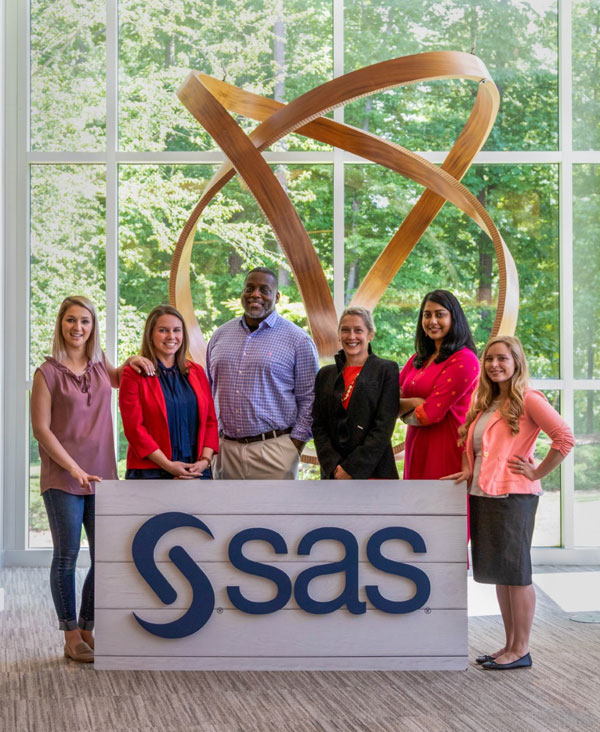 Acclaimed for its forward-thinking approach, SAS has received overwhelming global recognition not only for its best-in-class software solutions, but for its exceptional work environment and corporate culture. The innovative technology leader is also a well-known pioneer in workplace culture.
Since the beginning, Goodnight has believed that “if you treat employees like they make a difference, then they will.” This belief is centered on ensuring employees feel valued – and SAS provides an environment where employees feel inspired, supported and proud of the difference their work makes.
Goodnight often states that he considers employees his “greatest asset,” and SAS invests heavily in its employees’ well-being, professional development and health. The company offers an array of benefits, services and programs that foster a work-life balance, including outstanding healthcare, subsidized childcare, fitness benefits, collaborative workspaces and creative work environments.
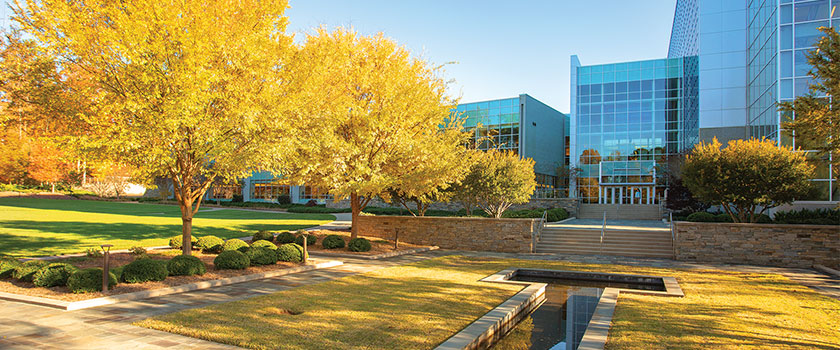
While SAS provides each global office with unique perks that resonate with their country’s culture, SAS’ headquarters campus spans 900 acres – with 300 acres developed – providing convenient, on-site services to facilitate work-life balance, a creative atmosphere and space for outdoor recreation.
Focused on being good corporate citizens, SAS also invests in environmental sustainability and volunteerism. The company has several global LEED Certified buildings, and its headquarters is home to a solar farm, garden and beehives. Employees are encouraged to get involved in the community and provided dedicated volunteer time off. All this contributes to the company’s extremely low turnover rate of 6% – less than half the 13% industry average. With an average employee tenure of 12 years, SAS seeks, attracts and keeps top talent who embody its corporate values of curiosity, passion, authenticity and accountability.
SAS is recognized globally as a best workplace for its inclusive corporate culture, work-life balance and world-class working environment. One of only 12 companies that are considered a Great Places to Work “Legend” – i.e., having been part of the Great Place to Work list since its inception – SAS provides a work environment that fosters creativity and innovation, diversity and inclusion.
In addition to being touted as a best workplace for women and millennials, and a best workplace in technology, recent accolades include:
- Fortune 100 Best Companies to Work For (Legend)
- Fortune Best Workplaces in Technology (2020)
- America’s Best Employers for Diversity (2020)
- Fast Company Best Workplace for Innovators (2019)
- Sustainable Business Awards (2019)
- People Magazine’s Companies That Care (2018)
Through meaningful projects, SAS employees continue to pave the way in the field of analytics – sparking curiosity that fuels innovation and helping revolutionize industries and improve the way we live. Simultaneously, SAS’ focus on the community and education continues to help shape a world where AI and analytics are at the heart of human progress.
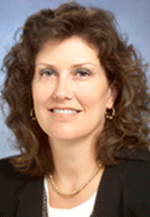
Kathy Lange is senior director, SAS Americas Technology Practice. She is a member of INFORMS.