
June 12, 2020 in Issues in Education
Teaching Millennials and Gen Z Students
SHARE: PRINT ARTICLE: https://doi.org/10.1287/orms.2020.03.06

Teaching for the first time as a rookie professor is an exciting milestone, but it can also be a stressful experience. Fortunately, senior colleagues are often helpful and generous with sharing large quantities of material from previous years. This material, however, sometimes needs to be adjusted to fit one’s style and preferences.
The fields of operations management (OM) and business analytics have grown substantially in the last decade – from the surge of “big data” and data-driven techniques, to the increasing prevalence of cloud computing. New generations of students at all levels (undergraduate, MBA, specialized masters, etc.) are eager to sharpen their data skills, and they systematically question the usefulness and practicality of the material taught in the classroom. Gone are the days when students were happy to be taught the newsvendor model or supply chain coordination without the context of applications relevant to their day-to-day lives.
As a result, many lectures (especially in business schools) are based on case studies, which use real-world business settings (involving either real companies or fictitious scenarios) to teach specific concepts. Over the years, a number of case studies have become famous in the context of certain topics and are used in many universities.
For many years, several OM cases were dominated by applications in production and manufacturing. The students we teach today – millennials and those in Gen Z – are often lackadaisical about these applications. Instead, they are eager to hear about the businesses they interact with every day – online platforms and marketplaces, startups, fintech companies and the like. In addition, they are increasingly expecting to learn hands-on skills, such as open-source programming languages (e.g., R and Python) and data visualization software (e.g., Tableau). Over the last few years, we have found that this has created a gap between some of the existing teaching material and students’ needs.
The Case for New Case Studies
As a first step toward filling this gap, we searched far and wide for OM case studies that would fit the bill. We found many outstanding ones, but in certain areas, we found several famous cases to be clearly outdated. A striking example was supply chain contracts and coordination, traditionally part of many core OM courses. A common way to motivate this topic was using the video and DVD rental company Blockbuster LLC. Blockbuster faced uncertainty in regard to which movies would be popular, and how many copies would be needed as a result. In a pioneering use of supply chain contracts, Blockbuster solved this problem by signing a deal with movie studios to sell them many copies of every movie at a symbolic cheap price and share some of the revenue or profits with the studios. This application of supply chain contracts was trailblazing and makes for a terrific case, with one slight problem: Most of the students we teach today have never heard of Blockbuster, and some have never even watched a DVD! We thus felt increasingly uncomfortable using this motivating example in our classes.
Together with Professor Wenqiang Xiao (New York University), we decided to modernize this lecture by writing “Supply Chain Coordination and Contracts in the Sharing Economy – a Case Study at Cargo,” in collaboration with Cargo, an innovative startup that raised $30 million in venture funding. In this case, we revisit the topics of supply chain coordination and supply chain contracts in the context of the sharing economy. With the help of the case, our lectures on supply chain coordination and contracts have become some of the most engaging in our OM classes. The case also allows us to touch on entrepreneurship and other related topics. This case won first place in the 2018 INFORMS Case Competition and is now used by several instructors at the undergraduate, MBA and graduate levels.
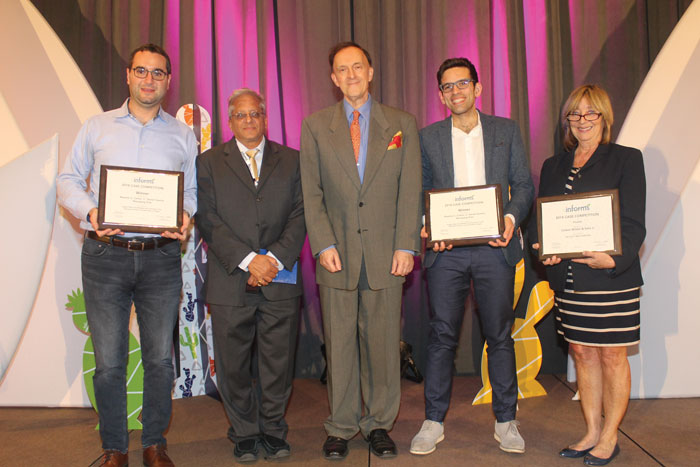
A second topic that we found in high demand was machine-learning methods applied to real business settings. To address this need, we wrote a comprehensive case study together with Kevin Jiao and Foster Provost (New York University): “Data-Driven Investment Strategies for Peer-to-Peer Lending.” This case uses data from LendingClub, the largest U.S. peer-to-peer lending platform. We develop data-driven investment strategies that demonstrate how machine learning and data analytics can be used to guide investments in peer-to-peer loans. We detail the process from the acquisition of data to the development and evaluation of investment strategies. The learning concepts include data cleaning and ingestion, classification/probability estimation modeling, regression, calibration curves, data leakage, evaluation of model performance, basic portfolio optimization and the use of Python for data science. This case was a finalist in the 2019 INFORMS Case Competition and is available free-of-charge (along with detailed teaching notes and Jupyter notebooks).
Finally, our third case co-authored with Matthieu Reed (McGill University), “Modern Retail Analytics: Data Visualization using Tableau,” teaches students how to use the data visualization software Tableau using the Global Superstore data set available on Tableau’s website. This case can be used to teach 1-3 lectures on data visualization or on retail analytics. We developed a step-by-step guide to help students get familiar with Tableau, answer business questions, and create a comprehensive dashboard.
We are heartened to see that many of our colleagues around the world are working on similar case studies, and we hope our community will continue to produce teaching material that incorporates new, exciting and emerging practices, as well as interdisciplinary subjects spanning OM, data science and other related disciplines. Based on our experience teaching these cases, we are confident that the reward that comes from developing this type of material is well worth the efforts and will continue to make our field exciting to the new generation of students entering our classrooms year after year.
Maxime C. Cohen is an associate professor of retail management and operations management and a Bensadoun Faculty Scholar at McGill University. He is also a co-director of the McGill Retail Innovation Lab. Prior to joining McGill, he was an assistant professor of technology, operations and statistics at NYU Stern and a Research Scientist at Google AI. C. Daniel Guetta is a senior lecturer at the Columbia Business School and director of the Columbia Business Analytics Initiative, a joint initiative of Columbia Business School and Columbia Engineering. He is the developer of XLKitLearn, a tool for learning Python data science in Excel, and the co-author of “Python for MBAs,” to be published in fall 2020. Prior to joining Columbia, he was a deployed computational engineer at Palantir Technologies.