August 7, 2020 in Student Perspectives
Working, learning, cooking – and living – from home
SHARE: PRINT ARTICLE: https://doi.org/10.1287/orms.2020.04.22

The COVID-19 pandemic has had unimaginable impacts on various aspects of life, dramatically transforming many of our daily routines and introducing new forms of work, study and communication. We asked former and current OR/MS Tomorrow members to share their experiences as students and researchers working from home and navigating (or optimizing) through this global crisis.
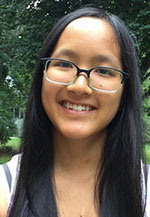
 The coronavirus crisis certainly caught the world by surprise. Andrew Law (right, Virginia Tech) said, “I became more aware how vulnerable our life could be.” Still, even though times are uncertain, the students overall expressed a positive outlook on future recovery from the virus, pronouncing the surmountability of the COVID-19 situation, the adaptability of people to change, and the usual phrases of being in and working through this together.
  Yue Wang (left, Texas A&M University) notes that “through our life there are always uncertainties ... it’s okay to be worried, anxious and [panicked], but a negative attitude will help nothing.”
Start typing “what will you do when” in a Google search bar and at least one of the results will relate to post-COVID-19 dreams. A common theme in the responses to online newspapers and social media posts is human connection. The same is true for our students. For Yue and Andrew, a return to outdoor activities with others after COVID-19 excites them. Considering how many sports have been canceled because of social distancing policies and infection spread, it’s likely that many millions more share in their feelings. Kirby Ledvina (see below), a student at MIT, whose parents live in a different state, looks forward to visiting family when concerns of spreading the virus decrease. In Kirby’s case, family lives far away, eliminating in-person contact, but that is also the case for folks who have family and friends just a town over. Abigail Lindner (see below, Regent University) has an older brother whose family lives nearby and friends at her local church. “Pre-COVID-19,” she explains, “summer would be filled with people in my family’s backyard.” She wants to have big family and friend gatherings and, as an afterthought, to browse the aisles of the public library.
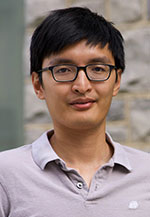
Though separated physically, modern technology allows us to stay in contact with friends and family. Video conferencing apps have racked up a lot of users in the last few months. Both Kirby and Yue stay in contact with their social networks through weekly game nights over Zoom. Andrew doesn’t have access to the lab equipment he needs for his experiments, but he can keep in touch with his lab members and advisors with Zoom as well. Other technologies the students note using include Microsoft Teams, WeChat, Slack, GroupMe, WhatsApp and good ol’ email. Despite those  options, Srinivasan Balan (right, North Carolina State University) admits, “I prefer to have face-to-face meetings and discussions rather than online or Zoom calls. It is difficult to explain or illustrate something online effectively.”
For parents of school-age children and university students, a big question is whether they will return to campus in the fall. Most schools closed mid-spring semester as the number of infections climbed, prompting a rapid migration to online learning. The opinion here was mixed. Abigail, Kirby and Srinivasan have felt more productive thanks 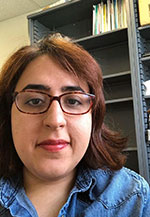 to the enhanced flexibility of online learning, while for Elham Taghizadeh (left, Wayne University) and Yue, the difficulty of finding a quiet place to work and the many distractions at one’s home impede their studies. When circumstances are safe enough, most of the students want to jump back on campus, though not all schools have committed to re-opening in the fall. Texas A&M University has switched all classes to online or hybrid
 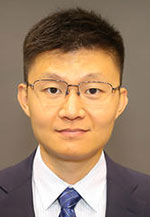 formats, and Wayne University is on track to be entirely online. The situations are less certain for Kirby at MIT and Xinglong Ju (right) at the University of Texas Southwestern Medical Center. Regent University and Virginia Tech have special on-campus sessions in mind for the fall, with the former ending the on-campus semester before Thanksgiving and completing the remainder online, and the latter giving an option between online and in-class experiences.
In addition to school, the students have to juggle jobs and research. Yue’s main obstacle is the work-life separation. When you go to an office, you can leave the house responsibilities behind. Working from home has led to a mix of house duties and work duties. Changing from pajamas to a regular outfit and keeping to the 8 a.m.-5 p.m. window helps Yue “physically push herself into that [work mode].” The transition isn’t as easy for Elham, who lives in a small apartment with her husband where TV distractions abound, and Kirby, who lives with housemates who have work calls at different times and daily activities to coordinate around them. “It is hard for me to manage my housework and office work,” Elham says. Andrew has the added fun of working with a toddler running around. With more than 50% of workers in the U.S. now working from home, and many of them parents, he’s in good company.
The work-from-home transition has been less of a challenge for students like Xinglong, whose current research on data analysis can be conducted at home. Abigail’s work as research assistant also translates well to all-virtual, and years of homeschooling amidst the noisiness of young children has her well-versed in blocking out house activity, though her poor Internet connection has made video calls difficult.
Finding the Fun
Though the transition has been difficult and continues to present challenges for some, these tumultuous months haven’t been all work and no play. Old hobbies have been resurrected and new hobbies have been discovered. Elham and Yue are keeping it active with jogging and Zumba (Yue aspires to be a Zumba instructor and has already choreographed a few dances herself!). Andrew is using the time at home to develop his programming skills. He recommends Coursera as a “good resource for picking up technical skills online.” Abigail, a lover of applied mathematics and English literature, has “[taken] up the pen (or rather, the keyboard)” that she let slack during the semester and returned to her story writing. Xinglong, meanwhile, is keeping it real and shared that his new hobby is “watching TV.” No judgment here! After a long day keeping all the balls in the air, downtime with a little “Stranger Things” isn’t a bad plan.
Being home more often has also allowed the students to focus not only on what they do in their free time, but also what they do during their mealtimes. A healthy diet is one important factor to strengthen the immune system against illness, a function of the body that has attracted considerably more attention during this pandemic. The World Health Organization even launched their own hashtag, #HealthyAtHome, to promote a healthy lifestyle. Having access to the ingredients for lunch during the day has enabled Kirby to eat healthier meals and, more importantly, prepare a “perfect cup of coffee.” The situation hasn’t changed too much for Andrew, who praised his wife for being “a very good chef who always ensures each of us are getting [the] needed nutrition in each prepared [meal].” For self-described health nut and vegetarian/vegan Abigail, having to stick around the house has given her time to cook fun meals that she wouldn’t usually have time for, like her favorite tofu ricotta lasagna with spinach. Srinivasan is less certain about healthy eating but did say that restaurants’ closing has reduced his takeout orders, which has helped. Yue had a different story to tell: “I’m eating less healthy because I eat more snacks now.” We suspect that many readers will relate to this grazing tendency at home.
The obstacles – physical, mental, financial – from the COVID-19 crisis cannot be denied, but from speaking with these students we sense hopefulness in addition to the frustration. Elham says, “We need to adjust our personality with the new situation,” a piece of advice echoed by Yue with her encouragement to “be positive and value what I currently own – health, education, family and flexible time.” Each student has had different experiences learning at home, working from home, cooking at home – just doing life primarily at home – but the common thread is the hope that the pandemic will pass, and the world will return, if not to the old normal, at least to some better normal.
Abigail Lindner is a recent graduate of Regent University, where she earned a B.S. in mathematics. She is currently enrolled as a Ph.D. student in the mathematics program at Worcester Polytechnic Institute in Massachusetts. Her research interests lie in the nonprofit sector and theoretical ecology. Abigail has served as an editorial staff writer with OR/MS Tomorrow since the spring of 2020. Sepehr Ramyar is a Ph.D. candidate in Technology and Information Management at the University of California, Santa Cruz. His research is focused on market design and game theory. Kirby Ledvina is a Ph.D. student in MIT’s Department of Civil and Environmental Engineering. She is an editorial board member for OR/MS Tomorrow.