


October 12, 2020 in Keys to the White House
Keys to the White House: Predicting the 2020 U.S. Presidential Election
What quantitative historian Allan Lichtman’s “13 Keys” forecast, what to watch and why.
SHARE: PRINT ARTICLE: https://doi.org/10.1287/orms.2020.05.11
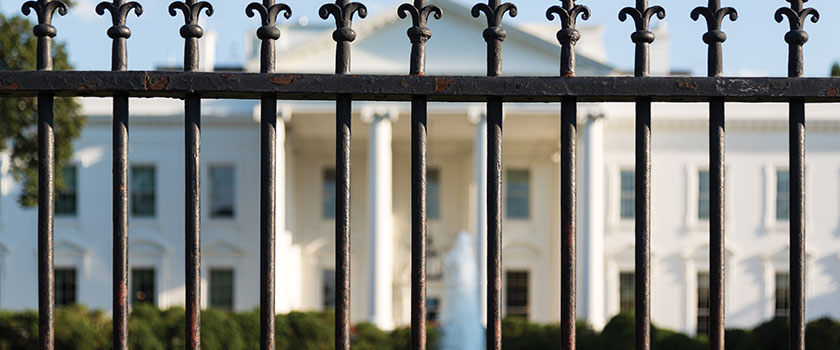
According to quantitative historian Allan Lichtman, Joe Biden will win the 2020 U.S. presidential election. Lichtman holds to this prediction regardless of what might happen during this obviously chaotic campaign. “The 13 Keys model has been remarkably stable through all kinds of variations that led people to say this election is different,” Lichtman says. “There were a lot more fundamental changes from 1860 through 1992 than there have been since, and the model still worked. This record of reliability and the implications of which variables made it into the model still indicate that presidential elections are about governance, not campaigning.”
Lichtman, a professor of history at The American University in Washington, D.C., has been the subject of several feature articles in OR/MS Today and Analytics magazines [1, 2]. More significantly, he has attracted quite a bit of coverage in the mainstream media, his books [3] continue to sell well, and it is evident that campaign strategists take his model into consideration in their planning. Lichtman’s model deserves to be taken seriously, as it has correctly predicted the national popular vote outcome of every U.S. presidential election since 1984, including George H. W. Bush’s comeback from nearly 20% behind in the polls in 1988 and Al Gore’s narrow win in 2000.
In 2016, based on mid-summer values of the keys, the model predicted Hillary Clinton’s popular vote victory. However, by mid-September, Lichtman had revised his prediction, as the entry of Gary Johnson as a third-party candidate polling above 10% flipped one more key and led him to predict a Trump victory. Lichtman explains, “The switch from predicting the popular vote winner to the Electoral College winner resulted from a major divergence in recent years between the two vote tallies. Virtually any Democrat can now count on an extra 5-6 million net popular votes from the states of California and New York alone. These votes count for nothing in the Electoral College. There are no comparable Republican states.” So, he reconsidered his interpretation of the model. As it happened, however, Gary Johnson’s share of the vote fell below 5%, and the old-version model’s prediction of the popular vote was proven correct.
Lichtman’s predictions are based on 13 questions, each with a “true” or “false” answer. “True” answers favor the incumbent party. If five or fewer answers are “false,” the incumbent party retains the presidency; if six or more are “false,” the challenger wins. Interestingly, with few exceptions, the 13 Keys have little or nothing to do with the perceived strengths or weaknesses of the presumed presidential nominees.
The 13 Keys to the Presidency
Following are the 13 Keys and Lichtman’s assessment of how they turn:
- After the midterm election, the incumbent party holds more seats in the U.S. House of Representatives than it did after the preceding midterm election. (FALSE)
- The incumbent-party nominee gets at least two-thirds of the vote on the first ballot at the nominating convention. (TRUE)
- The incumbent-party candidate is the sitting president. (TRUE)
- There is no third-party or independent candidacy that wins at least 5% of the vote. (TRUE)
- The economy is not in recession during the campaign. (FALSE)
- Real (constant-dollar) per capita economic growth during the term equals or exceeds mean growth for the preceding two terms. (FALSE)
- The administration achieves a major policy change during the term, on the order of the New Deal or the first-term Reagan “revolution.” (TRUE)
- There has been no major social unrest during the term, sufficient to cause deep concerns about the unraveling of society. (FALSE)
- There is no broad recognition of a scandal that directly touches the president. (FALSE)
- There has been no military or foreign policy failure during the term, substantial enough that it appears to undermine America’s national interests significantly or threaten its standing in the world. (TRUE)
- There has been a military or foreign policy success during the term substantial enough to advance America’s national interests or improve its standing in the world. (FALSE)
- The incumbent-party candidate is charismatic or is a national hero. (FALSE)
- The challenger is not charismatic and is not a national hero. (TRUE)
Again, if six or more of these statements are false, the incumbent party loses. For this election, Lichtman’s reading that the Republican party’s candidate has seven keys against him means they are two keys short of what they need. Note that Lichtman rates Trump as not charismatic or a national hero. He assessed Trump the same way four years ago. “Inspiring great enthusiasm among 40% of the electorate doesn’t do it,” he explains. “It has to be more of a consensus, as with the two Roosevelts, Eisenhower, JFK and Reagan.”
The Science Behind It
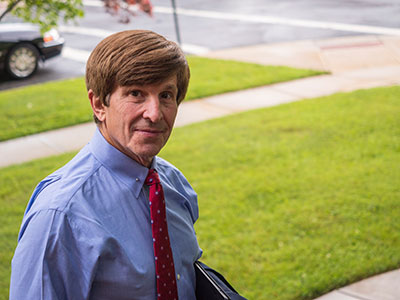
It is worth reemphasizing that the 13 Keys model is based on a statistical pattern recognition algorithm [4]. Specifically, it’s a kernel discriminant function, an adaptation of a model originally developed to predict earthquakes: put in the variable that most strongly differentiates between stability (incumbent party wins) and instability (incumbent party loses), then add the variable that makes the largest additional contribution; and continue until the additional contribution of another variable is too small to be attractive. Lichtman carefully chose variables that could, in fact, be evaluated fairly objectively several months in advance of the election.
“You might ask,” Lichtman notes, “why the variables are all equally weighted. Lots of people do ask that. The reason is that if I used weights, then we could argue every time about whether the weights overly and improperly influenced the result. Not weighting gives us the same variables and the same model every time.”
Lichtman adds, “It’s more robust than you might think. Some variables have a tipping effect on others. In 1932, for instance, there were only two economic variables against Hoover, and that doesn’t seem like enough to account for the result. But because of the Great Depression, he’d also lost Key 1 (the midterm election result), Key 7 (policy change) and Key 8 (social unrest). And he had no occasion to produce a military or foreign policy success (Key 11). So those two keys tipped four others, which combined with his lack of charisma to doom his re-election.”
Similarly, in 2020, Trump looked likely to win early this year, but the COVID-19 epidemic cost him both economic keys and the social unrest key. That took the total number of negative keys from four to seven. That is when the polls began to swing unfavorably, as well – although, as Lichtman frequently cautions, polls more than two months before the election tend to be unstable and unreliable.
The emergence of these 13 variables implies that governance is more important than campaign characteristics. “Political consultants hate the Keys,” Lichtman says. “They keep telling me, ‘Give us something we can influence!’ But that’s not what the model indicates.”
The divergence between popular vote and Electoral College vote is also noteworthy. Statistical purists will point out that the development and long-term validation of the model were based on predicting popular vote, and Lichtman’s reinterpretation may be less solid. Specifically, if Trump wins the Electoral College vote in 2020, that would contradict Lichtman’s forecast.
More important, as Lichtman adds, “The dissonance between the popular and Electoral College vote is far more of a challenge for our democracy than it is for the Keys. As the world’s most enduring of representative governments, America benefits from deeply entrenched democratic traditions. Yet, it remains mired in outmoded 18th-century institutions, most notably the Electoral College.” Whether the Electoral College structure remains appropriate may become the focus of a lively national debate. In addition, the country has moved steadily, over the years, from more republican to more democrat (direct election) practices: The Seventeenth Amendment mandating direct election of U.S. senators, for example, instead of having them chosen by state legislatures, and the 1964 Supreme Court decision, Reynolds v. Sims, requiring direct popular elections for all seats in both houses of state legislatures.
Other Things to Watch
Even if the popular vote is headed Biden’s way, as the Keys model appears to imply, the Electoral College vote is still in play, and many Senate and House races are hotly contested. So here are some things that do matter:
The electoral vote is different from the popular vote. In 2016, Trump won by carrying several states that brought his Electoral College votes to 306, more than the required 270, even though he lost the national popular vote. Pennsylvania (20 Electoral College votes), Ohio (18), Michigan (16), North Carolina (15) and Wisconsin (10) all went Trump’s way, mostly quite narrowly. If Biden can recapture Pennsylvania, Michigan and Wisconsin, he wins. There are also close races in Florida (29), Arizona (11) and Iowa (6), all of which also went to Trump in 2016. Any combination of states from this list adding to 39 or more electoral votes would give the election to Biden – provided, of course, that no states that went for Hillary Clinton in 2016 flip to Trump in 2020. And also provided that no electors defect, refusing to cast their votes for the candidate they purportedly represented; in 2016, seven did.
Voter access, encouragement and discouragement, and differences in access to voting. In Ohio in 2004 and 2006, allocations of voting machines to precincts and provisions for replacing malfunctioning machines contributed to long waiting times, mostly in poor and minority-heavy urban areas. A few years ago, analytics-based efforts to improve the process were outlined in OR/MS Today [5]. However, the concern continues in Ohio and elsewhere, as do efforts to tighten requirements for voter registration and actual voting. Multiple lawsuits allege that these efforts are really directed at suppressing legitimate voting.
In 2020, there are much more consequential issues about absentee voting and early in-person voting, with – again – claims of preventing fraud versus claims of voter suppression and intimidation.
Vote counting rules. In addition to his work on the 13 Keys model, Lichtman has testified as an expert witness in more than 75 cases of alleged wrongdoing in counting votes. In Florida in 2000, he found that the way the rules for counting ballots were applied was a critical factor: Ballots with a hole punched for a candidate and the same candidate’s name written in were disqualified as double votes, even though the voter’s intent was clear. This rule resulted in the disqualification of more than 120,000 ballots, disproportionately from Black voters [6].
“If Black voters’ ballots had been rejected at the same rate as white voters’ ballots,” Lichtman concluded, “there would have been 50,000 more Black votes statewide.” Assuming the disqualified votes would have split similarly to the Black votes that did get counted, this would have tipped the election to Gore. Clearly, counting rules are also a continuing issue that will command attention.
Ethnic blocs. In particular, Latino voters look like the swing bloc in several key states where the races look close; Florida, Ohio, Colorado, New Mexico and Nevada are most frequently mentioned by commentators on this topic. Political analysts estimate that the Republican candidate needs about 40% of the Latino vote to win. George W. Bush drew 44% of the Latino vote in 2004, John McCain received 31% in 2000, and Mitt Romney collected just 27% in 2012. Trump got 29%. This is of particular note in Florida, Arizona, Nevada, Ohio and Pennsylvania, which have a substantial proportion of Latino voters and were very close in 2016. Florida is unusual in that many of its Latino voters are of Cuban origin and tend to favor the Republicans, who seem more supportive of overthrowing the Castro regime. Most Latinos elsewhere are of Mexican, Central American or Puerto Rican descent and tend to dislike the Republicans’ restrictions on immigration and immigrants’ rights and benefits. There are also serious issues about whether younger voters from these ethnicities will vote at all.
Targeting appeals to selected groups is a well-known and longstanding (more than 50 years old) campaign method that has had considerable impact, particularly in more localized elections, such as those for House districts. In some cases, however, targeting also raises questions of propriety and possible undermining of the integrity of the political process. Negative messages, either localized or on a large scale, risk a phenomenon known in sales as market saturation; people simply get disgusted with both sides. There is a stronger, more specific backlash against negative messages subsequently proven to be false, although in the current social media climate, convincing anyone that a message is false can be quite a challenge.
The effects of massive spending. Big money spent on media blitzes and on organizational activity may not affect the national popular vote by much, but it can and does influence primaries, Senate and House races and the outcomes in a few closely contested swing states. In Kentucky, it seems likely that the candidates will combine to spend more than $100 million. By comparison, in 1972, Nixon and McGovern spent $118 million for the presidential race – in 1972 dollars. Beyond a certain point, however, big spending could also create a backlash from people over-saturated with the ads, phone calls and house-to-house canvassers. Tracking “how much is enough and how much is too much” will be an interesting challenge.
The self-serving professional class. One reason candidates keep raising and spending more and more money, for what the 13 Keys model indicates is little benefit, is because all the fundraisers, political consultants and pundits keep telling them they have to. This does generate considerable benefits for the fundraisers, political consultants and pundits. Eugene Burdick, a highly regarded political scientist in addition to his stellar career as a novelist, pointed out most of the applicable ethical issues in his 1956 and 1964 novels [7, 8]. He also sounded a warning theme of how such campaigners work that echoes ominously now: “Hate plus fear equals power.” Naturally, these people are also among the first and most committed to argue against any legislation limiting the money or its uses in advertising, just as the major manufacturers of voting machines are among the first and most committed to raise all kinds of creative objections to any strict standards on the reliability and tamper-resistance of voting machines.
Social media has an increasing and hard-to-assess effect. Sentiment analysis of social media picked up the shift to Trump in 2016 and supported the conclusion that he would win despite the polls [9]. He had a much stronger social media effort than Hillary Clinton in 2016. He has a stronger effort than Biden in 2020, although not as big an advantage as over Clinton; Biden has staff who are at least partially addressing this area. Still, an expert on social media-based sentiment analysis, Nicholas Kokkinos, an associate of Dimitris Vayenas, whom we cited in 2017, sees Trump as maintaining an advantage as of early September 2020 [10]. The Trump campaign so far has been more effective at generating high-volume social media responses to statements by Trump and Biden, playing up alleged good news and opponents’ weaknesses and mistakes. Some of this campaigning appears to reflect large, organized efforts by foreign trolls (people who spend a great deal of time on the ‘Net) and bots (automata that act as trolls). Experts have trouble untangling who is doing what, much less what effects these activities have.
Conclusions
While political methods and tactics continue to change, some factors seem fairly reliable over the long term in enabling us to predict who will win. Barring major new events, these factors favor Joe Biden’s election, at least in the popular vote. However, the Electoral College vote is more uncertain, and both parties are expected to campaign intensely in the half dozen swing states. TV advertising is likely to have little practical effect other than to annoy most voters. Issues of voter access and bloc voting could substantially affect the electoral vote, however, and potentially cast doubt on the fairness of the election.
OR/MS analysts, regardless of political preferences, would do well to learn about the analytical methods and issues that contribute to improving elections and keeping them credible.
References
- Samuelson, Doug, 2016, “Politics and Analytics: Who Holds the Keys to the White House?,” Analytics, July-August.
- Samuelson, Doug, 2016, “The Election that Confounded Everybody: How the ‘13 Keys’ Model Outperformed its Creator,” OR/MS Today, December.
- Lichtman, Allan J., 2020, “Predicting the Next President: The Keys to the White House,” 2020 Edition, Rowman & Littlefield Publishers, Lanham, Md.
- Lichtman, A. J., and Keilis-Borok, V. I., 1981, “Pattern Recognition Applied to Presidential Elections in the United States, 1860-1980: Role of Integral Social, Economic and Political Traits,” Proceedings of the National Academy of Science, Vol. 78, No. 11, pp. 7230-7234.
- Samuelson, Doug, Allen, Theodore T., and Bernshteyn, Mikhail, 2007, “The Right Not to Wait: Forecasting and Simulation Show Promise in Reducing Waiting Times to Vote,” OR/MS Today, December.
- Lichtman, Allan, January 2003, “What Really Happened in Florida’s 2000 Presidential Election,” Journal of Legal Studies, Vol. 32, p. 221.
- Burdick, Eugene, 1956, “The Ninth Wave,” Houghton Mifflin.
- Burdick, Eugene, 1964, “The 480,” McGraw-Hill.
- Samuelson, Doug, 2017, “Motives and Messages: The Analytics Story Behind the 2016 Elections,” Analytics, March-April.
- Kokkinos, Nicholas, 2020, personal communication, September.
Douglas A. Samuelson is president of InfoLogix, Inc., a consulting company in Annandale, Va. Samuelson worked as a paid campaign staffer in a U.S. Senate campaign in Nevada in 1970, as a county coordinator in a gubernatorial campaign and targeting analyst for a local campaign in California in 1974, and as a Federal Civil Service policy analyst from 1975 to 1982. He has been a longtime contributor of columns and articles to OR/MS Today and Analytics magazines.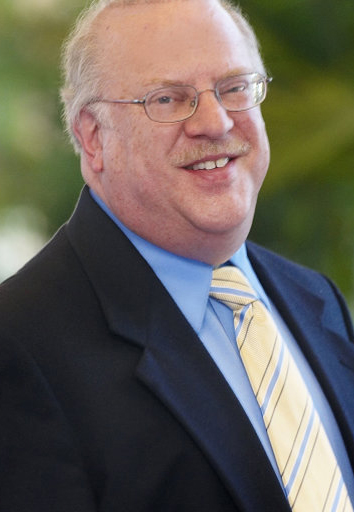
([email protected])