January 29, 2021 in Underrepresentation in STEM
Op-ed: Understanding Diversity, Equity and Inclusion
While numbers matter in claiming underrepresentation of a minority group in STEM, words matter just as much.
SHARE: PRINT ARTICLE: https://doi.org/10.1287/orms.2021.01.16

Author’s note: In this short writing, I will primarily discuss representation, but in the process will touch on race and discrimination as appropriate. Such discussions by their very nature tend to be difficult and invariably upset some people. However, concerning the present and future health of our nation these discussions must take place. Moreover, while I will be quite direct, I do believe that I am fair in my view of such important issues and expect to leave you, the reader, with much to digest.
I want to lead with two of the most important things that I have learned over many years as a STEM faculty member about improving minority STEM (science, technology, engineering and math) representation, and will expand on them in what follows.
- At the undergraduate level, STEM faculty who do not make a distinction between poor preparation and poor talent of Black and Brown STEM students force many of these students to leave STEM forever, and migrate to the non-STEM side of campus.
- Including foreign minorities in the university’s underrepresented minority count greatly works against the hiring of domestic minorities as faculty.
We say a group is “underrepresented” in an activity if the group members comprise a smaller percentage of the activity population than they do the total population under consideration. For instance, if a group comprises 25% of the total U.S. population, but less than 25% of the population in STEM activity (defined as being a STEM student or having a STEM-related job), then we say that members of the group under consideration are underrepresented in STEM (with respect to the U.S. population). The notions of overrepresentation and parity follow directly.
It is a mathematical truth that if there exists a group that is underrepresented, then there must exist at least one group that is overrepresented. Here the qualifier overrepresented is meant as a mathematical qualifier and is not intended to have any social or political connotations. Moreover, a group could be overrepresented for many reasons, and overrepresentation does not necessarily imply that the group had an unfair advantage.
We strongly emphasize that many groups in America are recognizable as minority groups, but are not underrepresented in STEM. For example, Jews are a minority group relative to the U.S. population, but they are not underrepresented in STEM. In fact, by the definition given above, they are overrepresented. They are overrepresented in the best high schools, the best undergraduate and graduate schools and on the STEM faculties of our best universities.
Another minority group, Asian Americans, are also overrepresented at quality high schools and at elite undergraduate universities. It is remarkable that the engineering undergraduate population at the selective University of California, Berkeley is 51% Asian American, while the California Asian-American population is 15%, and that of the United States is only 5%. Interestingly, Asian Americans are underrepresented in STEM disciplines at graduate schools and are underrepresented on STEM faculties of universities. Asians, as a whole, are overrepresented on STEM faculties, but only when including the foreign Asian and not the Asian American. The domestic Asian tends to favor industry careers over graduate school. I view this as a loss for academia.
Ensuring the health of the nation requires that we improve the representation of domestic minority groups that are critically underrepresented in STEM activities. A search for such groups will lead us to the minority groups consisting of Native Americans (Indigenous People or American Indians), domestic African Americans (Black), domestic Hispanic Americans (Latinos, Latinx or Brown) and Pacific Islanders – all critically underrepresented in STEM activity at all levels. Hence, we will refer to these groups as STEM underrepresented minorities or simply underrepresented minorities (URMs) with STEM being implied. It is STEM underrepresentation that we are concerned with and hence should focus on these particular groups. It should be noted that our definition of underrepresented minority is not arbitrary and follows from meaningful guidelines.
Misguided STEM Faculty
In general, URMs have inadequate preparation at all levels. Moreover, STEM faculty, especially mathematics faculty, do not differentiate between weak preparation and poor talent. Hence, especially in entry-level courses, faculty interpret poor performance as poor talent. The unfortunate result is that they unknowingly discourage URMs from continuing in a STEM discipline; the student often loses their confidence, and leaves or transfers to the non-STEM side of campus where poor mathematical preparation will not play a limiting factor in academic success. The situation is exacerbated by implicit bias wherein some faculty members subconsciously believe URMs lack talent. I ask you to be sensitive to this terrible practice and reach for the talented but less well prepared URM student, which is what one professor did for me in my early days at UCLA.
We are acutely aware that many minority groups including Jews and Asians have suffered serious discrimination and racism here in the United States. In fact, we have witnessed heightened discrimination against Blacks, Latinos (particularly Mexicans), Muslims and Jews by former President Trump and his supporters. The COVID-19 pandemic has led to increased discrimination against Asian minorities in the United States. However, due to their outstanding commitment to education, Asians and Jews are not underrepresented in STEM activity, but are overrepresented.
I have found that the term “overrepresentation” is emotionally charged. Recently I have had members of both of the latter minority groups react quite negatively to the use of the term overrepresented – indeed to the point of suggesting that I not use it and instead say something along the lines of “represented at a different level.” “Under” and “over” are well-accepted qualifiers in the English language; for example, under- and overqualified, under- and overachieve and even under- and overwhelm. I understand the dynamics that are in play leading to negative responses to the term overrepresented in STEM. A first response could be the implication that there are too many of us in STEM and want to cut back, and a possible second response could be, as a group, we do not want to be perceived as having an unfair advantage.
Representation
What do we gain from learning that large underrepresentation or overrepresentation exists? First of all, enforcing any quotas enhancing or limiting representation is wrong and illegal. This information should instead lead to a serious investigation as to whether the acceptance or hiring criteria are fair to all and designed to produce the appropriate product. If not, they should be changed. If all is fair, then an emphasis can be placed on making sure members of the underrepresented groups are competitive with respect to the existing criteria. In our current acceptance and hiring situation, I believe that our existing criteria are flawed.
It is of critical importance that we accept the fact that discrimination and representation are separate notions; yet I have found that representation often cannot be discussed without turning it into a conversation about discrimination. For example, in today’s national scene, the term “people of color” has become quite popular for describing politically disenfranchised citizens. Simply stated, people of color is intended to mean non-white people, which in this sense would include Asians. However, when talking about STEM underrepresentation it is not accurate to use the classification “people of color” to describe underrepresented minorities, because Asians in particular are not underrepresented. Yet, this usage is becoming popular in universities and the profession, and merely adds to the vast confusion that has already resulted from the use of the term “diversity” in the context of underrepresentation. Hence, when talking about STEM underrepresentation the term “underrepresented minorities” is my preferred usage and infinitely preferable to the use of the term “people of color.” Finally, to continue beating a dead horse, and playing obnoxious mathematician, I point out that the vast majority of Hispanics are members of the white race, there is no Brown race, hence most Hispanics are technically not people of color. As mathematicians, in our professional work, we constantly strive for proper definition but seem to sacrifice this fine characteristic when dealing with popular national trends.
Furthermore, the term “diversity” for our purposes is essentially meaningless. It merely applies to groups of individuals that have various different attributes. In this sense, it need not speak to minority underrepresentation. However, it is so ingrained in contemporary usage that it is impossible to ignore its use. History tells us that essentially beginning in the late 1960s in academia, and beyond, the term “affirmative action” meant using race or ethnicity as a factor in a decision or selection process. However, motivated by lawsuits and led by the courts the term and its purpose fell out of favor and was replaced by the unfocused term “diversity.”
Foreign vs. Domestic Minorities
In trying to improve the representation of domestic Black and Hispanic STEM faculty, the use of the tag “diversity” has allowed universities and large industrial firms to focus on individuals from other countries.
We are concerned with evaluating the United States with respect to how it is doing in improving representation. In order to do this, it is critical that we not mask the situation by including individuals from other countries in our underrepresented minority counts. A primary tenet of mine is that universities currently ignore the need for this distinction and count foreign Black and Hispanic faculty as underrepresented minority faculty. This overt action greatly curtails the desired improved representation of domestic Blacks and Hispanics as STEM faculty in our nation’s universities.
Let’s consider both the benefits and disadvantages of foreign minority faculty. On one hand, the ones I know are some of the best researchers in the world, adding tremendously to the scientific standing of their universities and the nation. They are also some of the finest and most caring faculty that I have ever met. They make great colleagues, teachers and friends, many forming part of my extended family. On the other hand, it is completely unfair to expect international faculty to understand the fundamentals, let alone the nuances, of the needs of URM students. For example, do they understand the workings of inner-city U.S. schools and culture, where so many URMs were raised and educated? Do they understand what it is like to be told that they do not belong and they are different? What about the understanding of poor preparation versus poor talent of URM students? And would they understand the importance of having URM faculty in the nation’s selective schools?
In my opinion, foreign minority STEM faculty do not have the background to serve as complete role models or strong advocates for domestic minorities. In my UCLA student days, I did not relate to the foreign Hispanic faculty, but was strongly impacted by the domestic Hispanic faculty. Foreign minorities tend to be better educated than domestic minorities, often the best in their home country with a doctorate from a prestigious American university and as such better satisfy the current (flawed?) hiring criteria than do domestic minorities, who tend to not have doctorates from equally prestigious universities. Hence, when put in the same class as the domestic minority for hiring consideration, there will be a bias toward the hiring of foreign minorities. Many foreign minority faculty do a fine job of mentoring domestic minorities, but we must have some role models that come from exactly the same fabric as the domestic minority students.
It is ironic that the classification “underrepresented minority,” put in place to improve the hiring of URMs, is actually working against the hiring of URMs. I am convinced that we would be better off with no such classification. Hence, we should hire foreign Black and Brown minorities as we would any other faculty, but not view them as underrepresented minorities and not include them in the underrepresented minority count as do essentially all universities today. We must differentiate between domestic and foreign minorities when considering hiring STEM faculty – not doing so hurts the true desired goal.
What about Women?
Are women underrepresented in STEM activity? The short answer is yes, although their representation is rapidly increasing. Observe today’s movement of women into the science and engineering faculties of research universities, national academies, as fellows of prominent societies, and into top-level administrative positions of major universities. The 2020 presidents of the AMS (American Mathematical Society), SIAM (Society for Industrial and Applied Mathematics) and INFORMS are women. Women are now positioned to support gender equity in STEM from positions of power, which hasn’t yet happened for underrepresented minorities. This is not implying that the problem of underrepresentation of women is solved, but women are moving forward at a good pace and have made much more progress than have URMs. No respected organization today can appoint an award or organizing committee that does not have significant female representation.
However, there is a not well-considered dark side to America’s gender equity success. A highly significant part of the women STEM faculty in America’s Tier 1 research universities are foreign. Like foreign minorities, they came here for graduate work and stayed on as faculty. Hence, it may just be that, like the case of URMs, the United States has not done a good job of producing domestic women as STEM faculty at its Tier 1 universities. Indeed, I believe that the same can be said for domestic males. It seems as if gender is such a strong bond that it crosses international boundaries better than blackness and brownness.
Closing words
Concerning the underrepresented minority’s lack of involvement in science and engineering, I impart the following words that I hope you will embrace:
- The United States cannot maintain its economic and scientific health when such a large part of its population is left out of America’s mainstream activity of science and engineering.
- We cannot have racial justice without educational justice, and we cannot have educational justice without educational integration. Underrepresented minorities must be equitably represented at quality universities.
I believe that the best way to view STEM underrepresentation is as a phenomenon that endangers the health of the nation far more than it endangers the health of the various scientific disciplines.
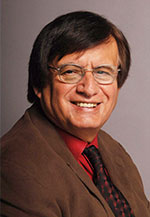
Richard Tapia is University Professor and Maxfield-Oshman Professor in Engineering in the Department of Computational and Applied Mathematics (CAAM) at Rice University. He has been awarded the National Medal of Science and National Science Board’s Vannevar Bush Award, and has been elected to the National Academy of Engineering. Prof. Tapia was a keynote speaker on the topic of underrepresentation in STEM at the Virtual 2020 INFORMS Annual Meeting.