


April 1, 2021 in International O.R.
O.R. reopens ORs in Italy
A favorable friendship generates an optimal plan
SHARE: PRINT ARTICLE: https://doi.org/10.1287/orms.2021.02.03

The coauthors, good friends, are a physician and an operations research (O.R.) professor: Pier Giorgio works in the ICU of the emergency department in the hospitals of Lodi and Codogno, which share their management and a large part of their personnel; Giovanni teaches at the University of Milan. They both live in Crema, 25 kilometers from Codogno, 50 from Milan.
 When the COVID-19 pandemic blew up in Italy, “patient 1” was identified in Codogno Hospital (right) on Feb. 20, 2020, and Pier Giorgio was the doctor who successfully took care of that extremely critical patient. Codogno Hospital, suddenly famous worldwide, was promptly locked down and all patients were transferred to the twin but larger hospital in Lodi, where all available physicians, including Pier Giorgio, were concentrated.
The difference between day and night quickly blurred for the hospital staff, while the number of beds in the ICU rapidly increased from seven to 26 and the mortality index raised to 50%. In the meantime, Giovanni, an INFORMS member who found himself at the epicenter of the pandemic affecting Italy, converted two traditional courses into online courses on the fly, which required a huge amount of extra work and prevented him from taking any initiative until the end of the spring semester. At this point, communication between the two friends was reduced to a few WhatsApp messages around Easter: “Still alive?” “Yes, but… just a bit tired!!”
A Problem and a Model
On May 20, Pier Giorgio called on Giovanni with an operations research problem. This is typically very exciting for any O.R. professional and Giovanni was happy to help. The top management of Codogno and Lodi hospitals decided to reopen Codogno’s first-aid service together with the ICU and the operating rooms (ORs) at the beginning of June. Pier Giorgio needed help to ensure coverage of all work shifts in the two hospitals while guaranteeing annual leaves in summer for all doctors, who were exhausted from four months of fighting against COVID-19. Giovanni received the problem description in the afternoon and an integer linear programming (ILP) model was ready that evening. It was a typical capacity planning problem: in short, 12 physicians with nonidentical skills must be assigned to six different types of work-shifts for 16 weeks, allowing one or two of them to be on leave every fortnight – night shifts are followed by a rest day and some other side constraints were satisfied. The problem was solved in a rolling horizon fashion, two weeks at a time, with a timeout of five minutes for each run. This was enough to provide the necessary initial insight into the problem and explore the frontier between feasibility and infeasibility.
Two Typical Loops
O.R. practitioners know the loop that typically starts at this point: every solution triggers a correction to the model, and the process repeats until all significant (and missing) requirements have been identified and put in place. In this loop, every new model is more restricted than the previous one, because it includes some additional constraints. The entire following day was devoted to this purpose, and the verdict from this initial analysis was scary: no feasible solution could be found. Pier Giorgio’s suspicions were well-grounded. The strategic-level decision taken by the hospital management without any preliminary analysis had no feasible implementation at a tactical level. Facing an outcome like this, the data needs to be reanalyzed. Are they really “data”? Well, not always.
For instance, the number of operating rooms to keep open is not really a datum but a decision. And the incompatibility between some pairs of shifts is not necessarily engraved in marble. Much of the “data” was reviewed, and some alternative scenarios were analyzed to make the problem feasible. This is the second typical loop in which relaxations of an infeasible model are iteratively examined. One can really appreciate the power of mathematical programming and modeling as a practical problem-solving tool, in both the restricting and the relaxing loops, when constraints can be transformed into objectives and data into variables and vice versa in a matter of seconds. Simply setting some coefficients to 0.5 or 1 makes it possible, for instance, to combine two work shifts together or put them in mutual exclusion, thus completely changing the structure of feasible solutions.
From Decision Problem to Decision Process
Giovanni used glpsol because it is free and easy to use. He put a lot of comments in the 300 lines of his MathProg model. After sending it to Pier Giorgio that next evening, together with the results, he was sure his friend would have spent the whole night (and the following ones) learning MathProg and “playing” with the model. He was right: Pier Giorgio’s Leonardesque attitude struck again … and a physician started becoming an O.R. practitioner. But he immediately experienced the other, darker side of O.R. practice. On Monday, May 25, he reported the results to his colleagues and hospital management. The first reaction of the personnel director was rejection: He simply could not accept that “a machine” could work better than him, and he could not admit that the human brain was not superior to a computer. However, his mistrust fell (but never really dropped) when he realized that all his efforts were constantly clashing with the evident greater efficiency of the mathematical model.
Opposite was the reaction of Pier Giorgio’s colleagues: Despite an initial blind trust in “The Computer,” as soon as they realized its absolute objectivity, they experienced a disturbing loss of freedom. Eventually, the head of the department, the only person responsible for the good performance of the service, imposed the use of the mathematical model as he understood its value. All this took several days of endless discussions. Pier Giorgio reported to Giovanni about his frustrating experience in a long telephone call, and Giovanni immediately decorated him on the battlefield as a “first-class O.R. missionary.”
Extending the Plan
In the next few days the analysis was extended from the anesthesiology ward to the resuscitation ward, and more complex models were taken into account where the emphasis was no longer on the search for feasible solutions but on the optimization of some objectives, such as the number of work shifts to be covered by subcontractors and the number of 12-hour “morning + afternoon” work shifts. To find a suitable trade-off between the minimization of these two conflicting goals, multiobjective programming methods were used and Pareto-optimal solutions were quickly enumerated. In the resuscitation ward the problem was simpler, but a suitable cyclic rotation of work shifts was sought to evenly spread the different types of work shifts among all physicians.
By the end of May 2020, all tasks were accomplished. On June 2, the Italian Republic Day, the president of the Republic visited Codogno, surrounded by cameras and news media. On June 4, Codogno’s first-aid service, its ICU and operating rooms reopened, which received wide coverage by national news media. Owing to the joint work of the two friends, there was also a plan to make this infeasible decision feasible. And with respect to some objectives, it was an optimal plan.
Lessons Learned (Refreshed)
This experience taught, or at least refreshed, some lessons. Here are three of them.
Lesson 1: Mindset. Well before an “optimal solution,” the main outcome of this study has been insight or knowledge about the problem. Maybe the solution will change soon; maybe for some reason it will never be implemented in practice. But what really counts is that now Pier Giorgio and possibly some of his colleagues have really understood the interplay between data and constraints of their planning problem. Their mindset has changed. They look at their problem with completely different eyes, because now they have a model in mind. The continuous feedback from the results back to the model generating them, which is typical of the scientific method, is the way O.R. generates knowledge. Even the answer “no feasible solution found” is valuable and contributes to generating knowledge. No solution is final but rather a starting point to improve the model.
Lesson 2: Decisions. To solve a decision problem, some good mathematics is necessary and sufficient; to change a decision process, mathematics is not always necessary, and, above all, it is never sufficient. One can expect opposition even from those who are the final beneficiaries of the application of O.R. techniques to their decisions. Paradoxically, emergency situations can help overcome such obstacles.
Lesson 3: The silent heroes. Media celebrate the results but rarely discuss the work behind the scenes, specifically the role of O.R. in reopening the ORs post-COVID. It is our task to fill this gap.
Pier Giorgio Villani is a medical doctor in the ICU at the Department of Emergency Medicine and Critical Care Unit, Lodi and Codogno hospitals, Italy. Giovanni Righini is an O.R. professor at the Department of Computer Science, University of Milan, Italy.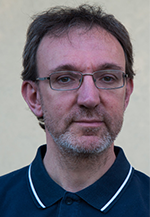
([email protected])

([email protected])