August 3, 2021 in Flipped Classroom
The Flipped Classroom
Remote learning best practices for the best probable outcome.
SHARE: PRINT ARTICLE: https://doi.org/10.1287/orms.2021.04.03

Remote learning prompted by COVID-19 has challenged educators at all levels, but it has also provided an enormous opportunity for innovative course content delivery and new access to educational technology tools. The authors leveraged this opportunity and access by “flipping the classroom” for an undergraduate engineering probability class at Northwestern University, replacing in-class lectures with hands-on problem solving, with the goal of providing an experience that helped students learn while facing the challenges of COVID-19; bringing real-world context into the classroom; actively engaging students regardless of whether their classes were taken through a computer screen or face-to-face; and fostering classroom community even for physically distant students. How could we create an experience that accomplished all of these objectives? And in the end, what did students think of this experience? All of these points will be discussed, but let’s start by sketching what our classroom model looked like.
How it Works
In the flipped probability course, all lectures are prerecorded and delivered asynchronously, allowing for synchronous class time to be used more intentionally. The flipped classroom model aims to meet the following objectives: actively engage students, meet learning objectives, avoid screen burnout and foster community. To meet these objectives, in any given week, students are expected to watch and reflect on all lecture content, prepare a draft of the week’s case study prior to the discussion session, attend synchronous discussions, and individually complete a problem set. A more detailed description of the class structure, its development and its implementation can be found in an article, “Flipping Out for Probability” [1].
This article focuses on student reactions to some of the key features of the flipped classroom model.
How Students Responded
Asynchronous lectures. Asynchronous lectures are prerecorded and split up into small, digestible pieces, typically around 10 minutes in length. These videos made students responsible for consuming lectures on their own time – a big change from the traditional classroom structure. However, students reacted to asynchronous lectures in an overwhelmingly positive way.
Second-year industrial engineering (IE) student Emily Hull took the class from her apartment in Evanston, Ill., in the fall of 2020. She described how the structure of asynchronous lectures allowed her to stay focused and avoid screen fatigue. “In the era of online school and Zoom burnout, it was nice to have the videos split into smaller, digestible parts,” she says. “It is much easier to watch four videos, each 20 minutes or less, than it is to pay attention to an hour and a half lecture.”
Denise Sullivan, another second-year IE student, took the same probability course in fall 2020. She also appreciated the asynchronous lectures, but for a different reason. “The asynchronous lecture made it easy to get ahead and to look back on things that were confusing,” she says.
Like Sullivan, many other students felt that being able to watch lectures on their own time provided them the opportunity to more easily revisit confusing topics, as well as a more flexible work schedule. However, students still acknowledged that the live discussion sessions were crucial in keeping them on track. Our next key feature addresses why.
Synchronous sessions. Synchronous discussions incorporate time in breakout rooms for students to collaborate with a group on responses to a case study. These sessions also dedicate time to clarify lecture material and engage in meaningful Q&A with the professor. Hull said that she personally felt very engaged in discussion sections and regarded them with the same importance as the content videos. Sullivan agreed on the prior, explaining that previously watching all of the lectures and being able to ask questions during the entirety of the discussion section allowed students to get all of their questions answered. Another classmate from the fall 2020 semester reflected on the discussion sections. David Meza, a second-year IE and economics student, took the probability course from Miami. Reflecting on the discussion sections, Meza says, “I never felt like I was wasting time in class, and I was always engaged.”
Apart from actively engaging students, these synchronous discussion sessions were used to help foster a sense of community within the probability classroom – something that was especially important last fall, when most first- and second-year students were not allowed on Northwestern’s campus. Annie Tsui, a second-year IE student who took the course from her bedroom in California, says that group collaboration “allowed me to make real friends in the class that I now study with and build my IE schedule around … so I can take [more] classes with them.” Several other students indicated that they built real connections throughout the course. Charlotte Oxnam, a second-year IE student who took the probability course from Evanston, Ill., even went as far as to say, “I have made more genuine connections in IEMS 202 than in the last three quarters of my remote classes combined.”
Third-year student Marina Siqueira, studying economics and IE, also found that the breakout rooms and group collaboration were extremely useful in building connections with fellow students. However, her experience was a little different. Taking the class from her home in Brazil, Siqueira was not only physically distant, but she was new to the IE program. “Coming in from a different major and having to take this class a little later in [my] schedule meant that I didn’t know anyone in the class,” she says. “It was great to have a safe space to get to know people, exchange contact information and get to work together!”
Case studies. The synchronous sessions have a significant impact on the way students collaborate in the probability course. A large portion of these sessions are spent on another key feature of our flipped probability classroom: case studies. Case studies consist of short narratives that bring context and purpose to the models and methods of probability, and include topics such as COVID-19 testing, renewable energy generation, portfolio management, and the popular game show, “The Price is Right.”
Many students felt that the case studies provided context and helped to ground abstract concepts. Oxnam explains that she was able to learn better through applying lecture content to the real-world examples in a case study. She referred to a case study about the accuracy of COVID-19 testing and adds, “I don’t do well when I am told just to memorize an equation, but if I can see how the equation fits into an example, I will remember it much longer. All of [a] sudden it wasn’t just remembering what was X and what was Y, it was a positive test or a negative test.” Fellow classmate Natan Gamliel, a second-year computer science student who took the probability course from Evanston in winter 2021, also found the COVID-19 case study particularly interesting, “in part because of its relevance to the times but in part because it explained details about the statistics relevant to the tests that I would not have understood otherwise,” he says.
One student found the case studies particularly helpful in understanding probability, but not because of its real-world relevance. Ploenta Voraprukpisut, a third-year IE major, who took the course from Bangkok, Thailand, says, “The case draft assignments gave me an opportunity to ‘test’ my understanding of the topic in a low-stress manner. By grading on completion, rather than correctness, this motivated me to figure out how to solve the cases myself before seeking help elsewhere.”
What Students Learned
Although the students reacted positively to the key features of the flipped probability classroom, we still needed to ask: Did students learn what they needed to learn? Along with student engagement and collaboration, we need to create a classroom model that is effective in helping students learn probability and prepare them for the next courses in the IE sequence. Having observed no significant change in exam grades and homework scores from a previous traditional offering, we turned to survey data and student testimonials to answer this question.
We compared course survey results from the flipped model in fall 2020 and winter 2021 with those from fall 2019, when the course was offered in person (all sections were taught by the same instructor). Student ratings for both fall 2020 and winter 2021 revealed similar or slightly increased scores for both overall course and instructor ratings. However, most striking was the dramatic increase in the students’ view of the usefulness of the discussion section, suggesting that the synchronous discussions, involving case study discussion, Q&A with the professor and group collaboration, were effective in helping students learn.
These ratings were brought to life when students were asked to reflect on how much they learned in the course and their preparedness for the following courses in the IE sequence. Many students indicated that moving onto the next course in the sequence was not difficult because of their strong foundation in probability; Gamliel is one such student. He credited his confidence to “the course structure requiring that we practice the new material almost immediately after learning it.” Tsui shared similar confidence in the material and has already applied her probability skills to the next courses in the IE sequence. “I feel confident in the material I learned, I have already successfully used the content learned in my continuation of IE courses and it was very helpful,” she says. Other students, including Siqueira, are taking classes even further on in the IE sequence and suggest that they are performing well because of their strong understanding of underlying probability concepts.
To further understand students’ level of preparedness, the authors spoke with three professors who teach three undergraduate courses that directly rely on probability. The professors indicated that they cannot provide hard data or concrete comparisons between students who took the probability course with the traditional format and those who took it with the flipped format, because of the significant changes that COVID-19 has presented. That said, the professors unanimously agreed that students appear to be at least as well-prepared relative to students in previous years. Professor Chang-Han Rhee, who teaches a stochastic modeling course, provided some more insight into the performance of his students from our flipped classroom format. While stopping short of causal inference, he pointed out that:
- Students seem generally more curious about the “why” than in previous years.
- Several of the students with the highest level of participation came from the flipped probability classroom.
- Students from the flipped probability classroom scored approximately 5% higher on the midterm exam than students who took the traditional probability course.
- The primary difference in the midterm exam scores came from the two questions that involved topics from the introductory probability course.
Professor Rhee’s observations suggest that at least some of the objectives for the flipped classroom have been met. Students seem to have learned the material well and are deeply engaged in their learning.
The Flipped Classroom Post-pandemic
While COVID-19 wasn’t the primary motivation for flipping the classroom, it certainly played a role in developing our new classroom model. It is very evident that parts of the flipped classroom, such as asynchronous lectures, work well during the pandemic when students are in different time zones and environments, and facing other challenges. However, we envision employing this model after the era of COVID-19. The next big question: How do we keep the best parts of the flipped classroom model while incorporating everything students and educators love about in-person learning?
It is evident that nothing can replace in-person learning. All students agreed that given the choice they would be learning on campus, in the classroom, face-to-face with fellow students and professors. Yet, COVID-19 revealed some ways that learning can be enhanced even when classes are “back to normal.” Hull provided some interesting insights on office hours. “Last year [2019], I rarely attended office hours because I never thought my questions were worth walking all the way to an office to potentially wait in line,” she says. “Now, with office hours only a click away, I find myself going almost weekly in each class. I feel much more comfortable logging on to ask a quick question and then maybe even coming back once I make progress and have a new question.”
Professors should consider offering mixed methods of office hours, possibly one day of remote office hours and one day in person. It is important for students to feel comfortable interacting and building a relationship with their professors face-to-face, but remote office hours also provide a more convenient means of asking quick questions.
Overall, the biggest advantage of remote learning, for most students, is having access to recorded lectures, and so we encourage professors to continue to record and post lectures once in-person class has made a full comeback. Gamliel says, “Beyond providing access to the coursework for people in distant time zones, recordings have been a convenient way to easily review a piece of material that may be giving me trouble.” Not only are recorded lectures helpful for rewatching content, but they also make learning more accessible to students with disabilities or chronic illnesses [2].
Incorporating case studies and discussion into in-person learning can also increase student engagement. Case studies use real-world context that helps make the material “stick.” The case studies are made more meaningful when supported with a designated discussion space to dive more deeply into complex topics, ask meaningful questions and collaborate with other students. Siqueira says that she would like to see less class time focused on delivering lectures and more time spent diving deeper into points of confusion and applying those concepts individually and in groups, suggesting that “this is efficient and is a good mix of self-paced learning and interacting with others to solve problems, which are key skills for 21st century jobs.” One way to accomplish this is by keeping one day of in-person class designated to case studies, Q&A and group work, though care should be taken to ensure workload for students does not increase.
Educators still have opportunities to continue to innovate the way in which we deliver course content. We have known what works in traditional, in-person learning, and now we have found new ways to teach remotely. Our next challenge is integrating the two modes to develop a learning experience that captures the best of each.
References
- Hardin Wilson, D.P. Morton, E. Han and E. Chudik, 2021, “Flipping Out for Probability,” Proceedings of the IISE Annual Proceedings.
- Christine Scherer, 2021, “Post-Pandemic Accessibility,” Northwestern School of Professional Studies, April 19, https://dl.sps.northwestern.edu/blog/2021/04/post-pandemic-accessibility/.
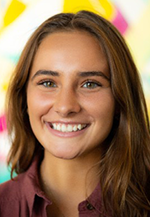
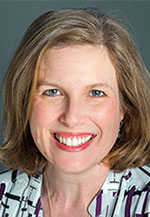
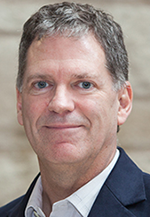
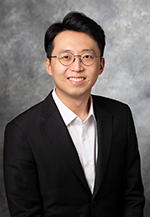
Eloise Chudik is entering her fourth year as an industrial engineering major at Northwestern University. She has considerable experience supporting educational efforts and is currently completing an internship at Goldman Sachs. Jill Hardin Wilson is a professor of instruction and assistant chair of industrial engineering and management sciences in the McCormick School of Engineering at Northwestern University. David Morton is the David A. and Karen Richards Sachs Professor and department chair in Industrial Engineering and Management Sciences at Northwestern University. He is an INFORMS Fellow, and his teaching interests include optimization and probability. Eojin Han is an assistant professor in the Department of Operations Research and Engineering Management at Southern Methodist University. He participated in this project when he was a doctoral student at Northwestern University. His teaching interests include probability, simulation and optimization.