


July 9, 2021 in INFORMS Continuing Education
INFORMS Academic Program Database
SHARE: PRINT ARTICLE: https://doi.org/10.1287/orms.2021.04.04

Searching for the correct bachelor’s, master’s, doctoral or certificate program can be like searching for a needle in a haystack. Many more program types, delivery methods and areas of study exist than just a few years ago.
If you Google “master’s in business analytics” you will get more than a million hits. This includes ads and some “best of” listings, but how are these lists determined? Somewhere in all those listings is the program you are looking for – your perfect needle in this huge haystack – but how do you find it?
With the wide variety of online information available, finding the program that is right for you can be even more challenging. Reviews and rankings, though helpful, are based on what someone else determines is important.
INFORMS Academic Program Database
A student’s future success can be influenced by finding the right program. In response to this need, volunteers from several universities have worked with INFORMS to create a world-class database [1] with the goal to provide individuals with relevant information to help them make informed decisions about their studies.
INFORMS is dedicated to promoting best practices and advances in operations research, management science and analytics. As the field’s largest professional association, INFORMS and its members work to improve operational and decision-making processes and outcomes. As a nonprofit focused on advancing the science and technology of decision-making, a critical component is educating the future workforce in these areas. Therefore, INFORMS is uniquely positioned to provide an unbiased source of information about educational programs.
The INFORMS Academic Program Database is a free resource that students can use to narrow their search and find the best academic programs for their needs. Colleges and universities enter and maintain their information for free, ensuring all programs are on a level playing field to attract candidates that are a good fit for their respective programs.
With more than 100 different programs in the database currently, students can use seven program filters, each with many different categories, to narrow their search. When you find a program of interest, various information is provided including a direct point of contact, testing requirements, credit hours and estimated tuition.
Looking for a specific program in data science, machine learning, financial engineering or marketing analytics? These are just a few of the many programs you’ll find in the database. There are also more ways to narrow your search. If your requirements are more precise, such as a master’s-level graduate school program in the southern United States classified as applied analytics, your search results would currently show five specific programs in the INFORMS Academic Program Database. Moreover, because universities maintain their own data, we expect the database to continue to grow with more programs and additional data over time. As the database continues to grow, INFORMS is working to expand to include international universities.
Visit the database to discover your perfect academic program at any level: https://www.informs.org/Resource-Center/INFORMS-Academic-Program-Database.
If you are an administrator or faculty at a university that has an analytics program and would like to be added to the INFORMS Academic Program Database, the process starts by becoming an administrator for your program. Visit https://education-admin.informs.org/users/register.php to register.
For any questions about the Academic Program Database, please contact Bill Griffin, INFORMS Professional Development Program Manager, at [email protected].
Reference
- INFORMS Academic Program Database, https://www.informs.org/Resource-Center/INFORMS-Academic-Program-Database.
Wendy Swenson-Roth is clinical assistant professor of management at Georgia State University. She is an INFORMS member involved in many communities including the University Analytics Program Committee. She serves as vice chair of INFORMS Section on Finance.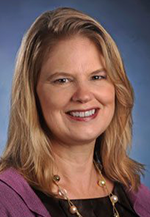
([email protected])