


October 13, 2021 in Viewpoint
Proximity for Public Good: Partnering with Dollar Stores for Addressing Social Needs
SHARE: PRINT ARTICLE: https://doi.org/10.1287/orms.2021.05.13
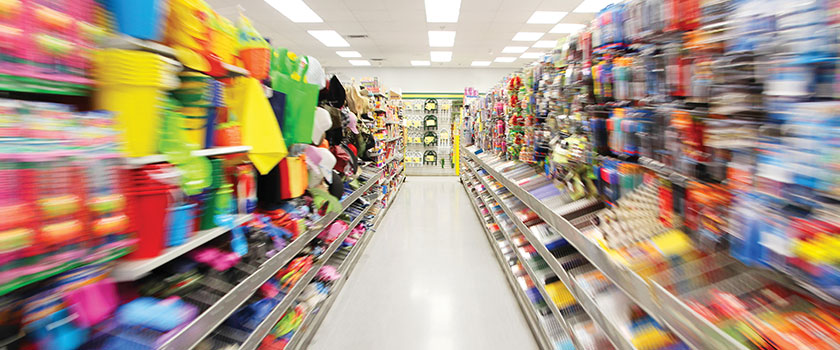
The mantra of real estate agents everywhere applies to retailers as well. Despite claims that “brick and mortar retailing is dead,” felled by the rise of e-commerce giant Amazon, retailers’ physical locations are more important than ever. Examples include major retailer players like Target, Walmart and Best Buy, who use their big-box stores as e-commerce hubs by offering buy online, pickup in store (BOPIS) options, and shipping e-commerce orders from stores using in-store inventory.
While the strategic importance of physical brick-and-mortar retailing cannot be overstated, it is worth noting that such a facility can also be an asset in matters of public health. Consider, for example, the case of Tennessee-based Dollar General. The proximity of its 17,000+ locations – more than twice the combined locations of Walmart and Target – may help combat persistent issues in public health, food insecurity and access to the financial system.
Dollar General (DG) is a $33.7 billion-dollar retailer, and, like most dollar stores, offers a wide variety of merchandise at low price points. According to a former CEO in a 2017 Wall Street Journal feature, DG “went where [Walmart] ain’t,” focusing on rural areas with less population to support sales, but less competition from other general retailers [1]. And unlike other retailers, its business model focuses on lower-income households with annual incomes of $35-40K, who buy items in smaller, affordable quantities [2].
This customer strategy – intentionally locating stores near people with the most financially precarious circumstances – offers a strategic advantage in addressing social needs of those same people. Analytics can be used to understand the opportunities and tradeoffs. We look at three distinct contexts – vaccinations, groceries and postal banking.
Vaccinations
DG’s proximity to the population may provide a strategic advantage in providing vaccination clinics for COVID-19 or another future pandemic. In an April 2021 paper [3], Yale authors compared DG’s proximity to the U.S. population to that of chains offering COVID-19 vaccines through the Federal Retail Pharmacy Partnership Program. According to the paper’s abstract: “Dollar General stores are disproportionately likely to be located in census tracts with high social vulnerability; using these stores as vaccination sites would greatly decrease the distance to vaccines for both low-income and minority households … Adding Dollar General to the current pharmacy partners greatly surpasses the goal set by the Biden administration of having 90% of the population within 5 miles of a vaccine site” [4].
Advanced analytics are fundamental to this insight. Specifically, operations research techniques can be used to model the trade-offs inherent in designing a supply chain network. For example, integer programming can be used to identify the tradeoff between the number of DG stores used for vaccine clinics and the associated 5-mile coverage; it may yield surprising results. Take the case of Texas, home to approximately 1,650 DG stores. Of Texas residents, 88% (or 22.1 million people, according to the 2010 census) live within 5 miles of a Dollar General. However, that same 88% coverage can be achieved with 700 well-selected stores, and 80% coverage can be achieved with 350 well-selected stores. If this insight roughly holds chain-wide, then strategically selecting a limited number of DG locations may yield identical, or close to identical, vaccine access as using all DG locations, simplifying distribution and storage requirements. A similar methodology could be used to design a vaccine distribution network across multiple pharmacies and retail partners.
In essence, “to transform vaccines into vaccinations requires solving daunting problems in both supply and demand and presents one of the greatest logistics challenges in human history,” according to Dr. Tinglong Dai, INFORMS member and vaccine rollout expert at Johns Hopkins University. Operations research, however, is paramount to fixing the equation.
Food Deserts
Dollar General is also making moves into the grocery business. It currently sells produce in 1,300 stores, with a plan to expand this up to 10,000 stores over several years [5]. Proximity to low-income communities – and its intentional strategy of opening stores away from Walmart, the nation’s largest seller of groceries – means that DG is well-located to address the nation’s food deserts.
Food deserts, as defined by the U.S. government, are “low-income census tracts with a substantial number or share of residents with low levels of access to retail outlets selling healthy and affordable foods” [6]. Low access is defined as “at least 500 persons and/or at least 33% of the population lives more than 1 mile from a supermarket or large grocery store” for urban census tracts and more than 10 miles for rural census tracts. By adding “healthy and affordable foods” to just 2,650 DG locations, approximately one-third of food deserts may be addressed, and in turn bring healthy and affordable foods to low income communities who disproportionally need it.
Postal Banking
All Americans should have easy access to basic financial services, and from that perspective, a government-provided, basic-services bank is a common sense idea. This can be done through rethinking “postal banking” for the digital age.
What could government-provided banking look like? A separate government organization, not the U.S. Postal Service, would be set up to administer accounts, develop websites and apps, and provide customer service. This organization would partner with the private sector to enable no-fee ATM access in the existing ATM network.
For individuals who prefer or need to visit a branch, employees at commercial bank branches would be able to process transactions for government banking. Retailers in depressed areas, like Dollar General, would also be able to process limited transactions. Private-sector partners would be compensated by the government according to a fee schedule. And the 5.4% of American households that are “unbanked” would receive access to the financial system they desperately need.
To conclude: Location really is everything. To be sure, more study and planning is necessary for implementation of these proposals, particularly in the case of vaccination clinics. However, Dollar General, and other retailers, have already cracked the hardest part – getting close to “where the people are,” particularly those people with the fewest disposable resources. It would be wise to understand how we can use that proximity for the public good.
References
- Sarah Nassauer, 2017, “How Dollar General became rural America’s store of choice,” The Wall Street Journal, Dec. 15, https://www.wsj.com/articles/how-dollar-general-became-rural-americas-store-of-choice-1512401992.
- Melissa Repko, 2021, “Dollar General will open more than 1,000 stores this year and expand its Popshelf brand,” CNBC, March 18, https://www.cnbc.com/2021/03/18/dollar-general-will-build-bigger-stores-expand-popshelf-brand.html.
- Judith A. Chevalier, Jason L. Schwartz, Yihua Su and Kevin R. Williams, 2021, “Equity impacts of Dollar Store vaccine distribution,” https://www.medrxiv.org/content/10.1101/2021.04.03.21254847v1.
- https://www.cdc.gov/vaccines/covid-19/retail-pharmacy-program/participating-pharmacies.html
- Mike Troy, 2021, “Dollar General adding produce to 10,000 stores,” Progressive Grocer, July 1, https://progressivegrocer.com/dollar-general-adding-produce-10000-stores.
- Michele Ver Ploeg, David Nulph and Ryan Williams, 2011, “Mapping food deserts in the United States,” USDA Economic Research Service, Dec. 1, https://www.ers.usda.gov/amber-waves/2011/december/data-feature-mapping-food-deserts-in-the-us/.
Ralph Asher is the founder of Data Driven Supply Chain, a Minneapolis-based consulting firm applying O.R. and data science to design and optimize supply chains. Prior to its founding, he designed supply chains at Target and General Mills. He serves as a military officer in the United States Marine Corps Reserve.
([email protected])