
December 1, 2021 in Food Inequity
Food, Food, Everywhere, But No Scrap of Health in Reach
Food inequity and the role of O.R. in socioeconomically disadvantaged and majority-minority communities
SHARE: PRINT ARTICLE: https://doi.org/10.1287/orms.2021.06.06

Editor’s Note: In lieu of the Student Perspectives column this issue, we are highlighting a student writer, who serves on the editorial team of OR/MS Tomorrow, the student magazine of INFORMS.
Willie Brown of the Hillside neighborhood in Fort Worth, Texas, travels up to an hour riding a series of buses to reach grocery stores stocked with nutritious products that are at least two and a half miles away from most residents [1]. In Baltimore, an adolescent girl stops for a processed snack at one of the many corner stores located near her home [2]. Residents in certain neighborhoods of Winnipeg, the capital of the Canadian province Manitoba, have easy access to wholesome food, but because of financial hardship they turn to cheaper convenience store foods [3].
These are just a few examples of food deserts, food swamps and food mirages in the modern food ecosystem (see sidebar below).
Each circumstance – desert, swamp or mirage – falls under the umbrella of food insecurity, and often leads to: 1) the general population’s dependence on “empty” calories in the form of cheap, processed food available at convenience stores and oft-ubiquitous fast food outlets, and/or 2) costly travel (in terms of price and time) to affordable and nutritious grocery alternatives [4-6]. These disadvantageous food ecosystems are part of a decades-long conversation on food inequity, which is a focus of the grassroots initiative for food justice [6].
Modern Food Ecosystem
Food desert: A community with limited access to nutritious groceries [7]. The U.S. Department of Agriculture, in cooperation with the Department of the Treasury and Department of Health and Human Services, defines food deserts as “low-income census tracts with a substantial number or share of residents with low levels of access to retail outlets selling healthy and affordable foods” [8].
Food swamp: An urban environment typical of the corporate North American food system in which the market provides an overabundance of food that is not nutritious, being dominated by fast-food outlets and convenience stores. This availability overshadows the more nutritious offerings in the community [5]. Hager et al. used the metric of four or more convenience stores within a quarter of a mile (two-fifths of a kilometer) of residents to identify food swamps [2].
Food mirage: A neighborhood in which residents have physical access to nutritious food options but not financial access. Poverty prevents consumers from taking advantage of food availability and spurs them to either travel out of their way to buy nutritious groceries at more affordable prices or default to less nutritious corner store offerings [3, 5]. Food mirages are functionally equivalent to food deserts [9].
Societal Impacts of Food Inequity
In Western nations, pockets of food insecurity are disproportionately present in communities with high poverty, such as rural areas and communities with a majority-minority population [6, 10-12]. In the United States, low-income zip codes have more than 30% of the nation’s convenience stores, which leaves little space for other, more nutritious grocery offerings [13].
The impact of food inequity on communities is multitudinous. Beyond the health risks of nutrition deprivation and the consequent cost of health campaigns to combat diet-related disease, there are economic ramifications in lost wages, reduction in the local tax base, and lost potential for food retail to serve as an anchor for other retail [7, 13].
Considering systemic roots of food inequity, Foley et al. highlight the consolidation and corporate control in the last century, facilitated by economic globalization of agriculture [4]. Soil health is compromised in favor of mass production of subsidized monocultures whose manufactured products dominate convenience store shelves; and business accountability is abandoned, which has allowed environmental harm through chemical runoff and leaking and water waste.
The Food Supply Chain and Food Inequity
The modern food supply chain in industrialized nations is a complex system with multiple firms working together in an increasingly globalized market that must contend with myriad uncontrollable factors prevalent in food production, such as weather and shelf life [14]. The network consists of suppliers (farmers), transformer sites (processing), distributor sites (that aggregate agricultural products from multiple sources to create a food supply) and clients (retailers) [14].
Foley et al. [4] identified several gaps in each of these organizational levels that have significant impact on food and social equity of the food system supply chain.
- Production: Technical difficulties in business planning and management, as well as lack of access to or failure to preserve working farmland, restrict farmers’ ability to grow plentiful and affordable agricultural products for distribution to communities suffering from food inequity.
- Transformation and distribution: Poor meat slaughtering and processing facilities, as well as improper produce processing and storage, compromise food quality and safety. Without establishing adequate sites and protocols, the cheaper and more convenient defaults for retailers in food insecure communities become the low-nutrition, low-hassle food products.
- Retail: There is little incentive for investment in retail expansion for nutritious food options in underserved communities because of the huge startup and operational costs, lengthy and complex development process, significant risk, slim margins, and concerns about demand.
Considerations in Reducing Food Inequity
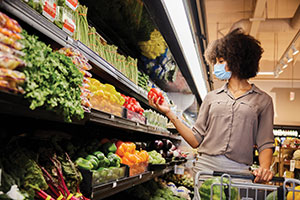 The theory for reducing food inequity used to be “if we build it, they will come.” That is, constructing grocery stores to sell the foodstuffs that convenience stores and fast food outlets do not offer would reduce the incidence of negative food environments. Research on the effect of a new grocery store on the food buying habits of residents in the beneficiary community indicates that the transformation is not so clear-cut [15].
The mere existence of a store is insufficient. Given the option between nutritious food and non-nutritious food, Cottrill and Mejia [7] identified three factors that drive consumer choice: 1) consumer awareness and perception, 2) environmental factors, such as distance and affordability, and 3) buyer characteristics, such as education. Handbury [16], for example, observed that consumers with higher education levels are more likely to buy a greater variety of nutritious foods than consumers with lower levels of education.
In communities where food insecurity has prevailed, the lack of nutritious options creates a low demand for nutritious options; thus, when they become more available, the previously set demand will not immediately proportionally adjust [5]. A process to develop positive, long-term eating patterns is required for the introduction of grocery stores to have the desired effect. What is needed in food mirages is not a new grocery store, but rather a reduction of food prices in current grocery stores. Cost subsidization programs like the U.S. Supplemental Nutrition Assistance Program (SNAP) provide one short-term solution, but work remains to target the root causes of unaffordability.
This is where operations research (O.R.) steps in.
The Role of Operations Research
In food equity, O.R. tools and techniques have been used to, among other tasks, identify communities experiencing food inequity, minimize distance and cost in the supply chain, and engage the community in confronting food insecurity.
Identifying communities experiencing food inequity. At the University of Winnipeg’s Institute of Urban Studies, Wiebe and Distasio [17] use food environment mapping to find nutritious and affordable retail food sources in Winnipeg and in low-income areas in the city to determine the distance between the two. Physical access was categorized as high when a store was within 500 meters; moderate within 501-1,000 meters; and low when a store was beyond 1,000 meters. This measure alone – proximity to a supermarket – has been used to nail down food desert locations, but it needs to go a step further, given that it “doesn’t account for areas of the country where nutritious options are nearby but poverty prevents people from being able to make better choices” [3].
With that in mind, researchers developed a social deprivation index, with seven variables related to factors such as income, unemployment, education, immigration and family structure, to identify socioeconomic characteristics of residential areas that might correlate with restricted accessibility to supermarkets and nutritious food [18]. The social deprivation score for an area was calculated by first standardizing all variables to a scale from 0 to 1 and then summing those standardized variables. A score of 0 indicated minimum deprivation and a score of 7 the maximum. Scores were divided into quintiles for comparison, and it was determined that 39.78% of Winnipeg had moderate or high social deprivation, with scores greater than or equal to 1.79.
Combining physical access and social deprivation index measurements presents a more accurate picture of the food environments in these residential areas of Winnipeg.
Improving supply chain performance. Operations research has long been applied to supply chain management. Most analyses are focused on cost minimization and threshold inventory satisfaction. Awareness of the impact of inequitable nutritious food distribution on communities has spurred researchers to consider what modifications can be made in the supply chain to serve the underserved in addition to the bottom line.
The main barriers to food delivery in food insecure areas include logistical challenges, particularly regarding transportation costs; lack of control over the season’s produce yield and the variable shelf life and aesthetic attraction of produce; purchasing power of the end customer; and concern about financial security [10]. Food insecure communities are high-risk for both investors and producers [4]. Efforts have been made to engage existing small shops, such as convenience stores, to put nutritious food and fresh produce on the shelves. However, this arrangement is not always plausible for producers because small food retailers often want to order fewer “units” than is minimally required for the transportation and sale to be worthwhile.
To overcome these barriers, the supply chain must be reconfigured to include a review of the product mix so that it contains nutritious foods with longer shelf lives, such as dried and frozen fruits and brown rice; and an exploration of more creative ways to sell it [7]. The creation of alternative distribution channels in the supply chain could help dispel business apprehensions about logistics, purchasing power and financial security [10]. Third-party buying programs linking smaller retailers via cooperative purchasing agreements, for example, have the potential to deliver smaller orders to stores by first buying larger orders from the producer, meeting or exceeding purchase minimums. Mobile markets have also been explored in North American cities [19].
Engaging the community to confront food insecurity. Rather than working as merely academics and policymakers analyzing data outside the reality of life in food deserts, swamps or mirages, Wang et al. [21] pursued community operational research (COR), elevating members of disadvantaged and vulnerable communities affected by these complex social and economic issues. Interventions that increase food access by establishing a new supermarket will have little effect if the wider issues of food supply control are not addressed, and COR can be used to engage citizens in formulating and executing appropriate initiatives.
Studying food deserts in South Wales, U.K., researchers deployed soft O.R. systemic intervention, a technique with debate-oriented problem structuring appropriate for a system involving multiple stakeholders, uncertainty and little or unreliable data. This soft COR aimed to achieve “a shared understanding, the development of a common purpose and the generation of a collective commitment to actions among stakeholders,” and not to identify an “objectively best solution” [21]. This approach acknowledged that food insecurity is a nebulous issue, continuously evolving and mutating, without an identifiable final or full correct solution.
Food Inequity Requires Complex Solutions
Food inequity is an issue that combines socioeconomic background, education and other demographic factors, and involves a multitude of stakeholders and product variabilities that do not respond to easy fixes. These complex and multifaceted problems require complex and multifaceted solutions.
While the eradication of hunger in our lifetime is uncertain, efforts to mitigate the problem will continue. Operations research projects have an important place in the global discussion.
References
- Manna, N., 2020, “Life in a food desert, where fresh produce is 2 bus rides from home,” Medical Xpress, https://medicalxpress.com/news/2020-09-life-food-fresh-bus-home.html.
- Hager, E., Cockerham, A., O’Reilly, N., Harrington, D., Harding, J., Hurley, K. M. and Black, M. M., 2017, “Food swamps and food deserts in Baltimore City, MD, USA: associations with dietary behaviours among urban adolescent girls,” Public Health Nutrition, Vol. 20, No. 14, pp. 2598-2607, https://pubmed. ncbi.nlm.nih.gov/27652511/.
- Distasio, J., 2016, “Canada is plagued by ‘food mirages,’” Huffington Post, https://www. huffingtonpost.ca/jino-distasio/food-insecurity-canada_b_11198586.html.
- Foley, K., Goodman, T. and McElroy, B., 2012, “Bridging the gaps: Funding and social equity across the food system supply chain,” RSF Social Finance, https://community-wealth.org/content/bridging-gaps-funding-and-social-equity-across-food-system-supply-chain.
- Haskell, S., 2021, “Food insecurity and food deserts: How are they related?” Institute for Food Laws and Regulations, https://www.canr.msu.edu/news/ food-insecurity-and-food-deserts-how-are-they-related.
- Food justice, Food Print, https://foodprint.org/issues/food-justice/.
- Cottrill, K. and Mejia, C., 2019, “A fresh approach to combatting the food desert scourge,” Supply Chain Management Review, Feb. 7, https://www.scmr.com/article/a_fresh_approach_to_combatting_the_food_desert_scourge.
- Ploeg, M., Nulph, D. and Williams, R., 2011, “Mapping food deserts in the United States,” USDA Economic Research Services, https://www.ers.usda.gov/amber-waves/2011/december/data-feature-mapping-food-deserts-in-the-us/.
- Breyer, B. and Voss-Andreae, A., 2013, “Food mirages: Geographic and economic barriers to healthful food access in Portland, Oregon,” Health Place, Vol. 24, pp. 131-139, https://pubmed.ncbi. nlm.nih.gov/24100236/.
- Lacagnina, G., Hughner, R., Barroso, C., Hall, R. and Wharton, C., 2017, “Supply chain barriers to healthy, affordable produce in Phoenix-area food deserts,” Journal of Food Distribution Research, Vol. 48, No. 3, pp. 1-15, https://www.fdrsinc.org/wp-content/uploads/2017/12/JFDR_48.3_ 01_Wharton.pdf.
- Masterson, M., 2020, “Urban food system resilience and supply chain vulnerabilities,” Risk Management and Decision, https://riskcenter.wharton.upenn.edu/lab-notes/ urban-food-system-resilience/.
- Treuhaft, S. and Karpyn, A., 2010, “The grocery gap: Who has access to healthy food and why it matters,” Policy Link, http://thefoodtrust.org/uploads/media_items/grocerygap.original.pdf.
- Karpyn, A., Riser, D., Tracy, T., Wang, R. and Shen, Y., 2019, “The changing landscape of food deserts,” UNSCN Nutrition, Vol. 44, pp. 46-52, https://www.ncbi.nlm.nih.gov/pmc/articles/PMC7299236/.
- Allaoui, H., Guo, Y., Choudhary, A. and Bloemhof, J., 2018, “Sustainable agro-food supply chain design using two-stage hybrid multi-objective decision-making approach,” Computers Operations Research, Vol. 9, pp. 369-384, https://doi.org/10.1016/j.cor.2016.10.012.
- Fu, J., 2020, “Is it time to retire the term ‘food desert?,’” The Counter, Jan. 9, https://thecounter.org/is-it-time-to-retire-the-term-food-desert-grocery-snap.
- Handbury, J., 2015, “How wealth and education – not access – drive healthy food choices,” Knowledge@Wharton, June 18, https://knowledge.wharton.upenn.edu/article/how-wealth-and-education-drives-healthy-food-choices/.
- Wiebe, K. and Distasio, J., 2016, “Confronting the illusion: Developing a method to identify food mirages and food deserts in Winnipeg,” In Brief Series, Institute of Urban Studies, https://winnspace.uwinnipeg.ca/bitstream/handle/10680/1205/2016%20Confronting%20the%20Illusion%20In-Brief.pdf?sequence=6&isAllowed=y.
- Apparicio, P., Cloutier, M. and Shearmur, R., 2007, “The case of Montréal’s missing food deserts: Evaluation of accessibility to food supermarkets,” International Journal of Health Geographics, Vol. 6, No. 4, https://doi.org/10.1186/1476-072X-6-4.
- Seeley, R., 2018, “Food desert residents find relief at mobile markets,” Asparagus, Aug. 14, https://asparagusmagazine.com/food-desert-residents-find-relief-at-mobile-markets-1611f3d4a771.
- “An overabundance of fast food: Food swamps are the new food deserts,” 2019, SWHelper, Dec. 11, https://swhelper.org/2019/12/11/an-overabundance-of-fast-food-food-swamps-are-the-new-food-deserts/.
- Wang, Y., Touboulic, A. and O’Neill, M., 2018, “An exploration of solutions for improving access to affordable fresh food with disadvantaged Welsh communities,” European Journal of Operational Research, Vol. 268, No. 3, pp. 1021-1039, https://www.sciencedirect.com/science/article/pii/ S0377221717310767.
Abigail Lindner is a recent graduate of Regent University, where she earned a B.S. in mathematics. She is currently enrolled as a Ph.D. student in the mathematics program at Worcester Polytechnic Institute in Massachusetts. Her research interests lie in the nonprofit sector and theoretical ecology. Abigail has served as an editorial staff writer with OR/MS Tomorrow since the spring of 2020.