April 12, 2022 in International O.R.
Effective Management of Elder Care Services through Public-Private Partnership
United Financial Intelligence was founded in 2020 to address the complex challenges and business opportunities for long-term elder care in Taiwan.
SHARE: PRINT ARTICLE: https://doi.org/10.1287/orms.2022.02.10

Z.D. Tsai is the head of social work at Taipei City Hospital (TCH), Zhongxing Branch. He begins each day by reviewing profiles of patients hospitalized in the past few days. Identifying suitable accommodations for patients who need long-term care (LTC) facilities when discharged is a major challenge. It usually takes more than 100 phone calls and several days to place a patient, often delaying the release of precious hospital beds to additional incoming patients. Tsai’s difficult task will continue in light of Taiwan’s rapidly aging population, scarce LTC facilities, insufficient certified caregivers and lack of information regarding changing patient acceptance conditions at the LTC facilities. Taiwan is one of the fastest aging societies in the world. In 2017, the 13.2% of Taiwan’s population over the age of 65 used 37.3% of its medical resources [1]. It is estimated that 20% of Taiwan’s population will be older than 65 by 2025, when it will join Japan, Germany and Greece as a super-aged society [2]. This demographic change has widespread ramifications for healthcare, social welfare, insurance policies, the workforce and overall economy [3].
To meet the rapidly growing demand for long-term care and reduce the heavy burden of family care, Taiwan’s government launched the “Long-term Care 2.0” initiative in 2017 [4], encouraging private institutions to provide long-term at-home or community-based care by substantially subsidizing professional care services. The budget for the 2022 plan is nearly $2 billion USD, a more than tenfold increase since 2016, and 14% growth from 2021 [5]. Accordingly, home care services have experienced rapid growth. As of March 2022, there are 1,338 home care service institutions, 688 elder day care centers and 11,056 elder care community centers in Taiwan [6]. These centers and institutions are typically newer (less than four years old), small in size and lacking digital capabilities. Many are struggling with quality of care and caregiver recruitment, training, certification and management.
United Financial Intelligence (UFI, ufi.ai) was founded in 2020 to address the complex challenges and business opportunities for long-term elder care. Its initial focus is to provide low-cost digital capabilities for LTC institutions in Taiwan to improve care quality and service management [7]. UFI has implemented two major SaaS cloud solutions after consultation with more than 100 LTC institutions: Long-Term Care Service Management System (LTC-SMS) and Long-Term Care Map (LTCMap).
Long-term Care Service Management System
LTC-SMS is designed to support LTC institutions, caregivers, elders and their family members. It empowers LTC institutions with smart digital capabilities to improve care quality while optimizing resource usage and profitability. It leverages analytics and a management dashboard to provide smart matching and (re)scheduling; caregiver performance management; compliance; auditing and financial management, including payments (online or at supermarkets); and automatic government subsidy application and write-offs linking to the government management system.
The application not only eliminates error-prone paperwork but also supports process automation and improves operational efficiency. Managers of care service institutions can optimize monthly or weekly shift scheduling, ensure that care portfolios and corresponding services remain compliant with government subsidy policies, and make dynamic adjustments based on needs, regulations or out-of-pocket services requests. Mobile apps are provided to the caregivers to record service activities as well as service recipients and their families to track progress. Through actively monitoring care receivers’ health conditions, the system is capable of providing timely alerts and notifications for remote care to avoid disease recurrence, reduce hospital visits and lower insurance expenses. Transparent care history and communication allow long-term care institutions, care providers, care recipients and their families to form a close-knit community with the best care.
Long-term Care Map
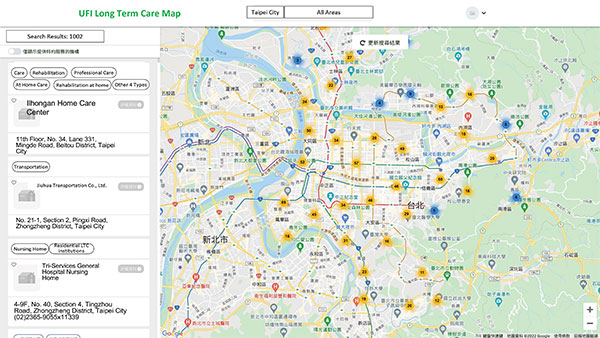
LTCMap was developed based on open data regarding elder care facilities supplied by central and local governments in Taiwan. It engages with care organizations to provide timely resource availability and service criteria to serve as a trusted platform for matching various care needs and care providers. It also provides clear instruction for elders transitioning into care facilities. LTCMap has gathered information on more than 10,000 facilities classified into 30 care categories of care capabilities and service types (see Figure 1). It also provides quick questionnaires for elders, their family members and hospital patient discharge planning teams to specify care needs for optimal matching. LTC facilities are alerted through instant messages once there is a service match.
The LTC Management Public-Private Partnership Pilot and Lessons Learned
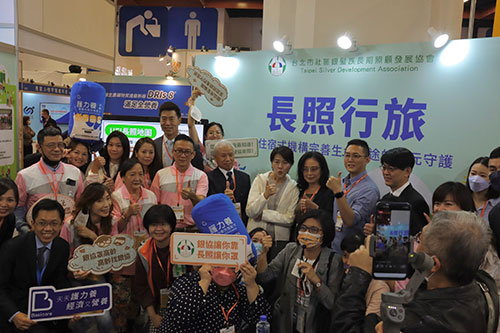
In mid-2021, UFI participated in a Taipei Smart City initiative [8] to launch a public-private LTC pilot partnership with the Taipei City Government, TCH Zhongxing Branch, TCH Long-term Care Planning and Development Center and Taipei Silver Development Association, which has more than 100 LTC institution members. TCH is a full-service, total-care medical institution with 10 municipal hospitals that provide comprehensive healthcare services for Taipei’s 2.6 million residents. It is the largest healthcare organization in northern Taiwan.
The LTC Service Management pilot covers smart scheduling, care personnel management, elder health tracking and communication, and government subsidy application process automation. Caregiver and elder service apps managed by UFI and TCH LTC Center served more than 100 elders, with more than 6,300 care services logged in two months. Care quality improvement and detailed care logs were tracked for future health alerts and preventive care improvement with an estimated 20% savings in administrative costs. LTC-SMS has also been deployed to more than a dozen at-home LTC institutions in five cities serving 1,200 elders.
LTCMap was deployed to the TCH Zhongxing Branch Social Worker Group and Taipei City LTC Development Association to seamlessly transition patients from hospital care to community long-term care facilities. More than 40% of the institution members of the Taipei Silver Development Association enhanced the basic information that UFI gathered from open data by providing detailed elder acceptance criteria for quality matching.
Now, instead of making more than 100 phone calls to place a patient, Tsai found that it only takes minutes to fill out the request form and receive a list of matching care institutes using LTCMap. He was able to find a suitable facility for a patient after just a few phone calls the first time he used the system, even under a severe LTC facility shortage. This successfully demonstrates the power of information and integration technology, analytics and public-private partnership (PPP) between hospitals, private companies and not-for-profit organizations. The commitment and dedication of the pilot leadership team headed by Dr. Ching-Yao Tsai, president of the TCH Zhongxing Branch; Ting-Hung Shih and Wei-Chun Shen, chairman and CIO (respectively) of Taipei Silver Development Association; and Grace Lin, founder of UFI, were also essential to the success.
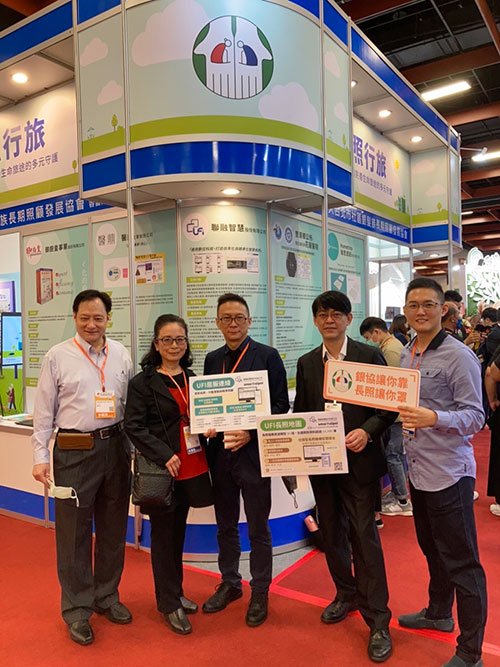
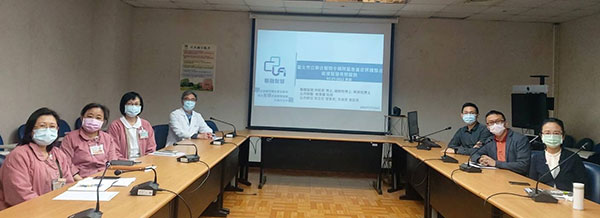
Analyzing cases for which LTC placement was difficult, even with smart-matching solutions during the pilot, revealed that the patients were all in vulnerable groups. Elder care institutes are mostly small businesses with limited resources, and they tend to be reluctant to accept these patients because they don’t have the means to recover care expenses. If not properly addressed, this critical issue would degrade the quality of life of all citizens of Taiwan.
Future Directions
UFI has started to expand its solutions and services, working with the PPP pilot team in several areas based on lessons learned from the LTC PPP pilot.
- LTC support for vulnerable groups. With support from TCH and the Taipei Silver Development Association, UFI is building an ecosystem engaging LTC institutions and associations, hospitals and government agencies to identify elders in vulnerable groups who need LTC services and financial support. The team also reaches out to various retiree organizations, charities and enterprises’ Environmental, Social and Governance (ESG) groups for potential donations and caregiving volunteers. UFI’s blockchain-based time bank will be expanded and used to support matching between vulnerable groups’ elder care needs (demand) and volunteers’ care service, while also providing transparent and trustworthy charity fund allocation and service time exchange.
- Tightly integrating LTCMap and LTC-SMS management and scheduling modules to provide peer-to-peer (P2P) LTC service-matching platform. An Uber-like care service-matching platform is being designed based on the LTC ecosystem and by leveraging Fusion$360’s state-of-the-art privacy protection mechanisms and API management system. Analytics and AI models will be key to optimal in-time service matching, tracking and care service improvements.
- Onward to Opportunity (O2O) training. Because of a severe LTC talent shortage, UFI is collaborating with LTC professionals and colleges to set up O2O training programs. A blockchain-based certificate and service ledger will be provided to help professionals fulfill their licensing.
Taiwan is a small island but has world-class information technology companies and medical hospitals with affordable universal healthcare. The citizens’ awareness of public health needs has helped Taiwan successfully manage the coronavirus pandemic with minimal losses over the past two years. However, due to a low birthrate over the past two decades, Taiwan has become one of the fastest aging countries in the world. In addition to expanding preventive healthcare and medical services, it is critical to manage the rapidly rising cost of LTC while improving care quality [9]. The PPP pilot has demonstrated that care quality and cost reduction can be achieved through cross-industry collaboration and PPP, supported by analytics and decision support systems. Research opportunities are abundant in innovative cross-industry ecosystem collaboration models, smart matching for P2P LTC services and multiobjective LTC quality and operational efficiency optimization.
References & Notes
- Chen Jie, Lin Huizhen and Yang Huijun, 2020, “The young and the poor pay premiums and the silver-haired go to doctor – how to solve the future of health insurance that young people may not be able to afford?,” The Reporter, Sept. 27, https://www.twreporter.org/a/health-insurance-system-generation-problems.
- The National Development Commission adopted the “Republic of China Population Estimates (2020-2070),” https://moe.senioredu.moe.gov.tw/UploadFiles/20220216090807782.pdf.
- Siok Hui Leong, 2018, “Health care for all: The good & not-so-great of Taiwan’s universal coverage,” The News Lens, Nov. 13, https://international.thenewslens.com/article/108032.
- The Ministry of Health and Welfare, Taiwan, 2019, “National Ten-year Long-term Care Plan 2.0,” https://www.mohw.gov.tw/cp-4344-46546-2.html.
- Li Qingying, 2022, “Long-term care fund budget hits a record high of 55.9 billion NTD,” Commercial Times, March 8, https://ctee.com.tw/news/policy/605868.html.
- Central News Agency, 2021, “370,000 people used long-term care services in the past year, with a coverage rate of nearly 55%,” Dec. 20, https://www.cna.com.tw/news/ahel/202112200075.aspx.
- Grace Lin, Han-Chao Lee, Ya-Hui Chan, Brick Tsai and Ko-Yang Wang, 2020, “Transforming long-term care for elders in Taiwan,” OR/MS Today, Volume 47, Number 2, April, pp. 53-60.
- Taipei Smart City Initiative: https://smartcity.taipei/about and https://amsterdamsmartcity.com/organisations/taipei-smart-city-project-management-office.
- Huang Yuying, 2020, “Highlights of Taiwan’s Long-term Care Industry Analysis Report,” June 4, https://www.ankecare.com/article/790-20167.
Grace Lin is the founder of UFI.ai. She has served as chair professor at Tzu Chi University, Asia University, China Medical University and Soochow University, Taiwan, and as a vice president at the Asia University, Taiwan. She was VP and general director for the Advanced Research Institute and Data Analytics Technology and Applications Institute at the Institute for Information Industry (III), Taiwan, from 2011 to 2016. Before that, Dr. Lin worked for IBM US for more than 16 years within IBM Global Business Services and IBM Thomas J. Watson Research Center as CTO, director for Innovation and Emerging Solutions, senior manager for Supply Chain and eBusiness Optimization and research staff member. She was a member of the IBM Academy of Technology and an IBM Distinguished Engineer. Dr. Lin is an INFORMS Fellow. Ko-Yang Wang, Ph.D., is founder and chairman of the FinTech startup, Fusion$360.com in Taiwan that is developing an API-based financial innovation platform to support inclusive financial and associated services. He is also chairman of the Taiwan FinTech Association. Dr. Wang previously served as an EVP at III, and before that, he was a partner and practice leader for business process management at IBM Global Business Service. Brick Tsai is the COO at UFI. Previously, he was a technical director at Fusion$360 and a senior director at the Advanced Research Institute and Data Analytics Technology and Applications, Institute at the Institute for Information Industry (III), Taiwan. He received his Ph.D. from National Taiwan University. Lynn Chao is a business analyst at UFI. Previously, she was a research staff member at the Big Data Research Center, Asia University. She received her Ph.D. from the Graduate Institute of Finance, National Taiwan University of Science and Technology. Kevin Kuo is a technical director at Taiwan FinTech Corporation (Fusion$360). Previously, he was a senior director at the Data Analytics Technology and Applications Institute and the Cloud System Research Center at the Institute for Information Industry (III), Taiwan. He received his Ph.D. from National Cheng Kung University. Ching-Yao Tsai, M.D., Ph.D., is president at the Taipei City Hospital Zhongxing Branch. He is also an adjunct professor at the Institute of Public Health, National Yang Ming Chiao Tung University, and the Department of Business Administration, Fu Jen Catholic University, New Taipei City. He received a doctorate in medicine (M.D.) and Ph.D. in epidemiology from National Yang Ming University, Taipei, Taiwan. Ting-Hung Shih is chairman of Taipei Silver Development Association. He also serves as secretary at Aiai Eldercare Institute, Taipei, Taiwan. He received an M.S. in long-term care from Fu Jen Catholic University, Taiwan. Wei-Chun Shen is the CIO of Taipei Silver Development Association. He is also the director of Taipei City Private Great Grace Elder Center. He received his B.S. from the Department of Material Science at Tsing Hua University, Taiwan.
([email protected])