


August 2, 2022 in Innovative Education
A Model for Amplifying Military Education
Motivation and mentorship turn lifelong learners into leaders
SHARE: PRINT ARTICLE: https://doi.org/10.1287/orms.2022.04.13

Editor’s note. A previous, expanded version of this article was published in Phalanx.
Lifelong learning – including self-teaching and having a learning ecology – is a responsibility, in fact a duty, of those who defend freedom.
Information has become dominant in power. The sum of human knowledge is exponentially increasing; the central axis of our time is accelerating change. This includes the changing forms and forces of war in which cognitive superiority wins. Erika Andersen advises that, “The only sustainable competitive advantage may be learning faster than our competitors” [1]. Traditional schedules and ways of learning are insufficient for our new, ever-changing world.
Increasingly smart machines and the reduction in barriers between expert knowledge and end users are making employment, expertise and even competence time-stamped and with an expiration date. The future requirement of lifelong learning for individuals and organizations is already here; it’s just unevenly distributed. A leader doesn’t want to be part of the past that is still here but unevenly receding.
In addition to mastery of the U.S. Department of Defense’s (DoD) impressive training and educational requirements, there should be an expectation that those who lead and aspire to lead are lifelong learners (LLLs) and have their own self-organized lifelong learning ecologies augmented by DoD offerings and assistance. Postgraduate education, whether assigned or self-initiated, that is relevant to the DoD’s mission under the broadest interpretation should be more celebrated, facilitated and, especially, valued in considering promotion in rank. Both operational field experience and knowledge from the ever-expanding frontiers of science and technology must be combined well.
The military organizations of the U.S. pride themselves in fostering innovative, thinking warriors rather than automata who must be micromanaged. Our “hero-stories” describe individuals who faced a difficult situation and found a way to prevail. We attempt to foster this culture by producing mission orders – describing the goal, not the precise means. That is half the condition. The other half is producing individuals who are capable of becoming those heroes. If we were to describe the psychological makeup of these individuals, we would include such attributes as observant, inquisitive, professional, having broad knowledge, problem-solving and so forth. Those are precisely the attributes of those who are self-motivated lifelong learners.
Motivation Models
“An organizational culture that fosters motivated individual inquiry and life-long learning utilizing knowledge sources internal and external to the organization is central for any learning organization” [2]. There is a science of learning and knowledge of how to achieve expertise. Improvement is possible in motivation, practice, efficiency, memory, quantitative skills, originality, creativity and subject mastery. To wit, one can become smarter (a more knowledgeable and efficient learner). Importantly, individual motivation and drive connected to the right type and amount of practice are critical predictors of success in getting smarter.
Motivation is the requisite power source for learning; it can be developed. Engendering motivation may require overcoming inertia, a lack of foresight or resistance to change. There are many influences on lighting the fire, the desire for learning. One method is to focus on the long-term benefits and envision whether new learning one year hence would bring personal and professional satisfaction. Sufficient time of engagement in self-directed learning can become a sustained habit. Affiliation with peers and mentors who are lifelong learners is motivating.
- Pull is self-organized, self-directed learning.
- Push is learning that is externally organized and directed, including what is required.
- Pull augments push – both are required for cognitive superiority.
It is important to identify and value LLLs – those whose desire to obtain new knowledge is unquenchable – to benefit from their knowledge and augment their information access. Additionally, it is important to ignite the fire of lifelong self-organized learning in others who can be motivated. Access to educational advisers and fostering connection to trusted knowledge sources such as experts and reference librarians is advised. The faculty of the internal military educational programs at college and postgraduate levels who are enthusiastic LLLs regularly disclosing their self-directed learning ecologies should provide motivating models.
Mentorship cannot be considered simply noteworthy but rather the wellspring of much expert knowledge and, as such, an intrinsic responsibility of leadership. Whenever possible, individual choice, not assignment, should be its genesis. Its forms and effectiveness should be assayed and optimized.
Critical Cognitive Strengths and Skills for the Future
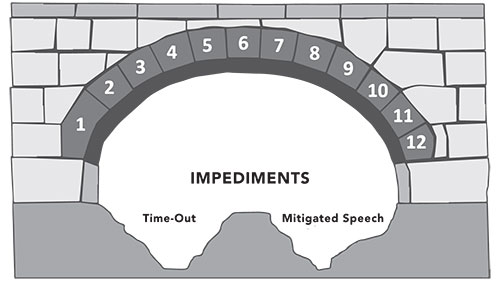
Here, we describe a dozen attributes that are necessary for military and analytics leaders alike who can succeed in our future world.
1. Self-knowledge. Humans have a tendency to believe that we know more about a topic than we actually do, the “delusion of knowledge.” Additionally, we have a “mad dash for order” [3], a bias toward pattern completion without sufficient data and a discomfort with the incomplete or unexpected, the departure from our preconceptions. It is vital that we learn to tolerate that unsettlement and, with sufficient pursuit and sagacity, find the new status or pattern. It is important to understand our preconceptions and those of a speaker, teacher or author. It is also essential to realize we humans have predictably systematic irrational aspects. Our preconceptions can distort our interpretation of new information. To minimize this, we should ask many thoughtful questions and invite unmitigated feedback.
Affiliating with those who have discovered the challenging festival of learning can be motivating. Positive feedback and praise for the work and effort are conducive to motivation. “Reliance on externally bestowed rewards by themselves diminishes self-directed learning, partly because they can be perceived as reducing independence and increasing external control” [4].
2. Understanding learning and the art of self-teaching. It is possible to be taught how to learn faster and more efficiently and develop a level of expertise in a skill. Good teachers are powerful catalysts for learning. Mentors are a gift: seek and appreciate them. Traditional face-to-face instruction is, en masse, substantially superior to digital-only instruction as currently constructed. Learn how to optimize practice and improve memory. Learn, engage and use the material; then, teach the new knowledge. By teaching, you get a self-assessment and learn more. “You don’t really know it until you can teach it” [3]. Collective learning empowers: engage smart groups; seek advisers; request feedback. Use andragogy (adult learning) to guide digital access and learning that is personalized, not just adaptive. Facilitate microstates (temporary confluences that inform).
3. Critical thinking and problem-solving. Asking the right questions is central. What are the components? How/why did this evolve? Why is it important? What parts need to be addressed and how do the parts fit together? Are there similar problems in other fields? Is the problem different at other scales? Can we flip this insoluble dilemma and turn it to some advantage? Surround yourself with smart people and practice elegant listening. Statistical literacy is essential in today’s technological world: without it, you are frequently at a cognitive disadvantage and easy prey to bad science and computational propaganda. Consider biomimicry; we are surrounded by nature’s myriad models of solutions and success.
4. Flexibility and adaptability. Humans are complex adaptive systems. We must rapidly adapt to today’s accelerating rate of change. Be resilient and failure-tolerant on the road to success; use microstates for advice to reframe and remix. Being able to say “I might be wrong” is essential.
5. Communication skills. The most common delusion about communication is that it has occurred (attributed to George Bernard Shaw). The amazing thing is not that we miscommunicate, but that, from time to time, we do communicate. We each have different vocabularies, privacies of reference and idiolects.
“Technical accuracy and semantic precision do not equate with effectiveness” [5]. We never respond to the full complexity of the message. The dialectic of social signals is as close as we come to a universal language. George Orwell’s observation that language shapes thought reminds us that rhetoric is ubiquitous and that teaching is a method of increasing our own understanding.
6. Collaboration. One should exercise collaborative and teaming behavior, including across networks, disciplines and cultures. Much of modern work is done in teams. Collective learning is central in andragogy, including heutagogy (self-determined learning). Collective intelligence is correlated with having smart members and the strength of strong ties, both within the team and in the external network. Collaborations are conducive to tacit knowledge transfer. “Come now, let us reason together” is part of ancient wisdom literature (Isaiah 1:18) and today is espoused in Silicon Valley technology firms.
7. Executive authority and entrepreneurialism. Leadership, initiative, capacity for self-directedness, the formation of a team of peers through influence, guidance of self and others, trustworthiness and sufficient concern for one’s fellows form a composite skill set of high value. Leadership is most commonly learned from mentors, role models and experience via tacit (expert, contextualized) knowledge.
8. Curiosity and imagination. Develop the art of asking good questions. Epistemic curiosity, questioning and interested exploration fuel learning. Additionally, novelty fosters initial attention and humans have an intrinsic desire to explore the novel. What are the first principles involved, the parts, the features of arrangement and the history? One should question defaults. What do both our successes and failures teach us? Could I be wrong? Is this approachable at a different scale? What’s next?
9. The “now.” Immediate benefits accrue to mastery of current needed understanding and skills. Seek “best in class” with a goal of exceeding it. Motivation, the right type and amount of practice, the art/science of learning and expertise are the attributes of success.
10. Foresight. Foresight can bring insight. In our world of unending accelerating change, awareness of future forces and emergent, unfolding disruptions of prevalent paradigms are critical abilities. Early recognition of new opportunities, impending problems and onrushing dilemmas is required.
11. Creativity, inventiveness and originality. “Coming up with a large number of ideas produces a high chance of originality” [6]. This applies to individuals and smart group brainstorming. New mistakes with reflective discernment can have creative value. A combination of knowledge in a field plus artistic hobbies increases the chance of creativity. Mixed groups from different disciplines with diverse backgrounds and free-flowing feedback are often creative. Analysis of big data sets with artificial intelligence (AI) may find new patterns that are the catalysts for discovery and creativity.
12. Favored information access. Knowledge access brings choice and power. Mastering search and optimizing information access and understanding the infrastructure of information with its network structure, barriers and tolls are essential. This meta-knowledge spans multiple traditional and digital domains. Information is found in the minds of experts, mentors, teachers and groups, through traditional and digital searches, sensing, experimentation, AI/ML, big data, pattern recognition, data literacy, combinations of routes and, at times, knowledge brokers or organizational membership. Reference librarians, information scientists and knowledge brokers are options for selective use. A major new advanced information-gathering system for the DoD to access knowledge from the expanding frontier of science and technology (an Eratosthenes affiliation) has been described and recommended in the book “Cognitive Superiority, Information to Power” [7].
Impediments
We see two current impediments to optimizing military learning:
- Time-out taken to pursue postgraduate education may impede career advancement, dependent on timed command levels or experience. This needs to be fully addressed.
- Mitigated speech can come from differences in rank – that is, not having the skill set to simultaneously maintain the command rank distinction and invite open feedback with “radical candor” [8].
The dozen cognitive strengths and skills provide the support to build a bridge across the impediments, as illustrated in Figure 1.
Last Words
The imperative of learning faster than our enemy is patently obvious in our age of unending, accelerating change and the exponential increases in technology and science. Open, unmitigated debate within and outside of the DoD is vital. Information is ascendant in power. Ergo, if your profession involves the defense of freedom, it is your responsibility and duty to be the best lifelong learner you can be. Smarter wins the future.
References
- Ignatius, A., ed., 2019, “How to learn faster and better,” Special Issue, Harvard Business Review.
- Senge, P. M., 2006, “The Fifth Discipline: The Art and Practice of the Learning Organization,” New York: Doubleday.
- Schweitzer, G., 2019, Personal communication with Professor of Nuclear Chemistry at University of Tennessee, September. (K. Jobson, Interviewer)
- Krishnan, K. R., 2015, “The Art of Learning: Learn to Learn,” Lexington, KY: Art of Learning.
- Shannon, C. E. & Weaver, W., 1963, “The Mathematical Model of Communication,” Champaign, IL: University of Illinois Press.
- Grant, A., 2017, “Originals: How Non-Conformists Move the World,” New York: Penguin Books.
- Hartley, D. S. & Jobson, K. O., 2020, “Cognitive Superiority: Information to Power,” New York: Springer.
- Hastings, R. & Meyer, E., 2020, “No Rules Rules: Netflix and the Culture of Reinvention,” New York: Penguin Press.
Kenneth O. Jobson, M.D., is chairman of the board of the International Psychopharmacology Algorithm Project (www.IPAP.org) and a retired psychiatrist. Dean S. Hartley III is principal, Hartley Consulting, which provides operations research support to military, medical and commercial organizations. Glenn Hodges, Ph.D., LTC, is an assistant professor in the MOVES Institute at the Naval Postgraduate School. Curtis Blais, Ph.D., is a research associate, MOVES, Naval Postgraduate School. Chuck Jones, Ph.D., is a retired psychologist, artist and director of research at Inogen. Dave Penniman, Ph.D., is a retired information scientist and past dean of the University at Buffalo School of Informatics. Maribel Koella, SIOR, CCIM, CRIE, FRICS, is owner/founder of NAI Koella/RM Moore.
([email protected])

([email protected])


([email protected])

([email protected])

([email protected])
([email protected])

([email protected])