
November 30, 2022 in Student Perspectives
Deep Learning Indaba: A View on Diversity in AI
SHARE: PRINT ARTICLE: https://doi.org/10.1287/orms.2022.06.12
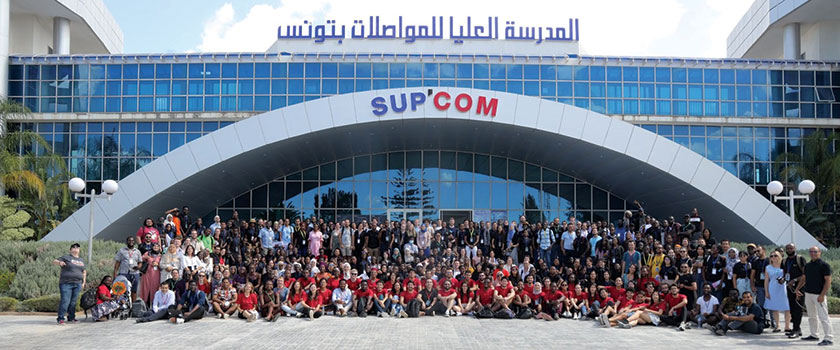
Artificial intelligence (AI) is undoubtedly experiencing massive acceleration, with incredible breakthroughs in language understanding, protein folding, mathematical reasoning and beyond. With the rapid expansion of AI capabilities, companies and organizations are rushing to adopt AI technologies to gain a competitive advantage. However, as the field of AI continues to grow and evolve, there is growing concern that the AI community is not diverse enough. There is no doubt that the AI community is predominantly white and male. According to recent studies, women make up only 20%-25% of the AI workforce, and people of color make up only up to 4%. This lack of diversity is an issue within not only the AI community but the tech industry as a whole.
Empowering Africa Through AI
Although this lack of representation occurs at different stages, researchers based in Africa have had the most difficulty being represented at top-tier machine learning (ML) conferences. As the field of AI grows, it is important that the AI community becomes more diverse, and we believe that only by having a diverse set of voices and perspectives will we be able to build AI technologies that are truly inclusive and beneficial to all. But we hope for more – a movement that improves lives in a postcolonial Africa where the diversity effort goes beyond inviting a few minorities and provides time and money to find the hidden brilliance that is hard to come by due to lack of platforms, resources and peer mentoring. We hope for a place that recognizes the uniqueness of Africa and uses it as a source of inspiration, valuing community building and collaboration above all. To our amazement, a group of researchers has been leading such a movement to strengthen an ML community in Africa under the name of Indaba.
Deep Learning Indaba
Deep Learning Indaba [1] is an annual event that brings together leading researchers and practitioners in the field of deep learning from across Africa. The aim of Indaba is to build a strong deep learning community in Africa, fostering collaboration between researchers and practitioners. In 2017, a group of organizers started a summer school in South Africa, expecting 30 students to attend and learn about ML. To their surprise, they received 700 applications! This was the spark and a clear sign of the need for connection between researchers and practitioners in Africa. Since then, the event has grown into an annual celebration of African AI with more than 600 attendees, and local IndabaX events have been held across nearly 30 African countries [2], including research grants, research awards, complementary programs and a mentorship program.
Deep Learning Indaba 2022: A Post-pandemic Event
This year’s Indaba hosted 400 participants from 36 African countries and had (almost!) equal gender representation, with 47% female attendees. The event featured all the elements of previous years and more. Attendees had the opportunity to learn the fundamentals of ML, be challenged by thought leaders, see African research in all stages, and advance new workshops at the forefront of science, technology and innovation, all in the good humor that defines the spirit of Indaba Week.
Karim Beguir, Indaba 2022 chair, noted during the opening keynote that the Indaba community is already making a positive impact in the real world, including through the Indaba Grand Challenge [3], which aims to use AI to find a cure for leishmaniasis, a potentially deadly blood disease that infects more than a million people a year and kills thousands, primarily in developing countries.
Throughout the week, multiple plenary sessions and keynote talks were delivered by leaders in the AI/ML fields. Multiple parallel sessions were held each day to provide in-depth discussions on specific topics of interest, ranging from technical (Monte Carlo methods and trustworthy AI) to skill-building (research communication) and parallels on ML communities and the state of AI in Africa. The hands-on sessions provided an excellent opportunity to learn skills in practical (programming) sessions, offering participants the chance to learn about cutting-edge technologies, such as stable diffusion, causality and graph neural networks. A research day was held that included poster sessions and demonstrations. In total, more than 120 posters were presented, covering a wide range of applications from healthcare (cancer diagnosis and brain tumor survival prediction), natural language processing (NLP; e.g., underrepresented languages) and early warning systems (e.g., wildfire, crop pests, diseases) to reliable and explainable AI and reinforcement learning. The Ideathon saw 14 teams from more than 15 countries compete, overseen by eight mentors and seven judges, with ideas on a variety of topics, such as healthcare, finance, community development, food security and sign language. Finally, there were two days of workshops that covered topics such as NLP, AI in healthcare, reinforcement learning, ML at the edge, AI governance and policy.
Indaba is clearly about more than just talks and technology. It’s about networking and building relationships within the African AI/ML community. As Avishkar Bhoopchand, Indaba steering committee member and senior research engineer at DeepMind, said, “Networking is what Indaba is all about: networking, building our community and hatching the seeds for new projects and ideas for the future.”
Machine Learning Communities
In line with the core mission of Deep Learning Indaba, there are several communities devoted to tackling specific problems in AI that are pertinent to Africa: lack of African data sets, low representation of African values in popular ML data sets, model and data set bias toward African cultures, exclusion of African languages in language technologies, etc. These communities include Masakhane [4], Zindi [5], Data Scientists Network, Data Science Africa [6], SisonkeBiotik [7], GhanaNLP, EthioNLP, Lesan.AI, Makerere AI Lab, HausaNLP, MoroccoAI, NorthAfricanNLP, Women in Data, AI Kenya, Roya-CV4Africa, Lanfrica, and more. At the heart of these communities is the “Umuntu Ngumuntu Ngabantu” value, which loosely translated from isiZulu means “I am because you are.” This ethos inspires collaboration and community participation, and proposes relationality over individualism as a means to strengthen social cohesion and achieve sustainable AI development in Africa. It is based on the belief that we share our successes. These communities have used innovative techniques to address AI-related problems in their regions. For example, Masakhane, which roughly translates to “we build together” in Zulu, is a grassroots organization whose mission is to strengthen and spur NLP research in African languages [4]. The community was created in response to the problem that despite the existence of more than 2,000 African languages, they are still underrepresented in technology. The mission of Masakhane, which is composed of researchers and practitioners in NLP, linguistics and beyond, is for Africans to drive technological breakthroughs toward human dignity, well-being and equity through inclusive community building, open participatory research and multidisciplinary approaches.
One major highlight is the community jointly-published paper [8] introducing the participatory research approach, one of Masakhane’s core principles, for the machine translation of low-resource African languages. The paper won the Wikimedia Foundation’s Research of the Year Award in 2021.
Masakhane demonstrated that the participatory research method effectively addressed the issues of NLP for African languages, and SisonkeBiotik was created as a sister community focused on medicine and AI in Africa. SisonkeBiotik is an open and inclusive community of researchers, practitioners and enthusiasts at the intersection of ML and healthcare, working together to build capacity and drive grassroots research initiatives in Africa. Both Masakhane and SisonkeBiotik hosted sessions during Deep Learning Indaba 2022, with Masakhane focusing on NLP for low-resource languages and Sisonke on the state of healthcare and AI in Africa.
What’s Next?
The final day of Indaba 2022 was a tough farewell – a testament to the strength of the community. The real work starts when attendees go back to their institutions and engage in high-quality research – this is what will truly elevate the community. Beyond the deep (obvious) gratitude that goes out to the organizing committee, volunteers, participants, sponsors and all those who shared their brilliant research and wrote about Indaba, this article is a tribute to the core mission of the event and a call to all those who wish to join this movement to advance artificial intelligence in Africa and beyond. As a reader, you are therefore strongly encouraged to reach out to the aforementioned research groups to learn more about and participate in the exciting work currently being conducted in Africa. To achieve the goals of Indaba, we, as a community, will need the continued support of all sectors. If you, an organization or any other stakeholder can support our mission in any way, as a financial supporter, as a sponsor of prizes or in outreach, fundraising and awareness, please contact [email protected].
References
- https://deeplearningindaba.com/
- https://deeplearningindaba.com/2022/indabax/
- https://deeplearningindaba.com/grand-challenges/leishmaniasis/
- https://www.masakhane.io/
- https://zindi.africa/
- http://www.datascienceafrica.org/
- https://www.sisonkebiotik.africa/
- Nekoto, W., Marivate, V., Matsila, T., Fasubaa, T., Fagbohungbe, T., Akinola, S.O., Muhammad, S., et al., 2020, “Participatory research for low-resourced machine translation: A case study in African languages,” Findings of the Association for Computational Linguistics, Stroudsburg, PA: Association for Computational Linguistics, https://aclanthology.org/2020.findings-emnlp.195/.
Yassine Yaakoubi is a postdoctoral researcher in the Stochastic Mine Planning Laboratory at McGill University. His research interests lie in combining machine learning and mathematical programming to solve large-scale combinatorial optimization problems. His current research focuses on the design of novel reactive/learning metaheuristics for optimizing smart(er) industrial mining complexes. He is an editorial board member for OR/MS Tomorrow, the student magazine of INFORMS. Chris Emezue is a research student at Mila - Quebec AI Institute and the founder of Lanfrica, where he works on accelerating the development of AI applications in African and underrepresented regions. He is currently enrolled as a master’s student at the Technical University of Munich. He is an active member of Masakhane and SisonkeBiotik, where he focuses on natural language processing for low-resource African languages and machine learning for healthcare, respectively.