
May 1, 2023 in Viewpoint
A Brief Historical Perspective on Integrating New Decision Support Technology into the Supply Chain Management Decision Process
SHARE: PRINT ARTICLE: https://doi.org/10.1287/orms.2023.02.07

There have been substantial improvements in artificial intelligence (AI), machine learning (ML), optimization, database and visualization technology over the past 15 years. In fact, some optimization folks [1] consider optimization part of AI and very different from ML. But the challenge remains on how to best incorporate these evolving new technologies into organizations with the goals of improved decision-making and organizational performance.
Here, I’ll offer an historical perspective on this challenge. Since 1976, first at IBM and for the past nine years at Arkieva, I’ve observed the efforts in supply chain management (SCM) to apply decision technology to support scientific discovery and improve organizational performance. Decision technology is an old term, but one I prefer: It recognizes a diverse and growing set of technologies (probability and statistical models, discrete optimization, machine learning, expert systems and more) that help humans make smarter decisions.
In the 1970s, operations research (O.R.) and statistics – the equivalent of today’s data science and machine learning rage – were grounded on four pillars.
Humans have their strengths, but also weaknesses, such as cognitive limitations. Organizations have cognitive limitations as well [2]. Humans make tools to help with physical activities and augment our cognitive abilities. Organizations must recognize the same need. The tools should support human and organizational decision-making [3]. The eventual use of any invention is not clear when first deployed. For example, the original role of telephones was envisioned to replace the telegraph by transplanting Morse code with voice. A century later, nearly every desk housed a telephone, and now the phone travels with us and doubles as a camera and search engine.
In 1977, the best and the brightest in O.R. were working on how to effectively integrate information and decision technology. Two early applications included the Executive Information Network (EIN), which enabled executives to keep track of events and finances in the field engineering business (repair of computer hardware), and the tax optimization model to evaluate different tax strategies to legally minimize tax costs.
A huge impediment to these systems at the time was the lack of any display devices that could handle full screen (Windows today). Interactive meant punch cards and printed reports. As the aforementioned core technologies became commonplace, the new hot technology was the decision support system (DSS). Two of the original DSS research papers were:
- “Interactive Computer Systems for Managers a Modest Proposal” by Peter Keen.
- “Models and Managers: The Concept of a Decision Calculus” by John Little.
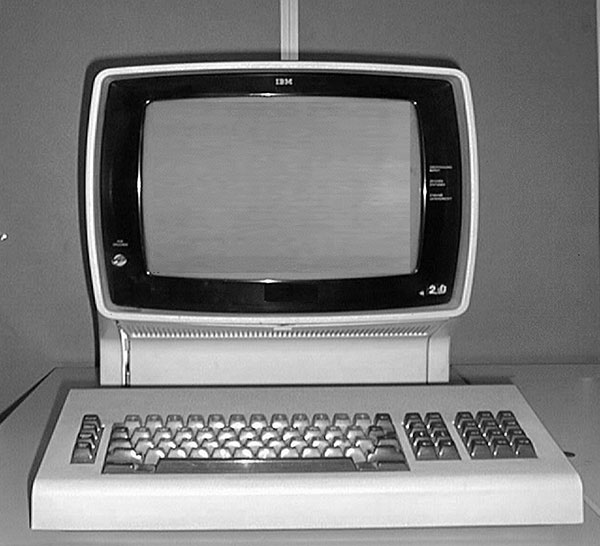
In the 1980s, interactive computing became a mainstay of advanced organizations [4], just as the AI wave emerged. The core AI technologies at the time were expert systems, search algorithms, natural language processing, fuzzy sets and early aspects of statistical learning. Access to the correct data was, as is now, a challenge. But the primary question was how best to use this technology in organizations to support rather than replace the human role.
This AI wave culminated in the late 1980s with two books: “Innovation Applications of Artificial Intelligence” by Herbert Schorr and “The Rise of the Expert Company” by Turing Award winner Ed Feigenbaum, who established the concept of community intelligence, which directly addresses organizational cognitive limitations.
“It is new a kind of entity – a community intelligence born from the collective wisdom of various disciplines, experiences, and points of view, which dynamically disseminate the new intelligence around the same community that engendered it, solving problems that are too tough for us humans to figure out.” [Feigenbaum, pp. 63-64]
The late 1980s and early 1990s saw the sunset of the AI wave, although the technical innovations continued. We saw the reemergence of discrete optimization (mixed-integer linear programming) driven by improvements in solvers, hardware, modeling environments and interest from major industries. Again, the primary question was how best to use this technology in organizations to support versus replace.
The mid-1990s saw the emergence of modern SCM, comprising two primary areas: demand management (DM) and integrated master or central planning engines (CPEs) [5]. A third area, sense and respond (SaR), arrived in the early 2000s [6].
In DM, the critical challenge was and remains:
- Better statistical methods (now including machine learning) to extract the most information from the data available.
- How to effectively merge statistical methods with human knowledge.
- How to best manage the human expertise.
Support for these challenges comes from proactive methods involving machine learning. One post begins: “If you think machine learning will replace demand planners, then don’t read this post. If you think machine learning will automate and unleash the power of insights allowing demand planners to drive more value and growth, then this article is a must read” [7].
The emergence of CPEs is attributable to a combination of technology and business awareness. The technology is the improvement in optimization methods, whereas the business awareness is the recognition that supply chains are ever more complex and demand tools to support planners and enterprises, but not replace them. The role of the planner can shift to application, rather than roles from just generating results. Sense and respond, with its origins in O.R., has become embedded in all best-in-class SCM organizations.
Improving the value of DM, CPE and SaR to augment human and organizational decision-making is an ongoing challenge. The INFORMS Edelman Award Competition makes this clear [8].
References
- https://www.princeton.com/
- Jay R. Galbraith, 1973, “Designing complex organizations,” Boston: Addison-Wesley.
- https://en.wikipedia.org/wiki/Administrative_Behavior
- Jon McGrew, 2016, “Forgotten APL influences,” https://pok.acm.org/meetings/foils/McGrew18paper.pdf.
- Ken Fordyce, Alfred Degbotse, John Milne, Robert Orzell and Chi-Tai Wang, 2008, “The ongoing challenge – An accurate assessment of supply linked to demand to create an enterprise-wide end to end detailed central supply chain plan,” 2008 Winter Simulation Conference, IEEE, doi: 10.1109/WSC.2008.4736329.
- Steve Buckley, Markus Ettl, Grace Lin and Ko-Yang Wang, 1970, “Sense and respond business performance management,” Supply Chain Management on Demand, pp. 287-311.
- https://blogs.sas.com/content/sascom/2018/04/17/how-machine-learning-is-disrupting-demand-planning/
- https://www.informs.org/Recognizing-Excellence/INFORMS-Prizes/Franz-Edelman-Award
Ken Fordyce is the director of analytics without borders at Arkieva. He joined Arkieva in 2013 after completing a 36-year career with IBM covering a wide range of analytics applications from supply chain to colon cancer. Ken was lucky enough to be part of teams that altered the landscape of best practices in central planning, dispatch scheduling, artificial intelligence, applied optimization and data science. These teams received major awards from IBM, IBM customers, INFORMS, AAAI and POMS.