


May 26, 2023 in Member Insights
Mentorship: You Have More to Share Than You Know!
SHARE: PRINT ARTICLE: https://doi.org/10.1287/orms.2023.02.10

Bedtime research and brown suits. That’s why I became a mentor in the INFORMS Mentor Match Program. It sounds ludicrous, but sometimes the most random events can lead your research – and your life – in strange and unanticipated directions. “A butterfly flaps its wings …”
In my case, it is probably no surprise that I gravitate toward roles that provide community support. I played highly competitive team sports all throughout my youth, so a team-first mindset was ingrained in me from a young age. When I was in middle school, I wanted to be a middle school English teacher so I could help my fellow kids gain a love of reading and literature. When I was in high school, I wanted to be a high school English teacher to help my fellow teens think critically and find patterns of meaning in literature. Of course, I eventually majored in industrial and systems engineering instead and, in fact, had plans to do an MBA and go into the cutthroat corporate world of mergers and acquisitions, but at some point – specifically, when my father passed away while I was an undergraduate student and my mother spent hours telling me about all their now-gone retirement plans to do fulfilling things after decades of putting off fun in favor of long, hard workdays – I decided that spending the best years of my life chasing money might make me rich, but it would not make me happy. Life is short; what’s the point of doing something if it doesn’t make you happy? So, surprise, surprise, as a Ph.D. student, I again imagined myself becoming a university professor so I could pass on my knowledge and help people grow and succeed in their lives and careers. Thus, here I am, researching healthcare topics and mentoring the next generation of the operations research (O.R) community.
I’ve shared this vignette of my life and career plan evolution with numerous undergraduate and graduate students, and many have told me that it made them reevaluate their career plans or their research areas. Others have said just hearing that someone else has had life struggles similar to theirs makes them feel like they can still persevere and succeed. How many of us have had similar moments in our lives? How many people could you help by sharing that story with others? That’s what mentorship is about: standing on the shoulders of giants. When we want to advance O.R. methodology, we look to the literature to learn about past approaches and successes, and we grow the field from there; it should be the same for career and life advancement, reaching out to senior members of the research community and learning and growing from their experiences.
Back to bedtime research and brown suits. More than a decade ago, I had just started researching an O.R. approach to modeling pandemic disease spread but was struggling to get funding (too out-there for epidemiological/medical funding agencies, not mathematically sexy enough for engineering funding agencies). So, I was developing models and writing code in my spare time. I happened to talk to Sheldon Jacobson about how I loved the work and felt it was important but didn’t know if I should continue doing it without being able to get funding because I did not yet have tenure. Sheldon called it “bedtime research” – research that you do before bed when you have a few extra minutes because you are passionate about it – and told me everyone should follow their passions, and funding and publications would eventually follow when, at some inevitable point, that area becomes hot and you’re the foremost expert because you’ve been in that field for years instead of just hopping from one hot topic to the next chasing grants (and if it didn’t become popular, at least you were doing something that made you happy). So, I kept at it, and we all know how hot pandemic research became. I have spread the word about bedtime research high and low ever since.
However, some years before that, at a panel session for Ph.D. students on the academic job market, a panelist told us that he would never hire anyone wearing a brown suit. I looked at my fellow students and at the brown and red-pinstriped suit I was wearing and thought, “We deserve better advice than this.” Later, another panelist shared the single most impactful piece of advice possible when the discussion turned to pre-tenure priorities. All of the panelists spoke about the need to focus on publications and funding, but this panelist said his top priority in the tenure process was to stay married. It is easy to lose the forest for the trees, but never forget the big picture of being happy.
Programs created by INFORMS to connect established faculty with young researchers, such as the Mentor Match Program and Coffee with a Member, help me connect with the next generation and share what I have learned in my years to help them succeed. I have benefited greatly from advice given to me, so it is the least I can do to spend 30 minutes during a conference with a junior faculty member or graduate student and pass on that advice. I have had regular contact with some of my mentees for years, and their successes give me some vicarious sense of achievement myself. It’s rewarding. It feels good to lift up the O.R. community, and if nothing else, INFORMS Coffee with a Member picks up the tab – and who doesn’t like free coffee?
Dionne Aleman is a professor of industrial engineering in the Department of Mechanical & Industrial Engineering at the University of Toronto and director of the Medical Operations Research Laboratory. She is general co-chair for the 2023 INFORMS Healthcare Conference.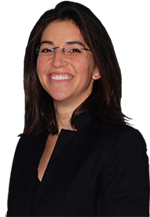
([email protected])