

June 20, 2023 in Member Insights
“To My Younger Self” Mentorship Program
Guidance for universities and professional communities to improve student mentoring
SHARE: PRINT ARTICLE: https://doi.org/10.1287/orms.2023.02.19
The field of operations research and analytics suffers from a “leaky pipeline” in which female students are disproportionately more likely to leave academia than their male counterparts [1]. The causes of this are complex and systemic; however, one possible solution is improved mentoring for these students. Although some universities offer structured mentoring programs, other schools use a decentralized approach: Some doctoral advisors provide such coaching and others don’t. Many women who have successfully risen to the ranks of full professor, department chair and beyond did so despite not having adequate mentoring along the way.
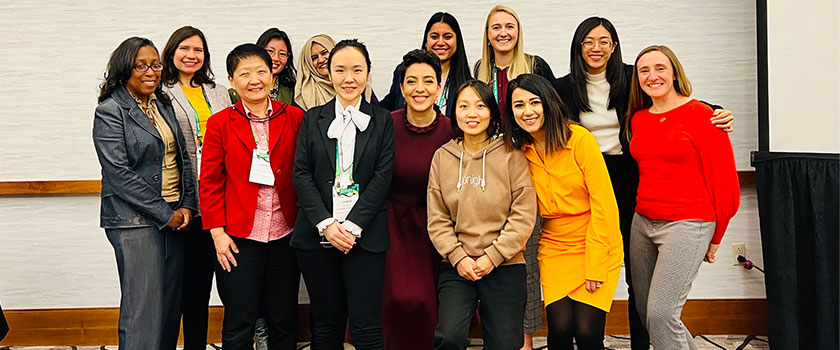
In 2022, the authors were selected as INFORMS Diversity, Equity and Inclusion (DEI) Ambassadors. The INFORMS DEI Ambassadors Program (https://connect.informs.org/diversity/ambassador-program) provides small grants to teams of INFORMS members to support programs that advance diversity, equity and inclusion in the profession. Our INFORMS DEI Ambassadors project, “To My Younger Self” (TMYS), provided professional development to 10 women – all doctoral students – through a tiered set of activities that allowed them to interact with more experienced women in the field as well as with their peers. We called this program “To My Younger Self” because many of the invited workshop facilitators, mentors and panelists provided the sort of mentoring and professional development coaching they wish they had received earlier in their careers.
The purpose of this article is to outline the structure of TMYS and provide guidance for universities and professional communities to improve their doctoral student mentoring.
The need for structured mentoring and peer support is acute among current doctoral students. In early February 2022, we announced a call for student participants, inviting applications from women-identifying Ph.D. students in their third or fourth year with academic career aspirations who would not be graduating during 2022. As we reviewed the applications, we were particularly struck by how the COVID-19 pandemic affected this cohort of graduate students. Some applicants spent most of their graduate study learning remotely and were lacking peer support. Many had never attended a conference. Prioritizing applicants with limited mentoring infrastructure at their home institution, we selected 10 participants for TMYS 2022.
TMYS 2022 offered a multitiered mentoring structure. Mentoring is not without its challenges, some of which include personality mismatch, inattention by the mentor, erroneous or ill-informed advice from the mentor, or even abuse and manipulation [2]. TMYS is structured to provide opportunities for mentorship across multiple tiers: paired mentoring, virtual professional development workshops, peer mentoring and a celebratory dinner. The combination of these components ensures consistent and multimodal engagement with the program throughout the year. Several videos and blog posts originating from TMYS 2022 and its participants are publicly available on the web, further extending the reach of the program (see references [3-7]).
Paired Mentoring
We created mentor-mentee pairs, identifying for each student participant a senior woman faculty mentor who came from a different (but similar) institution as the student. The mentors were established women in the operations research and analytics profession with a track record of excellent mentorship, including past recipients of the WORMS Award for the Advancement of Women in OR/MS. Mentors and mentees were encouraged to have monthly virtual meetings, and we provided suggested discussion topics following the themes of the bimonthly virtual workshops. Many mentor-mentee pairs met more frequently, and some continue to meet regularly even after the program’s completion. We are grateful to the dedication of the eight faculty who served as mentors in addition to ourselves: Lauren Davis (North Carolina A&T), Leila Hajibabaie (North Carolina State), Dorothee Honhon (University of Texas at Dallas), Siqian Shen (University of Michigan), Alice Smith (Auburn University), Beril Toktay (Georgia Tech), Candace Yano (UC Berkeley) and Shengfan Zhang (University of Arkansas).
Virtual Professional Development Workshops and Peer Mentorship
Bimonthly virtual workshops covered a variety of topics important for doctoral students preparing for academic careers:
- Workshop 1: Developing Your Professional Workshop
- Workshop 2: Preparing for the Job Search (S. Shen and B. Toktay)
- Workshop 3: Imposter Syndrome and Wellness (coaching session led by Jessica Dowches-Wheeler of Bright Space Coaching)
- Workshop 4: Practice Presentations for the INFORMS Annual Meeting
- Workshop 5: Academic Life (A. Smith and C. Yano)
Except for Workshop 4, each workshop started with a brief presentation on the topic by a speaker or panel and was followed by discussion and breakout sessions with mentor-mentee groups. Workshops 1, 2 and 5 were facilitated by the TMYS mentors. Workshop 3 about imposter syndrome and wellness was facilitated by professional coach Jessica Dowches-Wheeler. In Workshop 4, the student participants presented research talks in preparation for the INFORMS Annual Meeting.
Midyear student feedback reflected a desire for more peer interaction opportunities, so we incorporated peer breakout sessions into the end of the final three virtual workshops.
Celebratory Dinner
During the 2022 INFORMS Annual Meeting in Indianapolis, student participants and mentors gathered for a celebratory dinner. For most, this was their first opportunity to meet face-to-face, and it was a great opportunity to cement friendships.
Public Dissemination
To broaden the impact of the TMYS program, Workshops 1, 2 and 5 were recorded and posted to the INFORMS Diversity Community Connect page and INFORMS YouTube channel [3-5].
Additionally, several participants wrote short blog posts about their takeaways from each workshop, which were also posted on the INFORMS Diversity Community blog [6-8].
TMYS was well-received by mentees and mentors alike. To assess the effectiveness of the TMYS program, we conducted a midyear and end-of-year survey. In both surveys, student participants reported that the networking and one-on-one mentoring opportunities were the best aspects of the program. The student responses on the final survey also reflected an increase in confidence in their ability to succeed in the profession compared with the midyear survey. To measure the long-term success of the program, the students will be contacted again in one year. We will assess the impact of the program on their career and modify future offerings of the program accordingly.
TMYS has been adopted by WORMS and is moving forward in 2023. Due to the tremendous success of the 2022 DEI Ambassador Project, the INFORMS Forum for Women in OR/MS (WORMS) has taken ownership of the TMYS program moving forward. The 2023 program is already underway. We are thrilled that some of our TMYS alumna are leading the 2023 program, and several of our 2022 volunteer mentors have also rejoined for 2023. To make this happen, WORMS introduced a new position, DEI Liaison, to the WORMS Board.
Guidance to Universities and Professional Communities
Based on our experience running TMYS in 2022 and interacting with pandemic-era doctoral students, we make the following observations and recommendations to universities and professional communities.
- Doctoral programs should establish formal mentoring programs to support their students.It is not sufficient to assume that faculty advisors will provide adequate professional mentorship beyond research supervision. Moreover, a student’s professional interests may not align with the interests of the faculty advisor, and conflicts of interest can arise. Lastly, women and students from underrepresented groups experience specific challenges that benefit from a tailored mentoring approach. The 2019 report by the National Academies of Sciences, Engineering, and Medicine outlines many evidence-based recommendations for academic mentorship programs [2].
- Professional communities, such as INFORMS subdivisions, should establish mentoring programs. Students benefit from having multiple mentorship structures, both within and outside of their departments [2]. INFORMS subdivisions are a natural gathering point for scholars of similar professional interests. Connecting students to mentors within subdivisions can yield research area-specific mentorship opportunities.
- Students benefit from cross-institutional peer networking. The student TMYS participants expressed that the ability to network with other doctoral students was a distinct advantage of TMYS. Learning from the experiences of students at other institutions can help place an individual student’s own experience within context. When going through a difficult situation in graduate school, such context can make the difference between choosing to leave the profession or staying.
- Mentoring is particularly important for pandemic-era graduate students. Today’s doctoral students are not having the same experience and opportunities many of us experienced as graduate students. The COVID-19 pandemic isolated students and limited opportunities for conference travel. For these students, the need for formal mentoring is particularly acute.
References & Notes
- Winslow and S. N. Davis, 2016. "Gender Inequality Across the Academic Life Course," Sociology Compass, Vol. 10, No. 5, pp. 404-416.
- National Academies of Sciences, Engineering, and Medicine, 2019. “The Science of Effective Mentorship in STEMM,” Washington, DC: The National Academies Press, https://doi.org/10.17226/25568.
- “To My Younger Self: A Mentoring Workshop for Women Ph.D. Students,” Workshop 1 on networking and mentorship, https://www.youtube.com/watch?v=NPEHkwsuEo4.
- “To My Younger Self: A Mentoring Workshop for Women PhD Students Second Workshop,” Workshop 2 on academic job search, https://www.youtube.com/watch?v=KHo-Xtgs6o4.
- “To My Younger Self: A Mentoring Workshop for Women PhD Students,” Workshop 5 on academic life, https://www.youtube.com/watch?v=vZAkJ5N84EQ.
- S. Safaya, “To My Younger Self 2022: A Mentoring Initiative to Bridge the Gap Between Who You Are and Who You Want to Be,” INFORMS Diversity Community, https://connect.informs.org/diversity/diversity-blog/mentoring-initative.
- L. L. Czerniak, “To My Younger Self: Workshop: Impostor Syndrome and Work-Life Balance,” INFORMS Diversity Community, https://connect.informs.org/diversity/diversity-blog/workshop-imposter-syndrome.
- R. Alfant, “To My Younger Self: Bridging the Mentorship Gap for Underrepresented Students,” INFORMS Diversity Community, https://connect.informs.org/diversity/diversity-blog/bridging-mentor-gap.
Banafsheh Behzad is associate professor of information systems at California State University, Long Beach. She is the past president of Women in OR/MS Forum (WORMS), past chair of the INFORMS Membership and Member Services Committee and co-chair of the INFORMS DEI Ambassador Program. Her research examines the applications of OR/MS to public health and social network-related issues. Susan E. Martonosi is a professor of mathematics at Harvey Mudd College and the current treasurer of INFORMS. She is past chair of the INFORMS Diversity, Equity, and Inclusion Committee, as well as co-editor of an upcoming special issue of INFORMS Transactions on Education on diversity, equity and inclusion in the OR/MS classroom. Her research examines applications of OR/MS to public policy questions, such as mitigating the spread of fake news on social media and negotiating pricing contracts for pediatric vaccines.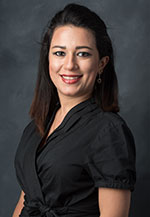

([email protected])