September 15, 2023 in INFORMS Initiatives
Increasing Underrepresented Students’ Exposure to OR/MS through K-12 Outreach
INFORMS DEI Ambassadors help student chapters initiate outreach
SHARE: PRINT ARTICLE: https://doi.org/10.1287/orms.2023.03.17

The INFORMS Diversity, Equity and Inclusion (DEI) Ambassadors Program was set up to foster collaboration and promote a diverse, equitable and inclusive operations research and management science (OR/MS) community [1]. The K-12 outreach project is a continuation of the larger 2022 DEI Ambassador Program: Strategic Initiative: High School Outreach Project [2]. During the initial phase in 2022, we created outreach materials for high school students and conducted a 1-hour virtual high school outreach workshop by collaborating with the University of Wisconsin-Madison precollege engineering summer program in July 2022. Our workshop was designed to introduce, excite and engage historically underrepresented students in OR/MS by providing information about the field and having students complete an OR/MS activity. By conducting pre- and post-workshop surveys, we saw evidence that the engagement activity improved students’ confidence that they would be successful in a computational science field.
With the help of the DEI Committee at INFORMS, we were able to launch the DEI Outreach Resources Folder [2], where individuals with an active INFORMS membership can access the workshop modules as well as contribute their own outreach materials to the folder. (Note: You must have an INFORMS login to access these materials.) We hope these resources will encourage community involvement and collaboration. To learn more about contributing to the folder, please refer to the blog post “Contribute Your OR/MS Engagement Activity to the INFORMS DEI Outreach Resources Bank” [3].
Our Current Work: The INFORMS K-12 Outreach Guide
With continued funding from the INFORMS DEI Ambassador Program, our 2023 project enhances our efforts in creating and disseminating standard materials for INFORMS student chapters to start and maintain outreach initiatives. The long-term goal of this project is to increase the exposure to OR/MS for students from underrepresented groups through high school outreach activities.
To ensure that this work would be ongoing and not a one-time project, we wanted to outline a standard high school outreach program and how to implement it so that INFORMS student chapters could conduct this kind of outreach more easily in their communities. This included compiling our lessons learned and creating a standard set of information and materials for INFORMS student chapters to ensure efficient and consistent implementation of future outreach events.
To accomplish this, we created the INFORMS K-12 Outreach Guide, which is designed to aid INFORMS student chapters in scheduling and hosting a workshop independently. It includes information such as how to find community partners and initiate communication and things to remember when putting together the workshop. The guide addresses many of the hurdles that are faced when aiming to get involved with K-12 outreach.
In the future, we envision all INFORMS student chapters will include outreach in their yearly goals. The guide may also be useful to any INFORMS member who is interested in K-12 outreach.
You Can Do It Too: How to Get Started with K-12 Outreach
It takes resources and time to connect with K-12 students, which may seem daunting. However, it is well worth establishing a yearly K-12 outreach program to move toward a more diverse and flourishing pipeline of OR/MS professionals. In the guide, we break down the process into easy-to-follow steps that will allow you to spend planning time efficiently. The INFORMS K-12 Outreach Guide is not yet complete, but we have outlined some steps to consider when beginning K-12 outreach.
- Designate roles and responsibilities. Having a team meet regularly helps determine individual responsibilities, provide feedback and create accountability – which is crucial. When planning a K-12 outreach event, we recommend a planning team of three to six people. Responsibilities may include the following.
Search for community partners and/or existing university programs. This person can expect to do a good amount of emailing and should be prepared to send follow-up emails and schedule and attend meetings with potential partners. Choosing what kind of community partner to work with depends on what kind of presence they have in your area. We found that looking for other organizations on campus that have outreach programs and asking to join their program to give a presentation was the best option. If this option is not available to you, you can reach out directly to local high schools or community centers.
Design the engagement activity. The engagement activity should be chosen or designed according to your intended audience. The person with this task will either be spending time searching for the right engagement activity or creating a new engagement activity for the students. Both options require a substantial amount of time and discernment to know what kind of activity students will respond to best. An engagement activity module on using the label propagation algorithm to select social media influencers, along with a teacher guide for the activity, can be found in the INFORMS DEI Outreach Resources Folder [2].
Present to the students. The person(s) presenting to the students should be comfortable and excited to speak with students. This person should be able to come to the workshop with an infectious energy to get the students excited about STEM.
Document progress. This role can be taken on by all members of the team at different times. Each person should keep notes of their work and the results to remember what worked and what didn’t. This documentation will make it easier to replicate the process again for future events.
- Establish communication with community partners and/or existing university programs. Prior to contacting anyone, you may want to create a standard email that you can send to each community partner to initiate contact. Additionally, you should try to keep the same person interfacing with the organization to aid in consistency and build trust.
Once you have found a potential partner, schedule a meeting to discuss what the event might look like. In this initial meeting, it may be a good idea to start with a short presentation addressing who you are and describe OR/MS and INFORMS. The goal here is to motivate community partners to see the value in their students being exposed to the event. We received feedback that these meetings were helpful in educating program leaders as to what operations research (O.R.) is and why their students would benefit from knowing more about O.R., even when we were unsuccessful in planning a specific outreach event.
- Create the presentation using the initial template provided. The presentation to the students should be engaging and relatable. For example, the first engagement activity we created focused on networks and communities, but the question we were trying to answer was: “How do I choose the influencer to represent my brand?” This activity was relatable to students, and the material focused on the thought process behind solving the problem rather than getting into graph theory. We want to show the students that they can think through a problem from start to finish. We do this by helping them map their thoughts to O.R. techniques. Examples of past presentations can be found in the INFORMS DEI Outreach Resources Folder as well [2].
- Practice your presentation. This step is incredibly important whether you are creating your own activity or using an existing engagement activity. Rehearse the engagement activity as many times as possible with as many different people as possible and ask for constant feedback. Leave yourself plenty of time (1-2+ weeks) to incorporate feedback.
- Conduct the workshop and have students fill out a survey. The survey should gauge students’ understanding and level of confidence. Ideally, after the workshop, students should have increased confidence in their ability to perform in the computational sciences.
- Review survey results and suggest recommendations for the next workshop. This is a good opportunity to look over documentation and make notes for next time. As an example, you may have found that you had a lower turnout rate for certain minority or underrepresented groups than anticipated. Consider what changes should be made (such as engaging additional community partners, accessibility considerations, etc.) to ensure you reach those students in the future.
In June 2023, the University of Wisconsin-Madison INFORMS Student Chapter participated in a workshop using the first version of the INFORMS Student Chapter Outreach Guide. This has been a great opportunity for us to see the guide used in real time and gain insight into what kinds of obstacles and questions the student chapter faced so that it can be adjusted and improved. In the future, the guide will be a “living” document in which any chapter conducting outreach can make comments and suggestions.
If you are willing to provide feedback to the guide before it is officially released, please reach out to Mary Ogidigben at [email protected], Carmen Haseltine at [email protected] or Veronica White at [email protected].
Authors' note. We would like to thank and acknowledge Liz Scaria and Katy Wrenn for helping to make this project possible.
References
- https://connect.informs.org/diversity/ambassador-program
- https://tinyurl.com/ym7akdb9
- V. White, 2022, “Contribute your OR/MS engagement activity to the INFORMS DEI Outreach Resources bank,” INFORMS Connect, April 27, https://tinyurl.com/5sb622a8.
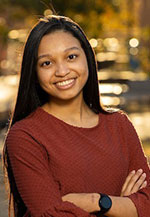
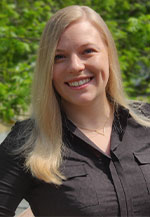
Mary Ogidigben is a third-year Ph.D. student in the industrial and manufacturing engineering department at Penn State University. Her research area is machine learning in healthcare – specifically, developing individualized risk indexes using machine-learning techniques. Carmen Haseltine is a Ph.D. candidate in electrical engineering at the University of Wisconsin-Madison. Her research focuses on security analysis of critical infrastructure systems through stochastic modeling. Recently, she has explored election security, creating mathematical models to improve equity in the voting-by-mail (VBM) process. Veronica White is a Ph.D. candidate in the industrial and systems engineering department at the University of Wisconsin-Madison. She has worked as a research assistant for the National Institute of Justice (NIJ) and University of Wisconsin-Madison’s Center for Health Enhancement Systems Studies (CHESS). Her research interests involve using operations research, analytics and decision science to application areas at the intersection of public health and safety (e.g., substance use, mental health, public policy, policing, healthcare access, criminal justice and homelessness).