
December 18, 2023 in International O.R.
Words Are Mightier Than Sword
SHARE: PRINT ARTICLE: https://doi.org/10.1287/orms.2023.04.11

“We cast a shadow on something wherever we stand … choose a place where you won’t do very much harm, and stand in it for all you are worth.” — E.M. Forster, “A Room with a View”
Recently, large language model (LLM) applications have taken the world by storm, with ChatGPT becoming one of the most recognizable consumer products in this domain. What roles do words play in healthcare artificial intelligence (AI) models? Where should we stand between progress and risk, especially concerning how young people make health decisions based on AI recommendations? Our research is aimed at providing a deeper understanding on what AI recommendations and its implications on healthcare application human-computer interaction (HCI). We selected Japanese young adults (YA) for our pre-pilot phase because they exhibit unique characteristics that could yield insights applicable to other countries.
Healthcare applications are special because of their sensitive nature and the need for proper communication between user and machine. A successful AI application in healthcare must be both a trusted partner and a knowledgeable advisor [1]. Four critical elements include:
- Conversational AI, paired with Explainable AI, could address some of the trust issues, provided that the AI suggestions are accurate for obvious reasons. Conversational AI is how to make an AI machine talk to people in the same way a human would, allowing users to ask the machine for information in a natural manner as if they were talking to another human.
- Explainable AI ensures that an AI program can explain its decisions and the logic behind it, enabling users to fully grasp the rationale and be comfortable with the reasoning.
- Context and language are important because healthcare is inherently dependent on both, thus requiring precise narrative reasoning to truly understand a patient’s perspective.
- The Turing test states that if a human cannot distinguish the answer of a machine from a human one, then the machine has passed the test. However, this test is neither necessary nor sufficient in this context because users are more concerned about the quality of the answers than who formed them.
Survey of Japanese Young Adults
To explore the working of HCI, we performed a pre-pilot program (an online survey to the undergraduates of a Japanese university) with Japanese YA (collected 22 responses) and found that they are 2.8% more likely (as evidenced by a higher likelihood-to-follow score in the test case recommendation) to follow AI recommendations if the cases were presented in their YA language [2]. We started with Japanese YA for several reasons. First, this group is among the most technologically adoptive, meaning they would be comfortable with the survey questions. Second, the timing of our research (survey finalized in April 2023) aligned well with the Japanese academic calendar, as we plan to expand to other countries near the end of the year. Furthermore, given the global influence of Japanese culture, we felt it would be a strategic start.
We presented the group with two cases: vaccination (the base case, presented in standard Japanese) and diabetes (the test case, rewritten by ChatGPT-4 using popular Japanese YA writing as the style source). We divided the questions into three parts: (1) respondents’ attitudes toward technology and health; (2) their reactions to the cases presented and (3) their demographics (the potential confounders).
We found that the survey respondents are tech-savvy and embrace AI without fear. Even though they exhibit consistent preference and viewpoints for both cases, their decisions to follow AI advice are still influenced by the language used, even after accounting for other confounders. In addition, they prefer AI recommendations to those from “authorities” such as school and parents.
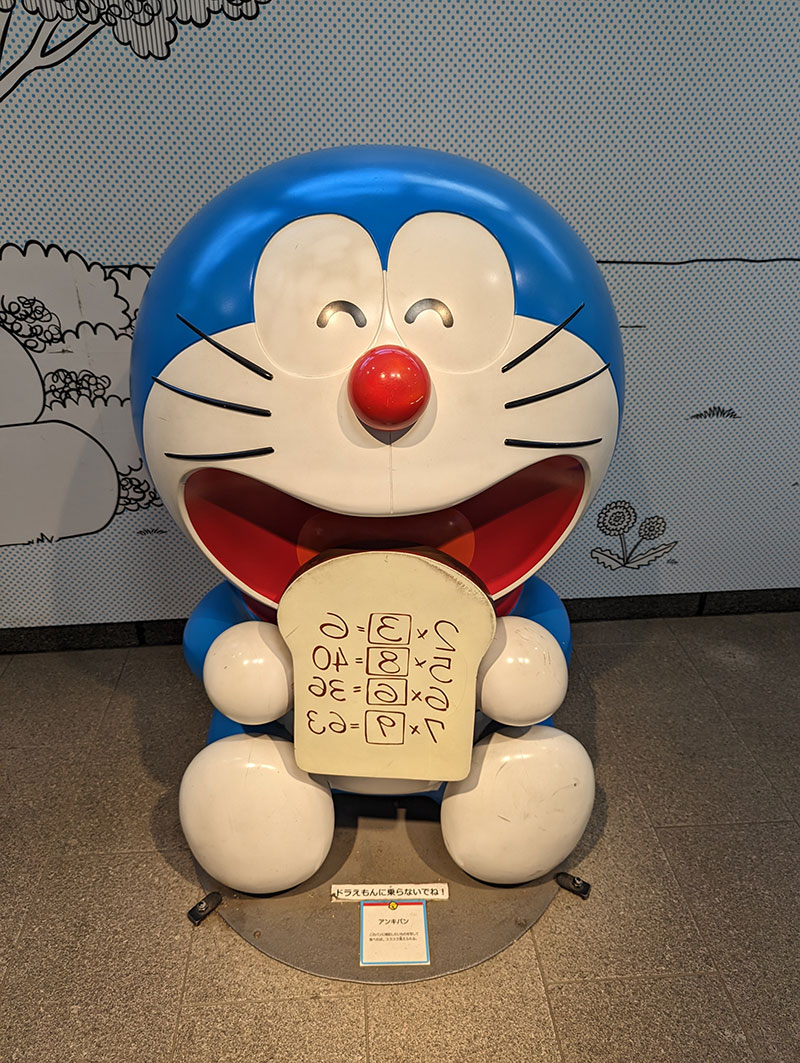
Why do the Japanese YA tend to follow AI recommendations when they are presented in their language? It is not due to intellectual ability (they are all university students) or technophobia. One plausible explanation is the unique “Kawaii” culture (loosely translated as cuteness). Yomota observed a distinct Japanese aesthetic appreciation for the concept of “Kawaii” [3]. A prime example of this is “Doraemon,” an endearing robot cat (see right) assisting the main character, Nobi Nobita, with his daily challenges. This cultural artifact suggests a broader Japanese inclination to infuse tools with a “Kawaii” essence. Notably, Japan’s pioneering invention of the robot pet underscores a cultural narrative in which robots are perceived more as human companions than threats.
This enduring Japanese affinity for objects that evoke sentiments of endearment has historical roots spanning over a millennium. In contemporary terms, “cuteness” predominantly revolves around youthful entities. These entities, marked by innocence and purity, often evoke a protective instinct, underscored by their playful gestures. These cultural undertones offer an explanation of their affection for cute language even within the context of healthcare. This implies that “one app does not fit all” – a localization of software goes beyond language translation even for simple healthcare applications. It would be intriguing to see if this applies to other cultures.
To conclude, words do matter, even in educated tech-savvy young adults. This underlines the necessity that AI healthcare application developers may need to develop different versions of software to cater to different demographic segments and cultures. Our future research plan includes other countries, such as Hong Kong, Taiwan, Japan, the U.K. and the U.S. We are particularly interested in how socioeconomic status and ethnicity may affect our results, especially when employing gamification to offer a more realistic and engaging user environment. We do need to take a stand on our first rule, “do no harm” – a mantra of paramount importance in the realm of healthcare applications.
Authors’ note. The opinions expressed in this article are their personal views only and do not represent those of their employers and affiliations.
References and Notes
- Further details on AI healthcare application framework can be found in Aaron Lai and Thomas Ming, 2023, “Why does AI fail in healthcare?”, Transactions on Computational Science and Computational Intelligence, Springer.
- This article is based on the presentation “To Turing and Beyond? Not yet for Chatbot in Clinical Settings” from INFORMS Healthcare Conference 2023 in Toronto, presented by Aaron Lai, Thomas Ming, Daniel Young and Cyrus Chan.
- Yomota, Inuhiko, 2006, “The Culture of Kawaii,” Tokyo: Chikuma Shisho.
Aaron Lai, CFA, serves as a Senior Fellow of the Krenicki Center for Business Analytics and Machine Learning at Purdue University. He possesses extensive experience within the healthcare industry and is presently in the Doctor of Technology program at Purdue, with research concentrating on LLM triage in critical care scenarios. The perspectives presented herein represent his personal views and may not necessarily align with those of his employer or other affiliations. Tefahrn Thaledt is as a part-time lecturer of English and philosophy at Saga University.