February 12, 2024 in Subject to...
If Dantzig Had a Sister
SHARE: PRINT ARTICLE: https://doi.org/10.1287/orms.2024.01.06

February 11 is the International Day of Women and Girls in Science. We exploit some quotes from Virginia Woolf’s “A Room of One’s Own” [1] to discuss why there is still the need for such days as well as the challenges faced by women in operations research (O.R.) past and present.
In her 1929 essay, Woolf pretended that William Shakespeare had a sister, Judith, as brilliant and talented as him to reason about the social disadvantages and prejudices women dealt with and the lack of their production in literature at the time. Let’s adopt a similar reasoning by assuming that, besides a brother, George B. Dantzig, one of the pioneers of O.R., had a younger sister. Let’s call her Emmy to honor Amalie Emmy Noether, the 20th-century German mathematician whose contributions to algebra are considered as important as Einstein’s theory of relativity [2].
Gender Inequality in STEM
“Women need exercise for their faculties and a field for their efforts as much as their brothers do ... it is narrow-minded ... they ought to confine themselves to making puddings and knitting stockings.”
Emmy Dantzig would have loved mathematics from a young age. However, during her classes in school, she would have been taught different subjects compared with boys her age, as happened to Greet Vanden Berghe, who was given knitting courses while boys learned history, politics and science [3]. Maryam Darvish mentioned the different rules and expectations for boys and girls set by society and families in Iran (still present today), proving that in some countries, the situation is even more challenging [4].
Suppose Emmy would have studied mathematics or engineering in the 1970s, perhaps at MIT, where she would have been part of the 4% of women there, never had a female professor, and signed her tests with just “E.,” similar to what Margaret Brandeau used to do to be impartially evaluated [5]. Later, Emmy would have started working on O.R. topics by discussing them with her brother. If she had a presentation on her research, she would have probably stood out among the others, like Anna Nagurney during her first conference in Monterey, California, in 1979, where she was the only woman in attendance [6].
Negative Experiences and Challenges
“Possibly when the professor insisted a little too emphatically upon the inferiority of women, he was concerned not with their inferiority, but with his own superiority.”
Being a woman, would our fictional character have been as supported as her brother was by their parents? We cannot know. When Claudia Archetti finished secondary school, she was not asked if she wanted to go to work or continue studying – as her brother was three years prior – and her mother told her to manage herself and work to pay for her studies [7]. If Emmy had pursued an industrial career, she might have been given extraordinarily boring work just for being a woman and therefore not be expected to stay in the job for many years, which happened to Karla Hoffman [8]. Otherwise, if she had gone to academia, she might have been discriminated against in a similar way, much like Margarida Carvalho, who was expected to decide on trivial matters (such as food at a coffee break) when organizing a conference [9], or Phebe Vayanos, who was assumed to be a professor’s assistant during a conference in which she was a session chair [10].
During meetings, Emmy would have risked being interrupted much more than men, as Sophie Parragh and Helena Ramalhinho Lourenço observed [11, 12]. Or, she would have been more contested just for being a young female professor, as assumed by Sin Ho [13]. She would have been speechless if a colleague of hers told her to “be at home and raise kids” because being a researcher “is not a job for a woman” or that she would have taken away a seat for a man, which happened to Martine Labbé and Pooja Dewan [14, 15], respectively. Also, Emmy could have received subtle comments to question her teaching qualities, as Claudia D’Ambrosio shared [16]. Young and at the start of her career, Emmy would have probably doubted herself like Grazia Speranza, who wondered whether she was not invited to be a conference speaker because she’s a woman or not competent enough [17].
Work/Life Balance
“When, however, one reads ... of a very remarkable man who had a mother, then I think we are on the track of a lost novelist, a suppressed poet, of some mute and inglorious Jane Austen.”
At some point, perhaps Emmy Dantzig would get married. Then, she would have received some pressure to have children, or she would have had doubts about wanting to become a mother. Suppose Emmy would have a child in her early 40s, as Francesca Maggioni [18]. She would then have had to deal with parenthood, “the most difficult job in the world,” according to Sibel Alumur Alev [19]. Perhaps Emmy’s university would not have had a maternity leave policy. Janny Leung said that was common because of the low percentage of women in academia [20]. Emmy would have handled what Speranza calls “dynamic priorities” [21], alternating between giving maximum priority to the job or the family, thus finding a compromise, as pointed out by Parragh [22]. Eventually, Emmy would have discovered how to be more organized, maybe having “more reasonable hours and leaving the nights and the weekends to her family,” as did Maria Battarra and D’Ambrosio [23, 24].
Emmy would have loved to receive some messages such as the one by Karen Smilowitz [25], who is proud of her CV because it is not straight and linear and, by looking at it, one could guess when her children were born. Emmy might accept that after having kids, she would not be as productive as before. What could make the difference? According to Dewan, “family is like a village” [26]. The presence (or absence) of a support network, composed of her husband, their parents and relatives, would have (or not) allowed Emmy to keep researching, traveling, visiting universities and attending conferences, as testified by, among others, Labbé, Luce Brotcorne and Luciana Buriol [27-29].
Role Models
“Therefore I would ask you to write all kinds of books, hesitating at no subject however trivial or however vast.”
Emmy’s role models would have been the very few female figures she met during her studies. At her time, indeed, there were no resources such as the “STEM Gems” books in which, for instance, Nagurney was one of the featured 44 Women in STEM [30]. Having great mentors and supportive people would have made Emmy never feel at a disadvantage for being a woman, as Parragh and Archetti said [31, 32], the latter referring to Grazia Speranza. For sure, Emmy would have been inspired by the first female president of EURO (Martine Labbé [33]), INFORMS (Karla Hoffman [34]) and IFORS (Elise del Rosario [35]). Emmy would have appreciated Labbé’s words: “You have to follow your path, your passion. ... You must dare to do it. There is no reason for fear. It’s not because you’re a woman [that] you’re not able as much as a man to do research or this type of activity. We are all the same. Go ahead and do it” [36]. Labbé, together with Carvalho, Ljubic, Nagurney, Dolores Romero Morales and Speranza, gave a similar encouragement in a written interview by Amorosi et al. [37].
Successively, Emmy would have moved from needing a role model to becoming one, encouraging young women to use their strengths and abilities to succeed, independently of what they wear or how they look, because the ideas they bring to the table and how much they contribute would be way more important, as emphasized by Radhika Kulkarni [38], or innovative, as Dorien Herremans’ O.R.-based contributions to the field of algorithmic composition [39]. Aware of the gender inequality issue, Emmy would have reasoned about the importance of making the field more welcoming for women, recruiting and mentoring potential female researchers, as suggested by Laura Albert [40], who also underlines the low levels of diversity on editorial boards. Emmy would have tried to convince young people to study mathematics, for instance through some specific program as the one Kate Smith-Miles served on the advisory board for five years [41]. Or, to pursue a degree at any age, such as Shylaja Subramanian, who at 52 years old defended her Ph.D. thesis with distinction at one of the top Latin American universities, fulfilling one of her dreams and becoming inspirational to many others, not just women [42].
Supportive Communities
“For masterpieces are not single and solitary births; they are the outcome of many years of thinking in common.”
Emmy would have been aware that joining forces with other women in STEM would be much more impactful. She would have been part of or even cofounded a community like WORMS [43], which Leung did in 1995 [44]. If Emmy had lived more recently, she would have helped her junior colleagues by developing an award such as YoungWomen4OR by the WISDOM EURO Forum [45], whose goal is to promote and give more visibility to female researchers through workshops and social media, as described by Romero Morales [46].
A Common Goal for All
“Life for both sexes ... is arduous, difficult, a perpetual struggle. It calls for gigantic courage and strength.”
Emmy would have been convinced that STEM subjects are for everyone, no matter their gender. And, because of that, not only women in STEM should support other women in STEM, but all of their colleagues, families and friends – everybody – should join this path toward gender equality. Inside committees to reduce disparity, there should be women, men and nonbinary people to enhance diversity and inclusion. Moreover, women should not end up having more committee work than men, as underlined by Vanden Berghe and Carvalho [47, 48]. In some universities, Jeannette Song noticed that the number of female faculty members and doctoral students is improving [49]. However, in others, Ramalhinho Lourenço observed they are getting worse again [50].
Like Romero Morales [51], Emmy would have believed that diversity should be about more than just numbers. However, until these numbers even out, we should keep shining a light on the issue and exploit days like February 11 to involve more people, no matter their gender, in the conversations, decisions and actions of today and tomorrow to give each person the opportunity of being free to pursue whichever career one aspires to. A concrete path of one’s own.
References
- Woolf, V., 2015, “A Room of One’s Own and Three Guineas,” Oxford, U.K.: Oxford University Press.
- Natalie Angier, 2012, “The Mighty Mathematician You’ve Never Heard Of,” The New York Times, March 27, https://www.nytimes.com/2012/03/27/science/emmy-noether-the-most-significant-mathematician-youve-never-heard-of.html.
- Greet Vanden Berghe, s.t. episode, https://www.youtube.com/watch?v=pXK1vCbQGNg&t=517s.
- Maryam Darvish, s.t. episode, https://www.youtube.com/watch?v=HaFKPe7ON4A&t=743s.
- Margaret Brandeau, s.t. episode, https://www.youtube.com/watch?v=jg1IdsDeIrc&t=682s.
- Anna Nagurney, s.t. episode, https://www.youtube.com/watch?v=fa29HSlAR0o&t=516s.
- Claudia Archetti, s.t. episode, https://www.youtube.com/watch?v=CkZP19i8N9s&t=421s.
- Karla Hoffman, s.t. episode, https://www.youtube.com/watch?v=yPxF_MBsrRY&t=1052s.
- Margarida Carvalho, s.t. episode, https://www.youtube.com/watch?v=IHr6wfhaez8&t=4022s.
- Phebe Vayanos, s.t. episode, https://www.youtube.com/watch?v=9OtCbznTCJA&t=4010s.
- Sophie Parragh, s.t. episode, https://www.youtube.com/watch?v=YZ9bVSteDew&t=3957s.
- Helena Ramalhinho Lourenço, s.t. episode, https://www.youtube.com/watch?v=yrt5AO-Rx1A&t=4079s.
- Sin Ho, s.t. episode, https://www.youtube.com/watch?v=G8GN9ujTcvw&t=3995s.
- Martine Labbé, s.t. episode, https://www.youtube.com/watch?v=AEQP4V8Z3js&t=1990s.
- Pooja Dewan, s.t. episode, https://www.youtube.com/watch?v=rg0ZZDG3q-Q&t=3573s.
- Claudia D’Ambrosio, s.t. episode, https://www.youtube.com/watch?v=LpaGu_FkqNU&t=3867s.
- Maria Grazia Speranza, s.t. episode, https://www.youtube.com/watch?v=rDshB06FaRk&t=3884s.
- Francesca Maggioni, s.t. episode, https://www.youtube.com/watch?v=DLCIrNKAKTs&t=3861.
- Sibel Alumur Alev, s.t. episode, https://www.youtube.com/watch?v=jwo8U5NixUQ&t=2735s.
- Janny Leung, s.t. episode, https://www.youtube.com/watch?v=o8OzQS65TqA&t=3948s.
- Grazia Speranza, s.t. episode, https://www.youtube.com/watch?v=rDshB06FaRk&t=4080s.
- Sophie Parragh, s.t. episode, https://www.youtube.com/watch?v=YZ9bVSteDew&t=4081s.
- Maria Battarra, s.t. episode, https://www.youtube.com/watch?v=qq4N74ELyfQ&t=3331s.
- Claudia D’Ambrosio, s.t. episode, https://www.youtube.com/watch?v=LpaGu_FkqNU&t=4159s.
- Karen Smilowitz, s.t. episode, https://www.youtube.com/watch?v=3Fd4cHdcr_I&t=2734s.
- Pooja Dewan, s.t. episode, https://www.youtube.com/watch?v=rg0ZZDG3q-Q&t=3524s.
- Martine Labbé, s.t. episode, https://www.youtube.com/watch?v=AEQP4V8Z3js&t=3895s.
- Luce Brotcorne, s.t. episode, https://www.youtube.com/watch?v=BS8j0vJ8u5g&t=2301s.
- Luciana Buriol, s.t. episode, https://www.youtube.com/watch?v=nzberhT-7c8&t=4893s.
- Anna Nagurney, s.t. episode, https://www.youtube.com/watch?v=fa29HSlAR0o&t=2994s.
- Sophie Parragh, s.t. episode, https://www.youtube.com/watch?v=YZ9bVSteDew&t=3776s.
- Claudia Archetti, s.t. episode, https://www.youtube.com/watch?v=CkZP19i8N9s&t=4090s.
- Martine Labbé, s.t. episode, https://www.youtube.com/watch?v=AEQP4V8Z3js&t=3407s.
- Karla Hoffman, s.t. episode, https://www.youtube.com/watch?v=yPxF_MBsrRY&t=5029s.
- Elise del Rosario, s.t. episode, https://www.youtube.com/watch?v=B2fH8NeOlC4&t=3194s.
- Martine Labbé, s.t. episode, https://www.youtube.com/watch?v=AEQP4V8Z3js&t=3797s.
- Amorosi, L., Cavagnini, R., Dal Sasso, V., Fischetti, M., Morandi, V. and Raffaele, A., 2021, “Women Just Wanna Have OR: Young Researchers Interview Expert Researchers,” Operations Research Forum, Vol. 2, Art. no. 2, https://doi.org/10.1007/s43069-020-00039-8.
- Radhika Kulkarni, s.t. episode, https://www.youtube.com/watch?v=chbtDvlUIac&t=3323s.
- Dorien Herreman, s.t. episode, https://www.youtube.com/watch?v=yM0Jwg5kj38&t=851.
- Laura Albert, s.t. episode, https://www.youtube.com/watch?v=pynQYwsqZg4&t=3834s.
- Kate Smith-Miles, s.t. episode, https://www.youtube.com/watch?v=OOJQ59-qz3g&t=4797s.
- Shylaja Subramanian, s.t. episode, https://www.youtube.com/watch?v=ADy2_Brm8V8&t=2218.
- INFORMS Women in OR/MS, https://connect.informs.org/worms/home.
- Janny Leung, s.t. episode, https://www.youtube.com/watch?v=o8OzQS65TqA&t=3818s.
- EURO Women in Society Doing Operational Research and Management Science, https://www.euro-online.org/web/pages/1654/wisdom.
- Dolores Romero Morales, s.t. episode, https://www.youtube.com/watch?v=rn4zFZCwsrE&t=3667s.
- Greet Vanden Berghe, s.t. episode, https://www.youtube.com/watch?v=pXK1vCbQGNg&t=4096s.
- Margarida Carvalho, s.t. episode, https://www.youtube.com/watch?v=IHr6wfhaez8&t=4136s.
- Jeannette Song, s.t. episode, https://www.youtube.com/watch?v=iDp12y9eoIA&t=4930s.
- Helena Ramalhinho Lourenço, s.t. episode, https://www.youtube.com/watch?v=yrt5AO-Rx1A&t=4174s.
- Dolores Romero Morales, s.t. episode, https://www.youtube.com/watch?v=rn4zFZCwsrE&t=3551s.
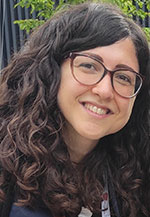
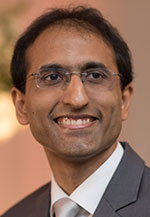
Alice Raffaele is a postdoctoral researcher at the University of Padova in Italy. From 2021-2024, she was one of the two joint coordinators of AIROYoung, the Young Chapter of the Italian Association of Operations Research. She is one of the organizers of the ROAR project and collaborates with “MaddMaths!,” the main Italian website of mathematics divulgation. Anand Subramanian is a professor at the Universidade Federal da Paraíba in Brazil. He is the organizer and host of the “Subject to” (s.t.) podcast.