


October 28, 2024 in INFORMS Annual Meeting
We Need Every Set, and We Need to Reset
SHARE: PRINT ARTICLE: https://doi.org/10.1287/orms.2024.03.24n
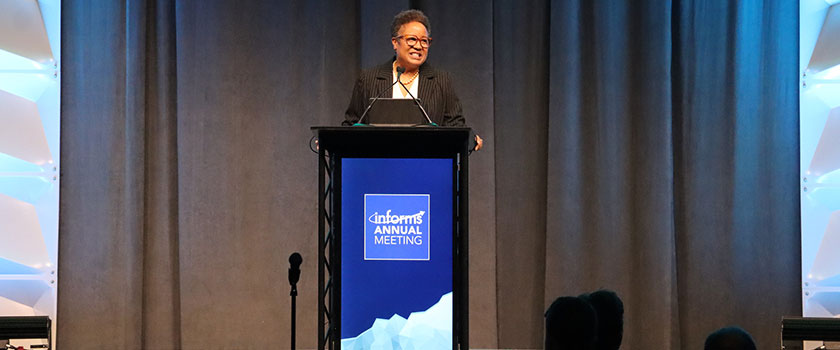
Harriet Nembhard, former dean of engineering at University of Iowa and current president of Harvey Mudd College, presented a keynote at the INFORMS Annual Meeting in Seattle, on the role of operations research (O.R.) in preparing responsible and hopeful interdisciplinary leaders.
Her talk focused on what we, as professionals and educators, can do in face of the many global challenges that have been affecting society. For example, we must deal with the legacy of a pandemic, growing antimicrobial resistance, social and economic inequities, and climate change – while also being diverted and seeing those challenges growing due to war.
Nembhard quoted Prime Minister of Barbados Mia Mottley, who said, “we need a reset and we need to reset.” That is not the title above, but I explain why later.
If it is a systems problem, it is an O.R. problem
Nembhard shared her experience from a recent visit to the Kigali Genocide Memorial – a venue dedicated to the memory of the 1994 massacre primarily targeting members of the Tutsi ethnic group in Rwanda, with an estimated number of 1 million casualties over the span of 100 days. The memorial also allows reflection on similar events that unfortunately occurred before and after the Rwandan genocide, such as in Germany, Bosnia, Cambodia and Sudan. Although knowledgeable of such events, Nembhard admitted that this visit had a profound impact on her.
The exhibit included a poster connecting the dots in a way that was new to her. Namely, the argument was that many of these challenges cascade as a chain of interrelated events: climate change leads to food insecurity, which leads to mass migration, which leads to hate speech, which – if treated with impunity – leads to identity-based violence. With that example, she triggered in us the realization that war is not only a diversion from the other challenges that she first mentioned, but that it may also be caused by those same challenges.
The exhibit poster also suggested that the solution would be in reversing such a sequence of events to achieve resilient and stable communities, and that such a solution would entail understanding all of these challenges as part of a system. And if this is a systems problem, then O.R. can be central to how we go about solving it.
Modeling the System: UN’s Sustainable Development Goals
Nembhard argued that the 17 Sustainable Development Goals (SGDs) devised by the United Nations (https://sdgs.un.org/goals) provides a framework for pursuing peace, equality and prosperity:
- End poverty in all its forms and everywhere.
- End hunger, achieve food security and improved nutrition, and promote sustainable agriculture.
- Ensure healthy lives and promote well-being for all at all ages.
- Ensure inclusive and equitable quality education and promote lifelong learning opportunities for all.
- Achieve gender equality and empower all women and girls.
- Ensure availability and sustainable management of water and sanitation for all.
- Ensure access to affordable, reliable, sustainable, and modern energy for all.
- Promote sustained, inclusive and sustainable economic growth, full and productive employment, and decent work for all.
- Build resilient infrastructure, promote inclusive and sustainable industrialization, and foster innovation.
- Reduce inequality within and among countries.
- Make cities and human settlements inclusive, safe, resilient, and sustainable.
- Ensure sustainable consumption and production patterns.
- Take urgent action to combat climate change and its impacts.
- Conserve and sustainably use the oceans, seas, and marine resources for sustainable development.
- Protect, restore, and promote sustainable use of terrestrial ecosystems, sustainably manage forests, combat desertification, and halt and reverse land degradation and halt biodiversity loss.
- Promote peaceful and inclusive societies for sustainable development, provide access to justice for all, and build effective, accountable, and inclusive institutions at all levels.
- Strengthen the means of implementation and revitalize the Global Partnership for Sustainable Development (https://sdgs.un.org/partnerships).
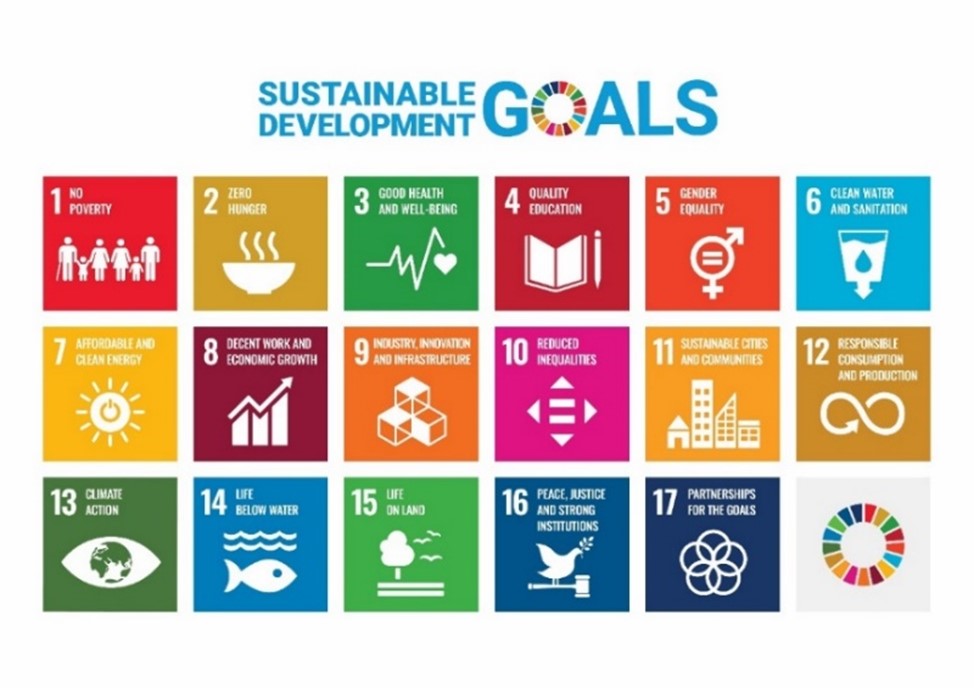
Nembhard believes that these goals map the converging global challenges, which she summarizes as a polycrisis: many crises in one. However, she is concerned that the progress toward the agenda outlined for 2030 (https://sdgs.un.org/2030agenda) is slowing down, not to mention emergencies such as COVID-19. On top of that comes the tricky technical part: What kind of “solver” can we use for such a complex model?
Educating the Leaders who will Tackle Global Challenges
Nembhard’s stance is that today’s problems do not respect boundaries, therefore our teaching and scholarship should evolve and break disciplinary silos if we want to solve global problems. She offered some creative combinations of majors that could be around sooner than later, such as geochemistry or neuroengineering. In terms of rethinking how we educate students, she mentioned three aspects to consider:
- Integrate SGDs into O.R. coursework, showing how it can be used to tackle global, urgent challenges. Create interdisciplinary courses, think about ethics and help students reflect on the moral complexities involved.
- Bring O.R. to the institutional strategy. With O.R. typically housed in a specific university department, be it in engineering, business or math, the plans made by the whole institution to make an impact may not necessarily be aligned with those of an O.R. department unless we take part in the conversation.
- Engage a broad social network to make this possible.
Now allow me to explain the title of this article, and why it differs from the quote from Mia Mottley’s address. When I heard the original quote, I immediately imagined that the first reset was actually “set” and that it implied a set of skills. Having not found it online anywhere, I asked Nembhard and discovered the correct quote. Still, I took the liberty of using that powerful misheard quote because it took the point home to me, unintended or not: We need all sets of skills for the reset that we need to make.
Walking the Talk
Toward the end of her talk, Nembhard described the approach of Harvey Mudd College (HMC). HMC, or “Mudd,” is a liberal arts college aimed at providing a holistic education, offering degrees in science, technology, engineering and mathematics (STEM). Under her helm, the college’s philosophy of having people work at the intersection of fields gained a new meaning with the development of a core impact course to be integrated to the core curriculum of all students, drawing from different disciplines and forms of artistic expression. The first central theme of this course, in spring 2023, was climate change.
Following the plenary, I asked Nembhard how we can tell from which problem to start. She answered that we should let the students decide.
For those interested, she provided a link with some of the materials used: https://tinyurl.com/2482afu9.
Thiago Serra recently joined the University of Iowa’s Tippie College Business as an assistant professor of business analytics, following five years as an assistant professor of analytics and operations management at Bucknell University’s Freeman College of Management. Previously, he was a visiting research scientist at Mitsubishi Electric Research Labs from 2018 to 2019, and operations research analyst at Petrobras from 2009 to 2013. He has a Ph.D. in operations research from Carnegie Mellon University’s Tepper School of Business, from which he received the Gerald L. Thompson Doctoral Dissertation Award in Management Science in 2018. During his Ph.D., he was also awarded the INFORMS Judith Liebman Award. His research at the intersection of discrete optimization and machine learning is supported by the National Science Foundation. He served as an INFORMS NavigatOR for the 2024 INFORMS Annual Meeting in Seattle.