


December 9, 2024 in Harry Markowitz
Markowitz: Not Just a One-Shot Nobel Laureate
The Life & Work of Harry Markowitz
SHARE: PRINT ARTICLE: https://doi.org/10.1287/orms.2024.04.01

The contributions of Harry Markowitz to optimization are vast, so as a Ph.D. student building on portfolio theory, it was inevitable I would come across his work. The more I read, the more I was awed by the life of a man who sowed the seeds for two entirely distinct fields of research. His is an incredible story, with coincidences, connections and copious name drops weaved throughout, and one that emphasizes the importance of interdisciplinary thinking.
Early Life
Harry Max Markowitz was born in 1927 to a Jewish family living in Chicago. Despite being born immediately before the United States was plunged into the Great Depression (1929-1939), Markowitz said in his own biographies that he wasn’t conscious of this as a child, because he always had a roof over his head and enough food [1].
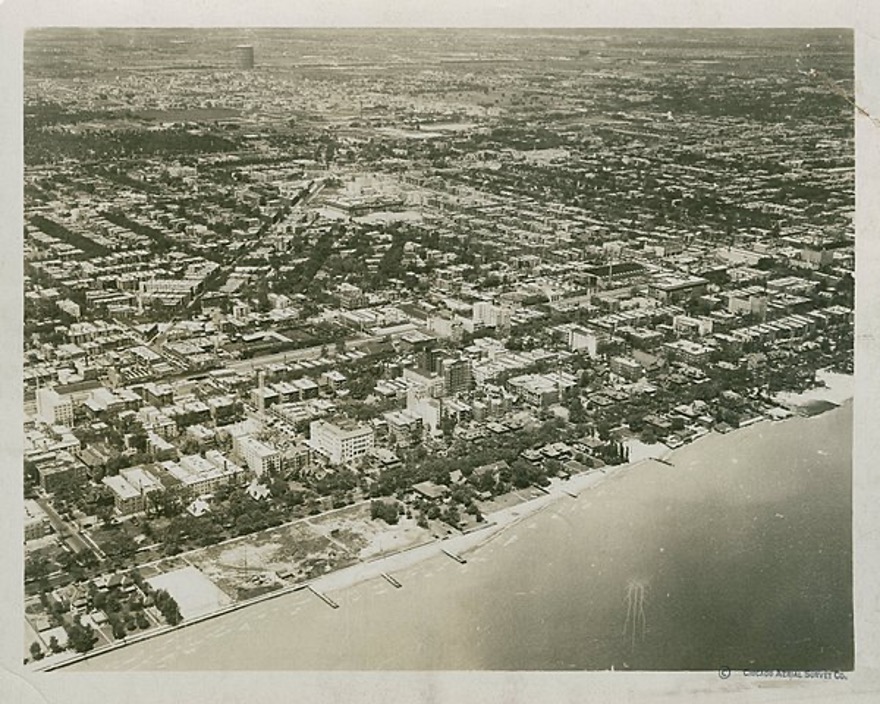
The Depression was followed by yet more uncertain times, with Pearl Harbor and the U.S. entry into World War II (1941-1945), which spanned Markowitz’s teenage years. He was 14 years old when America joined the war and turned 18 just nine days after V-J Day.
Despite two generation-defining tumultuous events, Markowitz enjoyed school, read comics and played baseball. Unusually, he was interested in academic reading from an early age (“On the Origin of Species” was his favorite book!), particularly the work of philosophers. The influence of David Hume (“my philosopher”) can be seen in his own work [2], such as considering how past performance is not a guarantee of future success [3, 4].
Into Research
Markowitz’s academic story begins in earnest at the University of Chicago, graduating in 1947 with a PhB (Philosophiae Baccalaureus or Bachelor of Philosophy, the name for Chicago’s undergraduate degree at that time). The degree encouraged broad reading, and one course he highlighted as an influence was Observation, Interpretation, and Integration, lectured by Joe Schwab [1]. If this name is unfamiliar, that’s because Schwab wasn’t an economist or similar, but an education expert. His course focused on interdisciplinary relationships between fields of research [5], foreshadowing how Markowitz’s later work would straddle disciplines.
Markowitz continued his studies at Chicago and earned an MA in economics in 1950. He was particularly drawn to the works of Oskar Morgenstern and John von Neumann and how they could be used as a tool for describing how – when faced with choices of varying risk – people respond as if maximizing the expected return among those choices.
He then continued his education toward a Ph.D. in economics at Chicago, supervised by Milton Friedman and Jacob Marschak. Among the recommended reading was “Theory of Investment Value” by John Burr Williams, which spurred the lightbulb moment in which Markowitz’s fundamental ideas for portfolio theory were formed [1].
In 1951, while working toward his Ph.D., he joined RAND Corporation as a research associate. RAND has since pivoted to policy research across fields from health to artificial intelligence (AI), but its origins are as “Project RAND” within the United Stated Air Force. Against the backdrop of the bombing of Pyongyang during the Korean War and Operation Ranch Hand during Vietnam, Markowitz worked on aircraft inventory problems alongside Herbert Scarf, among others [6]. This was “operational research” in the earliest, military sense of the field.
Although he didn’t work on portfolio theory at RAND, he met George Dantzig who Markowitz credited in the development of his optimization and computational methods [7, 8]. Their access to cutting-edge technology would also spur the creation of the modeling language SIMSCRIPT, soon followed by the database language EAS-E (pronounced “easy”), with Markowitz heavily involved in both.
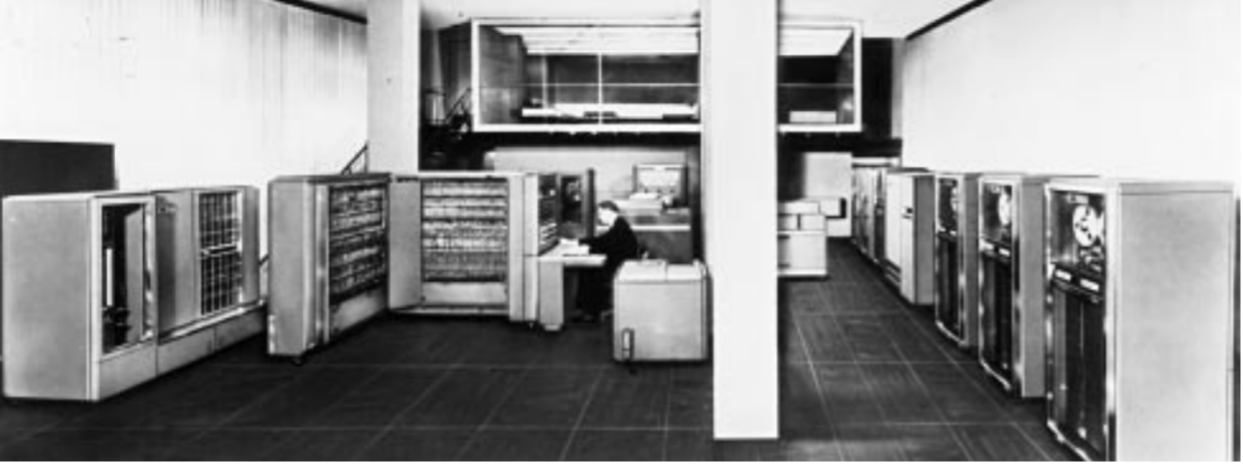
In 1952, at only age 24, Markowitz published two seminal papers just one month apart, all while working toward his Ph.D.
Modern Portfolio Theory
The first of Markowitz’s influential papers was “Portfolio Selection,” published in March 1952 in The Journal of Finance, in which he outlined the mathematics for incorporating risk analysis into portfolio selection, fundamental ideas that would form the basis of modern portfolio theory (MPT) for decades to come.
The paper set out portfolio selection as a two-stage process:
- Use past experiences to form beliefs about future performance.
- Use those beliefs to inform portfolio choice.
Markowitz focused on the latter, although the former did suggest use of statistical methods followed by manual adjustment informed by practical experience. His central argument was that “returns from [assets] are too intercorrelated. Diversification cannot eliminate all variance.”
In other words, it matters not only that investors diversify but how they diversify. It’s great to have a portfolio of 100 assets, but if they are all highly correlated and one suddenly falls, they will likely all fall together. This then motivated his so-called “expected returns – variance of returns” (E-V) rule. Rather than giving a specific portfolio as a solution, the E-V rule aimed to find which expectation-variance combinations are attainable and then helped practitioners balance those two factors as desired.
Crucially, the paper did not give a proof for the E-V rule. Instead, it presented a heuristic argument for the general case followed by rigorous arguments for the three- and four-asset cases. Despite the lack of proofs, the paper was complete with equations and logical justifications that went beyond what was the norm for economics literature of that time.
Markowitz completed his Ph.D. thesis, also titled “Portfolio Selection,” and graduated from the University of Chicago in 1954. During the viva, Friedman joked that Markowitz couldn’t possibly be granted a doctorate in economics because of how much mathematics was in the thesis. As Markowitz himself wryly noted, if portfolio theory wasn’t economics before his Ph.D., it surely was after [9].
Behavioral Economics
The second 1952 paper came in April, this time an essay titled “The Utility of Wealth” [10]. To say this was an unusual piece of academic writing is an understatement. Although it had some reference to mathematics and economic theory, the essay was framed more as an argument for why its core thesis held rather than a rigorous work of scientific research.
It explored how people balance risk and reward in decision-making, building upon earlier work on utility curves from Friedman and Leonard Jimmie Savage (yet another of Markowitz’s teachers at Chicago). The fundamental argument that Markowitz made was that people prefer:
- Small chances of large gains to large chances of small gains.
- Large chances of small losses to small chances of large losses.
He argued that exactly where the turning point on that calculus falls is tied to the individual person’s preexisting personal wealth.
As an overt example of the paper’s nonrigorous basis, Markowitz evidenced this conclusion by nothing more than a survey of his colleagues. The questions asked aimed to find the limits of someone’s appetite for risk, considered separately for gain and loss. He freely admitted that he only surveyed middle-income people, and in an unsystematic way, to reach his conclusions. It’s the kind of methodology that makes a peer reviewer’s hair gray.
Despite this, the idea took root, and this understanding of a preference for low risk is now taken as a given in this area of economics. Markowitz’s work here fed into the development of other related work on human behavior within economic systems.
Psychologist and economist Daniel Kahneman built on ideas from “Utility of Wealth” when developing the field of behavioral economics, for which he won the Nobel Prize in 2002 [11]. He amalgamated much of the research in this area into a single popular science book, “Thinking Fast and Slow” (2011), which was widely popular and became a New York Times bestseller.
Shortly after publication of this book, the field was rocked by the “replication crisis.” Many papers from across physical, natural, and social sciences were found to be based on unreplicated studies in which replication was either never attempted or was attempted and explicitly not achieved.
Psychologist Ulrich Schimmack published a review of Kahneman’s book [12], which reported a shocking number of its references showed no significance because of the small sample size. Kahneman responded, saying:
“I knew, of course, that the results of priming studies were based on small samples, that the effect sizes were perhaps implausibly large, and that no single study was conclusive on its own. … However, I now understand that my reasoning was flawed and that I should have known better” [12].
In painful contrast, Kahneman said the following about the priming research in his book, which as of 2024, is still published without qualifying statements or retractions:
“Disbelief is not an option. The results are not made up, nor are they statistical flukes. You have no choice but to accept that the major conclusions of these studies are true” [13].
It’s only natural to ask, what of Markowitz’s survey and the hypotheses dependent on it? Despite deeply unscientific origins, his findings were (broadly) replicated by more rigorous experiments [14]. Although there are some deviations and adjustments, the underlying argument about risk appetite is used (and importantly, holds) to this day.
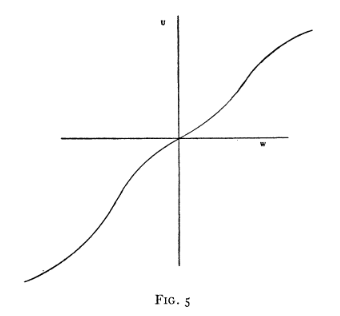
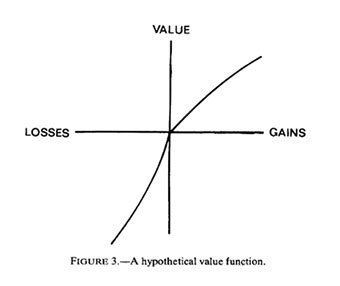
The original utility curve by Markowitz [left], later replicated by Tversky and (ironically) Kahneman [right], among others [14].
Critical Line Algorithm
Markowitz compiled his research on MPT in the 1959 book, “Portfolio Selection,” [15] although its reception at the time was not wholly positive. Fellow economist Merton Miller, for example, criticized Markowitz’s work as unsuited for its intended audience: “This attempt to direct the book to the non-mathematical reader was doomed from the outset” [16].
Miller also criticized the rigor with which Markowitz’s algorithm was presented, saying, “Steps are inexcusably omitted from the proof of the critical-line algorithm, the reader being referred to an article by the author in a rather obscure journal” [17].
With the benefit of hindsight, these publications were, without doubt, hugely influential. Spurred by Markowitz’s positioning in the field and the work’s evident applicability, many other academics and practitioners accepted and built on his research over the following decades.
Work on MPT was later summarized in Markowitz’s 1987 book, “Mean-Variance Analysis in Portfolio Choice and Capital Markets.” A complete implementation of the critical line algorithm (CLA) was also included for the first time, which garnered some criticism. For example, William Sharpe said, “The [implementation] is written in EAS-E, a database management language developed by Markowitz but generally unavailable. … The code differs significantly from one that might be written in more well-known algorithmic languages such as Pascal, BASIC, or Fortran” [18].
In response, an updated version of the mean-variance analysis book with a new implementation in Visual Basic for Applications was released in 2000 in collaboration with Peter Todd.
Later Life
In 1990, Markowitz won the Nobel Memorial Prize in Economic Sciences with his critics-turned-colleagues, Merton H. Miller and William F. Sharpe, awarded “for their pioneering work in the theory of financial economics.” In a satisfying circle back to his master’s, just a year earlier, he won the INFORMS John von Neumann Theory Prize for his ground-breaking work in three areas: portfolio selection, mathematical programming and simulation.
Markowitz continued to publish on MPT well into the 2010s and continued his work with Ashok Malhotra on EAS-E. Perhaps his most significant work outside of OR/MS was his early contributions to sparse matrices (a term he may have coined), particularly on pivot strategies for sparse matrices in linear programming in the mid-1950s.
Markowitz held many academic positions over the course of his career, including at UCLA, Rutgers University and the Rady School of Management at UC San Diego. He also took visiting positions at the University of Tokyo, Hebrew University of Jerusalem and London School of Economics, among others.
Besides RAND, outside of academia, he was involved in many companies across research, finance and software, including roles at General Electric, IBM and Daiwa Securities. SIMSCRIPT was also successful enough that Markowitz and fellow RAND employee Herb Karr left to found CACI to further commercialize the tool and provide services to the U.S. government [19].
Markowitz himself noted, “I’m not a one-shot Nobel laureate – only doing one thing,” a quote that is very much a true reflection of his life.
Harry Markowitz died on June 22, 2023, with a legacy as the father of modern portfolio theory, the grandfather of behavioral economics and an influential contributor to many more fields. He is survived by five children, 13 grandchildren and more than a dozen great-grandchildren.
Clearly an inspired thinker, it’s undeniable that a healthy dose of luck and quite the cast of greats helped Markowitz along the way [20]. His inspirations weren’t necessarily just contemporaries in economics, but were teachers, philosophers and colleagues working further afield. It’s evident that interdisciplinary thinking lies at the center of each of his great works and their success.
References and Notes
- https://www.nobelprize.org/prizes/economic-sciences/1990/markowitz/biographical/
- Markowitz, H.M., 1993, “Trains of thought,” The American Economist, Vol. 37, No. 1, pp. 3-9.
- Though distinctly not drawing influence from or endorsing some of Hume’s other ideas.
- Mills, R., 2020, “David Hume’s racism was attacked by an 18th century Scottish philosopher, as well as modern Black Lives Matter protesters,” The Scotsman, September 18, https://www.scotsman.com/news/opinion/columnists/david-humes-racism-was-attacked-by-an-18th-century-scottish-philosopher-as-well-as-modern-black-lives-matter-protesters-dr-robin-mills-2976377.
- Levine, D.N., 2006, “Observation, Interpretation, Integration,” Powers of the Mind: The Reinvention of Liberal Learning in America, Chicago: University of Chicago Press.
- Scarf, H.E., “Inventory theory,” Operations Research, https://doi.org/10.1287/opre.50.1.186.17773.
- Gass, S., 2005, “The life and times of the father of linear programming,” OR/MS Today, https://doi.org/10.1287/orms.2005.04.15.
- Markowitz, H.M., 1957, “The elimination form of the inverse and its application to linear programming,” Management Science, Vol. 3, No. 3, pp. 255-269.
- Markowitz, H.M., 1991, “Foundations of portfolio theory,” The Journal of Finance, Vol. 46, No. 2, pp. 469-477.
- Markowitz, H., 1952, “The utility of wealth,” Journal of Political Economy, Vol. 60, No. 2, pp. 151-158.
- https://www.nobelprize.org/prizes/economic-sciences/2002/summary/
- https://replicationindex.com/2017/02/02/reconstruction-of-a-train-wreck-how-priming-research-went-of-the-rails/
- Kahneman, D., 2013, “Thinking, Fast and Slow,” New York: Farrar, Straus and Giroux.
- Kahneman, D. and Tversky, A., 1979, “Prospect Theory: An Analysis of Decision under Risk,” Econometrica, Vol. 47, No. 2, pp. 263-291.
- For those keeping track, this was the third distinct work Markowitz published with this title. The “Portfolio Selection” paper (as opposed to the thesis or book) was also distributed with the same name as a RAND report and a Cowles Commission paper.
- Miller, M. H., 1960, “Book Review: Portfolio Selection: Efficient Diversification of Investments,” The Journal of Business, Vol. 33, No. 4, pp. 391-393.
- That journal being Naval Research Logistics Quarterly, so perhaps a fair criticism had Miller not also published there just three years prior.
- Sharpe, W. F., 1989, “Book Review: Mean-Variance Analysis in Portfolio Choice and Capital Markets,” The Journal of Finance, Vol. 44, No. 2, pp. 531-535.
- Markowitz either left or had been pushed out of CACI (accounts vary) some time before it provided interrogators for Abu Ghraib prison; the company has since been found liable for its role in the torture that occurred there in a U.S. federal trial.
- There’s an undeniable absence of women. The University of Chicago had a separate Department of Home Economics until 1956, and most women studying what would now be topics in economics or operational research were based there. Despite the separation at the time, their alumnae have to some extent been retconned into the history of the Department of Economics.
Josh Fogg is a Ph.D. student and tutor at the University of Edinburgh’s School of Mathematics in Scotland. Their current work is on improving the efficiency and applicability of Markowitz’s critical line algorithm, a tool for exploring the Pareto frontier of dual-objective portfolio optimization. 
([email protected])