
May 14, 2025 in INFORMS Initiatives
Fostering Ethical Behavior in Academic Publishing: A Call for Self-Regulation
SHARE: PRINT ARTICLE: https://doi.org/10.1287/orms.2025.02.06

The Institute for Operations Research and the Management Sciences (INFORMS) has long been a beacon for scholars and practitioners across various disciplines, including management science, operations research, marketing, strategy and more. In 2024, the total submissions to all 17 INFORMS journals exceeded 11,000, marking an increase of more than 11% from 2023. This surge reflects robust engagement within the INFORMS community and reinforces the visibility and impact of the organization’s scholarly platforms.
However, with this growth comes the challenge of maintaining high ethical standards in publishing. We propose that self-regulation within the INFORMS community can be a powerful and necessary tool to enforce ethical behavior and curb misconduct by a small subset of authors.
Upholding Ethical Standards
As members of INFORMS, we each have a responsibility to uphold high ethical standards on behalf of society, our institutions and the academic profession. INFORMS’ ethics guidelines emphasize honesty in reporting results, truthfulness in providing attribution and vigilance in identifying and discouraging actions that undermine the integrity of our field [1].
- Honesty in Reporting Results: Authors must report research outcomes truthfully, regardless of whether the results support their hypotheses. This principle safeguards the credibility and cumulative value of research in our field.
- Truthfulness in Attribution: Proper citation is essential when a manuscript draws on the ideas or language of prior work. This applies not only to work by others but also to authors’ own previously published material.
- Vigilance Against Unethical Actions: Community members are expected to remain alert to behaviors that damage the profession and speak out when necessary.
Understanding the Drivers of Unethical Behavior
To promote self-regulation, it is essential to understand why ethical breaches occur. Although most authors act in good faith, the academic environment is increasingly shaped by systemic pressures that can distort incentives.
“Publish or perish” dynamics tied to tenure, promotion or grant success can create an overwhelming incentive to maximize publication count. Institutional emphasis on metrics such as journal impact factors and h-index scores further intensifies this drive. In global academic contexts in which access to top-tier journals confers significant career advancement, the stakes can be even higher.
These pressures, combined with gaps in training or ambiguous standards across disciplines, can lead some authors – knowingly or otherwise – to engage in misconduct such as duplicate submissions, data manipulation or insufficient citation of related work.
Measures to Promote Ethical Conduct
To reinforce ethical publishing, INFORMS journals require submitting authors to acknowledge their understanding of the organization’s ethical policies and guidelines. Although slight variations exist across journals, key principles are consistently emphasized:
- Originality and Plagiarism: Authors must clearly identify when portions of a manuscript build upon previous work, including their own. Proper citation and an explanation of novel contributions are expected.
- Falsification and Fabrication: Altering or inventing data or results is unacceptable and constitutes a serious ethical violation.
- Redundant, Concurrent or Multiple Publications: Submitting similar or identical work to multiple journals – simultaneously or sequentially – without disclosure is unethical, as is fragmenting study results across numerous publications without substantive differentiation.
To support these policies, INFORMS journals employ several safeguards. All co-authors are notified upon submission, helping to prevent unauthorized or unilateral actions by any individual. Additionally, a plagiarism detection system checks each manuscript against a wide corpus of publicly available literature and other submissions within the INFORMS portfolio.
Ongoing Challenges
Despite these measures, INFORMS continues to encounter ethical violations. Some submissions closely mirror other uncited papers by overlapping author groups. In other cases, data has been selectively manipulated at different stages of analysis to yield more favorable outcomes. Still, others involve near-duplicate papers submitted to multiple journals, often with different titles, within a short period.
Such actions not only violate INFORMS policy but also erode trust in the academic publishing system. Although journals have formal procedures to investigate and respond to misconduct, editors cannot address these issues alone.
The Crucial Role of Self-Regulation
This is where self-regulation becomes essential. Self-regulation refers to the proactive role that researchers take in upholding ethical norms – monitoring their own practices, supporting ethical behavior among colleagues and intervening when they observe misconduct.
If a co-author receives an email regarding a submission they were not involved with, they should promptly notify the editor-in-chief. If a researcher suspects that data has been fabricated or manipulated – or that similar papers have been submitted to multiple journals – they have a responsibility to report these concerns. INFORMS editors treat such reports confidentially and follow procedures designed to ensure fair resolution.
The mantra “See it, Say it, Sort it” captures the spirit of self-regulation. When community members take an active role in maintaining high standards, they reinforce the expectation of integrity and model ethical leadership for others.
A Collective Responsibility
Ethical publishing is a shared enterprise. Although formal policies and editorial oversight are necessary, they are not sufficient on their own. Ethical culture is built from the bottom up through daily choices, active mentorship and a willingness to speak up when something is amiss.
We invite every member of the INFORMS community to embrace their role in fostering an environment of trust, transparency and scholarly rigor. By doing so, we not only protect the reputation of our organization, but we also ensure that the science we contribute to is worthy of its purpose: to inform, to improve and to inspire.
Reference
Christopher Tang is a University Distinguished Professor and the holder of the Edward W. Carter Chair in Business Administration at the UCLA Anderson School of Management at University of California, Los Angeles. He received his B.Sc. (First class honours) in mathematics from King's College London in 1981, M.A. in statistics in 1983, M.Phil in administrative science in 1983, and Ph.D. in operations research in 1985 from Yale University. He is the INFORMS VP of Publications and former editor-in-chief of Manufacturing & Service Operations Management.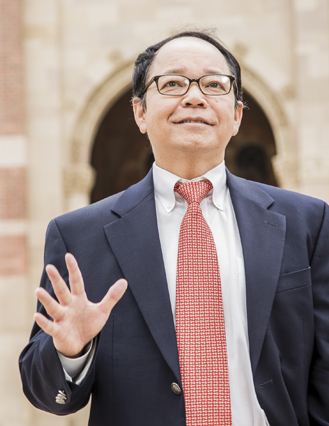
([email protected])