
August 28, 2025 in Bridging the Gap
Lessons from a Career in Analytics: Bridging Academia, Industry and Society
SHARE: PRINT ARTICLE: https://doi.org/10.1287/orms.2025.03.13
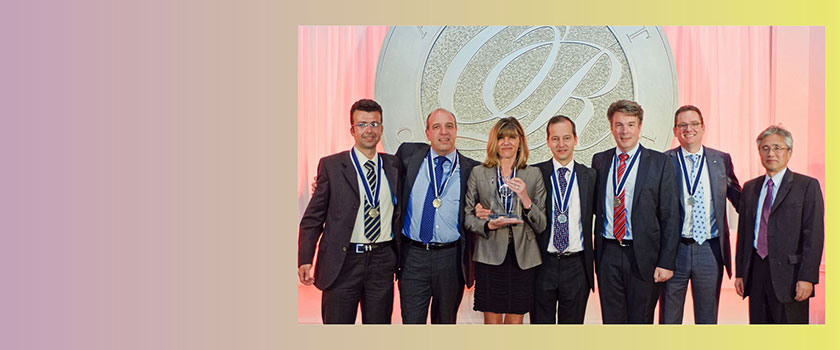
Editor’s note. Tilburg University colleagues Melvin Drent and Hein Fleuren reflect on Hein’s four decades at the intersection of academia, industry and humanitarian work. Together, they explore the lessons learned from bridging rigorous analytics and real-world impact – and what the future holds for the next generation of analytics professionals.
Introduction
Professor Hein Fleuren has spent the past four decades at the intersection of academia, industry and humanitarian work, pioneering the application of operations research (O.R.) and business analytics to complex real-world problems. His collaborations span from express delivery networks at TNT Express to the global food aid operations of the United Nations World Food Programme (WFP). Twice recognized with the prestigious Franz Edelman Award (2012, 2021), his work highlights how analytics can create tangible societal value. Now recently retired from his formal position at Tilburg University, Professor Fleuren reflects on the collaborative efforts that shaped his career, the lessons learned from bridging academic rigor and practical impact, and his hopes for the next generation of analytics professionals.
Collaboration Journeys: A Foundation in Dual Ambitions
When joining Tilburg University in 2000, Fleuren was faced with a direct question: Would he focus on securing funding or focus on publications? His answer was clear: both – not simply out of ambition, but from a deep belief that meaningful applied research requires academic excellence, domain knowledge and people involvement to achieve real-world impact. As he puts it, “Excellence in applied research isn’t just about building the best academic models. It’s about combining academic and domain knowledge – and getting people on board to make it work in practice.” This philosophy became the foundation for the collaborations that followed.
One of his first major industry projects began with a modest pilot in Italy for TNT Express. Over time, it evolved into the Global Optimization (GO) program – an organization-wide effort aimed at improving logistics planning through tailored decision-support tools. The team focused on practical outcomes – reducing costs, improving service and reducing carbon dioxide emissions – but always with models grounded in robust methodology.
Transitioning to Purpose-Driven Analytics
A turning point in Fleuren’s career came with a visit to the World Food Programme’s logistics operations in Rome. Witnessing the immense scale and complexity of humanitarian logistics – and the human stakes behind every operational decision – shifted his perspective.
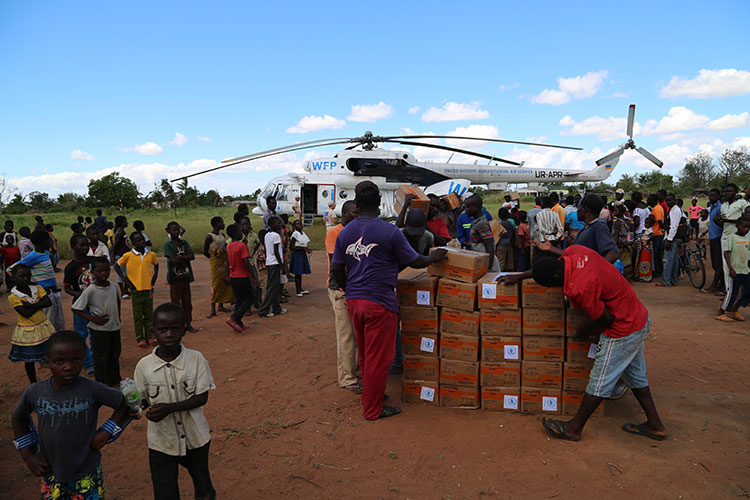
“Seeing WFP’s operations in Rome and the communities they support around the globe left a deep impression,” he recalls. “It raised a personal question: could we use the same tools that improved efficiency in industry to save and improve human lives?” This moment marked a significant turning point, leading Fleuren to refocus his skills from corporate logistics to global humanitarian aid.
At WFP, Fleuren collaborated with five master’s students to develop several analytics tools. One of them, Koen Peters, worked with Fleuren on the very first version of “Optimus” – an optimization platform that integrates supply chain and diet modeling. After years of further development and data integration at WFP, Optimus now supports the design of food baskets, sourcing strategies and distribution plans that balance nutritional needs with cost constraints. The results were profound: WFP estimates it can feed an additional 2 million people annually within the same budget. This achievement was recognized with the 2021 Edelman Award; however, Fleuren emphasizes that the true reward lies in the measurable humanitarian impact. “The Edelman Award in 2021 was a great honor,” he says, “but more important to me was seeing how analytics could make a real difference – helping to feed millions more people.” An important side effect, he notes, is that this project proved analytics can work effectively and at scale in humanitarian operations.
Building Lasting Collaborations
Fleuren points out that the real success in both collaborations lay in both achieving operational efficiencies and, further, creating truly sustainable cultural shifts from within.
“In both cases, we embedded analytics into the organization – not just through software, but also through people,” he explains.
At TNT, Fleuren and his team set up the GO Academy, through which hundreds of employees were trained to understand and work with optimization tools, embedding analytics deep into the organization. “Analytics is not something you just build and deliver; it needs to live within the people and their processes,” he reflects. The Academy focused not only on technical skills but also on building an organizational mindset that embraced data-driven decision-making at all levels. This initiative became a core part of TNT’s transformation and contributed to the project being recognized with the 2012 Edelman Award.
At WFP, Fleuren took a different approach to building awareness. Together with one of his Ph.D. students, he developed a serious game that was played by WFP’s entire senior logistics leadership. In the simulation, managers had to decide where to build and maintain roads and which transport modes to use – all under strict budget constraints. The goal: ensure fair food distribution between urban and rural areas.
After 1 hour of gameplay, the outcomes of the managers’ decisions were compared with those of a simple mixed-integer programming (MIP) solver, which consistently improved performance by 4%-5%. This clear contrast raised awareness among WFP leadership about the potential of analytics to support and improve strategic decision-making, even in complex humanitarian settings.
Whether in commercial or humanitarian settings, Fleuren sees commonalities in his successful collaborations: long-term commitment and mutual respect. Rather than imposing solutions from the outside, his approach has always been to embed analytics through shared understanding and capacity-building. “Our Ph.D. students, thesis researchers and professional teams became bridges between academia and practice. They didn’t just bring models; they brought operational urgency back to the university and academic rigor into practice,” he adds.
Challenges: Cultural and Operational Gaps
Industry and humanitarian work brought distinct challenges compared with the academic world. One major hurdle Fleuren highlights is the difference in the pace of decision-making. “There’s a need for timely, understandable insights – whereas researchers are trained to seek completeness and formal proof,” he explains. Bridging this gap, he notes, required listening, iteration and a willingness to move forward with “good enough” solutions where perfection was impractical.
The 2008 financial crisis starkly illustrated this dynamic. Under immense time pressure, Fleuren’s team developed the first DELTA model for TNT in just six weeks, supporting strategic decisions such as the closure of operations at 12 airports – a sensitive and impactful recommendation. Trust was built through early stakeholder engagement and transparent communication of model implications. “People trust what they understand,” Fleuren reflects, “and involving them in the process fosters ownership.”
In humanitarian logistics, Fleuren found that the challenges were of a different nature. “Access to data was often limited, infrastructure like internet connections was unreliable, and political landscapes could shift rapidly,” he explains. Unlike in commercial settings, local context played a huge role – operational environments could vary widely from one region to another, requiring flexible approaches and on-the-ground adaptability. Flexibility and perseverance became essential in these settings. Yet even small, demonstrable wins helped build trust and strengthened the case for the role of analytics in humanitarian work.
Data Quality and Semantic Inconsistencies
Data quality emerged as another persistent obstacle across all projects. It was not a lack of data but the inconsistency and fragmentation that often created barriers. Fleuren recounts instances in which depot codes varied by country, system and even department – making it difficult to establish a common network structure. In humanitarian contexts, something as seemingly simple as “rice” can appear under 10 different names, depending on local sourcing, language or nutritional variant. Addressing such inconsistencies requires more than technical fixes – it involves close collaboration with domain experts who understand the context behind the labels and can interpret and reconcile the differences. “It’s a reminder that good data work is not only about algorithms, but about translation – between systems, languages and perspectives,” he reflects.
Lessons and Advice for the Next Generation
Looking back, Fleuren shares clear advice for young researchers aiming to bridge academia and real-world practice without compromising academic quality. Start with questions that matter beyond academia. “Find real partners – even small ones – and be open to adapting your research to their needs,” he advises. “Often, the most interesting academic problems arise from practical constraints.”
A good example, he notes, is the classic location-allocation problem. “In academic literature, we often focus on the capacitated versus uncapacitated variants, assuming demand remains fixed,” he explains. “But during my work at TNT Express, I saw how closing a depot is never just an operational decision. Depots often serve as local commercial points of contact; once they are closed, fast delivery options decline, local customer relationships weaken and demand patterns start to shift. Over time, this can cause customers to move elsewhere – altering flows across the entire network. It taught me that real-world location decisions are rarely static; they are embedded in dynamic systems of behavior and trust that extend far beyond the model’s immediate inputs.”
Supporting Institutional Structures
Fleuren is also quick to acknowledge the institutional support that enabled his applied work. “Without Tilburg University’s openness to combining research with practice, much of this work would not have been possible,” he says. “Universities need to trust researchers to explore unconventional paths – that’s where innovation lives.”
This flexibility made it possible to start ventures like BlueRock TMS and co-found the Zero Hunger Lab, initiatives that bridge theory and application in impactful ways. Zero Hunger Lab, in particular, started as a modest initiative but quickly grew into a recognized center for data-driven work on food security. “We began with a simple idea: use analytics to fight food insecurity,” Fleuren recalls. “Today, we’re collaborating with major NGOs and governments, working toward real, sustainable change.”
Humanitarian vs. Commercial
When comparing commercial and humanitarian projects, Fleuren observes important distinctions. Commercial work often focuses on performance, efficiency and scale, whereas humanitarian projects require broader engagement with ethics, equity and long-term resilience – far beyond traditional performance metrics. Nevertheless, both domains benefit from a common foundation: structuring complex decisions with clarity, compassion and attention to real-world constraints.
“In humanitarian contexts, you trade control for purpose,” he notes. “You work with incomplete data, unstable timelines and shifting priorities – but the stakes are human lives and well-being. That changes the nature of every conversation, every model and every line of code.”
Legacy and Looking Forward
Reflecting on his career, Fleuren says the greatest pride comes not from specific accolades or models but rather from the people and institutions he helped shape. The Zero Hunger Lab has grown into a recognized center for data-driven work on food security, and former students now lead impactful initiatives across sectors. “That, to me, is the lasting impact,” he reflects.
As he steps back from formal academic duties, Fleuren remains committed to supporting efforts in anticipatory action, hunger monitoring and sustainable food systems. “There is still much to be done,” he notes, “and I hope universities continue to encourage applied, multidisciplinary efforts with clear societal value.”
Closing on a personal note, Fleuren draws a parallel between his professional life and his other passion for photography.
Top Lessons from Professor Fleuren
- Let the question guide the method – Don’t begin with a model or a tool, but with a real problem.
- Trust builds impact – Meaningful partnerships grow from honesty, shared goals and time.
- Connect precision with purpose – Analytics is most powerful when it serves people, not just systems.
- Listen first, listen second and listen third – As academics, we’re trained to explain; but deep, respectful listening often reveals what our models really should be solving.
Melvin Drent is an associate professor of operations management in the Department of Information Systems and Operations Management at Tilburg University. Hein Fleuren is full professor in the application of business analytics and operations research at Tilburg University, and co-founder and director of the Zero Hunger Lab.