
November 19, 2025 in Analytics in Action
Near-Real-Time Measles Surveillance: How Analytics Can Help Transform Public Health Response
SHARE: PRINT ARTICLE: https://doi.org/10.1287/orms.2025.04.04
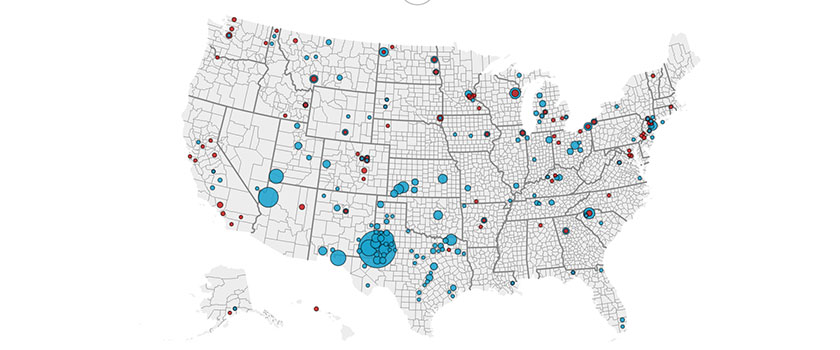
The U.S. is experiencing its largest measles outbreak in more than three decades, with over 1,650 confirmed cases across 42 jurisdictions as of November 2025, nearly eight times the annual average of 200 cases seen from 2000 to 2024. This surge represents not just a public health crisis but also a compelling case study in how analytics can provide critical infrastructure for real-time decision-making in healthcare emergencies.
The Challenge: Data Fragmentation in Crisis Response
Traditional measles surveillance in the U.S. relies on the Centers for Disease Control and Prevention’s weekly state-level reporting system (https://www.cdc.gov/ncird-surveillance/about/nndss.html). Although adequate for routine monitoring, this approach creates significant gaps during outbreak scenarios in which rapid, localized response is essential. Measles outbreaks are typically highly clustered geographically, with transmission patterns that can only be understood and addressed through granular, county-level data. The fundamental challenge was one familiar to any analytics-driven researcher: how to integrate heterogeneous data streams from 50+ different reporting systems, each with unique formats, update schedules and data quality standards, into a unified, real-time (or near-real-time) surveillance infrastructure that could support evidence-based public health interventions.
Multisource Data Integration and Standardization
Drawing on methodologies from real-time optimization, our team at the Johns Hopkins Center for Systems Science and Engineering (https://systems.jhu.edu/) developed a comprehensive surveillance system that addresses the core operational challenges of disease tracking.
Automated Data Pipeline Architecture: The system uses a hybrid collection infrastructure combining automated web scraping protocols for structured data sources with manual curation procedures for unstructured reports. Python-based implementations extract data from interactive state dashboards, while standardized data entry templates with validation requirements handle press releases and public health communications.
Dynamic Source Management: Unlike static data systems, our infrastructure dynamically adapts to changing reporting landscapes. Between January and October 2025, we expanded from monitoring dozens of sources to systematically tracking more than 170 unique official sources across 42 jurisdictions. This scalability was achieved through automated alert systems that detect new content and AI-powered search tools that identify emerging data sources.
Addressing Heterogeneous Reporting Standards
One of the most complex operational challenges involved standardizing data across jurisdictions with fundamentally different reporting protocols. As an example, Kansas suppresses exact counts for counties with fewer than five cases, Tennessee reports by health region rather than county and Oklahoma provides only state-level totals. Our solution used hierarchical data processing algorithms that maintain native reporting structures while enabling national aggregation. For vaccination status data – critical for outbreak modeling – we developed standardization procedures that accommodate four-tier classifications across states with different documentation requirements. This mirrors classic analytics problems in multisupplier coordination: The challenge lies not only in data integration but also in preserving the integrity and interpretability of information across disparate reporting systems.
Impact and Practical Applications
The system’s public dashboard (https://publichealth.jhu.edu/ivac/resources/us-measles-tracker) and open GitHub repository (https://github.com/CSSEGISandData/measles_data) have provided near-real-time situational awareness that was previously unavailable. Public health departments can now access county-level case counts, transmission classifications (imported vs. local) and demographic breakdowns with weekly updates.
Opportunities for the OR/MS Community
This project illustrates several key principles relevant to OR/MS researchers working in healthcare and emergency management. The intersection of operations research and public health emergency response presents numerous opportunities for the OR/MS community:
- Surveillance Under Uncertainty: Traditional disease surveillance assumes stable reporting systems and standardized processes. Outbreak conditions require adaptive algorithms that can accommodate rapidly changing data structures and reporting frequencies.
- Scalable Infrastructure Design: The system architecture needed to scale from monitoring a few dozen sources to 150+ sources while maintaining data quality and processing speed. This required careful consideration of computational complexity and resource allocation.
- Stakeholder Integration: Success required coordinating with epidemiologists, public health officials, data engineers and visualization specialists, highlighting the importance of interdisciplinary collaboration in such applications.
- Emergency Response Optimization: Beyond surveillance, there are significant opportunities to apply network optimization, resource allocation and scheduling models to vaccine distribution, contact tracing and healthcare capacity management during outbreaks.
- Predictive Modeling: The county-level temporal data enables sophisticated forecasting models that could inform preemptive resource deployment and targeted intervention strategies.
- Supply Chain Resilience: Public health supply chains, from vaccines to diagnostic testing, face many of the same challenges addressed in commercial operations research (O.R.) applications, including demand uncertainty, capacity constraints and geographic distribution requirements.
- Decision Support Systems: There is substantial need for decision support tools that integrate epidemiological models with operational constraints to optimize intervention strategies under resource limitations.
Looking Forward: A Call for Engagement
The COVID-19 pandemic demonstrated both the critical need for real-time public health infrastructure and the power of analytics methodologies in addressing complex, large-scale coordination challenges. The measles surveillance system represents an evolution of these capabilities, but significant opportunities remain.
The OR/MS community has unique expertise in optimization, simulation, forecasting and systems integration, that is directly applicable to public health challenges. Whether through academic partnerships, consulting engagements or pro bono project work, there are substantial opportunities to contribute to infrastructure that directly impacts community health outcomes.
As we continue to face emerging infectious disease threats, the integration of O.R. methodologies with public health practice will be essential for building resilient, responsive surveillance and intervention systems. The measles tracking project demonstrates that these partnerships can produce both immediate practical impact and innovative methodological advances.
For those interested in engaging with this work, our complete datasets, methodological documentation and system architecture specifications are publicly available through our GitHub repository (https://github.com/CSSEGISandData/measles_data). We welcome collaboration from the OR/MS community as we continue to expand and refine these capabilities.
Acknowledgments
The measles tracker project is a collaborative, interdisciplinary effort conducted by a group of researchers at Johns Hopkins University who are tracking and modeling the risk of measles in the U.S. It reflects contributions from the Center for Systems Science and Engineering (CSSE) at the Whiting School of Engineering, the International Vaccine Access Center (IVAC) at the Bloomberg School of Public Health and the Bloomberg Center for Government Excellence.
The team is led by Lauren Gardner, Shaun Truelove and William Moss of Johns Hopkins University.
The JHU Measles Tracker is publicly available at publichealth.jhu.edu/ivac/measles-tracker with open-source data repository at github.com/CSSEGISandData/measles_data. The accompanying research was recently published in JAMA (September 2025) by Ahmadi, Dong and Gardner.
Farzin Ahmadi is an assistant professor of healthcare management at Towson University. He earned a Ph.D. in civil and systems engineering from Johns Hopkins University. He was also a Postdoctoral Fellow at the Center for Systems Science & Engineering at JHU.