December 22, 2025 in INFORMS Ambassadors Program
The INFORMS Ambassadors Program: A Brief History and Perspectives for the Future
SHARE: PRINT ARTICLE: https://doi.org/10.1287/orms.2025.04.12

INFORMS: Smarter Decisions for a Better World
The world (in the form of our society), the environment around us and the systems we build have been the focus of INFORMS since its inception. INFORMS, as the premier professional society for operations research (O.R.) and the management sciences, has put societal good front and center in its mission throughout the years: A brief study of the current strategic plan immediately reveals its mission of “advancing and promoting the science and technology of decision making” to help create a more “just, prosperous, and sustainable world.”
“World” is a key term here. INFORMS members, with their actions in the profession, at academic institutions and in governance, aim to improve the systems around us. Doing Good with Good O.R. is a competition that goes back to 2009 and celebrates the practice of operations research to help create a better world; Public and Societal Operations Research (PSOR) (formerly Public Sector Operations Research) is a section of INFORMS, also dating back to 2009, that has celebrated community O.R. and advancing theory and knowledge in decision-making for all humanity. The INFORMS Ambassador Program (formerly INFORMS DEI Ambassadors Program) is a more recent addition to this elite group of helping communities with the power of operations research. Established in 2019, and having its first cohort in 2020, the INFORMS Ambassadors Program has been a staple of improving the way we do things in the profession, industry, academia and INFORMS, creating communities of practice and new programs.
INFORMS Ambassadors Program
The program aims to provide funding, means and support to INFORMS members who have an idea about initiatives that improve our community outreach. This involves a diverse array of areas, including in the profession (in the workspace), in teaching and research within academic institutions (e.g., improving retention of students and creating more readily accessible and relevant materials), in the building of new communities and improvement of existing communities of practice, and, of course, in the improvement of INFORMS from within. The program is open to any INFORMS professional member, including staff, students, practitioners and academicians, and celebrates the unique capacities and capabilities that each set of members brings to the table. This is immediately visible from the wide variety of projects that have been supported throughout the years, which have brought together different groups with unique perspectives, building unique initiatives.
From a logistical perspective, the Ambassadors Program is announced in late October or early November every year through a call for proposals. The proposals are typically submitted by mid-December and are then evaluated by a panel of INFORMS members who are changed and rotated each year to ensure fairness. If awarded, projects can begin their work in January for one year. What types of projects are supported, and what makes them unique in our professional society?
A Retrospective of the INFORMS Ambassadors Program
Since 2020, the first cohort of the program, a whopping 58 projects have been supported by the Ambassadors Program. A classification of the programs performed by the former INFORMS Diversity, Equity, and Inclusion Committee (DEIC) found that a wide variety of topics were covered, and they can be broadly classified into the following categories:
- Education and student outreach programs
- Quantification and improvement of community outreach in academia and industry
- Community building and empowerment
- Research with a lens to fairness and justice
- Professional development and mentorship programs
- INFORMS organizational initiatives
The Ambassadors Program has led to the creation of new sections and forums within INFORMS; the celebration of research with a lens to helping and improving society through new awards; the creation of more accessible, relevant and modern teaching tools and materials; and improvement in how our professional society interacts with society at large. In only five years, the Ambassadors Program has had a lasting impact on INFORMS, creating a better, safer and smarter society for all of our members.
Among the first cohort of programs, the LGBTQ Community Building project set up the first steps for creating the INFORMS PRIDE Forum, a forum for all members of INFORMS who identify as LGBTQIA+ or allies. We also saw an INFORMS introspection with an analysis of INFORMS journals’ editorial boards, an analytics journey to establishing how INFORMS can broaden the participation in editorial boards across all of its members. INFORMS en Español proposed and established a series of online seminar lectures for members who communicate in Spanish; seeing as the project coincided with the onset of COVID-19 and the transition to online education for many higher education institutions, this program attracted wide audiences and built numerous collaborations. The main focus of the 2020 cohort was serving populations and communities that have not always been as present in INFORMS, and it has remained a central pillar of the Ambassadors Program since then.
The next two years saw programs that built on their initial successes (broadening the PRIDE Forum and establishing programming at the INFORMS Annual Meeting, continuing the exploration of editorial board membership, reaching out to minority-serving institutions) and brought about a new set of programs focusing on accessibility within INFORMS, mentorship of groups that have not been traditionally well mentored (such as mid-career faculty) and new connections with local schools. For example, “To My Younger Self” established a mentoring workshop for women Ph.D. students and has remained a staple within INFORMS, increasing in popularity each year because of its outcomes and successes. We also established the first DEI Student Paper Competition, which received approximately 50 submissions annually and concluded in 2025.
In 2023 and 2024, alongside the traditional themes that the Ambassadors Program was becoming increasingly known for, we saw some newer initiatives aimed at establishing new pedagogy for OR/MS, new case studies and problems motivated by modern and culturally relevant issues, and even more K-12 outreach activities. We also continued to support programs that improved mentorship within and outside INFORMS (such as WELL INFORMED). The most recent cohort is no exception: Programs that advance belonging for OR/MS students in business and analytics, empowerment of student engagement and understanding of OR/MS, and advances in K-12 outreach were among the programs funded.
Future Avenues
INFORMS has a unique opportunity to build on the momentum: At a time when the society around us questions some of the initiatives that focus on community engagement and empowerment, we have a unique set of members that can help tie the outcomes of these programs to real-life improvements that can be felt by society at large. Operations research and the management sciences, in the form of modern decision-making, is a unique intersection of disciplines that also “talks” to modern societies because its stated goal is to improve their services and performance (healthcare and transportation, governance and justice, supply chain management and sustainability, etc.). As OR/MS and analytics practitioners, academicians, and advocates, we have a duty to continue promoting our tools and techniques for the improvement and empowerment of the communities around us.
Many INFORMS members have been participating in very useful conversations and actions within their environments and organizations that involve fostering an environment that values engagement and collaboration. These “best practices” that our members have been developing, refining and updating for years are invaluable to our community. Future Ambassadors will be asked to continue quantifying the “state of our profession” and how to best accommodate the INFORMS members of the future. Ambassadors will also be called upon to lead efforts to ensure everyone can access OR/MS tools and techniques, as well as the tools to succeed and thrive through mentorship and individualized guidance.
With the rise of artificial intelligence (AI) and its inherent interaction with OR/MS, we have another unique opportunity ahead to build communities that understand the advantages and disadvantages of AI in modern decision-making. INFORMS should not give away this leadership position and should build on more community outreach and education to improve the way that AI complements our societal systems. As modern higher education institutions broaden access to OR/MS education (i.e., more professional programs offered or better technology available for online learning), we have the responsibility to bring OR/MS to more students from widely different backgrounds and with widely different life experiences. Ensuring how to maintain academic excellence without compromising the student experience is a key part of community empowerment that future INFORMS Ambassadors will be called to address.
For more information about the INFORMS Ambassadors Program, visit https://connect.informs.org/diversity/ambassador-program.
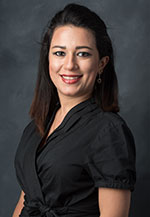
Chrysafis Vogiatzis is a teaching associate professor at the University of Illinois Urbana-Champaign. Banafsheh Behzad is associate professor of information systems at California State University, Long Beach. She is the past president of Women in OR/MS Forum (WORMS), past chair of the INFORMS Membership and Member Services Committee and co-chair of the INFORMS DEI Ambassador Program. Her research examines the applications of OR/MS to public health and social network-related issues.