December 22, 2025 in Viewpoint
Building Successful Industry-Academia Collaborations: Insights from SF Express and Tsinghua University
SHARE: PRINT ARTICLE: https://doi.org/10.1287/orms.2025.04.16

Collaborations between industry and academia are increasingly important in operations research and management science (OR/MS). These partnerships combine academic expertise with real-world business experience to address practical challenges, enhance efficiency and drive innovation. One successful example is the partnership between SF Express, a leading logistics company in China, and Tsinghua University.
Why Industry-Academia Partnerships Matter
Industry-academia partnerships blend theoretical expertise and practical applications. Universities provide advanced research methods and theoretical models, and companies offer operational data and practical scenarios for implementation. This combination leads to innovative solutions such as more efficient logistics networks, reduced environmental impact and improved customer satisfaction.
SF Express and Tsinghua University
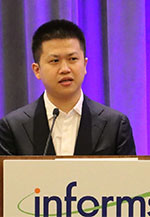
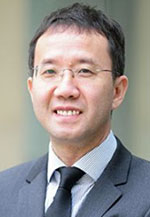
Yixiao Huang, currently chief operations research scientist at SF Technology, joined SF Express after earning his Ph.D. at Tsinghua University under the mentorship of Professor Lei Zhao. This academic-to-industry transition laid the foundation for a lasting partnership that benefited the O.R. team at SF Express, with shared experience in modeling and solving practical optimization problems. The O.R. team also received support and guidance from Georgia Tech, including Professors Martin Savelsbergh, Benoit Montreuil, Alan Erera, etc.
Addressing Real-World Challenges
SF Express faced substantial challenges because of China’s booming e-commerce industry, which demands rapid and efficient logistics. Previously, logistics planners manually managed route and hub decisions. However, as parcel volumes grew and customer demands for faster delivery increased, more sophisticated approaches became necessary.
Huang, leveraging his academic training under Professor Zhao, collaborated with skilled operations researchers from the team at SF Express to develop innovative methods for optimizing their logistics networks. The approach balanced complexity and practicality, ensuring that the theoretical models effectively translated into real-world operations.
Objectives and Outcomes
The main objectives of the collaboration were reducing operational costs, speeding up deliveries and minimizing environmental impacts through improved network design.
Through iterative testing and refinement, the collaboration significantly improved operational efficiency. The optimized logistics networks reduced decision-making time for route planning, eliminated redundant trips and enhanced vehicle utilization.
Financially, these improvements resulted in substantial cost savings – over a billion dollars in operational expenses within seven years. Environmentally, optimized routing reduced travel distances for parcels, significantly lowering carbon emissions by millions of tons.
Practical Lessons from the SF Express-Tsinghua Collaboration
Several practical lessons emerged from this partnership:
- Clearly defined goals: It’s essential for partners to have clearly defined and shared goals from the beginning, ensuring alignment between academic research and practical business needs.
- Phased implementation and feedback: Small-scale pilot projects allowed for incremental testing, adjustment and refinement, reducing risks during implementation.
- Effective communication: Regular, transparent communication between academic and industry teams was crucial for addressing issues and smoothly integrating new methods.
- Mutual learning: Mutual knowledge sharing between academic and industry teams significantly enhanced solution quality.
Impact and Recognition
The SF Express-Tsinghua collaboration received notable recognition for its innovative outcomes, paving the way for SF Express to become a finalist for the Franz Edelman Award, considered the “Nobel Prize” in analytics. This highlighted the substantial industry value and academic contributions resulting from the partnership.
Looking Ahead: Expanding the Collaboration
Building on their initial success, SF Express and Tsinghua University expanded their partnership into new research topics, such as region design and service network design problems.
The collaboration also contributed broadly to the industry by developing new standards, patents and academic publications. These resources provide valuable insights for other companies seeking efficient and sustainable logistics solutions.
Advice for Future Collaborations
Based on their experience, organizations looking to start similar collaborations should:
- Define clear objectives early: Clearly outline the problem, objectives and expected outcomes.
- Pilot projects first: Start with manageable pilot projects to test methods and build confidence.
- Prioritize communication: Maintain regular communication to align theory with practice effectively.
- Invest in mutual learning: Regularly share knowledge and expertise to deepen mutual understanding and enhance solutions.
The partnership between SF Express and Tsinghua University demonstrates the significant potential of industry-academia collaborations. With clear objectives and effective communication, similar collaborations can deliver significant innovation and operational excellence.
These partnerships not only benefit the involved organizations but also contribute to the broader community, driving continuous advancements in operations research and management science.
Yixiao Huang is chief operations research scientist at SF Technology (SF Express). He holds a Ph.D. in industrial engineering from Tsinghua University. Since joining SF Express in 2018, Huang has led projects on same-day delivery network design, vehicle routing, intercity ground networks and green transportation. He has published in Transportation Science, Transportation Research Part B and Omega. In 2020, he received the Outstanding Paper in Urban and Transportation Planning and Modeling Award from the TSL Society of INFORMS. He remains active in academia, giving guest lectures and organizing student competitions. Lei Zhao is a professor in the Department of Industrial Engineering at Tsinghua University. He serves as the director of the Institute of Systems Intelligence and Industrial Computing, director of the Operations & Services Research (TOpS) Laboratory and director of the Research Center for Transportation Science & Logistics. He earned his Ph.D. in systems and industrial engineering from the University of Arizona. His research interests focus on stochastic optimization methods and their applications in logistics and transportation, supply chain risk management, and omnichannel retail and logistics. Zhao’s work has been supported by the National Natural Science Foundation of China and the Ministry of Science and Technology of China. He has collaborated with prominent companies including Sinoair, Sinopec, COSCO Shipping, Alibaba, Meituan, Mitsubishi Heavy Industries, General Mills, IBM China Research, etc. His research has been published widely in many prestigious OR/MS journals.